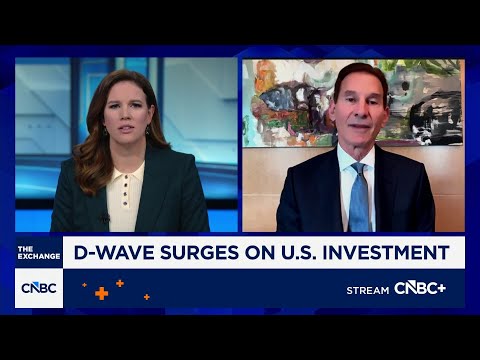
In a world where technological breakthroughs often hinge on the delicate balance between financial support and visionary endeavors, the recent $100 million investment by the U.S. government in D-Wave Quantum signifies more than just the transfer of capital—it is an accelerant in the race towards quantum computing innovation.
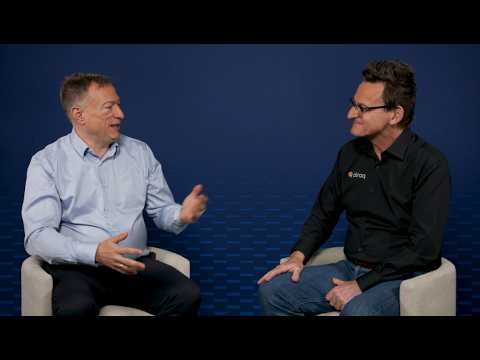
Not long ago, CNBC’s Kelly Evans had an insightful conversation with Alan Baratz, CEO of D-Wave, a company recognized as a trailblazer in quantum computing. It was a discussion centered not just on numbers, but on implications—both immediate and long-term—of this substantial investment. The dialogue hinged not on the winds of Wall Street fluctuations, but on the winds of change this collaboration could bring about.
Based on content from CNBC Television
For D-Wave, $100 million represents a significant push forward, not just financially but symbolically. As Baratz explained, “This is really about the government and quantum computing companies forming a partnership to help drive quantum innovation and leadership for the United States.” In a landscape where quantum potential is often seen as opaque or otherworldly, this partnership anchors such dreams into a more tangible reality.
It’s intriguing to consider how far D-Wave has come. Founded two decades ago, the company has been shaping and reshaping the quantum landscape, with their annealing quantum computers already being used commercially by an array of companies. This journey took $500 million over 20 years. When you pause to let that sink in, 100 million appears more as a focused thrust than a mere windfall.
Baratz paints a picture of careful stewardship. A $100 million endorsement does not spell complacency. “There’s still another 75% that we still have to fund,” he remarked, emphasizing the persistent diligence required. This is not some sudden windfall bred from luck. Rather, it calls for continued strategic rigor.
One can’t help but ponder the skepticism that such investments might bring. Are government endorsements at risk of spawning inefficiencies? Will they inadvertently water down the fierce competitive spirit needed for technological dominance? Baratz addressed these concerns head-on, asserting that the partnership highlights not ease, but urgency. It amplifies the sense that the quantum race is not just about speed, but precision.
It’s notable to mention the intangible part of this investment—endorsement. The U.S. government putting stakes in companies like D-Wave doesn’t merely translate to shares on paper. It’s a gesture, a scaffold of legitimacy and hope that the quantum future is not just imagined but imminent.
As this partnership unfolds, we are left in anticipation—bearing witness to how it might redefine the contours of computational challenges. It’s like standing on the edge of possibility, where each calculation and qubit shifts closer towards reshaping industries and solving problems once thought unsolvable.
For those of us captivated by the cadence of each technological heartbeat, the question lingers like a note at the end of a symphony: How many more leaps in understanding will this investment facilitate? As we move forward, one wonders not just about the answers quantum computing might deliver, but also about the new questions it will pose.
—