The landscape of computing is on the brink of a revolutionary transformation. With the advent of accelerated quantum supercomputers, the realm of possibilities is tantalizingly vast—ready to redefine entire sectors such as drug discovery, materials science, and optimization. Integral to this transformation is the marriage of advanced qubit hardware, accelerated computing, and specially crafted AI models. Enter NVIDIA Ising, a pioneering initiative aimed at catapulting quantum computing into the practical domain.
NVIDIA Ising stands as the first open source AI model family specifically tailored to bolster the transition towards useful quantum computing. But what sets this initiative apart? It’s all about how we compute and what we can compute. Supercomputing has long been a transformative asset—dissecting complex problems and laying the groundwork for new technologies. However, quantum supercomputers, powered by qubits, are poised to elevate these capabilities to unprecedented heights.
Based on content from NVIDIA
The foundational challenge in realizing these accelerated quantum supercomputers lies in error correction, control, and calibration—tasks that are inherently complex due to the fragile nature of quantum states. This is where NVIDIA Ising makes its mark:
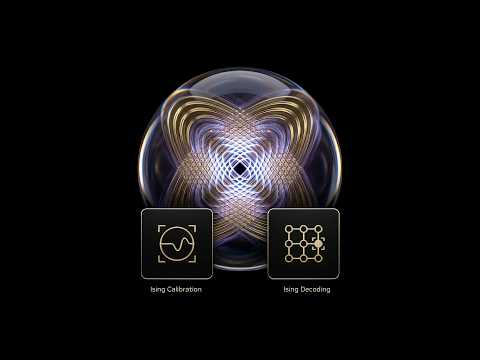
- Ising Calibration: A pre-trained vision language that facilitates automation of essential quantum processes. By ingesting measurement results, it identifies the requisite corrections, significantly expediting tasks that were traditionally manual and labor-intensive.
- Ising Decoding: This model handles the classical computations crucial for pinpointing errors within a quantum processor. By doing so, it tackles conventional decoding approaches, advancing the practicality of quantum error correction.
These models aren’t just theoretical tools—they’re equipped with a suite of ready-to-run workflow recipes. This immediacy allows quantum researchers to seamlessly integrate NVIDIA Ising’s AI tools into their work, propelling their exploration and discovery processes with minimal friction.
NVIDIA’s framework also simplifies the deployment of these AI models through its NIM platform—instantaneous, containerized, and optimized for prompt execution. This ease of deployment ensures that both emerging and established quantum researchers can access and apply these tools without significant overhead.
The synergy between AI and quantum computing isn’t just an evolutionary step—it’s a groundbreaking leap. As tomorrow’s quantum computers continue to evolve, they will undeniably be shaped by the capabilities afforded by AI. NVIDIA Ising emerges as an indispensable toolkit in this new era of discovery, democratizing access to the future of quantum computing technologies.
For those keen to delve deeper into how NVIDIA is fusing AI with quantum computing to unlock new realms of possibility, you can explore further here.