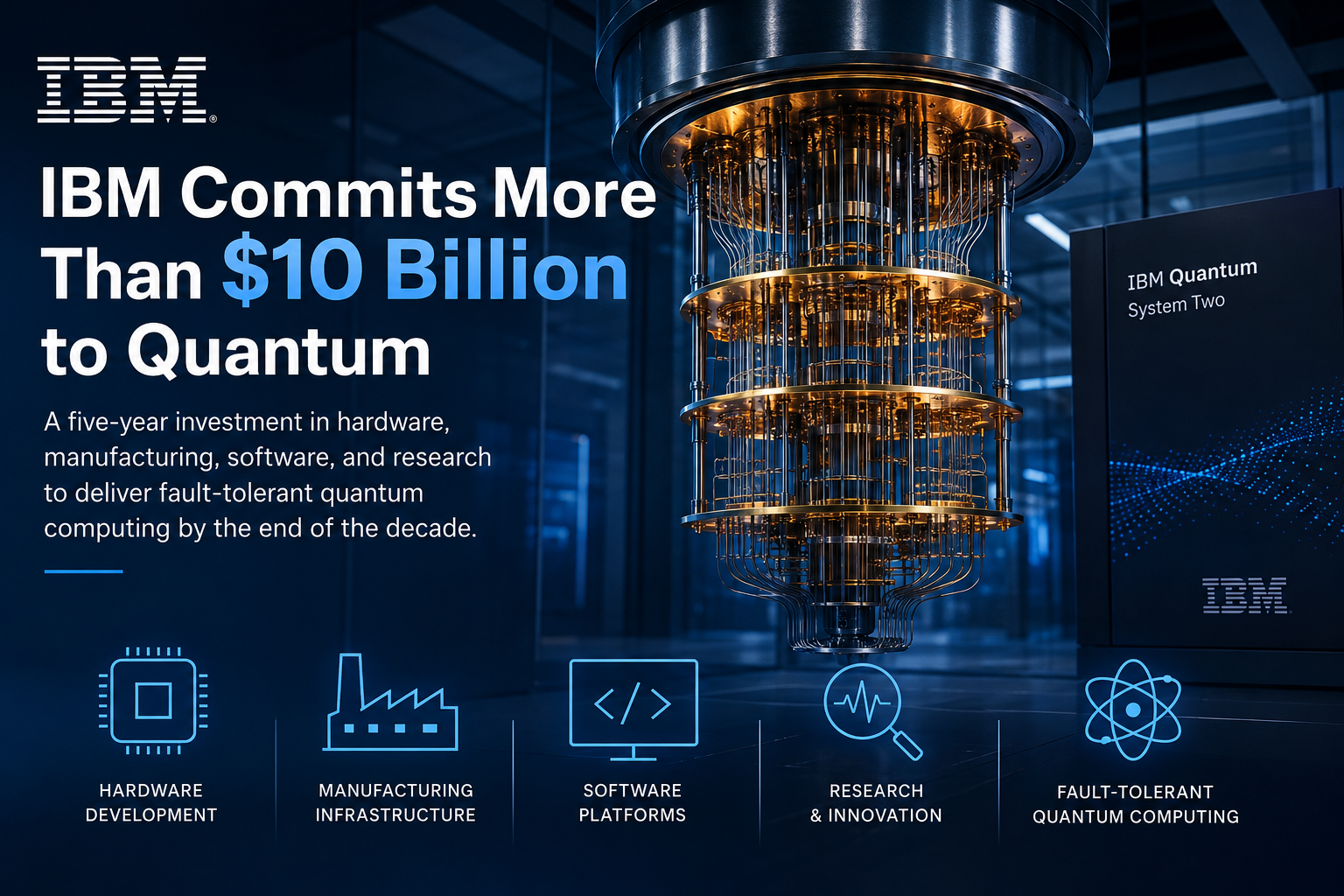
Let’s start with a quiet truth: Quantum computing is no longer a lab curiosity dressed in theoretical complexity and hope. It’s slipped quietly into boardrooms and back-end systems, not with a bang, but with a subtle shimmer—just enough to catch the edge of a strategist’s gaze.
And nowhere is that shimmer more visible right now than in the unfolding collaboration between IBM and Vanguard. Yes, that Vanguard—the investment titan managing trillions. When giants of computing and finance team up, you listen. But when they use quantum computing to tackle real-world portfolio optimization? You stop. You listen harder.
Because something just shifted.
Risk, Return, and a Thousand Tiny Knots
Here’s the thing about finance: on the surface, it’s spreadsheets and acronyms. Underneath? It’s elegant chaos.
Managing a bond portfolio at scale isn’t just “buy low, sell high.” It’s threading a needle between risk appetite, return expectations, transaction costs, liquidity, and the relentless thrum of regulatory constraints. Every additional asset, every extra constraint, doesn’t just add complexity—it explodes it. Classical computers are brilliant, but even they get winded trying to compute the best blend of 3,000+ securities, all while dodging risk cliffs and cost traps.
That’s where the IBM-Vanguard collaboration gets fascinating.
They didn’t just throw a quantum computer at the problem like tech confetti. No. They designed a hybrid quantum-classical workflow, akin to a brain that knows when to dream and when to perform mathematical calculations. The quantum side—powered by IBM’s Quantum Heron processor—ran Variational Quantum Algorithms (VQAs) to explore the vast solution landscape. The classical part refined those quantum suggestions. It was intuition meeting logic. A duet.
And here’s the kicker: it worked. Better than classical-only methods, especially as the complexity grew. The bigger the problem, the more the quantum system showed its teeth.
Finance Was First, But It Won’t Be Last
This wasn’t a fluke. It was a blueprint. A quiet one, yes, but strategic thinkers should take note. Because other industries are already tuning in:
Pharma & Materials: Forget guesstimates. Quantum computers can model the quantum behavior of molecules directly, simulating how electrons dance and interact. That changes drug discovery from a hunt into a guided tour. It also reshapes material science—from lighter aircraft alloys to cleaner energy storage. The implications aren’t just academic; they’re existential.
Logistics & Manufacturing: What’s more annoying than traffic? Freight logistics. Global supply chains are 3D puzzles with a clock ticking. Quantum optimization isn’t just faster; it can actually find solutions that classical systems miss entirely. Think fewer delays, smarter routing, leaner production. Think billions saved, stress reduced, and systems that finally feel elegant instead of patched together.
The Era of Hybrids
Let’s be clear: quantum supremacy, the mythical moment when quantum computers completely leave classical ones in the dust, isn’t here. But what IBM and Vanguard have proven is that quantum advantage—that subtle shift where quantum begins delivering real-world value—is already walking among us.
It’s not splashy. It’s not loud. But it’s strategic, intentional, and, perhaps most importantly, practical.
This isn’t about replacing classical computing—it’s about rebalancing. Let the classical systems manage what they do best. Let quantum handle the impossible parts. And let the human minds in between ask better questions.
A Note Beneath the Noise
If there’s one thing to learn from this leap, it’s that disruption doesn’t always come with noise. Sometimes it arrives like a footstep in freshly fallen snow—soft, but undeniable. IBM and Vanguard didn’t just showcase a technology. They marked a shift in mindset. A willingness to bring the future into the now—not with buzzwords, but with action.
Quantum computing isn’t science fiction anymore. It’s quietly becoming infrastructure.
And if you’re in an industry still waiting to see if it’s “worth it,” this is your gentle nudge: start paying attention.
Because the future? It’s already beta testing.
Stay Connected
Follow our journey and be part of the conversation:
🔗 Find us on LinkedIn
📬 Join our mailing list
📺 Subscribe to our YouTube channel