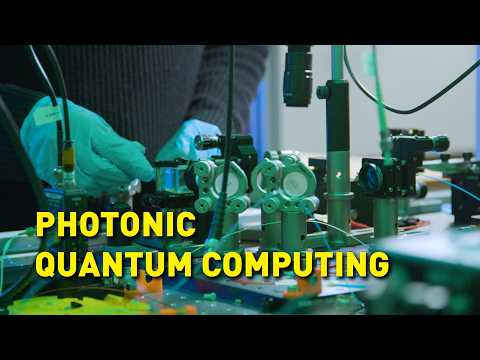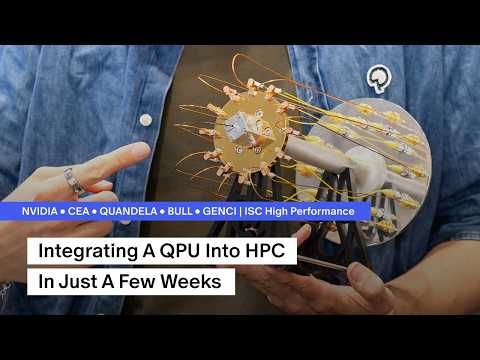
The atmosphere at ISC High Performance 2026 in Hamburg carried a palpable air of anticipation, almost like the quiet hum before a symphony begins. Here, amidst the interchange of ideas, experts from NVIDIA, Bull, GENCI, CEA, and Quandela gathered to discuss a frontier endeavor: the seamless transition of photonic quantum processing units (QPUs) from experimental hardware to a production high-performance computing (HPC) environment in just weeks.
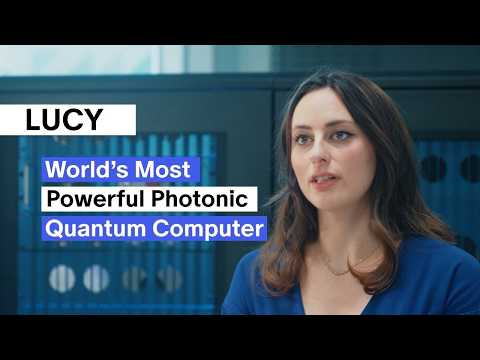
This isn’t merely a technical achievement—it’s a promising step towards integrating quantum computing into the broader tapestry of HPC and AI. Imagine the delicate dance of photons within Quandela’s 12-qubit photonic quantum computer, Lucy, housed at CEA’s TGCC. The endeavor illustrates an orchestration of both complexity and innovation, moving from a concept rooted in the abstract to something tangible and practical, like a painter bringing form to the canvas with each stroke.
Based on content from Quandela
Intricacies abound in the process, notably how Bull’s Qaptiva Access facilitated Lucy’s fluid integration into CEA’s supercomputing ecosystem, or how NVIDIA’s NVQLink technology grants previously unheard-of microsecond-level communication between GPUs and Quandela’s photonic QPUs. It’s these connections—akin to synapses within a vast, computational neural network—that foster a new era of hybrid computing workflows.
The discussion didn’t shy away from the inherent challenges. Integrating experimental QPUs into production environments is no small feat. The speakers, including Thomas Volz of Quandela and Sam Stanwyck from NVIDIA, emphasized the need for a supportive infrastructure that mingles adaptability with robustness. And within the subtleties of their conversations lay a profound realization: that quantum computing, much like life itself, thrives not in isolation but through interaction and synergy with its counterparts—HPC, AI, and beyond.
Thomas Volz highlighted Lucy’s potential, sharing that Quandela has effectively conducted up to twenty proof-of-concept projects with various industrial partners over four years. These projects span diverse fields such as aeronautics with Safran, deploying Lucy’s computational prowess in their fluid dynamics research, and defense strategies with Thales, optimizing drones. Each collaboration adds a note to the growing symphony of possible applications for quantum technology.
Moreover, Cyril Allouche from Bull underscored the swift transition from experimental to live production environments. That, too, holds a silent testament to the underlying harmony of a well-strategized integration—a melody achieved in mere weeks, an echo of the broader cadence of technological evolution in which time, once a barrier, becomes an enabler.
Another significant point of discussion revolved around energy requirements of quantum technologies. It’s easy to conjure images of energy-guzzling behemoths when picturing quantum computers. However, as Stéphane Requena from GENCI pointed out, not all quantum technologies are created equal in their energy demands. Photonic and cold atom technologies don’t necessitate the cryogenic environments that superconducting qubits do, thus presenting an opportunity for energy-efficient calculation.
Looking forward, the path to fault-tolerant quantum computing is illuminated by the vision of logical qubits with built-in error correction. It feels like watching the morning mist slowly unveiling the landscape. According to Philippe Deniel of CEA, the roadmap is clear, and with it, the potential for revolutionary changes in computing as we know it.
This conversation hinted at a future where quantum computing is seamlessly woven into the fabric of our computational systems. Much like an expansive, interconnected web, it suggests a collaborative approach spanning quantum, classical, and AI infrastructures. The essence is not merely in the technology’s power, but in its integration—a nuance often overlooked yet profoundly significant.
As the discussion closed, a lingering question hung in the air for those invested in the future of computing: how can we continue to foster these integrations to ensure that quantum technology not only exists but thrives alongside its technological relatives? As you ponder this, it becomes clear that the symphony of computing is only just beginning its overture.
—