The quantum era, once a distant whisper echoing in the halls of theoretical physics, is now asserting its presence in the domain of reality. For decades, the prospect of harnessing quantum mechanics for computational purposes seemed more myth than math—a realm of endless possibilities where a qubit could exist in superposition, holding both a zero and a one, defying the binary constraints of conventional computing.
Based on content from RAZOR Science Show
Yet, here we are, standing at the cusp of a new computational dawn, propelled by the capabilities that quantum computers promise to unleash. Unlike their classical counterparts, which relay on the strict discipline of logic gates, quantum computers tap into qubits. These qubits exist in charming defiance of classical expectations—they navigate through multiple states at once. As Dr. Richard Murray, CEO and co-founder of ORCA Computing, so succinctly puts it, the task now is not if they will work, but how soon they can integrate into solving the complexities of our world.
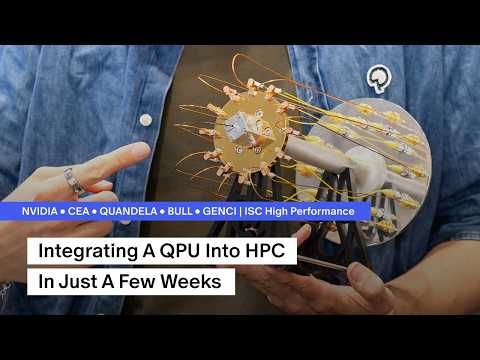
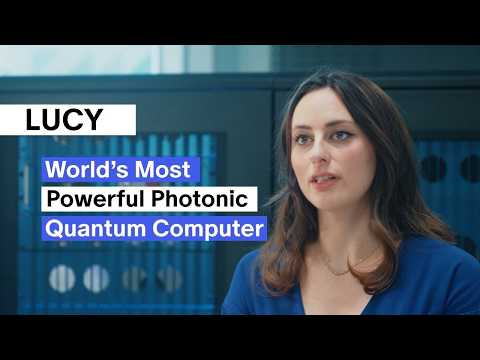
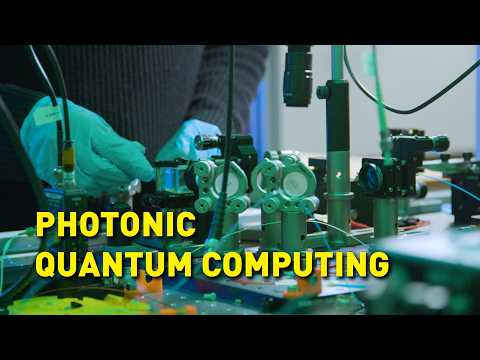
ORCA Computing, a pioneer in the burgeoning field, focuses on photonic quantum computers, machines that employ light to process information. This choice is not whimsical; photons, operating at room temperature, sidestep the logistical quagmire of cooling requirements that other quantum technologies face. This practical approach promises a blend of speed and scalability, and more importantly, it signals the tangible deployment of quantum systems to tackle real-world problems.
Halfway across the globe, in China, the Origin Quantum Institute has unveiled the Wukong-180, boasting 180 qubits—a testament to the international race toward quantum superiority. This global momentum underscores a critical convergence: theory, engineering, and investment are bending toward a singular aim, the attainment of quantum advantage—the point where a quantum computer outperforms a classical one in practical tasks.
It’s essential to pause and consider what this quantum proficiency looks like in practice. From enhancing the precision of AI models to optimizing complex logistical networks, quantum computers present us a chance to unravel problems previously deemed insurmountable: cancer treatment predictions, encryption fortification, climate modeling, and even the enigmatic nature of financial markets. Each potential application is a knot of variables that classical computers struggle to untangle due to their linear processing confines.
But there exists a tension beneath the excitement—a subtle but substantial counterpoint to the jubilant march toward this quantum promise. The probabilistic nature of quantum mechanics, once the delight of quizzical physicists, translates into a computing paradigm where certainty becomes elusive. Instead, outcomes are draped in probabilities, fundamentally altering how we approach problem-solving.
In Dr. Murray’s words, while we may not fully understand the quantum states we’re manipulating, we have learned to predict their behaviors under certain operations. It’s an unsettling yet invigorating prospect, where comfort lies not in certainty, but in the meticulous study that allows this technology to function even amidst its inherent unpredictability.
There is something profoundly human in this endeavor—this dance with the unknown. The tools we’ve crafted, from semiconductors to practical systems that fit neatly in a data center, bear witness to an age-old proclivity: our relentless pursuit to comprehend, utilize, and indeed thrive amid uncertainty.
As we step forward, it begs the question—what programs will we, as societies and as individuals, choose to run on these machines of potential? How do we reconcile their propensity for probabilistic outputs with our desire for deterministic outcomes? The edge of a new era isn’t a line of demarcation but a call to introspection and action, an invitation that subtly mirrors our own growing awareness of the complexities that shape the world we live within.
The quantum era may be proximate, yet it demands that we clamber through questions as much as quests. As we peer into this vanguard of computing, are we poised to let its light illuminate not just our understanding of technology, but of ourselves?
—