
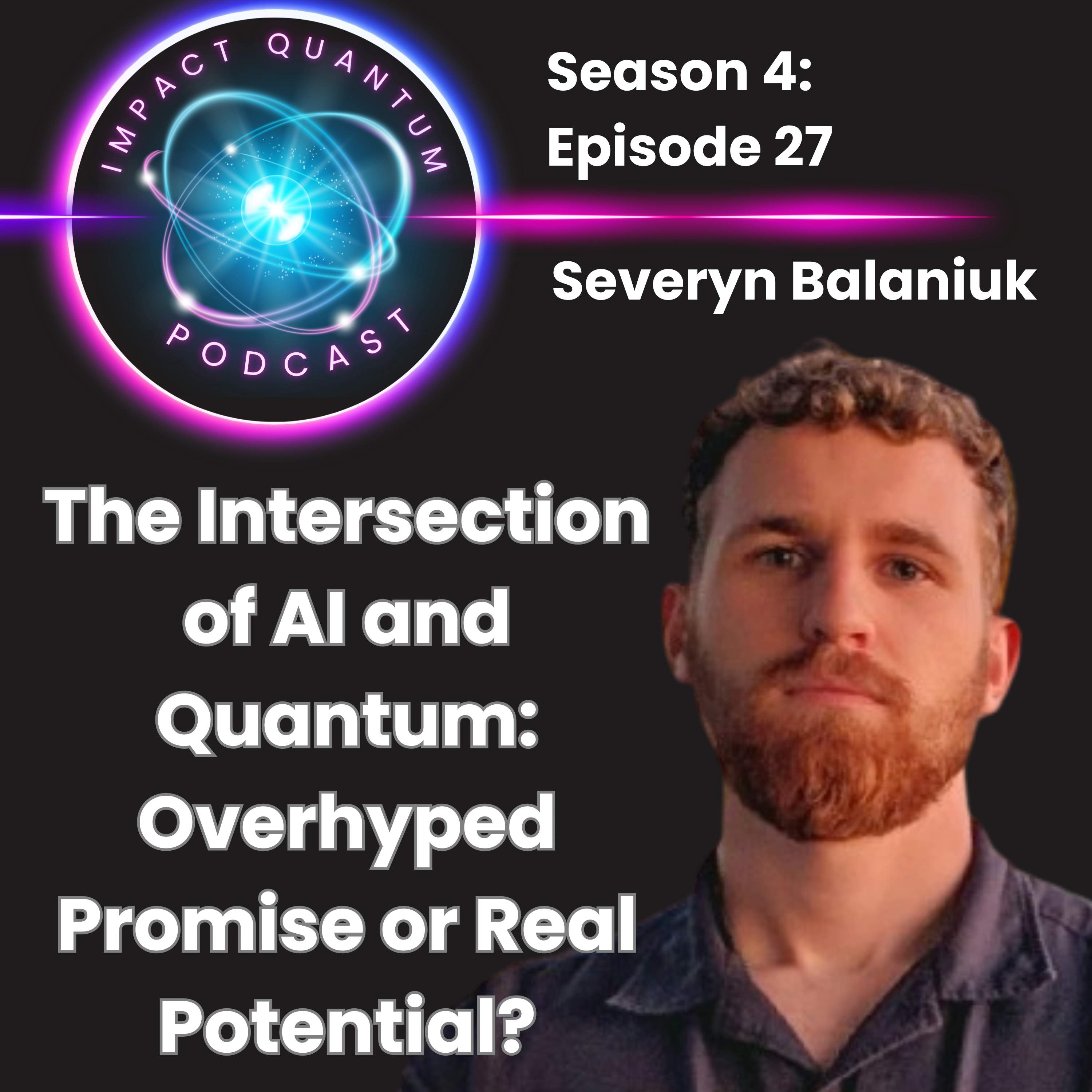
In today’s episode, we sit down with Severyn Balaniuk, a research software developer at 1QBit, whose journey from reading “Programming the Universe” in high school to contributing to quantum advancements provides a unique insider’s perspective. We’ll explore the real relationship between AI and quantum, why networking and communication matter just as much as coding, and which quantum breakthroughs may be on the horizon.
From debates on the future of programming languages like Julia, to insights into government-backed quantum corridors, open source’s pivotal role, and the biggest misconceptions about quantum computing, this episode offers a candid reality check in a field defined by both promise and hype. Whether you’re a curious student or a seasoned developer, tune in to discover what it really means to build the future—one quantum leap at a time.
Links
- Severyn on LinkedIn – https://www.linkedin.com/in/severynbalaniuk/
- Watch on YouTube – https://www.youtube.com/watch?v=qf4rw0fFn4o
Time Stamps
00:00 Explaining Quantum AI vs AI for Quantum
06:00 Importance of Networking in Quantum
10:00 Current AI industry outlook
10:59 Government goals for quantum computing
14:37 Debating AI’s role in quantum
18:22 Investing in Quantum Computing
23:34 Programming language demand in quantum computing
26:36 Misconceptions about quantum computing
28:04 Quantum computing platforms to watch
32:28 Importance of open source in quantum
37:41 Open source in quantum computing
39:45 Key skills for researchers
43:28 Quantum computing’s potential impact
46:05 Learning practical skills and feedback
50:16 Candace and Frank’s quantum podcast
Transcript
when I was in high school, I read a book, it's
Speaker:called Programming the Universe by Seth Lloyd.
Speaker:And he was an MIT professor,
Speaker:amazing book about how you can see the universe from
Speaker:the perspective of quantum computation. And I was really intrigued by this
Speaker:idea. I wanted to learn more about how regular computers work. So
Speaker:I went to computer engineering, you know, department
Speaker:and finished my bachelor's, entered my masters
Speaker:with an intention now to understand how quantum hardware works.
Speaker:As a result of that, I realized that there is a lot of potential there
Speaker:and there is a lot of problems you can solve. So this is how
Speaker:I end up in 1QBit.
Speaker:Welcome to Impact Quantum.
Speaker:Hello and welcome to
Speaker:Impact Quantum.
Speaker:Quantum, the podcast where we explore the emerging industry that is
Speaker:quantum computing, where you don't necessarily have to have a
Speaker:PhD, though it probably helps. You just need to be
Speaker:curious. And I think that's what really matters. So with me, I have the
Speaker:most quantum-curious person I know, Candace Cahouli.
Speaker:How's it going, Candace? It's great. It's great today. Beautiful
Speaker:day, blue skies. It's wonderful.
Speaker:I'm very excited about our conversation we're going to have today. We're going to be
Speaker:speaking with Severin Ballinuck. And he is a
Speaker:research software developer at 1QBit.
Speaker:How are you today, Severin? Great. Thank you. Very
Speaker:excited to be here with you guys, and I'm ready for your questions.
Speaker:Awesome. Awesome. And in the virtual green room, we were talking about
Speaker:this is how the discussion these days is less
Speaker:about AI, but around AI and
Speaker:quantum. And I also hear a lot in terms
Speaker:of quantum for just quantum's sake, but also quantum in the phase of AI.
Speaker:Do you think that— all right, what's your take on that?
Speaker:Is that a way for quantum founders to
Speaker:get some of that sweet AI venture capital money, or is it—
Speaker:is there some meat behind it, or possibly both?
Speaker:Yeah, I would say that let's start with
Speaker:Distinguishing these 2 concepts, there is like a thing that's called
Speaker:quantum machine learning or, you know, quantum AI, and there is
Speaker:another thing that is AI for quantum computing, and that's
Speaker:different things. Quantum machine learning is basically how we
Speaker:imagine quantum computers to do machine learning for us,
Speaker:as you know, and engines. And AI in quantum is the way
Speaker:we use machine learning or AI to
Speaker:assist support and accelerate quantum computing
Speaker:development in terms of software, in terms of hardware control,
Speaker:in terms of computing itself. And I think a big
Speaker:chunk of what we are hearing about AI and quantum
Speaker:is around this topic of how AI can
Speaker:help quantum computing. What do I mean by that? From my personal
Speaker:experience, my thesis project at University of Waterloo was about how
Speaker:we can use machine learning to classify quantum states. Yeah.
Speaker:So we collect images from quantum computer, it's, you know, atoms.
Speaker:We have images in black and
Speaker:white colors and all the atoms are in different colors. You
Speaker:can classify those things with machine learning algorithms because
Speaker:hardware in those labs are, you know, limited, capability is
Speaker:not as advanced as we would want, but machine
Speaker:learning can assist with that. Same goes for quantum
Speaker:hardware, setting, you know, you can have machine learning
Speaker:algorithms help your experiments to set up or calibrate your quantum
Speaker:hardware. So that's, I think, the bigger picture
Speaker:about how AI can help quantum computing. Quantum ML is more
Speaker:theoretical concept, and I didn't
Speaker:expect it to be a hype topic or something implementable
Speaker:anytime soon, but it's still exciting to see how it
Speaker:develops. So yeah, I think it's a real thing. A lot of companies right now
Speaker:hiring, you know, AI specialists to run, you know, let's say
Speaker:agentic solutions or agentic autonomous AI labs
Speaker:in quantum research teams,
Speaker:which help them to, you know, surface the area, implement papers,
Speaker:test ideas. And that's at least real for me.
Speaker:Okay. So what first
Speaker:attracted you to quantum computing?
Speaker:Say it again. What first attracted you to quantum computing?
Speaker:Oh, I think the great idea of how you can
Speaker:invent a new age of computing. Because when I was in high
Speaker:school, I read a book, it's called
Speaker:Programming the Universe by Seth Lloyd, and he
Speaker:was an MIT professor. Amazing book about how you
Speaker:can see the universe from the perspective of quantum
Speaker:computation. And I was really intrigued by this idea. I wanted to learn more
Speaker:about how regular computers work. So I went to
Speaker:computer engineering, you know, department and finished my
Speaker:bachelor's, entered my master's with an
Speaker:intention now to understand how quantum hardware works. As a
Speaker:result of that, I realized that there is like a lot of potential there and
Speaker:there is like a lot of problems you can solve. So. This is how
Speaker:I end up in 1QBit. Oh, very cool.
Speaker:Yeah, go ahead, Candace. I'll just say, like, what skills proved
Speaker:to be the most valuable that weren't taught
Speaker:necessarily in quantum courses?
Speaker:I think the most valuable skill in quantum world is
Speaker:surprisingly networking. It's not necessarily like how
Speaker:you program or what theoretical
Speaker:approach do you know for a certain platform,
Speaker:but it's how you communicate with people, how you express your
Speaker:ideas, and how you can actually help teams. And in order
Speaker:to understand how you can help, you have to talk to people and understand what
Speaker:is needed in this or that team, in this or that
Speaker:company. And it actually helped me and my lab
Speaker:at University of Waterloo. It's called Primory Institute Quantum
Speaker:Intelligence Lab was, you know, a heart of this environment where
Speaker:we had a team of researchers who specialize on, you know, machine
Speaker:learning applications in physics in general. And we
Speaker:tried to connect with hardware people to see how we
Speaker:can help them, how we can assist this
Speaker:quantum computing development. And this is basically like how a lot of companies
Speaker:hire. They hire people who understand the context, who talk
Speaker:to others, who have network and are able to deliver
Speaker:what's needed. So yeah, I would say go to conferences.
Speaker:You have to understand other people's work. Don't be hyperfocused on,
Speaker:you know, only like coursework because it's only half of the story.
Speaker:Interesting. Um,
Speaker:I think that really points to the idea that even if you are
Speaker:a physicist, you do to really get the most out of this
Speaker:opportunity, 'cause I really think this is a once-in-a-lifetime opportunity. You know,
Speaker:we're too young, we were born too late to take
Speaker:advantage of, you know,
Speaker:the transistor
Speaker:revolution, but I think we're just in time for this
Speaker:quantum computing revolution that we're seeing.
Speaker:Yeah, I think that's about right. But, you know, some
Speaker:estimates could vary a lot. Right. Similarly to how
Speaker:people, you know, predicted AGI to be a thing in a couple of years.
Speaker:Right now, a lot of people predict Q-day to be, you know, around the
Speaker:corner. Right. Q-day basically, like, means that quantum computers
Speaker:would be able to actually, like, break RSA encryption or
Speaker:something along those lines. It's not necessarily that,
Speaker:actually. We could spend another 10 years
Speaker:solving certain problems in quantum computing and not getting
Speaker:that. So we definitely at the start of something big,
Speaker:but it's really hard to tell if it's going to be in the
Speaker:next 5 years or in the next 18 months, as a lot of CEOs like
Speaker:to say. Yeah. Yeah, it's very hard to predict the
Speaker:future, right? Isn't that a Feynman quote? Predictions are hard, especially about the
Speaker:future. But I also, I also think, though, we're either
Speaker:at or very near an inflection point where this is going to become
Speaker:very real. Real, right? And it's always a
Speaker:good time to be in the IT security business, but it's probably a
Speaker:really good time to be in the getting ready for quantum, right? Because
Speaker:whether Q-Day happens next month, next year, next decade,
Speaker:one of the funniest things I heard, I live in the DC area
Speaker:and somebody was saying, this would've been maybe 8 years ago
Speaker:now, that you really need to start preparing for They
Speaker:didn't have the cool Q-Day name yet, but it basically said you need to
Speaker:start upgrading your encryption algorithms to be more quantum resistant.
Speaker:Yeah. And somebody in the audience kind of called him out. It's like, this
Speaker:e time the estimates were the:Speaker:come on, do we really need to worry about this? And he said, he says,
Speaker:no, you do, because you all, everyone in this room, because it was all government
Speaker:IT people, everybody in this room knows how slow government IT
Speaker:works. Exactly. To be ready for a problem
Speaker:in 20 years' time, you need to start 15 to 20 years ahead of
Speaker:time. Yeah. It sounds about right.
Speaker:Yeah. Where's the lie, as they would say? So
Speaker:what's your take
Speaker:on where the industry is now? Do you really think that— because there's always
Speaker:irrational pessimism, then irrational exuberance, and then
Speaker:a little bit of irrational pessimism. again, right?
Speaker:And you're right, like, AI is a perfect example of this, right? It went from,
Speaker:we're 10 to 20 years away from AGI,
Speaker:then all the usual suspects in, you know, the AI
Speaker:kind of top-tier people are saying, we're only a couple of years away.
Speaker:And then when the money starts running out, they say,
Speaker:well, hold up now, right? Do you really think—
Speaker:what's your take if you had to guess? And we're not going to hold you
Speaker:to it, right? This is— No, there are no experts, right,
Speaker:in terms of this. But do you really think— you think it's a
Speaker:problem that we're going to face in the remainder of this decade, or is this
Speaker:more of a problem for the:Speaker:It's really hard to tell. Again, I agree with you 100%. I
Speaker:will slightly refer to what governments right now are
Speaker:aiming to predict or to stimulate people to do.
Speaker:And what I mean by that, there is a lot of government
Speaker:grants or government programs that stimulate or motivate
Speaker:quantum companies to deliver something, you know, deliver a
Speaker:scientifically reasonable quantum computer or
Speaker:utility-grade quantum computer. And they're usually
Speaker:saying something like:Speaker:, maybe:Speaker:based on that, I assume that to have something at
Speaker:least scientifically meaningful, and by that I mean to build a quantum
Speaker:computer that would be useful at least for scientists to, you know, benchmark their
Speaker:assumptions or, uh, software or just, you know,
Speaker:run experiments, the '30s is the more
Speaker:adequate and visible timeline. But
Speaker:when we talk about actually useful quantum computer that would be able to
Speaker:solve real-life problems, it's way harder because It's not
Speaker:just a question of engineering, it's also a question of algorithms.
Speaker:So we didn't have useful algorithms to solve a lot of problems
Speaker:that our, that real world needs to solve. So yeah,
Speaker:that's my perspective. Yeah, I guess it's very easy to get caught up
Speaker:in the security aspects of this, the Q-Day aspects
Speaker:of it. Yeah, and you know, the worst part is it's not just that we
Speaker:need to move from regular encryption to post-quantum
Speaker:encryption, it's also the fact that A lot of people or
Speaker:governments are collecting a lot of data from the internet that is
Speaker:encrypted, and they would be able to decrypt it at, you know,
Speaker:at some point in the future. And that's also a thing that we need to
Speaker:keep in mind. It's not that we just need to, again, be ready. We
Speaker:need to understand, like, what will happen if everyone would be able to, let's
Speaker:say, break internet encryption that was collected
Speaker:over the last 10, 20, 30 years. That's a real thing as well.
Speaker:Interesting. Do you— sorry, Candace, I don't want to hog the mic. It's all good.
Speaker:Do you think AI will help build useful quantum computers faster?
Speaker:I think so, yes. I mean, because it's
Speaker:easily the most important thing for,
Speaker:you know, research, because AI is able to
Speaker:write, AI is able to review, and AI is able
Speaker:to brainstorm ideas for the research. And the goal of
Speaker:the researcher in the company is not to, you
Speaker:know, invent a wheel. It's to
Speaker:find a good paper, find a good problem, and find a
Speaker:way to deliver a product. And in order to do that, you need to
Speaker:again read a lot of papers. You need to implement some of them. You
Speaker:need to test them, and you need to understand who needs what from
Speaker:us. Like, if you're a software company, you will write software
Speaker:for other quantum companies, or you can write software for,
Speaker:let's say, you know, financial companies and, you know,
Speaker:quantum-inspired portfolio optimization algorithm, stuff like
Speaker:that. And in order to do all of that, you need a regular research
Speaker:cycle, and research cycle could be accelerated or,
Speaker:uh, could be improved by AI. And I mean like LLMs,
Speaker:chatbots, stuff like that, AI agents.
Speaker:So which is currently overhyped? Is it quantum for AI
Speaker:or is it AI for quantum?
Speaker:I think AI for quantum is overhyped, I guess in a good sense.
Speaker:We haven't seen the results of any kind from it
Speaker:at this point, but at least people invest money, at
Speaker:least people hire for this position. So I think it's
Speaker:it's a valid hype point. We will test this idea and we'll
Speaker:see, is it like actually useful for research or no in a couple of years?
Speaker:Quantum for AI is way less
Speaker:discovered field, and I don't think quantum computing would
Speaker:be able to meaningfully show anything useful for AI
Speaker:necessarily. I, I've seen interesting papers recently
Speaker:about it, but it's most of the work that is done
Speaker:in this quantum for AI field is
Speaker:purely like theoretical or purely like a showcase of, oh
Speaker:wait, we can do something with quantum computers that
Speaker:will help LLMs or will help, you know, AI
Speaker:in general, but it's not something that people will, you know,
Speaker:use on a day-to-day basis. Yeah, it's purely
Speaker:scientific from my perspective.
Speaker:Okay. Okay. Interesting. We were talking also in the green
Speaker:room about nation-states
Speaker:taking a real interest
Speaker:in, in this from a
Speaker:perspective, right? There's at least 3 quantum corridors
Speaker:in Canada, probably more. Where I live in
Speaker:Maryland has actually become very popular with the
Speaker:quantum development, actually multiple sites now. There's
Speaker:one in College Park at the University of Maryland, which is
Speaker:by DC. DC folks will notice where the IKEA is.
Speaker:And Frederick, which is closer to where I live, they're building out a big
Speaker:quantum campus that they're going to build out over the next 10
Speaker:years or so. And there's obviously
Speaker:Boston has a pretty good ecosystem. New
Speaker:York does come up a lot, as obviously Silicon
Speaker:Valley as well. So
Speaker:what's your take on that? Is that—
Speaker:what's your take on kind of like that bigger picture of governments are really
Speaker:worried about that? Do you think they're trying to like make this a big thing,
Speaker:or do you think they see, hey, you know what, we missed out on the
Speaker:Silicon Valley revolution, the dot-com revolution?
Speaker:We may or may not have jumped on the AI bandwagon, but this is the
Speaker:next bandwagon. Well, it could be
Speaker:that. I see it as another attempt to
Speaker:unite companies or unite people around the
Speaker:bigger and more challenging and less
Speaker:clear perspective of quantum computer.
Speaker:It's— I see it as an attempt to build, you know,
Speaker:a Project Manhattan. For nuclear research,
Speaker:but in quantum computing, where we just accelerate
Speaker:the field by financing or
Speaker:intensifying companies to deliver something meaningful in a certain
Speaker:timeframe. And as a result of these investments, actually something
Speaker:cool can happen. Because again, as I said before, like a lot
Speaker:of research is just trying to find something
Speaker:new again, you know, scientific novelty and scientific novelty
Speaker:could be done by you know,
Speaker:people hours. And it's not something we can predict. And I
Speaker:guess the government strategy right now is we can invest more money
Speaker:so we can give more resources to researchers, we can hire more
Speaker:researchers, and as a result of that, something actually
Speaker:useful can emerge. And this is like a valid thing
Speaker:to do. And I think it's great that governments and again, like
Speaker:private equity, as investing in this idea
Speaker:because a lot of people didn't believe in, you know, nuclear
Speaker:power. Right now it's really hard to convince people that quantum computers would
Speaker:be useful, but we never know until it's actually built and we can
Speaker:run experiments on it. Because like the only way we can do meaningful science is
Speaker:when we have something we can work with physically. And until we
Speaker:just do it on paper, I do not expect any crazy
Speaker:breakthroughs happening. The most important thing for now is to find
Speaker:the platform that will be the most, you know,
Speaker:reliable, scalable, and accessible to people
Speaker:and to labs, and then build a quantum computer from it
Speaker:to then run a number of experiments,
Speaker:research cycles, and,
Speaker:you know, getting something unique and novel from it. So that's my perspective,
Speaker:and that's why I do not expect anything crazy from purely
Speaker:scientific or purely software research, because this is like
Speaker:how science works, in my opinion. It should be done on the real thing.
Speaker:Absolutely. So I was looking at your LinkedIn profile.
Speaker:You're the 2nd person I've ever met, and both of them have been
Speaker:guests on this show, that programs in Julia.
Speaker:Oh, I was like, because that's not a name you hear a lot,
Speaker:and Julia at one point was going to be the next great language. And I'm
Speaker:not saying it's not a great language. I don't wanna start a language— Hopefully. I
Speaker:don't wanna start a language war or anything like that. I'm way too mature for
Speaker:that. But I find it interesting that the 2 people
Speaker:in the QAM space have chosen Julia. Why does—
Speaker:why do you— why— what, have you seen a lot of
Speaker:Julia in your work? It says you do low-level development in Julia. And
Speaker:why did you pick the language or did the language pick you?
Speaker:Well, I would say my introduction to Julia happened at
Speaker:Perimeter Institute when I took like 2 courses there. One
Speaker:was about numerical methods, and those numerical
Speaker:methods were taught in Julia. From my perspective, and again, I'm not an expert
Speaker:in Julia, I have— I'm, I would rather say I'm a beginner in
Speaker:Julia, but Julia was
Speaker:introduced like a language that can improve speed of your
Speaker:emulation simulations and linear algebra-based calculations.
Speaker:So it's not for, you know, machine learning type thing. It's more
Speaker:for Monte Carlo
Speaker:simulation, stuff like this. It's also useful for
Speaker:quantum in general, and we have
Speaker:some software written in Julia, but I wouldn't say it's
Speaker:mainstream. still most of the things that is done
Speaker:in quantum or in science in general are written in Python
Speaker:because it's, again, like easier to understand. There are like way
Speaker:more libraries in Python and there are a lot of like
Speaker:frameworks that help your Python code to be
Speaker:transformed into a product. So Julia is like gaining a lot of traction,
Speaker:but we still like need more people and more
Speaker:projects to be converted into Julia or written from scratch
Speaker:in Julia. But yeah, that's, uh, that's something that is popular in
Speaker:quantum and in theoretical physics circles, at least from my perspective.
Speaker:All right, so that makes— I'm going to bump up Julia on the learn list.
Speaker:Yeah, I think so. I think so. I mean, it's pretty easy
Speaker:to learn it. Yeah, when I say it was meant to be— I'm sorry,
Speaker:but when you think of Jupyter Notebooks, the first 2 letters are for Julia.
Speaker:Julia Python R was originally the,
Speaker:um, was originally what it was built for. So, like, Given
Speaker:that that has been the de facto tool for data science,
Speaker:it's kind of surprising that Python kind of took all the oxygen out of the
Speaker:room, but we'll see. Well, yeah, there are reasons for it, but
Speaker:not to start again a language war. No, I don't want to start a language
Speaker:war. I was just saying like, yeah, yeah, it was posited to be the next
Speaker:big thing and it just maybe just, maybe
Speaker:it's not washed out, but washed up,
Speaker:but maybe it's just its time hasn't come yet. How about that? Yeah, I mean,
Speaker:exactly. It takes time. It takes a lot of time because
Speaker:it's not just that you can or should write just one
Speaker:project in Julia, it's that the whole lab should be run in
Speaker:Julia, right? And like a lot of code that people write for
Speaker:research should be done in Julia. And it really takes time. It's
Speaker:similar to how previously people worked with like
Speaker:C and my prof, like Roger Melchior, he started as a
Speaker:C language like researcher, and then he
Speaker:migrated to Python and Julia, and it took, you know, a
Speaker:decade, maybe more. So yeah, you know,
Speaker:maybe a quantum computer will be built at the point where
Speaker:Julia will become more mainstream. Yeah, people's habits
Speaker:are hard to change. Sure. Do you
Speaker:think that Julia is well suited to create these
Speaker:hybrid classical quantum workflows?
Speaker:It's really hard to tell, really hard to tell.
Speaker:Again, it all depends on what
Speaker:skill set would be in demand because
Speaker:previously, again, a lot of companies in quantum computing like
Speaker:wrote a lot of stuff in C++, let's say, but then
Speaker:you're not able to find a ton of C++ developers
Speaker:that are also good in physics and quantum computing or in
Speaker:in machine learning. And all of those people
Speaker:tend to know Python. And if you have like
Speaker:7 years of experience in Python, it's really hard to
Speaker:convince you to switch to Julia just because Julia is a good language.
Speaker:That's why I, it's hard to predict. If companies started to
Speaker:scale in one language, it's highly unlikely that it will
Speaker:change. We should see like new companies pick Julia as
Speaker:a default language because a number of reasons. And
Speaker:I just don't see that number of reasons to emerge
Speaker:because, you know, Julia community should grow and we should see like a lot of
Speaker:like libraries, a lot of existing guides,
Speaker:and we should see a lower barrier to
Speaker:entry because right now it's a bit hard. Like recently I
Speaker:read Julia docs again and I just, you know, usually I
Speaker:just watch YouTube videos to get myself
Speaker:familiar with concepts really quick. And there is not too
Speaker:many, there aren't too many, you know, Julia tutorials.
Speaker:And that's, you know, the first step that we need to pass. We should have
Speaker:more workshops in Julia. We should have more Julia, you know,
Speaker:sponsoring events maybe. I don't know.
Speaker:But yeah, it's all part of the popularization.
Speaker:And sometimes a language is just at the right place at
Speaker:the right time, right? I'm not, I'm a Python developer, but Python I
Speaker:think was uniquely suited because a lot the mathematical
Speaker:sciences and bioinformatics, as what I understand is what
Speaker:really drove it, was that there was already a lot of these scientific
Speaker:libraries before AI really kicked off, and it
Speaker:was just in the right place at the right time. Yeah. You know, and it
Speaker:was a multi-domain language, so like you could do different things with it. And
Speaker:so that meant that you had web developers that
Speaker:About the talent pool, like you said, right? How many, how many physics
Speaker:physicists are really good in programming in Rust, right?
Speaker:Yeah. Probably not a lot. Probably not a lot, right? So
Speaker:like, they're gonna take the tool, they're gonna take their languages and tools with them.
Speaker:And, you know, I mean, maybe, I just think it's
Speaker:interesting, like, you're, you know, the second person in this space that uses Julia. So
Speaker:maybe, maybe they'll bring that with them as these things roll out.
Speaker:So let's do a little quantum reality check for a second. What
Speaker:do you think is the biggest misconception people have about quantum
Speaker:computing? Let me think about it.
Speaker:I think the biggest misconception about quantum computing is that
Speaker:if we will build a quantum computer tomorrow, perfect quantum computer, that
Speaker:we will be able to actually break everything and take advantage of
Speaker:everything just the next day. It's actually not quite true.
Speaker:And we have 2 sides of the coin,
Speaker:hardware and software, and there are a ton of work that we
Speaker:have to do on the software side to make use of
Speaker:quantum computer properly. And for example, we
Speaker:have a quite short list of useful quantum algorithms, and this is
Speaker:something we need to improve on, and it's really unclear how to
Speaker:improve on that because we don't have a real quantum computer. And
Speaker:when we see a lot of like news about
Speaker:Google building a new chip, Microsoft building a new chip, and it
Speaker:will, you know, disrupt industry or something like that, even if
Speaker:it's true, even if it's actually working, it's not going to
Speaker:happen, you know, the next day. And
Speaker:people tend to measure things in, you know, physical or
Speaker:logical qubits while we also
Speaker:take into account how is our, you know, quantum operating system is doing. And
Speaker:that's, in my perspective, is the biggest misconception. Yeah.
Speaker:Okay. So what are industry
Speaker:insiders discussing about quantum that the public rarely
Speaker:hears about? I think the
Speaker:biggest topic that insiders are
Speaker:discussing, at least from my perspective, is like, what's the
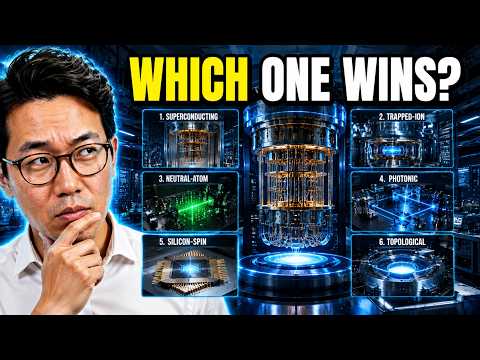
Speaker:next big platform? For the last, I
Speaker:think, 10 years, most people tend to lean
Speaker:towards superconducting platform or architecture
Speaker:since, you know, Google investing in it, IBM investing in it,
Speaker:other big players developing this
Speaker:platform and investing money in it. But right now it's not as
Speaker:clear, and I think a lot of, you know,
Speaker:underdogs emerging. And the biggest topic
Speaker:that I'm encountering is
Speaker:neutral atoms and trapped ions. They're, at
Speaker:least from my perspective, again, the next big candidates for
Speaker:a scalable and reliable quantum computer. Of course, they have their problems,
Speaker:but we tend to discuss more
Speaker:about, we tend to discuss more
Speaker:how neutral atoms are going to
Speaker:conquer the world or how trapped ions will be developed
Speaker:and why they're more promising. And I think it comes from
Speaker:the place where, you know, superconducting architecture
Speaker:hasn't delivered on the promise. And that's why
Speaker:the discussion happens. Yeah, I think for the
Speaker:longest time, I think superconducting qubits were the only game in town.
Speaker:not the only game in town, but they were definitely the most promising. And then
Speaker:all of a sudden you hear about photonics, trapped ion, cat
Speaker:qubits, and there's at least, I know I'm leaving out some off the list, but—
Speaker:Yeah, NMR also was there. And
Speaker:what was the Majorana? Yeah, yeah, Majorana
Speaker:qubits, Microsoft thing. Not familiar with it,
Speaker:but I know there's like a lot of controversy.
Speaker:Yeah, I was inside Microsoft when
Speaker:some of that controversy started.
Speaker:And, but I mean, they haven't made this announcement yet. Yesterday, actually, we recorded this
Speaker:on June 3rd, and yesterday at the Build conference, they
Speaker:said something to the effect about there's a Majorana 2. I haven't followed up on
Speaker:it. So clearly, whatever they had issues with, they've,
Speaker:they've, they've, they're moving past it now. We would hope, if the
Speaker:press release is to be believed, but— That's right.
Speaker:But I don't know, like, I've been intrigued by photonics, if I'm being honest.
Speaker:That's an interesting concept. I agree with that. From my perspective,
Speaker:Xanadu is doing a great job with photonics and
Speaker:how they run the company overall.
Speaker:So good for them. Waiting for the big release of the
Speaker:quantum computer, I guess. Right, right, right, right, right.
Speaker:So if you saw— oh, I'm sorry, go ahead. No, that's all fun and games
Speaker:until you Until you actually ship, right? Until you ship. So
Speaker:if you could solve one problem in quantum computing,
Speaker:what would it be? So amazing
Speaker:question. I would say error
Speaker:correction. I see like we are
Speaker:talking about error correction a lot, and I think if we are
Speaker:able to solve error correction, and again, It's really tied to a
Speaker:platform, and error correction for one platform would be completely
Speaker:different from error correction for another platform. I mean,
Speaker:like superconducting qubits versus phonics versus
Speaker:trapped ions versus neutral atoms. They all build
Speaker:differently to some extent, of course, and error correction
Speaker:would be different. That's been said, if we can
Speaker:have error-correcting code that will allow us to
Speaker:run circuits without a huge overhead and
Speaker:without actually bottlenecking us, that would be a big unlock.
Speaker:Yeah, that's a good way to put it. And I think whoever cracks that problem
Speaker:first, because it is hardware or maybe not hardware dependent, but approach
Speaker:dependent, whoever cracks that first, whichever one of these platforms
Speaker:cracks that first, is probably going to be the lead for
Speaker:at least half a decade, maybe longer. Could be that.
Speaker:So you've been involved with open source quantum initiatives.
Speaker:Yes, that's right. Why is open source important for the future of
Speaker:quantum computing? I think open source is
Speaker:quite important for a number of reasons. First reason is the
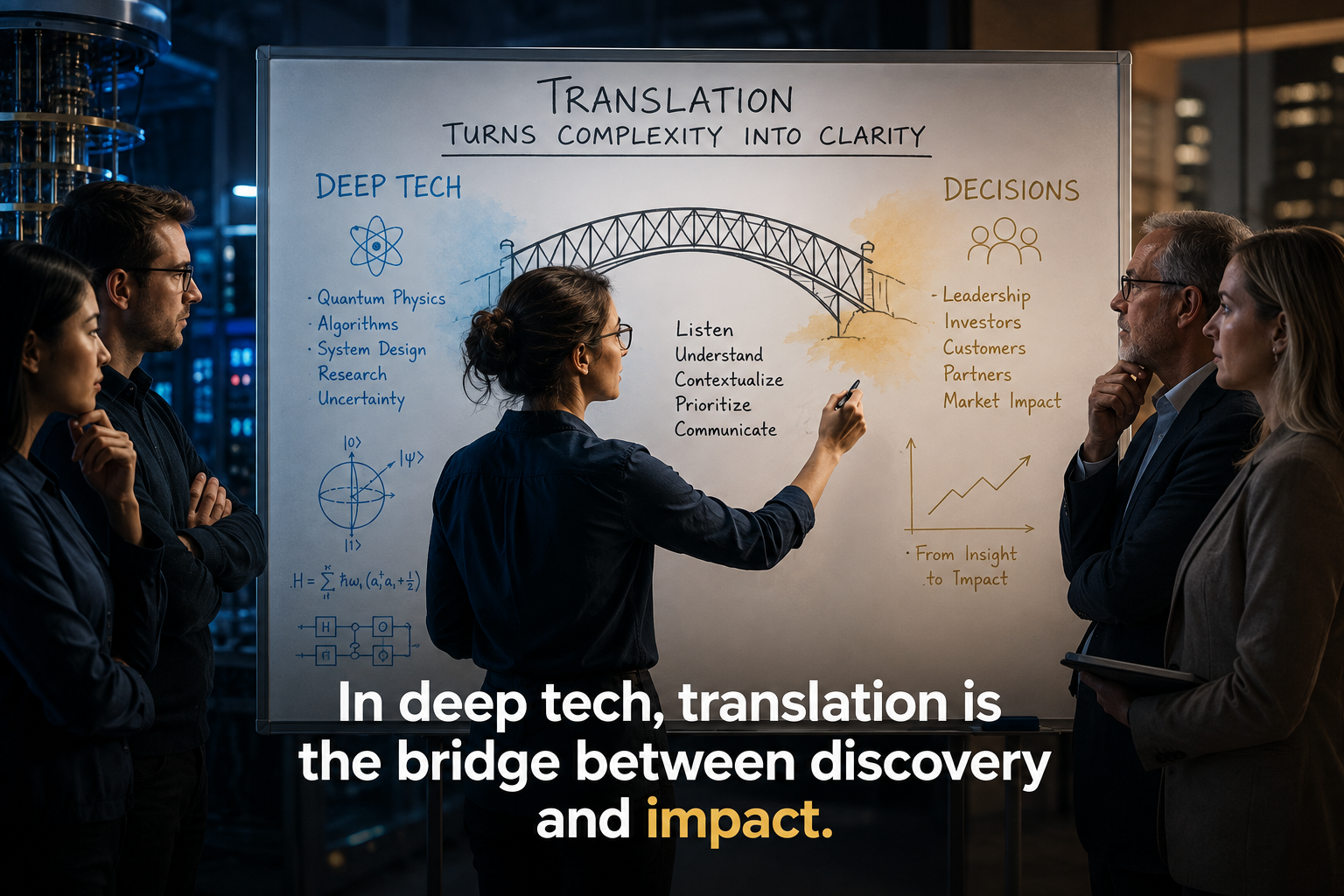
Speaker:missing translation layer in quantum field. What I mean
Speaker:by that is we have scientists, they are focused on
Speaker:delivering novelty. We have business people who are focused on
Speaker:return on investment product, but all of
Speaker:that thing, all of those things are usually
Speaker:targeting other developers or other scientists.
Speaker:And if we talk about financial district, if
Speaker:we talk about drug discovery, if we talk about
Speaker:other industries that are slightly interested in quantum computer
Speaker:or want to hear something from it, they are locked
Speaker:and they are not able to see what's going under the hood of quantum companies
Speaker:because it's, you know, intellectual property, no one will disclose it. Quantum
Speaker:companies did some consulting to private
Speaker:companies for a while, but it's going downwards.
Speaker:And where open source comes into play, open
Speaker:source is actually able to show people, okay, this is What
Speaker:hardware are we using? This is all details about
Speaker:hardware, and this is like realistic way to a better
Speaker:hardware. And open source could be way more,
Speaker:again, like open and
Speaker:clear and not biased towards
Speaker:its own solutions or its own stakeholders,
Speaker:because when you have a lot of you know, open source
Speaker:contributors, all of them are able to access hardware or able to access
Speaker:experienced teams of scientists. They can
Speaker:help quantum field as a whole because like real
Speaker:projects are super challenging to find in quantum computers to get
Speaker:experience, like learning online courses or, you know, passing online
Speaker:courses are not enough to be, you know, a quantum
Speaker:developer or to be a scientist. Usually you need to go
Speaker:to university, but if we have open source projects,
Speaker:you can contribute to open source and get that real experience, get that real
Speaker:connections that I mentioned earlier, and you can understand
Speaker:what's actually needed in the field. And I feel like it's extremely
Speaker:useful and perspective,
Speaker:or it's extremely good way to build
Speaker:part of the field. It's similar to how we have, again, macOS and
Speaker:Linux, right? It's Linux is not dominating
Speaker:personal computer field, but it's crucial
Speaker:part of IT infrastructure and for the
Speaker:reason of being open source again.
Speaker:No, that's a good point. I think open source has really, I think, changed the
Speaker:game in terms of how people look at not
Speaker:just software development, but also kind of ownership of
Speaker:products, right? One of my One of my biggest aha moments
Speaker:of, and I work, my day job is Red Hat, right? So you can see
Speaker:the fedora behind me. Right. But I cut my
Speaker:teeth on Microsoft tech during the Ballmer era where
Speaker:Ballmer had some unsavory things to say about open source. But
Speaker:like over time I kind of realized like open source, if
Speaker:you're building platforms that enterprises are gonna rely
Speaker:on, it's gonna be common infrastructure. To
Speaker:have closed-door meetings where massive
Speaker:decisions are made, AKA killing Silverlight, killing Windows Phone,
Speaker:right? Both things that directly impacted—
Speaker:Personal to you. Personal to me and impacted my
Speaker:economic situation is just not a stable
Speaker:place to build on. Now I understand why. I mean, I'm
Speaker:sure backroom closed-door meetings happen.
Speaker:positive they do. But, you know, look at what happened with
Speaker:Node.js a few years ago. The Node.js community was very unhappy
Speaker:about the direction of Node.js. So they got so
Speaker:unhappy, they forked the project to io.js. And then
Speaker:ultimately the brains behind Node.js kind of said, all
Speaker:right, we messed up. Let's get everybody back into the fold. But having
Speaker:that leverage or the threat of that leverage, I mean, it changes the
Speaker:power dynamic, right? And if I'm, if I'm a CTO and I'm a bank
Speaker:or whatever, I don't, I have to have a lot
Speaker:of trust in that Company X is
Speaker:proprietary software isn't gonna just end the product one
Speaker:day, right? Yeah. And that until that happens,
Speaker:and I think the demise of Silverlight and a lot of other things that were
Speaker:killed, not just Microsoft, but licensing drama with other
Speaker:vendors and things like that. I think has really made open source a
Speaker:viable option because while
Speaker:forking a project is a big deal and starting up a new thing and changing
Speaker:your infrastructure, the fact you can do it
Speaker:helps people sleep at night. Not that it's a great idea, but the fact that
Speaker:you have, as a consumer of technology, as a user of technology,
Speaker:some of that power is a little more shifted in your favor, right?
Speaker:Mm-hmm. And the smart companies that are selling this stuff know,
Speaker:like, not to abuse it to the point where they push people over.
Speaker:Yeah, exactly. Yeah, I agree with that 100%. And like
Speaker:another point could be that open source kind
Speaker:of keeps other companies in
Speaker:check about what they promise in quantum computing field,
Speaker:because we can see it with AI again, to draw
Speaker:another parallel with AI, we have closed source
Speaker:LLMs and we have open source LLMs. And we know that open source LLMs are,
Speaker:they are quite behind from the
Speaker:cutting-edge models. At the same time, they are,
Speaker:you know, keeping up. And when we hear, oh, you know,
Speaker:everything and everyone will be replaced in the next 18 months, we know
Speaker:it's kind of not true because we see open-source, you know, models are
Speaker:just not able to support that
Speaker:breakthrough. And in big industries, there is, you know, no one
Speaker:single breakthrough that changes everything. It's the It's a
Speaker:development, it's a process, and when you have open source, you
Speaker:have more visibility into field as a whole, and you can
Speaker:tune your expectations accordingly. And I think for other big,
Speaker:big tech or other fields, or for government, it's extremely
Speaker:important to have that visibility into the field.
Speaker:Yeah, it's a good, it's a good counterbalance to hype. Yeah,
Speaker:exactly.
Speaker:So you've mentioned Julia, we've mentioned coding, we've talked
Speaker:about open source. What additional tools should an
Speaker:aspiring quantum developer be learning today?
Speaker:I think paper implementation is the big one. Coding, yeah, I
Speaker:think it's part of the coding. What else could it be?
Speaker:Probably learning a little bit of how to translate a lot of these abstract
Speaker:concepts into something more people can understand.
Speaker:Yes, I would say so. I mean, the verbal ability is the big
Speaker:one. You should be able to communicate ideas clearly
Speaker:for sure. So like, I mean, there are like a number of things
Speaker:to To this, and being a researcher means one,
Speaker:you understand the math, you understand the
Speaker:physics, you are able to do your own research. And I
Speaker:think this is the big one, actually, being able to do your own research.
Speaker:So like defining the problem, finding a good problem you want
Speaker:to research or you want to solve, do like literature review,
Speaker:talk to peers, understand what was done, what could be
Speaker:done. By you, and finally, the implementation. So
Speaker:you should be able to implement parts of other papers, and you
Speaker:should be able to, like, implement a solution that would be clearly understood
Speaker:by other people. I think it's a big thing as well.
Speaker:But again, it's only for theoretical quantum
Speaker:researchers. But if you are a hardware, you know,
Speaker:experimentalist, they have to have another set of skills.
Speaker:And I have no idea how that works in detail.
Speaker:That's a good point because we're so new at this. This is such a new
Speaker:field that the line between hardware and software is not as well
Speaker:established as it is in, say, software, right? You can have a data
Speaker:scientist and someone who's an AI researcher. They
Speaker:clearly know CUDA. They clearly know the math behind it, but are they going to
Speaker:basically, are they going to go down to Micro Center and like get their own
Speaker:GPU and build their own? Probably not. Probably not.
Speaker:Yeah, we, we know we take regular hardware. for granted, right? Just
Speaker:exists. It could be better or worse, but we still can work with it. And
Speaker:quantum computing is the whole other, you know, aspect of,
Speaker:of research again. For now. For now. Maybe in 50 years we'll all be
Speaker:sitting back in our lawn chairs, retired and kind of laughing at, do
Speaker:you remember when— remember before Julia
Speaker:got famous and we had to worry about hardware?
Speaker:And— Yeah, I hope so. I hope so. I work every day to,
Speaker:you know, bring that day closer. Right. So which
Speaker:industries do you think will see quantum value first?
Speaker:It's a good question. I feel like material science
Speaker:for sure. And our open
Speaker:source hardware prof
Speaker:gave an amazing lecture 2 years ago, I think, about how quantum
Speaker:computers can actually give— provide value to science.
Speaker:And we can use quantum computers as a
Speaker:platform to explore how, you know, atoms evolve or how
Speaker:quantum systems evolve. And that can give us certain insights about
Speaker:material science. That's one argument. Second argument is
Speaker:financial field. I think
Speaker:quantum-inspired portfolio
Speaker:optimization algorithms is the big one. But again,
Speaker:it's theoretical. I do not know if it's actually useful
Speaker:now, but I'm hearing a lot of it. all the time.
Speaker:And quantum sensing is the third one. And I think quantum
Speaker:sensing has been around for a while, and it actually, you
Speaker:know, generates money. But I do not know, like, any
Speaker:particular details about how it works or who is interested in that.
Speaker:But that's pretty much 3 things that
Speaker:I can remember. Okay.
Speaker:What's one prediction about quantum computing that most people would
Speaker:disagree with today, but you believe could become a
Speaker:reality?
Speaker:I think that quantum computing can
Speaker:deliver unexpected results that are
Speaker:impossible to predict now, but for a curious
Speaker:scientists are desirable. So my point is
Speaker:that quantum computers is like another piece of
Speaker:technology that we haven't explored fully. And a lot of
Speaker:people, they straight own
Speaker:an opinion that quantum computers are like either useless or will
Speaker:not deliver anything meaningful even if they're
Speaker:built. But my idea is, or my prediction is, that once
Speaker:we will build a quantum computer, we will see
Speaker:another
Speaker:unlock in certain, you know, fields of research or in
Speaker:material science or in something else. And like, this is
Speaker:basically a promise of, you know, quantum computing
Speaker:that I'm following. Okay.
Speaker:So if a 16-year-old student is listening to this
Speaker:episode and wants to work in quantum computing someday,
Speaker:what should they start learning this week?
Speaker:I would say programming language for sure. You should start with Python.
Speaker:You should explore some quantum courses.
Speaker:Again, like, you have to do all the things step by step to
Speaker:learn quantum, you know, mechanics. You should understand
Speaker:you know, Calculus 1, Calculus 2, linear algebra, all of those things.
Speaker:If you want to be an experimentalist, you have to start with
Speaker:something that you can do at your home. And the most
Speaker:important thing is, from my perspective, is getting connections in
Speaker:university as early as you can. University of Waterloo has
Speaker:a number of, you know, summer programs for
Speaker:curious high schoolers. I've heard about that. So
Speaker:that's definitely one thing. If you're geographically unable to attend
Speaker:any, you know, high school quantum summer camps or
Speaker:whatever, you definitely should like reach out to people and
Speaker:get, you know, a real person's advice
Speaker:in the thing that you're interested in. Again, it's impossible to
Speaker:predict or impossible to understand what is needed
Speaker:and what you should learn. And I was,
Speaker:yeah, I was at the same place. I thought, well, I will learn Qiskit and
Speaker:I will get a job as a quantum software developer. It's not the case
Speaker:whatsoever. Like no one is looking for Qiskit, you know, quantum
Speaker:software developer. It's not a thing. You should learn another set of
Speaker:skills and you do not know about those skills. You
Speaker:do not know what you do not know. And the only way to
Speaker:understand what to do, like, and where to start and where to finish is to
Speaker:get real feedback from people in industry that are working on
Speaker:real problems, from profs in the labs that are
Speaker:building real experiments or running real experiments
Speaker:again. And with that, you can
Speaker:acquire meaningful skills and get in school
Speaker:or maybe, you know, contribute to open source and become, you know,
Speaker:valuable to the project. That's my perspective. But yeah, start
Speaker:with basics, programming, some math, and
Speaker:do something with your hands if you want to be experimentalist. I did it myself.
Speaker:I did, you know, like a small circuits when I was in high
Speaker:school, and it helped me to understand what I want and what I do not
Speaker:want. So yeah, definitely like be proactive, try different
Speaker:things, you know, break stuff, try
Speaker:again. That's the only way to learn. Because like field is
Speaker:emerging, there is no established pathway, and
Speaker:everyone is figuring things out on the fly. Even like large businesses,
Speaker:like giant quantum companies, they do not know what they're doing
Speaker:a lot of times, and they are again like researching things. And when you
Speaker:research things, you come to unexpected conclusions or
Speaker:unexpected ideas. So you explore them further. So that's— it's
Speaker:all about exploration. You should— And that, that is great.
Speaker:That is a great way to put it. It's all about exploration. Who knows, like,
Speaker:the student could be the next Mark Zuckerberg, right?
Speaker:Like, you know, yeah, um, you know, you may not— all
Speaker:I'm saying is kids aim higher than just being an employee, right? Like,
Speaker:this really is new. There's some kid in the garage somewhere or in the
Speaker:basement in Waterloo, or Montreal or, you know, Baltimore
Speaker:that could be the next billionaire in the space, right? Like, it
Speaker:really is that far out. I mean, that far new, right? It's
Speaker:not impossible to think about it. Difficult, but not
Speaker:impossible. It's true. So where can
Speaker:folks find out about more about you and the company you work for?
Speaker:LinkedIn works the best. Visit our
Speaker:company's website. We, I think we have a number
Speaker:of like workshops or lectures on YouTube as well. Oh, cool.
Speaker:Yeah.
Speaker:Yeah, that's pretty much it. Yeah, we didn't have, we didn't have an X
Speaker:account or anything like that. You should definitely check out
Speaker:Xenedus Open resources. They have an amazing
Speaker:tool or, you know, software called Penlane
Speaker:and IonQ also have a lot of like guides on their
Speaker:website. Our company has documentation for our
Speaker:product. It's called TopCat. Check that out. But again,
Speaker:it's more for other developers and other researchers. So
Speaker:if you want to start with something simple, there are a ton of like brilliant
Speaker:lectures on YouTube and 3Blue1Brown
Speaker:had a video about quantum. That's the best
Speaker:starting point you can imagine. Okay, good. Well, I
Speaker:love Three Blue One Brown. Yeah, fantastic. I
Speaker:think Candace actually met Grant Sanderson. Yeah,
Speaker:brilliant, brilliant, and very approachable. Very, very approachable. Yeah.
Speaker:Yeah, by the way, Veritasium as well. He came— oh yeah,
Speaker:University of Waterloo, I think 2 years ago. He made a
Speaker:video or a number of videos about quantum,
Speaker:so Check that out. I definitely will.
Speaker:All right, and with that, we'll let the outro music play.
Speaker:Thank you, that was great, man.
Speaker:The multiverse is skanking, skanking in time. Black holes are
Speaker:wailing in a horn line so fine. From Planck scales to planets, they're
Speaker:connecting the dots. Candace and Frank, they're the cosmic
Speaker:hotshots.
Speaker:Quantum podcast, turn it up fast. Candace and Frank blowing my mind.
Speaker:Quantum Podcast, they're breaking the mold. Science has
Speaker:got beats. It's bold and it's
Speaker:gold.






Leave a Reply