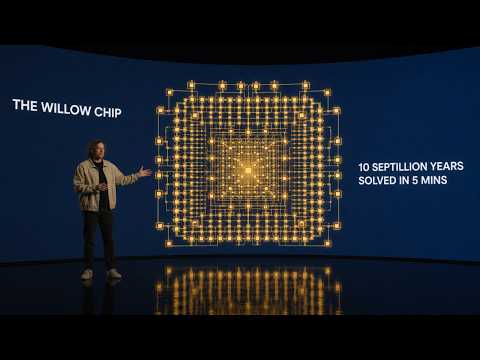
In the hushed corridors of BITS Pilani, a silent revolution is underway, one that shimmers like a mirage at the horizon of computational capabilities. Quantum computing is reshaping the paradigms we once believed were unyielding. A recent achievement at this prestigious Indian institute has firmly placed it on the map of global quantum advancements, solving intricate physics simulations in a mere twenty seconds—an accomplishment that classical systems, with all their venerable rigor, would labor over for two long hours.
Based on content from AIM Network
For those attuned to the subtle pulse of technology’s evolution, this marks a pivotal moment. It’s not just an academic milestone; it suggests a shift toward a more immediate and tangible utility of quantum technologies in real-world applications. The promise is no longer a whisper of potential but a resonant echo drawing nearer.
The complexities that BITS Pilani has managed to unravel so swiftly are anchored in the challenges of quantum hardware versus classical models. In the traditional schema, even the most advanced classical systems falter at a bottleneck of time and efficiency when addressing certain quantum physics simulations. Yet, here lies a contrast: quantum systems, with their potential harnessed effectively, are beginning to see the outside of their proverbial box—not just in solving theoretical problems but in real materials science and engineering applications.
At the heart of this transformation is a broader context of quantum advantage, with IBM’s own endeavours reflecting a worldwide push for quantum supremacy—where quantum sees itself not merely as an aspirant, but as a harbinger of solutions to what were once considered insurmountably complex issues. The inflection point here is to recognize that these aren’t disparate stories; they form a latticework of progress, each breakthrough a thread, weaving a new tapestry for future technology.
This moment of triumph is set against the backdrop of national quantum missions, with India carving a niche for itself in the global tech ecosystem through robust investments and strategic policies. It’s a vibrant testament to the nation’s ambition to cultivate an infrastructure that can carry these advancements forward, accelerating the rate of discovery and application.
However, there’s a whisper of caution amid the celebrations. The realm of quantum computing is not without its constraints. Issues of scalability and error rates hover like unseen specters, reminding us that while the horizon is bright, the path is complex and fraught with challenges yet to be deciphered. It invites us to ponder the dynamics between this newfound clarity and the murmurings of overwhelm that accompany technological upheaval.
The question that hangs delicately in the air, much like the early morning mist that shrouds the Pilani campus, is where do we go from here? As we stand on the cusp of a computational renaissance, the potential of quantum computing beckons us to explore, to question, and to innovate. It’s a call to action, not just for academia, but for industry and policy-making as well, to recognise the moment and propel forward with intention and insight.
As the ripples of this achievement expand outward, one cannot help but feel a sense of anticipation—a quiet thrill over what could be the harbinger of the next great leap in technology. It’s more than a narrative of numbers and algorithms; it’s a testament to human ingenuity and the relentless pursuit of understanding our world more deeply.
In the words of the scholars and the thinkers, let us remain both cautious and exhilarated by the unknown, ever mindful that with each question answered, a dozen more may yet be born.
—