In a world where our digital horizons expand at an exponential pace, the spaces between what we know and what we have yet to understand shrink rapidly, raising pivotal questions. Among these, the role of artificial intelligence (AI) and quantum computing in reshaping cybersecurity is gaining a new hue—a conversation largely led by companies like Island.
Based on content from Boardroom Club
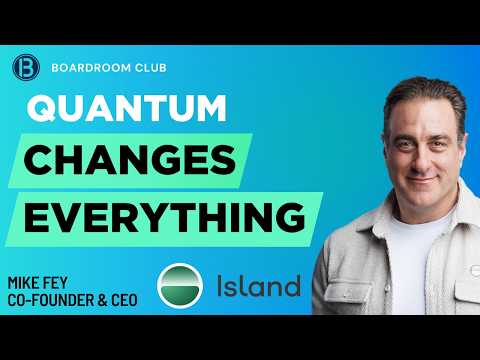
Island, with its pioneering stride in the realm of enterprise browsers, offers a vivid example of how AI, when harnessed strategically, can serve as a fortification rather than a threat to cybersecurity. This perspective springs to life vividly in our recent discussion with Michael Fey, Co-Founder and CEO of Island.
The narrative begins with AI’s transformative impact on Island’s product roadmap. Fey reflects on their forward-thinking approach, one that sees AI as a guardian rather than the “boogeyman” its often made out to be. Products like AI Publish are emblematic of this ethos, allowing teams to construct and deploy applications securely—even empowering non-technical team members to innovate without risk.
As Fey explains, AI has been a long-anticipated force, its explosion in scale surprising perhaps, but its importance in the digital future a shift foreseen by many. Here, we encounter one of the more underappreciated facets of technology: the quiet bridges built by foresight and preparation that often evade the public eye.
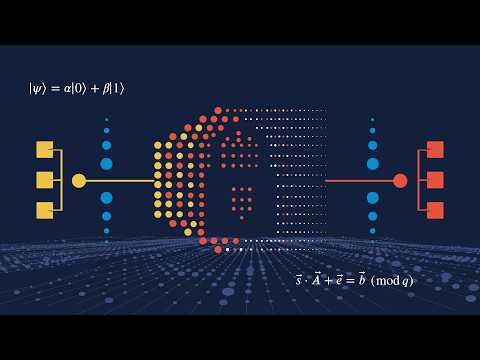
Notably, the discussion ventures into the often-daunting realm of quantum computing, dubbed somewhat provocatively as “Quantum Armageddon.” The name signals more than the advent of quantum technology; it represents the readiness necessary to defend against its potential disruptive force. In this space, Island positions itself on the defense line, indicating that the existential threat posed by quantum capabilities also brings with it the opportunity for groundbreaking solutions.
One of the understated revelations in the conversation is what Fey describes as being underestimated in the cybersecurity industry—the dynamics of tokenization and the expansive potential it brings to innovation. It’s through this lens that we glimpse a broader horizon, stretching from the confines of Earth to speculative territories such as data centers orbiting in space—a concept oscillating between futuristic vision and tangible possibility.
Yet, the narrative of technology is never solely confined to the realms of the unknown. Sometimes it’s interwoven with personal fragments—like Fey’s favorite movie thrown nonchalantly into the conversation, a reminder that the architects of our digital futures are deeply human, with personal musings shaped as much by cinema as by code.
Reflecting on this discourse, it stands apparent that AI, along with looming quantum advancements, embodies not merely technological evolution but a philosophical shift in how we approach security and potential. Island’s approach exemplifies a critical pivot—viewing AI not as a challenge to be managed but as an integral tool in safeguarding and maximizing digital potential.
As we peer into the future, the dialogue that Island fosters around cybersecurity invites us to question whether we are prepared for this new age of technological responsibility. We are left contemplating the enduring question: In a rapidly shifting digital landscape, can we learn to see technology as the harbinger of protection and clarity, rather than merely a vessel of potential peril?
—