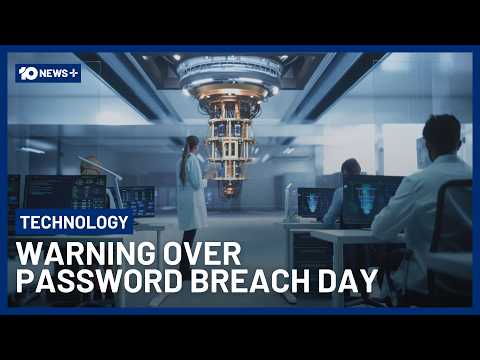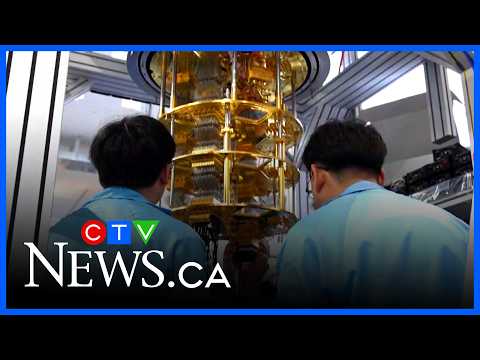
Picture a room, somewhere deep in the recesses of a research facility, where tangled wires meet components that glimmer like frosted chandeliers. This is where echoes of the future are brewing: the world of quantum computing. Machines that were once relegated to the realm of speculative science fiction now knock at the threshold of reality, teasing the boundaries of what we know and demanding a recalibration of everything from digital privacy to national security.
Based on content from Listen up, science
Why do we care so deeply about quantum computers? It’s not just their raw power, although that’s part of it. It’s their fundamental otherness, turning classical computing on its head. While our everyday devices use bits, flipping like confident coin tosses between states of zero and one, quantum computers flirt with uncertainty. With their qubits, they occupy a space of ‘superposition,’ reminiscent of coins suspended mid-flip, existing in all possible states until an observant glance forces a decision.
Imagine two spinning coins, side by side, each independent yet mysteriously linked—a phenomenon known as ‘entanglement.’ Even separated by vast distances, these coins echo each other’s flips. This is the brilliance and eeriness of entanglement, and it’s a principle quantum computers exploit to perform computations that echo faster than the quickest whisper across the universe.
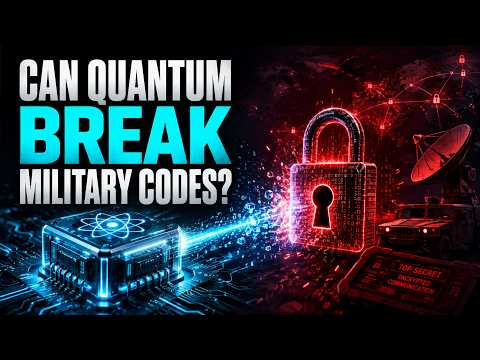
So what does this have to do with the digital world, the secure webs spun around our private data, sensitive communications, and national secrets? Currently, these are guarded by encryption methods that rely on the computational slowness of breaking down very large numbers. They’re sturdy locks, trusted for decades. But a quantum computer, with an algorithm like Shor’s, dances through these locks almost mockingly, reducing cryptographic security to quaint memory.
Consider the implications: encrypted data amassed today, too complex for current methods to decipher, could be rendered transparent in the not-too-distant future. It’s not an exaggeration to say the digital chest could be flung wide open, exposing personal data, financial transactions, or governmental communications once a quantum computer wreaks havoc on current encryptions.
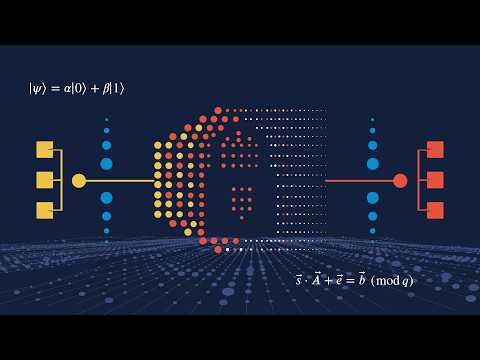
As we teeter on the edge of what feels like an impending quantum reality, there’s a scramble—a race not just to build the most powerful quantum computers but to fortify our data through post-quantum cryptography. This is the art of creating problems that even a quantum behemoth cannot easily solve. It’s an urgent endeavor, one that the US National Institute of Standards and Technology (NIST) is spearheading, working tirelessly to ensure our digital fortifications evolve in tandem with the threats.
Yet, despite this looming threat, quantum computers are not merely the bringers of peril. Their potential for catalyzing breakthroughs is profound. From medicine to artificial intelligence, they hold the keys to solving complex problems that today feel insurmountable. Imagine designing drugs at the molecular level or optimizing global supply chains with unprecedented efficiency. It’s less an edge of destruction and more a blade’s edge of transformation.
The dual nature of this quantum leap poses both question and challenge: Can we harness this power wisely, using its might to heal and innovate rather than to unravel the digital tapestry of trust we’ve woven over decades?
As individuals, our role may not be in adapting cryptographic protocols or designing hardware, but there remains a shared responsibility to understand the quantum conversation, to advocate for the secure foundations of our digital world even as we welcome the brilliance these machines promise. Meanwhile, silently, quantum computers flicker to life in carefully controlled environments, their quiet hum—the prelude to change—we might not fully see coming but will inevitably guide us to a new frontier.
—