. Quantum computing has lived in the brilliant, rarefied air of theoretical physics. We’ve gasped at the possibilities of superposition and entanglement, marveled at the math, and looked forward to a future completely transformed by quantum supremacy.
But there’s a quiet truth that the industry is finally waking up to: Science proves what is possible, but engineering makes it a reality. Quantum cannot scale on theory alone.
In the latest episode of the Women in Quantum podcast, I sat down with Rachel Noek, a Technical Program Manager whose career path has taken her from rural New Mexico to the absolute forefront of quantum engineering.
We talked about what it actually takes to move deep tech out of the lab and into the real world—and spoiler alert: it requires a lot more than just colder refrigerators and better qubits. It requires a fundamental shift in how we manage risk, build infrastructure, and support the humans doing the work.
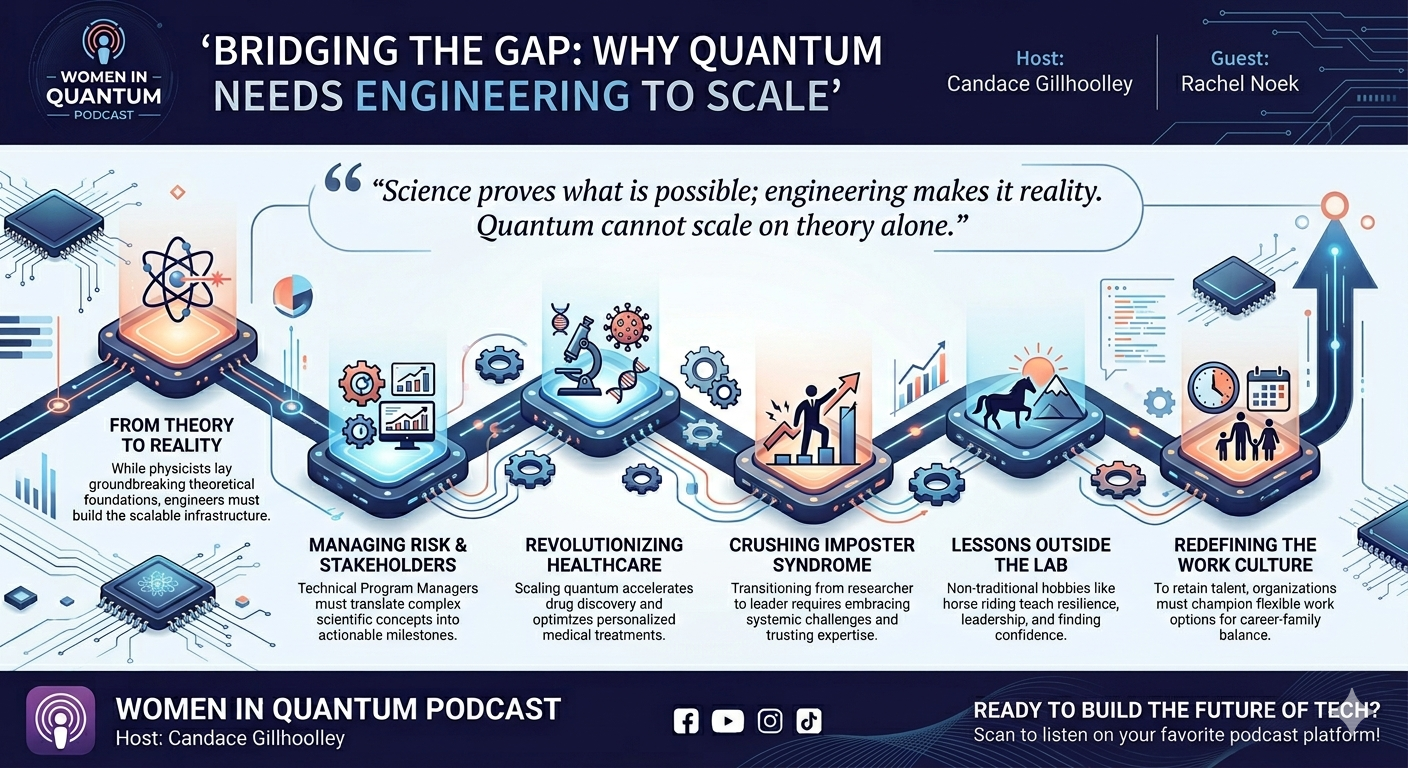
Here is the blueprint of what we covered, neatly mapped out for the visual thinkers among us.
The Blueprint for Quantum Scaling
(Insert Infographic Here: watermarked_img_4488276034054810102.png)
1. Building the Infrastructure (Physics vs. Engineering)
Physicists are amazing at laying the groundwork for groundbreaking theoretical foundations. But a prototype in a cleanroom is a long way from a commercially viable, fault-tolerant quantum computer. To bridge that gap, we need systems engineers, cryogenic experts, and software architects who can build scalable infrastructure around the physics.
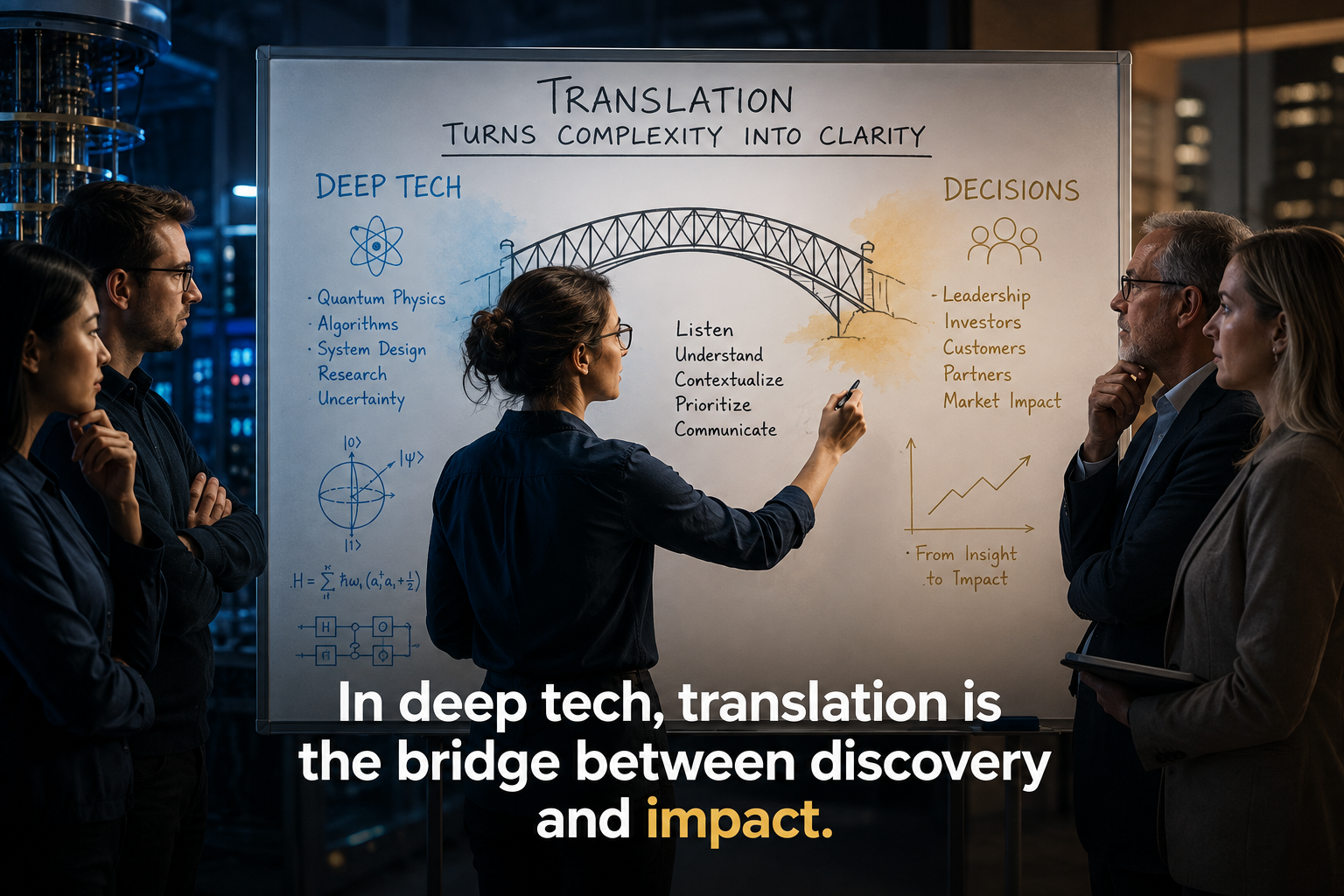
2. The Critical “Translation Layer”
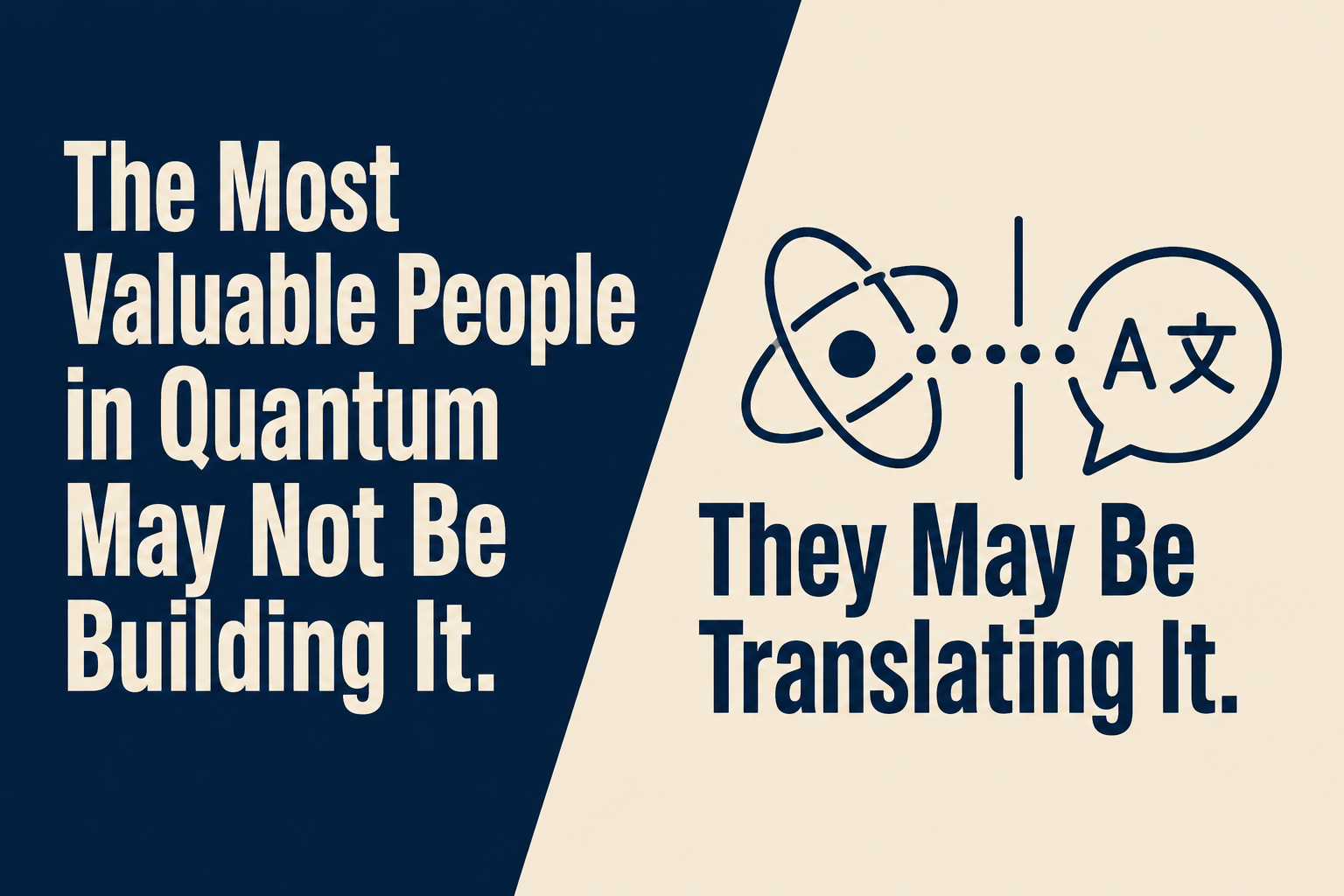
One of the biggest bottlenecks in deep tech isn’t the hardware—it’s communication. Rachel emphasized the massive demand for Technical Program Managers who speak both “scientist” and “stakeholder.” Success requires translating complex quantum mechanics into actionable business milestones and strict risk management frameworks.
3. Real-World Stakes: Why Scaling Matters
We aren’t just building these machines for bragging rights. The societal payoff is staggering. When we successfully scale quantum systems, the first major beneficiary will likely be healthcare—radically accelerating drug discovery and mapping out truly personalized medical treatments.
4. Overcoming Imposter Syndrome & Finding Non-Traditional Confidence
Moving from a technical researcher to an industry leader comes with a steep psychological learning curve. Rachel shared an incredibly honest look at fighting imposter syndrome. Interestingly, she found her breakthrough in confidence outside the lab—through her passion for working with horses, which taught her invaluable lessons about presence, leadership, and emotional resilience.
5. Designing a Workforce Culture That Stays
If we want the best minds to solve the hardest problems in computing, the industry has to change how it treats people. We can’t build the future of tech on burnout. Rachel and I discussed why quantum organizations must champion genuine workplace flexibility, allowing elite talent to chase ambitious career goals without sacrificing their families.
Listen to the Full Conversation
Whether you are deeply embedded in the quantum ecosystem or just “quantum curious,” Rachel’s insights offer an inspiring, grounded look at the messy, rewarding reality of building the future.
- Listen on Apple Podcasts / Spotify: Search for “Women in Quantum — Here’s Why Quantum Won’t Scale Without Engineers”
What do you think is the biggest bottleneck facing deep tech scaling right now? Is it the hardware, the funding, or the talent pipeline? Let’s talk in the comments below.
If you enjoyed this deep dive, consider sharing it with a colleague or subscribing to get the next blueprint delivered straight to your inbox.