Imagine a computer that challenges our very understanding of computation, one that doesn’t merely operate in the binary certainty of ones and zeros but dances in the realm of possibilities. This is the enigmatic world of quantum computing, a frontier that marries the seemingly paradoxical states of physics with the relentless pace of technological advancement.
Based on content from Future Vision
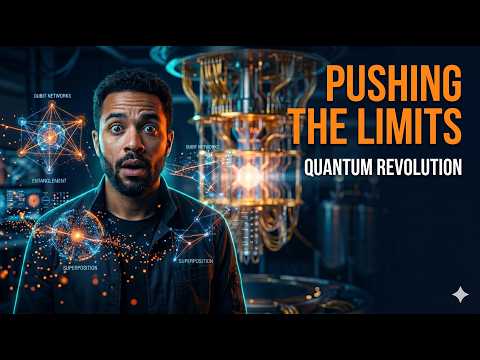
At the heart of quantum computing lies the use of qubits, the quantum equivalent of classical bits. Unlike their counterparts, qubits are not constrained to a state of zero or one. Through the phenomenon of superposition, they can exist in a confluence of both, simultaneously, offering a vast landscape of potential calculations at any given moment.
Equally mind-boggling is entanglement, a principle that allows qubits, even those light-years apart, to be intricately linked. This interconnectedness promises computational prowess that could unravel problems beyond the reach of our most sophisticated supercomputers. Imagine revolutionizing drug discovery, transforming complex material sciences, or redefining our intelligence frameworks. It’s a vision of a future almost within grasp.
Yet, this immense potential accompanies daunting challenges, pushing the boundaries of human engineering and scientific understanding. Qubits, with their almost ethereal nature, are notoriously fragile. To preserve their delicate quantum states, they demand environments of near-zero temperatures and isolation so exacting that even the faintest whisper of environmental disturbance can cause decoherence, unspooling computations in a moment.
Constructing these machines necessitates a level of precision that treads into the realm of the atomic scale—a monumental task indeed. Scaling such technology is not just a feat of engineering but an esoteric dance with the laws of nature. Quantum computers aren’t destined to replace their classical counterparts but rather to complement them, serving as specialized tools in our technological arsenal. It’s a humbling reminder that even as we delve into groundbreaking realms of possibility, the fundamental limitations of physics still whisper their constraints.
As we stand at the threshold of this computational era, one can’t help but reflect on the broader implications. How might quantum computing reshape our approach to problem-solving, and what new ethical landscapes might we encounter? The pathway forward is as uncertain and full of potential as the qubits themselves, inviting deeper inquiry and imagination.
As we navigate these uncharted waters, what possibilities do you foresee in this emerging quantum landscape?
Follow the journey as this intricate tapestry of science and innovation continues to unfold.
—