There’s a certain hum in the air whenever the conversation turns to the future of technology, a reverent hush that precedes difficult questions and uneasy answers. As we stand at the precipice of what researchers are calling “Q-Day,” a moment when quantum computers might shatter the encryption that blankets our digital lives, this hum grows louder.
Based on content from New Scientist
For years, the advent of Q-Day seemed distant, a whisper more science fiction than fact—an abstract concern tucked safely in the recesses of futurism. But reality, it seems, has a habit of catching up with imagination. Cutting-edge research reveals that the countdown to this pivotal moment may have already started. It’s a disquieting revelation, the pang of a clock ticking down to a world we aren’t quite ready for.
The Peril Behind the Padlock
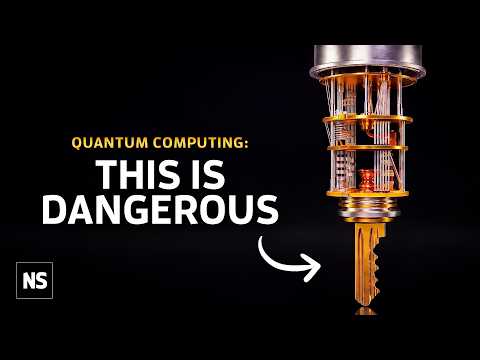
The padlock icon that sits reassuringly in the upper corner of your browser—a symbol of modern security—may soon become obsolete. On Q-Day, a sufficiently powerful quantum computer could unravel the encryption protocols that safeguard much of the world’s data. From bank transactions to state secrets, everything could lie bared under the cold scrutiny of quantum capabilities.
This isn’t mere conjecture. Hostile actors might already be collecting encrypted data, waiting patiently until technology matures enough to decrypt it. The concept, called “harvest now and decrypt later,” is both simple and frightening in its implications. Our security measures, reliant on math’s current enigma to classical computers, may soon face a quantum adversary that operates on a different set of rules altogether.
An Evolving Threat
But why has Q-Day crept closer? The answer lies in the unexpected mingling of innovation and error correction within quantum computing. Initially, quantum machines were plagued by inaccuracies that rendered their outputs unreliable. The presumption was that we’d need millions of qubits (quantum bits) to tackle current encryption standards. Thus, the threat appeared tamed, held at bay by technological limitations.
Then, under the flicker of laboratory fluorescents, the narrative shifted. Advances in error correction strategies and cunning algorithmic improvements slashed the necessary computational power—it plummeted from millions of qubits to mere tens of thousands. Suddenly, the distant future had moved uncomfortably near.
Google and other tech giants are hard at work, and state-of-the-art machines now boast over a thousand qubits, with some arrays pushing past six thousand. The landscape of possibilities is broadening, but so too is the chasm of potential risks.
From Threat to Potential
Here’s where the conversation surprises you, like sunlight breaking through heavy clouds: quantum computing isn’t merely a tool poised to pry open the locks of our data; it is a bridge to scientific and technological breakthroughs that could reshape our understanding of everything from materials science to medicine.
Imagine quantum computers simulating molecular structures with unerring precision, catalyzing new drug discoveries, or unraveling the complex systems governing climate dynamics. There’s a profound beauty in these machines functioning as catalysts for progress, a whiff of something transcendental. The double-edged nature of quantum technology is emblematic of our perennial dance with innovation—each step forward balanced on the razor-thin edge between peril and potential.
Where do we go from here?
Q-Day’s arrival may seem inevitable, yet we are not mere passengers on this journey. Our collective response—a measured blend of advancing cybersecurity measures, funding research, and reimagining cryptographic systems—could decide whether this day becomes a turning point towards enlightenment or chaos.
As we press forward, we’re tasked with an introspective inquiry: how do we reconcile the exhilarating promise of quantum technology with its unsettling threat? It is a delicate dance that demands vigilance and wisdom, a future where digital fortresses are built anew, not upon sand but upon the very quantum principles that challenge us today.
As you close this page, the hum may linger just a bit longer in your thoughts, a quiet reminder that the future is as much about asking the right questions as finding the right answers. What paths will we forge, and will we be ready to walk them?
—