While much of the attention in the quantum technology sector continues to focus on increasingly powerful quantum processors, another critical area of development is quietly gaining momentum: quantum networking.
Recent collaboration efforts involving Hamamatsu Photonics, NKT Photonics, and Yaqumo underscore the growing investment in the infrastructure needed to connect future quantum systems. Although quantum computing often dominates headlines, many researchers and industry leaders believe that the long-term future of quantum technology may depend just as much on networking as it does on processing power.
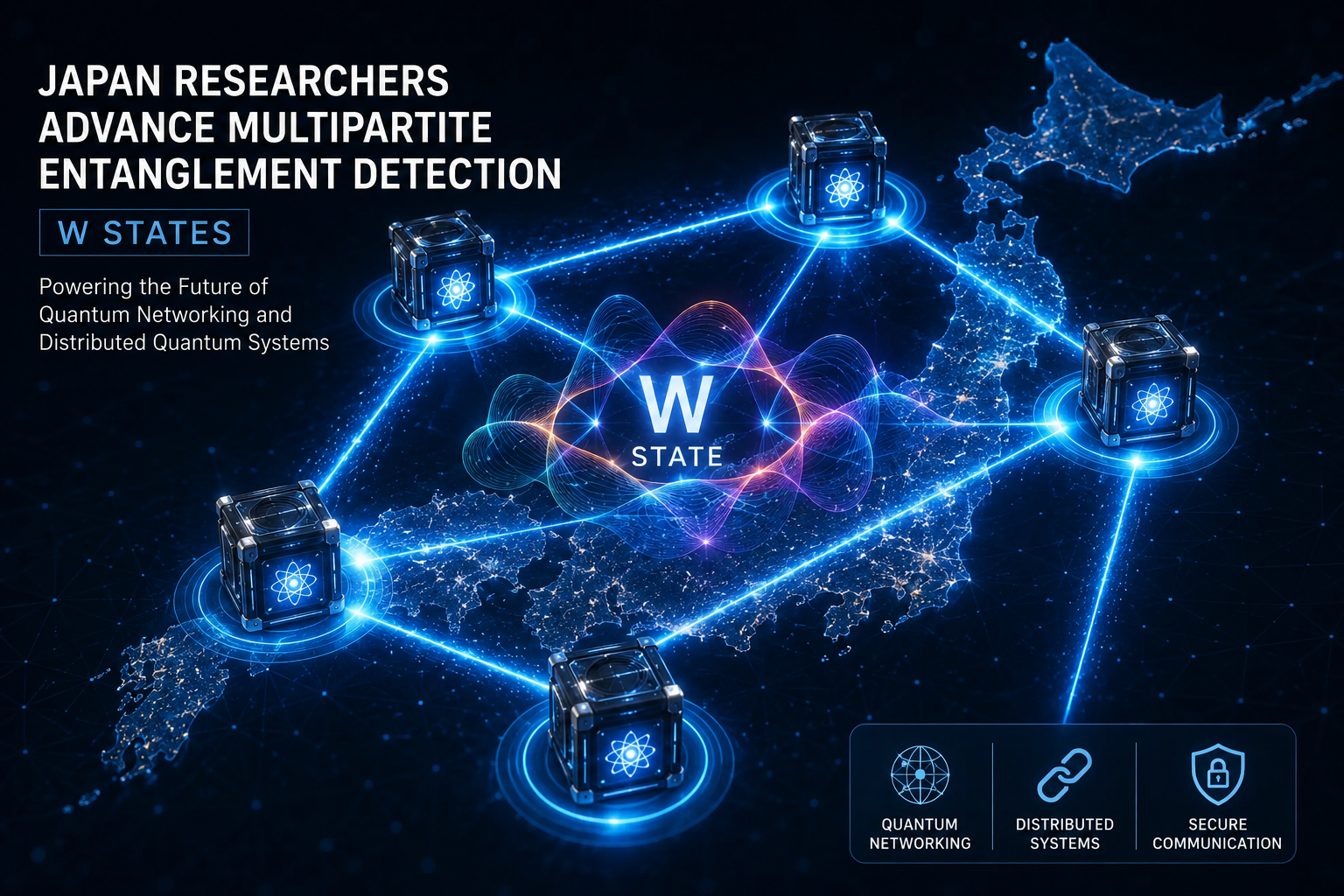
The reason is simple. Building a single, massive quantum computer capable of solving every complex problem may not be the most practical path forward. Instead, the future could resemble today’s cloud computing ecosystem, where multiple interconnected systems work together across distributed networks. In this vision, quantum nodes located in different facilities, cities, or even countries could collaborate through specialized quantum communication links, creating a scalable and resilient quantum infrastructure.
This concept is becoming increasingly attractive as the industry confronts the engineering challenges associated with scaling quantum hardware.
Today’s quantum computers remain relatively small and highly specialized. Expanding these systems to millions of fault-tolerant qubits presents enormous technical obstacles involving hardware complexity, error correction, cooling systems, and manufacturing requirements. Quantum networking offers an alternative approach. Rather than concentrating all computational resources in a single machine, researchers can connect smaller quantum processors into larger distributed systems capable of performing more sophisticated tasks collectively.
The model closely mirrors the evolution of classical computing. Decades ago, organizations often relied on centralized mainframe systems. Over time, networking technologies enabled distributed computing architectures, data centers, and cloud platforms that could scale more efficiently and provide greater flexibility. Many experts believe quantum computing may follow a similar trajectory, with quantum networks becoming the foundation for large-scale quantum services.
The collaboration between Hamamatsu Photonics, NKT Photonics, and Yaqumo reflects growing confidence in this possibility. Each organization brings unique expertise to the partnership. Hamamatsu Photonics is recognized globally for its advanced optical technologies, including photodetectors and photonic devices used in scientific and industrial applications. NKT Photonics specializes in high-performance fiber lasers and photonic crystal fiber technologies that support advanced optical communications. Yaqumo focuses on quantum networking technologies that enable secure, efficient quantum communication between distributed systems.
Together, these capabilities address some of the most important technical requirements for future quantum networks.
Unlike traditional digital communication systems, quantum networks rely on the transmission of quantum information. This information is often carried by individual photons that must preserve delicate quantum properties while traveling through optical fibers or free-space communication channels. Maintaining these quantum states over long distances presents significant scientific and engineering challenges.
Even minor environmental disturbances can disrupt quantum information, making reliable transmission extraordinarily difficult. Researchers must develop specialized hardware, networking protocols, and error mitigation techniques to ensure that quantum information arrives intact and usable.
This is where photonics companies are becoming increasingly important to the broader quantum ecosystem. Photonics technologies sit at the intersection of quantum computing, communications, and sensing. Optical components play essential roles in generating, transmitting, manipulating, and detecting quantum states. As a result, companies with expertise in lasers, optical fibers, detectors, and photonic integrated circuits are emerging as key contributors to next-generation quantum infrastructure.
The growing interest in quantum networking is also tied to cybersecurity. One of the most widely discussed applications of quantum networking is quantum-secure communication. Quantum communication systems can leverage the principles of quantum mechanics to detect potential eavesdropping attempts, creating security capabilities that are fundamentally different from conventional encryption methods.
Governments, financial institutions, defense organizations, and critical infrastructure operators are increasingly exploring these technologies as they prepare for a future in which advanced quantum computers could potentially challenge existing cryptographic systems.
However, the potential benefits of quantum networking extend far beyond security. Researchers envision future quantum networks supporting distributed quantum computing, quantum cloud services, and collaborative scientific research. Multiple quantum processors could share computational tasks, exchange quantum information, and work together to solve problems that exceed the capabilities of any single machine.
This distributed approach could significantly accelerate the practical adoption of quantum technologies. Rather than waiting for a single breakthrough that enables enormous standalone quantum computers, organizations could gradually expand capabilities by connecting smaller quantum systems as networking technologies mature. Such an approach may offer a more realistic pathway toward scalability while reducing some of the risks associated with building ever-larger monolithic quantum processors.
The trend is also attracting growing attention from governments around the world. National quantum initiatives in Europe, North America, and Asia increasingly include networking and communications infrastructure as core strategic priorities. Policymakers recognize that future quantum competitiveness will depend not only on processor development but also on the ability to connect and coordinate quantum resources across large geographic regions.
In Europe, several major programs are already working toward creating quantum communication networks spanning multiple countries. Similar efforts are underway in the United States, China, Canada, Japan, and Australia. These initiatives are helping establish the foundations for what some researchers describe as the future “quantum internet.”
Although a fully realized quantum internet remains years away, progress continues to accelerate. Advances in quantum repeaters, entanglement distribution, photonic devices, and network protocols are steadily addressing key technical challenges. Each new collaboration contributes valuable expertise that helps move the field closer to practical implementation.
The involvement of established industrial companies is particularly significant. Partnerships between quantum startups and experienced photonics manufacturers demonstrate how the industry is evolving from purely academic research toward commercial infrastructure development. Such collaborations bring together scientific innovation and industrial execution, both of which are essential for scaling emerging technologies.
Importantly, the increasing focus on networking reflects a broader maturation of the quantum sector. In its early stages, quantum technology was largely concerned with proving that quantum systems could function reliably in laboratory environments. Today, the conversation has expanded to include deployment strategies, infrastructure requirements, interoperability standards, and long-term scalability.
These are the kinds of questions that arise when an industry begins preparing for real-world adoption.
The collaboration involving Hamamatsu Photonics, NKT Photonics, and Yaqumo may therefore represent more than a routine partnership announcement. It highlights a growing recognition that the future of quantum computing will likely depend as much on connections as on computation.
As quantum hardware continues to advance, networking technologies are becoming an increasingly important piece of the puzzle. The industry’s vision is gradually shifting from isolated quantum machines to interconnected quantum ecosystems that share resources and capabilities across distributed networks.
If that vision becomes reality, tomorrow’s quantum infrastructure may look remarkably similar to today’s cloud environment—except instead of servers exchanging classical data, quantum nodes will exchange quantum information. The continued momentum behind quantum networking suggests that the industry is already laying the groundwork for that future.