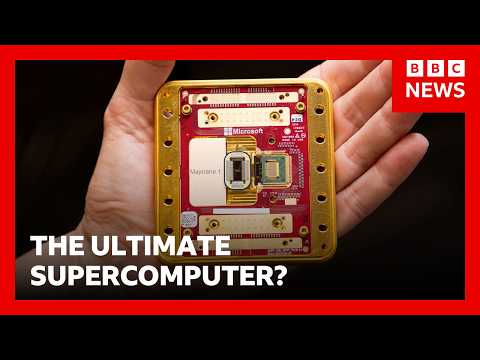
There is a certain kind of silence that settles over the quantum industry whenever a breakthrough is too technical to become a headline. No dramatic promises about breaking encryption overnight. No “this changes everything” energy. Just a research paper, a few complicated diagrams, and terms like “multipartite entanglement” and “SiMOS unit cells” quietly circulating through academic circles while everyone else keeps scrolling.
But honestly? Those are usually the moments that matter most.
This week, researchers demonstrated multi-qubit entanglement across two silicon metal-oxide-semiconductor (SiMOS) quantum unit cells, successfully generating GHZ states while preserving entanglement longer than earlier methods. On the surface, it sounds like another incremental physics update. In reality, it touches one of the biggest questions hanging over quantum computing right now:
Can quantum systems actually scale using the manufacturing infrastructure the world already spent decades building?
Because beneath all the hype surrounding quantum computing, scalability is still the real issue. At this point, plenty of labs can build small quantum systems. Plenty can demonstrate isolated qubits. The hard part is turning fragile experiments into something manufacturable, repeatable, and stable outside highly controlled research environments.
That’s where silicon changes the conversation entirely.
Silicon is familiar. It already powers almost every modern device we rely on. Phones, servers, medical equipment, satellites, cars—entire economies run on semiconductor infrastructure. The chip industry has spent decades refining CMOS manufacturing to almost absurd levels of precision, building fabrication ecosystems capable of producing billions of components reliably at scale.
So every time silicon-based quantum systems improve, the implications stretch far beyond physics.
The question stops being:
“Can we build a quantum computer?”
And starts becoming:
“Can we manufacture one?”
That distinction matters more than people realize.
For years, quantum computing felt disconnected from practical manufacturing reality. The machines were impressive, but often dependent on highly specialized environments, exotic materials, or architectures that looked difficult to scale economically. Many approaches still show enormous promise, but there has always been uncertainty around what happens when the industry eventually moves beyond the lab.
Silicon offers a quieter, more pragmatic path.
This latest research demonstrated several important advances at once: parallelized initialization and readout, multipartite entanglement, longer coherence times, and scalable coupling between quantum units. Individually, each milestone matters. Together, they start looking less like isolated experiments and more like the early foundations of architecture.
And architecture changes everything.
The GHZ states demonstrated here are especially important because they allow multiple qubits to function together as a highly entangled system. These states are foundational for quantum error correction, distributed quantum processing, and more advanced computational workloads. Demonstrating them across two SiMOS unit cells suggests researchers are beginning to coordinate larger collections of silicon qubits in increasingly stable ways.
And stability is not a minor detail in quantum computing.
Quantum systems are unbelievably sensitive. Heat fluctuations, electromagnetic interference, microscopic imperfections—almost anything can disrupt coherence. Researchers are not just trying to make qubits function. They are trying to make them survive long enough to become useful.
That challenge feels strangely human sometimes: fragile systems trying to preserve meaning inside noisy environments.
What makes this research especially interesting is the push toward modular growth. Instead of relying on one massive, impossible machine, the industry may eventually scale through interconnected quantum building blocks that grow over time.
Which, honestly, mirrors how classical computing evolved.
Modern computing didn’t arrive through one giant breakthrough. It emerged through repeatable manufacturing, modular systems, standardization, and decades of incremental refinement. Quantum computing increasingly feels like it may follow the same pattern.
And maybe that’s why silicon feels so important emotionally, not just technically.
It introduces familiarity into a field that often feels abstract and distant.
There’s something grounding about the possibility that future quantum systems could emerge from fabrication plants and semiconductor frameworks already woven into modern civilization. Suddenly the technology stops feeling mythical and starts feeling manufacturable.
Of course, major challenges still remain.
Silicon quantum systems continue to face difficult problems involving error correction, interconnect density, cryogenic integration, fabrication consistency, and maintaining fidelity at larger scales. Nobody is pretending the hard part is over. If anything, this stage makes it clear how much engineering still lies ahead.
But the tone of the industry is changing.
A few years ago, most quantum discussions revolved around supremacy demonstrations and theoretical possibility. Now the language sounds increasingly industrial:
yield,
scaling,
modularity,
fabrication,
integration,
manufacturability.
Those are not the keywords of a purely academic field anymore.
They’re the vocabulary of infrastructure.
What makes this breakthrough fascinating is that it sits at the intersection of two very different worlds: frontier quantum physics and mature semiconductor engineering. One represents uncertainty and experimentation. The other represents decades of manufacturing discipline and optimization.
If those worlds fully converge, quantum computing could accelerate much faster than people expect.
Because the semiconductor industry already understands scaling. It already knows how to optimize supply chains, reduce defects, refine fabrication processes, and deploy complex systems globally. Quantum computing may not need to reinvent all of that from scratch if silicon architectures continue progressing.
And that changes investor confidence too.
The industry is slowly rewarding platforms that appear manufacturable, not just impressive inside a laboratory. More attention is shifting toward scalable ecosystems, modular architectures, and fabrication compatibility because long-term success may depend less on producing the most advanced individual qubit and more on building the most scalable infrastructure around it.
And scalability is usually where real revolutions begin.
Not with spectacle.
With repeatability.
The strange thing about technological transitions is that they rarely announce themselves clearly in real time. Looking back, the patterns seem obvious. But while they’re happening, progress often arrives disguised as technical nuance most people ignore.
A paper about entanglement across SiMOS quantum unit cells doesn’t sound world-changing at first glance.
But hidden inside that language is a much larger possibility:
that quantum computing may eventually emerge not as a completely separate industry, but as an extension of the semiconductor world humanity already built.
And if that happens, the future of quantum computing may not arrive through unfamiliar machines at all.
It may emerge from the same silicon foundations already humming quietly beneath modern life.