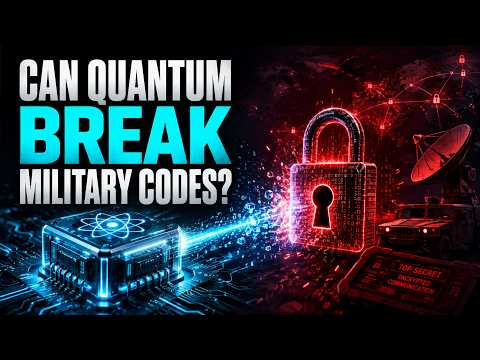
In the unassuming hum of server rooms and the incessant exchange of digital pulses across the globe, there’s a hidden countdown. But unlike the explosive drama tied to timepieces in action movies, this timer concerns something invisible yet infinitely more impactful: the cohesion of digital trust. We’re on the brink of what some experts call Q-Day, the moment when quantum machines rise to overshadow our current encryption techniques, thus rewriting the scripts of digital security and power.
Based on content from Kado Stratify
Many rest assured under the metaphorical guard of the padlock symbols in their web browsers, symbols of intricate mathematical fortifications, symbols soon to be riddled with futility. RSA 2048, a pillar of contemporary encryption, owes its security to the sheer impossibility of its complexity breaking under the strain of standard computation. Yet, against the parallel-armament of qubits within a quantum processor, this golden standard is but a drywall in the path of a bulldozer.
As it stands, malicious entities are biding their time in a strategic foreplay known as “Harvest Now, Decrypt Later.” This involves siphoning and storing encrypted data in anticipation of a cusp moment when quantum supremacy allows them to unveil and decipher, retroactively altering privacy’s past promises.
This isn’t conjecture embedded in speculative science fiction; it’s unfolding across high-tech ecosystems. Consider Google’s Willow chip—a 105-qubit processor that surprisingly improves its error rates as it scales—or Microsoft’s Majorana 1 chip with its topological qubits that promise stability. These advancements underline a racing climate dominated by slogan-less campaigns among tech giants, governments pouring billions into quantum research to clinch an edge in a new global hierarchy.
Amid this, the looming “Trust Migration Crisis” approaches—a seismic shift where classical privacy technologies may falter against a quartic future. This isn’t simply upgrading protection measures; it’s a complex restructuring while trying to keep the coastlines of our digital continent from eroding under cyber tides. The implementation breadth and depth vary drastically, with affluent entities poised to transition smoothly while smaller forts stand vulnerable, perpetuating a tiered internet.
Yet within the somber forecast lies luminous optimism. Quantum computing’s utility isn’t purely destructive; it’s a multitude of doors unlocking problems previously sealed by binary limits. From bio-medical frontiers reshaped by perfect molecular simulations to ground-breaking material science ushering a new era in agriculture, the machine that can break might also make whole.
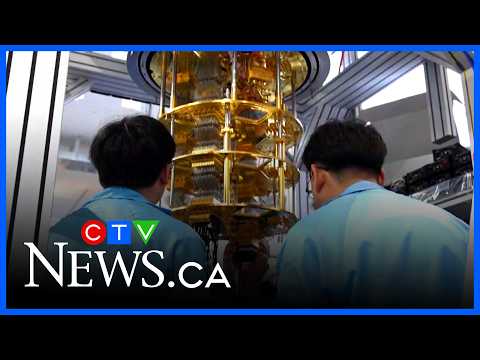
But at the core of this techno-fascination comes the stark realization—quantum computing, unlike classical computing, doesn’t democratize technology. The physicality of quantum hardware, reliant on near-absolute-zero conditions, signifies its confinement to a select few: privately-owned conglomerates and governmental bodies. The readily accessible power dramatized by technological advancement will lock behind institutional gates, redefining ownership of innovation and its cascading influence.
The transition from a digital age accessible to all to an elite-handheld post-digital age leaves us pondering foundational questions. Who gets to dictate the new order of connectedness, and where do individuals fit in this post-digital tapestry? The whispered speculation becomes a rousing dialogue—if quantum computers will model the future, who shapes these models, and what facets of our lives will they, in turn, define? The handles of our livelihood—once again—find themselves in a select few hands, kindling conversations about the cost of progress.
As we teeter on this threshold, the coming days may illuminate more transforming the prophecy of uncertainty into chapters of informed sharing. Meanwhile, our shared responsibility emerges clearer: to interrogate, understand, and safeguard against all of what this quantum horizon implies—a horizon quietly and steadily unmasking itself.
—