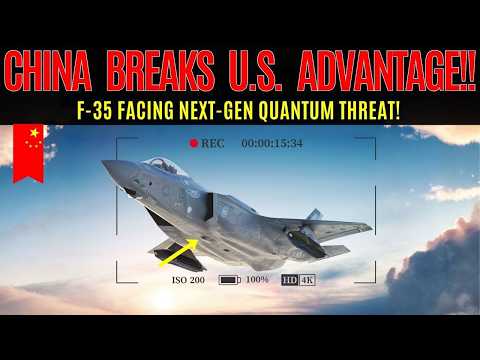
The air is still, held in a kind of hushed anticipation, as the most advanced stealth aircraft undergoes a transformation not of its physical form, but of its very core—the digital realm. The F-35, known for its sleek physique and formidable stealth capabilities, is quietly being reengineered, not in response to physical threats but to an intangible force: quantum computing. With China at the forefront of this technological frontier, the United States finds itself compelled to upgrade the aircraft’s encryption systems—an adaptation that underscores a broader conversation about national security, technological power, and the future of digital warfare.
Based on content from SpaceEyeNews
The driver behind this evolution is not immediately visible. It’s not a nation armed with faster jets or stealthier missiles, but the abstract and profound potential of quantum technology. For years, the discourse surrounding the F-35 has centered around its external attributes—precision mimicked from nature, engines that whisper rather than roar, sensors that see by painting in invisible colors. Yet, the plane’s true essence lies in its digital heartbeat. It is, in essence, a flying data center, orchestrated by layers of software and constant streams of encrypted information. This is precisely where quantum computing makes its entrance, poised to potentially unravel encryptions long thought secure.
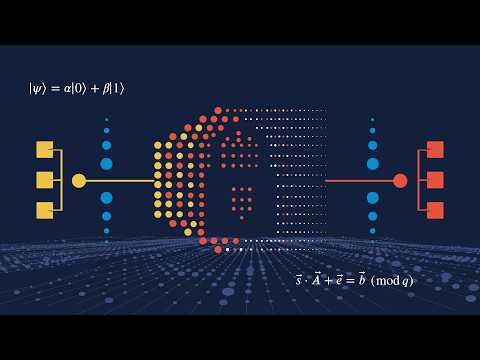
Traditional cryptographic methods have stood armed as sentinels, safeguarding mission data, authenticating software, and securing communication. However, the dawn of quantum computing threatens to reposition this security landscape. Unlike traditional computing, which hurdles through information sequentially, quantum computers dance through possibilities, harnessing the perplexing nature of qubits. This capacity to simultaneously observe myriad potential outcomes means that encryption could be deciphered at an alarming speed in the future. As such, the specter of future-ready quantum capabilities brings a palpable urgency to current technological strategies.
This predicament has catalyzed the U.S. Department of Defense’s move to retrofit the F-35’s inline file encryption device with quantum-resistant algorithms. A straightforward software patch this is not. Rather, it is a profound rethinking of the cryptographic architectures that form the underpinnings of sophisticated aviation programs today. What’s being called into question is nothing less than the future validity of the digital barriers we trust to protect vital information.
Simultaneously, we find ourselves guided through an intricate geopolitical lattice, with China positioned alongside the U.S. in this stride towards quantum ascendancy. China’s investments in quantum research and technology, over a decade in the making, resound as whispers of strategic foresight. Our attention turns to the Micius satellite program, where long-distance quantum communication experiments unfold—not just an emblem of progress but a harbinger of a new technological era. Quantum key distribution is trialed as a path to near-impervious communication channels, signaling China’s vision for a future etched in quantum code.
Back in the U.S., considerations of strategic vulnerability come into sharper focus. As quantum capabilities grow, the traditional metrics of technological supremacy—hardware, infrastructure—yield ground to new paradigms, where information dominance might tip global scales. The implications stretch far beyond military frameworks into civilian domains—artificial intelligence systems, encrypted communications, even the cloud beneath your fingertips today.
The fear of “harvest now, decrypt later” looms, an intriguing anticipation where data collected in the present may be vulnerably decrypted by future quantum advancements. Therefore, it’s not merely about today’s threats but about anticipating tomorrows’ unforeseeable challenges. This anticipation has inspired the National Institute of Standards and Technology to finalize quantum-resistant encryption standards by the mid-2020s, a testament to the urgency and complexity of this digital renaissance.
The intrigue doesn’t end here. Within whispers of quantum computing lies the seduction of quantum radar technology—a possibility suggesting that these new lenses could pierce through current invisibility cloaks, bringing the unseen into sharp focus. While no existing quantum radar system has yet translated theory into robust practice, the promise of such technological evolution fuels speculation and research. It suggests a horizon where conventional stealth techniques may need reinvention, further echoing the necessity of integrating quantum advancements into the global defense fabric.
In this quiet yet profound revolution, the F-35’s upgrades symbolize more than a tactical enhancement. They mark a movement—a recalibration of global stakes where countries scurry to master a confluence of secure computing, AI evolution, and quantum capability. As this race accelerates, we are left pondering not just the shape of aircraft or systems, but the form our future will take in an era where information itself becomes the ultimate battlefield.
As we edge closer to these unfolding technological landscapes, we are invited to ask ourselves: What does it mean to be prepared for a future where the most potent tools are wielded not as weapons, but as ideas and algorithms fighting along unseen networks? Where might the balance of power truly lie when the quiet hum of quantum machines begins to orchestrate our world?
—