There’s a certain kind of ambition that makes a lot of noise. It announces itself early, overpromises slightly, and thrives on attention. And then there’s the quieter kind—the kind that builds slowly, almost invisibly, until one day you realize it’s no longer emerging. It’s established.
That’s the energy surrounding Barcelona right now in the quantum space.
Not a frenzy. Not a gold rush. Something more measured. And, in its own way, more durable.
The Shape of a Quantum City
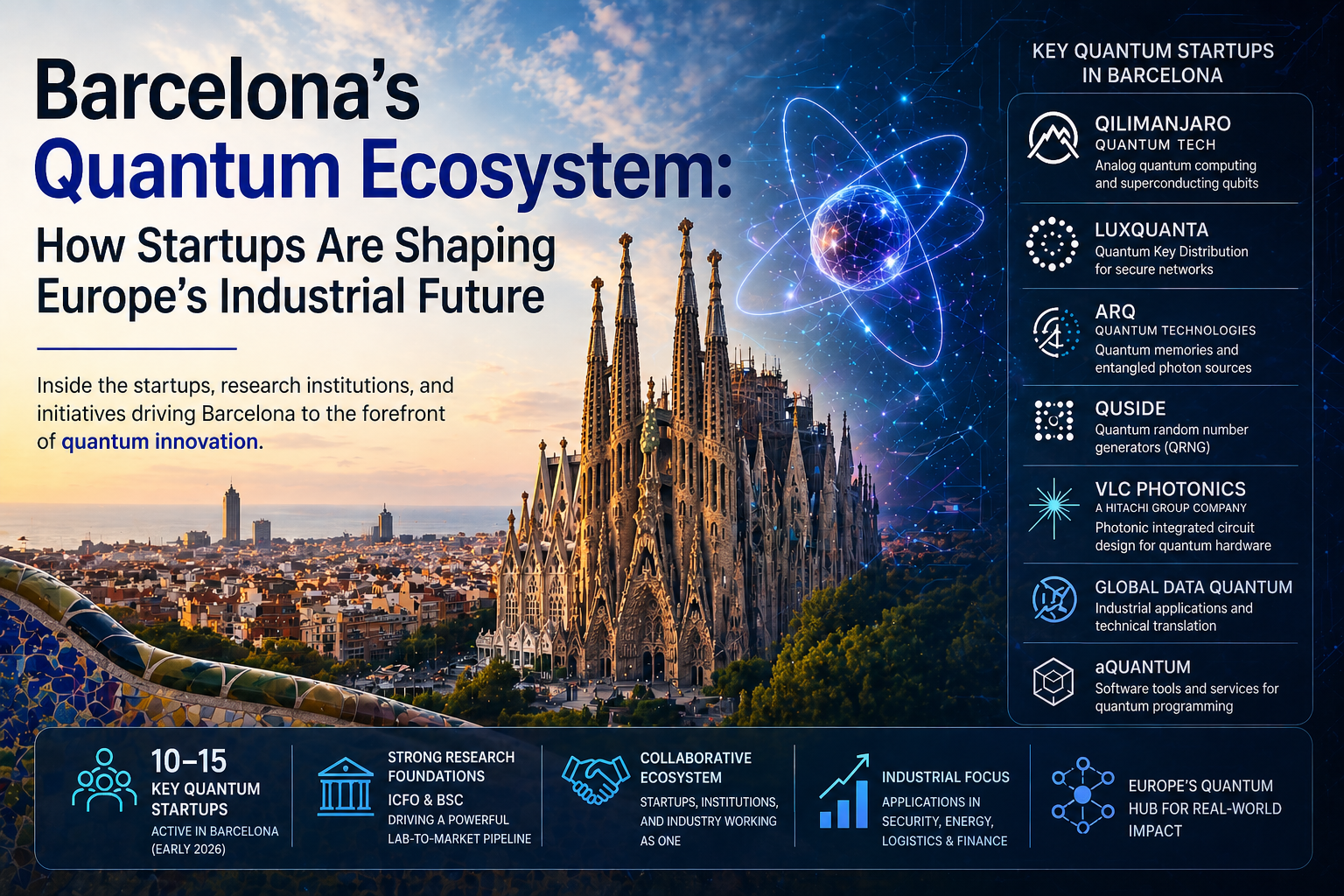
If you try to quantify it, the Barcelona quantum ecosystem looks deceptively modest: roughly 10 to 15 startups actively operating as of early 2026. Not hundreds. Not sprawling. Just enough to feel intentional.
But numbers don’t tell the full story here. Because what’s taking shape isn’t density—it’s alignment.
This is a city where research doesn’t sit in isolation. It moves. It transitions. It finds its way into applications faster than you’d expect, and with less friction than you usually see in deep tech.
At the center of that movement is Institute of Photonic Sciences. Not just as a research institution, but as a kind of quiet engine—turning photonics, quantum optics, and theoretical breakthroughs into companies that actually have somewhere to go. Alongside it, Barcelona Supercomputing Center provides the computational backbone, grounding quantum development in real-world infrastructure rather than abstraction.
Together, they create something rare: a pipeline that feels less like a pipeline and more like a continuum.
A Full-Stack Ecosystem (Without the Noise)
What’s striking about Barcelona is that, despite its relatively small number of startups, it covers almost the entire quantum stack.
On the hardware side, Qilimanjaro Quantum Tech is advancing analog quantum computing and superconducting qubits, leaning into specialization rather than scale. Their work hints at a future where efficiency and targeted performance matter more than sheer qubit counts.
In parallel, Arq Quantum Technologies is building components for the quantum internet—quantum memories and entangled-photon sources—the kind of infrastructure that rarely gets headlines but quietly defines what’s possible later.
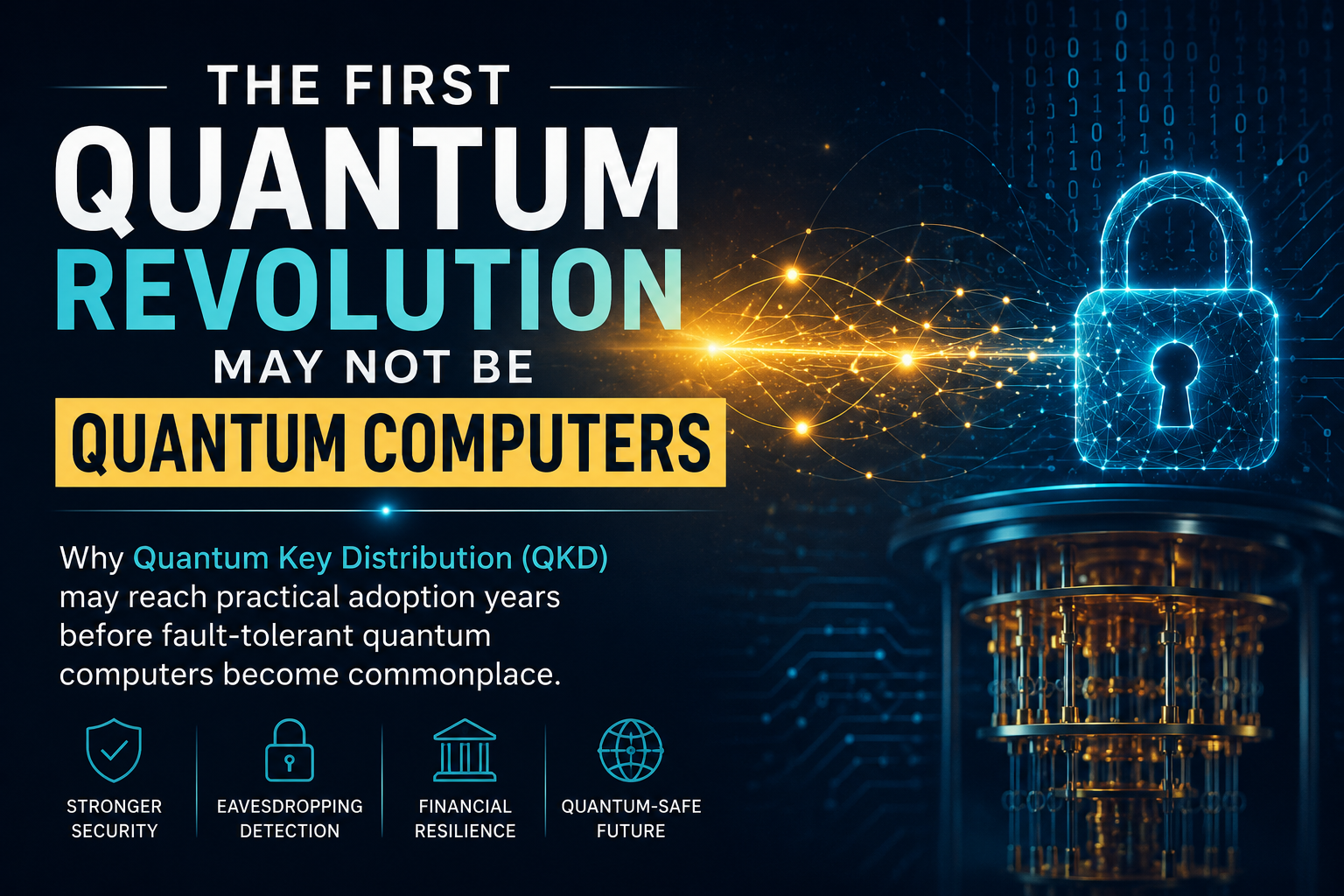
Then there’s LuxQuanta, operating at the intersection of quantum physics and cybersecurity. Their focus on quantum key distribution feels less like future-gazing and more like an immediate necessity, especially as concerns around long-term data security continue to grow.
On a different layer entirely, Quside is working on quantum random number generators—the invisible backbone of encryption and simulation—while VLC Photonics anchors the photonic design capabilities that so much of this ecosystem depends on.
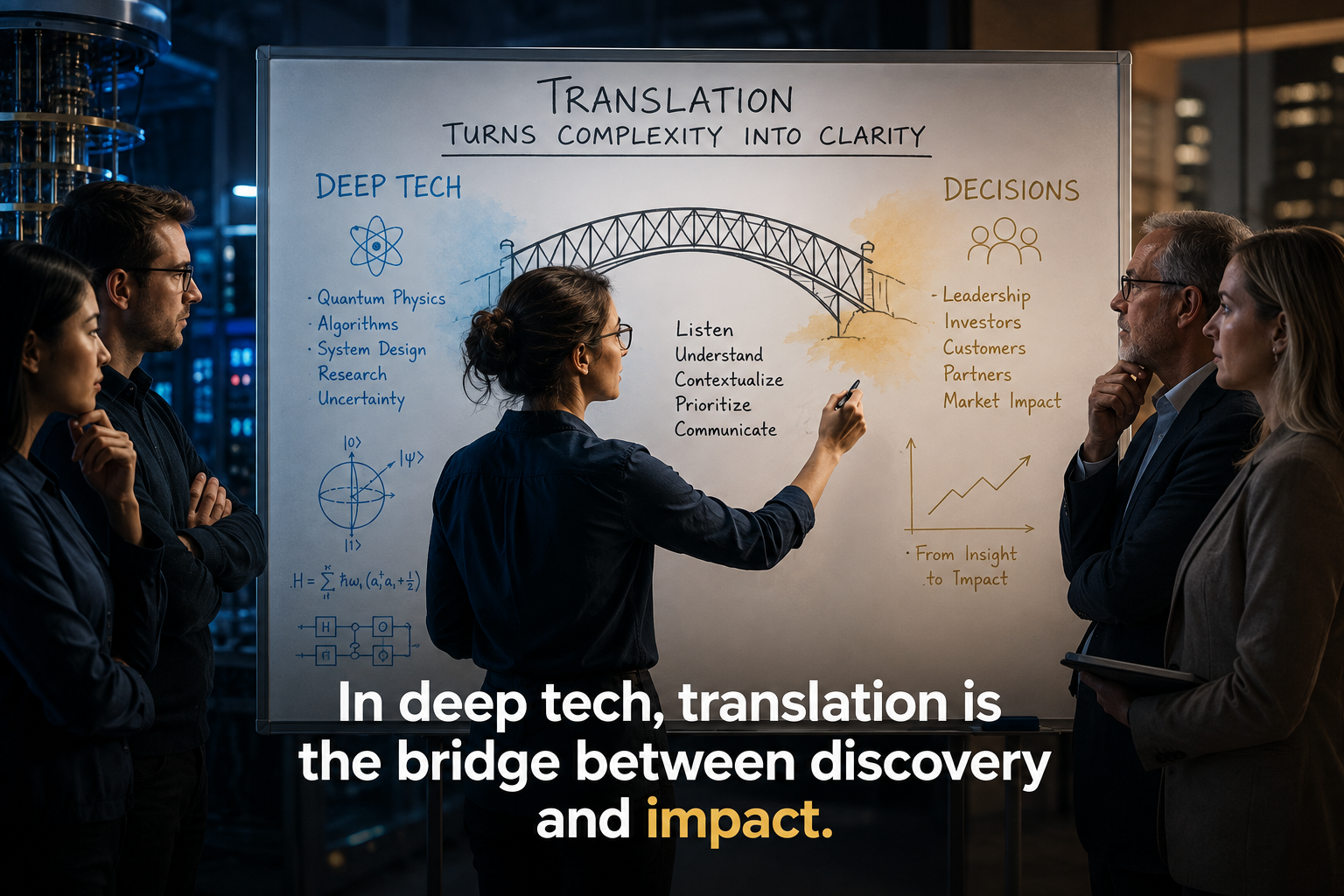
And then come the interpreters. Global Data Quantum and aQuantum sit in that often-overlooked space between deep tech and decision-making, helping enterprises understand how quantum fits into their actual operations—not just their innovation narratives.
The Infrastructure Beneath the Surface
Initiatives like Quantum Spain are embedding quantum capabilities directly into national infrastructure, including integration at the BSC. Meanwhile, Quantum CAT coordinates a network of research groups and companies, accelerating the transfer of lab insights into industrial applications.
There’s a subtle but important difference here: these aren’t parallel efforts. They’re interdependent.
And that interdependence reduces one of the biggest risks in emerging technologies—fragmentation.
A Shift in Focus
Something else is changing too, though it’s harder to measure.
The conversation is evolving.
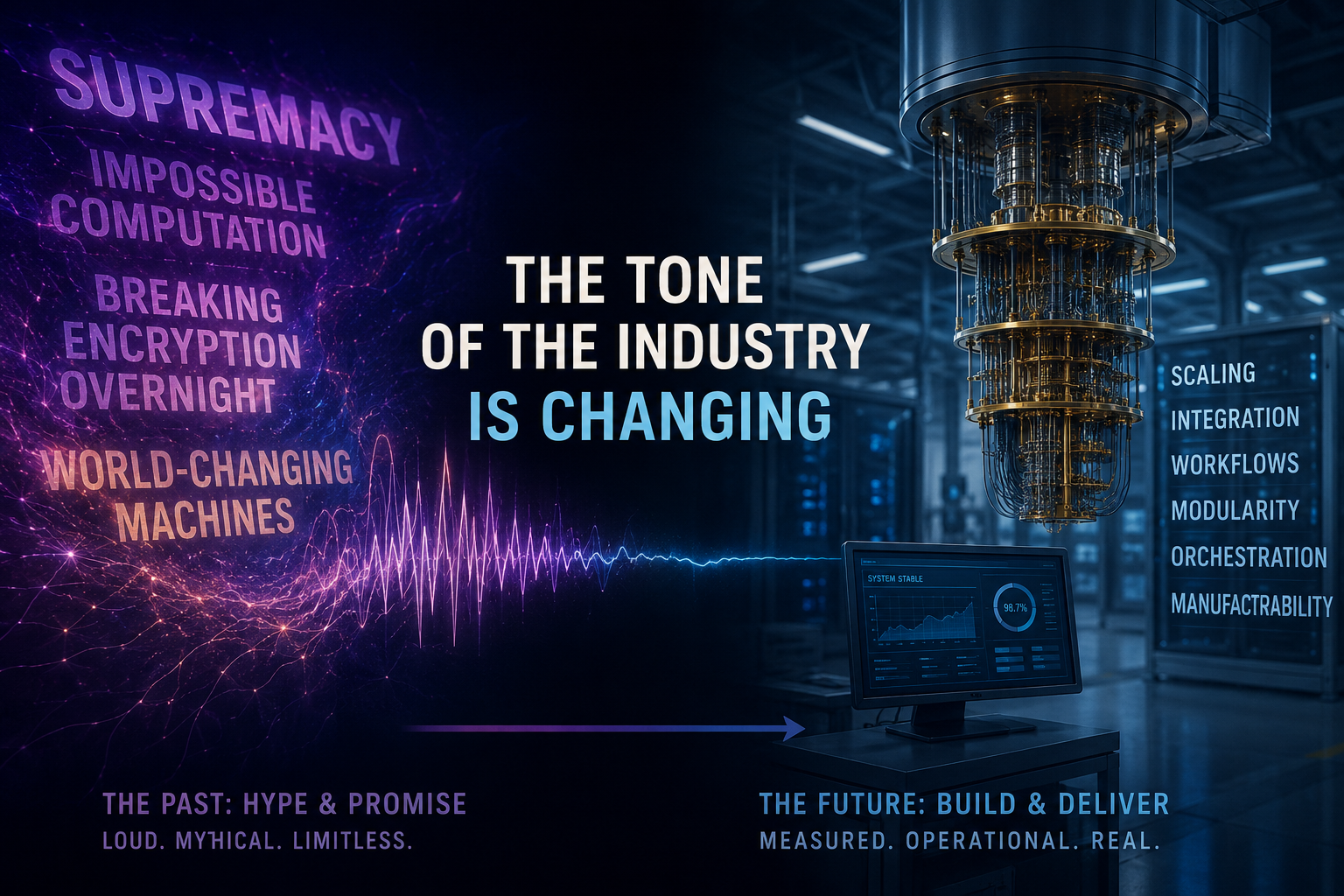
Where quantum computing once lived mostly in the realm of theoretical benchmarks and long-term potential, Barcelona’s ecosystem is increasingly oriented toward near-term impact. Not abandoning ambition, but grounding it.
You can see it in the types of problems being addressed: energy efficiency, secure communications, logistics optimization, and financial modeling. Domains where the question isn’t “can quantum do this someday?” but “can it do something useful soon?”
Events like Mobile World Congress Barcelona and Quantum Meet 2026 continue to bring visibility and investment, but the tone has shifted. Less spectacle. More substance.
Why This Model Matters
Barcelona isn’t trying to outscale the largest global players. It’s not chasing dominance through size alone.
Instead, it’s building coherence.
A smaller, tightly connected ecosystem where research, startups, infrastructure, and policy move in sync. Where progress isn’t just measured in breakthroughs but in how effectively those breakthroughs translate into something usable.
In a field as complex—and as prone to hype—as quantum computing, that kind of coherence might be the difference between momentum and stagnation.
Because in the end, the cities that matter won’t just be the ones that build the most advanced systems.
They’ll be the ones that figure out what those systems are actually for.