Barcelona. On the surface, it’s all sunlight and symmetry. Barcelona as a postcard, as architecture, as a movement. But if you linger just a little longer, past the façades, past the rhythm of the coast, you start to feel it. A different kind of construction. Not loud. Not performative. Just steady. Intentional. Almost… patient.
Because while the rest of the world seems busy announcing the future of quantum computing like it’s a fireworks show, Barcelona is doing something far less cinematic and far more interesting. It’s translating. Taking the abstract, the deeply technical, and the almost-impossible, and asking a very grounded question: “What does this actually do in the real world?” That quiet pivot from spectacle to usefulness is where things start to shift.
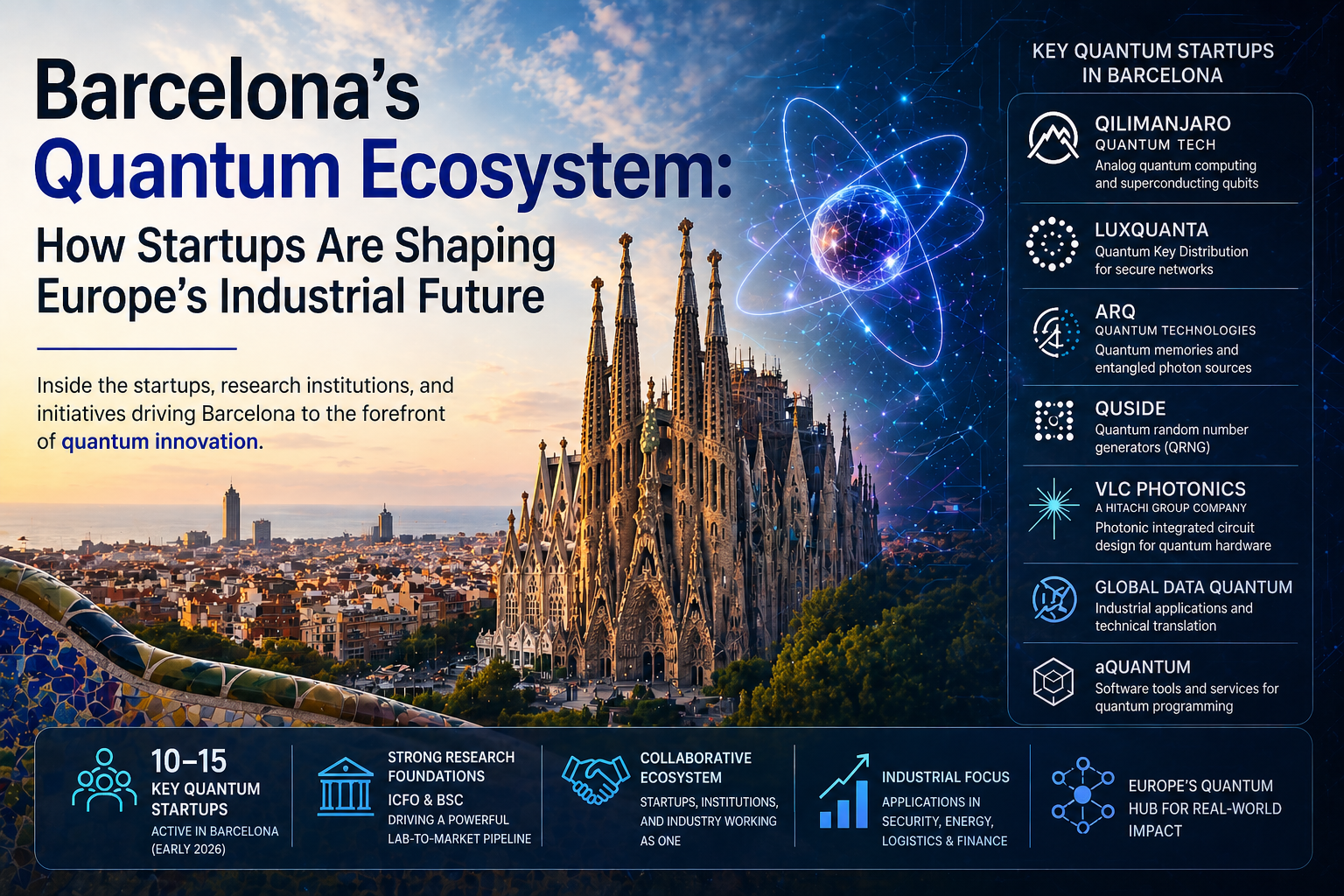
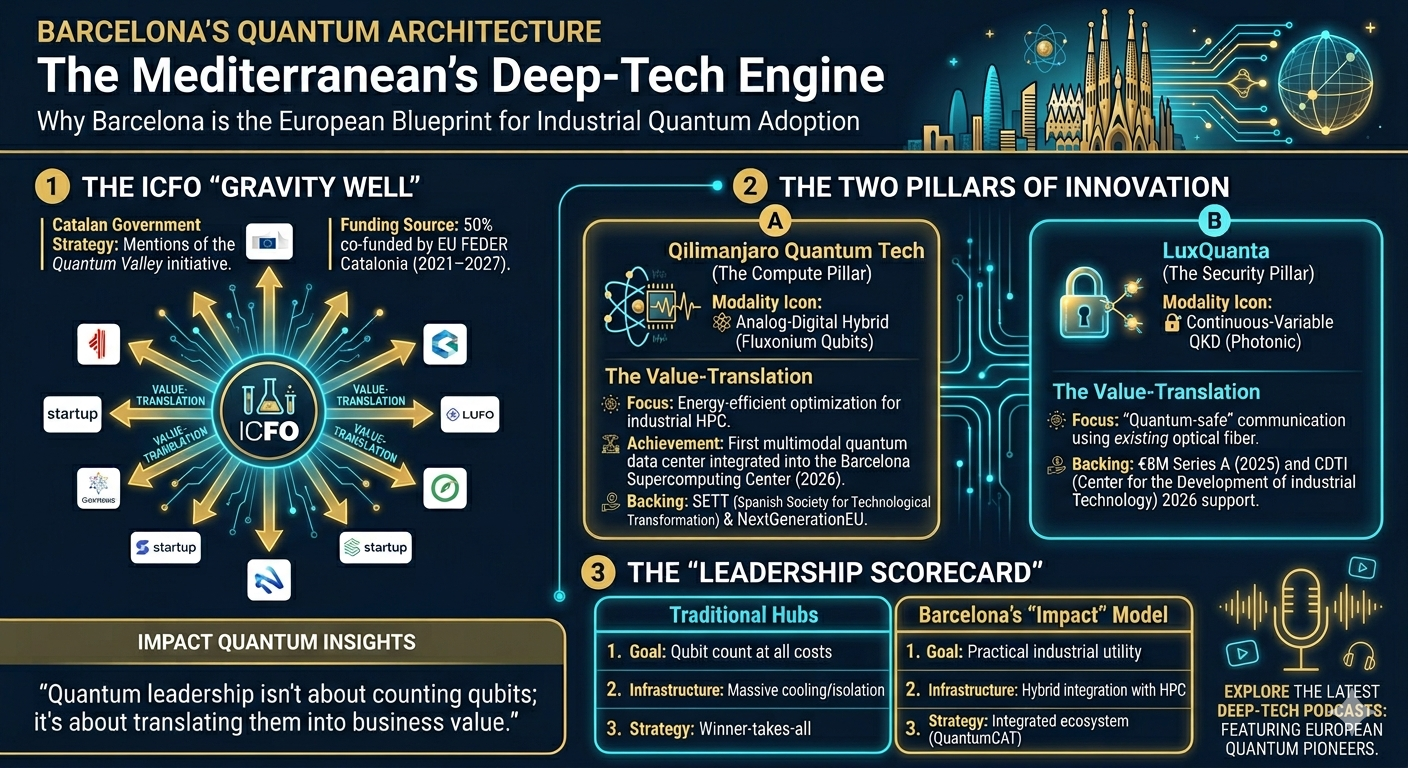
At the center of it all is the Institute of Photonic Sciences, and calling it a research institute almost undersells it. It feels more like a gravity well—ideas fall in, and something tangible comes out. Not immediately, not magically, but consistently. There’s a kind of trust embedded in that process. The Catalan government seems to understand this too, backing initiatives like “Quantum Valley” with the kind of funding that says, “We’re not chasing headlines; we’re building continuity.”
And then you have Qilimanjaro Quantum Tech, which, if you look closely, isn’t trying to win the same race everyone else is running. There’s no obsession with brute force dominance here. No need to shout “supremacy” into the void. Instead, their approach feels almost… restrained. Thoughtful. A blend of digital and analog quantum systems, paired with classical computing, suggests they’re less interested in proving a point and more in solving an actual problem. Energy, for example. Efficiency. The kind of things that don’t trend on social media but quietly determine whether a technology survives contact with reality.
It’s the same energy as LuxQuanta. There’s no mystique for the sake of mystique. Just a very clear understanding that the future of security isn’t theoretical; it’s already under pressure. Their work in quantum key distribution fits within existing infrastructure rather than requiring a complete overhaul, which feels less like disruption and more like… respect for how systems actually evolve. Incremental, yes. But also scalable. And quietly urgent.
What’s striking is how little friction there is between all these pieces. In other places, you can almost feel the tension—startups guarding territory, academia drifting in its own orbit. But here, the boundary feels softer. More permeable. The lab talks to the market. Policy listens. There’s a kind of ecosystem intelligence at play, where progress isn’t isolated; it’s shared, shaped, and, importantly, grounded.
And maybe that’s the real story. Not who gets to quantum first, but who makes it matter. Barcelona isn’t trying to be the loudest voice in the room. It’s doing something more difficult: staying with the work long enough to make it useful. To make it sustainable. To make it real.
The headlines will keep chasing breakthroughs. That’s their nature. But underneath all that noise, there’s this quieter race unfolding—the one that asks whether any of this actually improves how we live, how we build, how we protect what matters.
Barcelona, almost effortlessly, seems to be answering that question already.