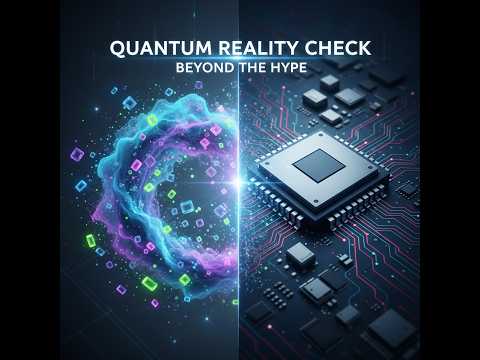
For a time, it seemed as if quantum computing was the magical solution to every conceivable problem. From curing world hunger to completing your tax return instantly, quantum computing was heralded as the ultimate panacea. But as the initial wave of enthusiasm begins to ebb, a more nuanced understanding emerges about what quantum computing truly represents and where it excels.
The idea that quantum computers would wholesale replace classical computers was a common misconception. Instead of being a universal solution, quantum computing’s strength lies in addressing specific high-dimensional problems that are beyond the reach of classical systems. For instance, tasks like optimizing complex delivery routes, solving financial calculations, simulating molecular behavior for drug discovery, and enhancing cryptographic systems are promising areas where quantum computing can shine. These tasks are esoteric and require the specialized capabilities that quantum machines provide, rather than a blanket, exponential speedup for all computational problems.
Based on content from ImpactQuantum
It’s essential to understand that quantum computing is not poised to render classical computers obsolete. Classical computers are incredibly stable, reliable, and suited for a wide array of general-purpose tasks. What we’re looking at in the future is a hybrid approach — one that combines the strengths of quantum and classical systems. Quantum processes will tackle niche, intensive problems, while classical systems handle everything else. Ultimately, it’s about choosing the right tool for the problem at hand, rather than one system taking over all computational needs.
So, why isn’t this hybrid future a present reality? The journey towards widespread quantum computing adoption faces significant challenges. Qubits, the building blocks of quantum computers, are currently quite fragile. They’re highly sensitive to environmental noise and prone to errors, which necessitates extreme cooling and sophisticated error correction methods. The current error rates in quantum computing far exceed those in classical systems. Beyond that, building fault-tolerant quantum computers with millions of qubits necessary for practical applications presents a massive engineering challenge.
The software landscape is another hurdle. It lacks mature tools and frameworks, making it difficult to develop applications for these nascent machines. Today, we find ourselves in what is known as the noisy intermediate-scale quantum (NISQ) era. Devices in this era have tens to hundreds of qubits but carry high error rates and limited scalability, which means they’re not ready to revolutionize everyday business operations just yet.
Disciplined thinking and tempered expectations are crucial to navigating the current state of quantum computing. It’s vital not to get swept away by potential and hype. Instead, we should focus on rigorous validation and consider where quantum computing truly fits within the broader technological landscape. The path forward is one of patience and persistent innovation. While the journey is a long one, paving the way for quantum computing to find its rightful place alongside classical systems will no doubt unlock revolutionary potential in ways we are only beginning to comprehend.