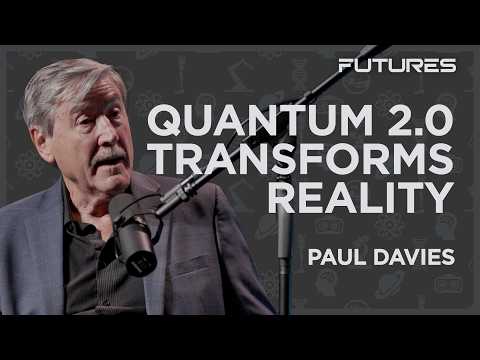
Physicist Paul Davies shares his insights on whether the universe can ever be fully knowable, how quantum mechanics reshapes our notion of reality, and why the convergence of quantum physics and AI may challenge everything we know about consciousness, life, and our place in the cosmos.
Paul Davies is a Regents’ Professor of Physics and Director of the Beyond Center for Fundamental Concepts in Science at Arizona State University. The bestselling author of some thirty books, his many awards include the Templeton Prize and the Faraday Prize of the Royal Society. He is a Member of the Order of Australia and has an asteroid named after him.
Based on content from Luke Robert Mason
In the quiet corners of theoretical physics, where the visible and tangible often yield to the abstract and speculative, there exists a conversation that transforms how we perceive our universe. It’s a conversation that physicist Paul Davies, a luminary known for his profound insights, engages with as if he’s reflecting on the cosmos over a cup of coffee. During a live recording at the University of Warwick, Davies sits down with host Luke Robert Mason on the FUTURES Podcast to explore the intriguing terrains where quantum mechanics and artificial intelligence converge, potentially reshaping our understanding of reality itself.
Davies doesn’t just traverse the grand avenues of science but also meanders through its nuanced alleyways, pondering if the universe, in its entirety, can ever be wholly comprehensible. It’s a question that resonates not just with physicists but with anyone who gazes at the night sky, wondering about the nature of existence. Are we bits of stardust with fleeting consciousness, or is there a deeper pattern we have yet to unravel—a cosmic symphony played in quantum chords?
The conversation delves into how quantum mechanics—the strange, almost surreal basis upon which much of modern physics rests—calls into question what we perceive as reality. It’s a domain where particles blink in and out of existence, defying the deterministic universe classical physics once assured us was tidy and accountable. In this quantum realm, we find a playground for ideas that may seem heretical to conventional science yet hold the keys to understanding the mystifying facets of our existence.
In tandem with this quantum exploration is the rise of artificial intelligence, a parallel frontier where silicon minds begin to mimic human thought processes, albeit through circuitry and code. The curiosity here lies in how these two domains of quantum physics and AI might intersect to revolutionize fields as diverse as computation, communication, and even our conception of consciousness itself. Davies suggests that as these technologies advance, they might prompt us to redefine not only intelligence but life and our role within the grand cosmic tapestry.
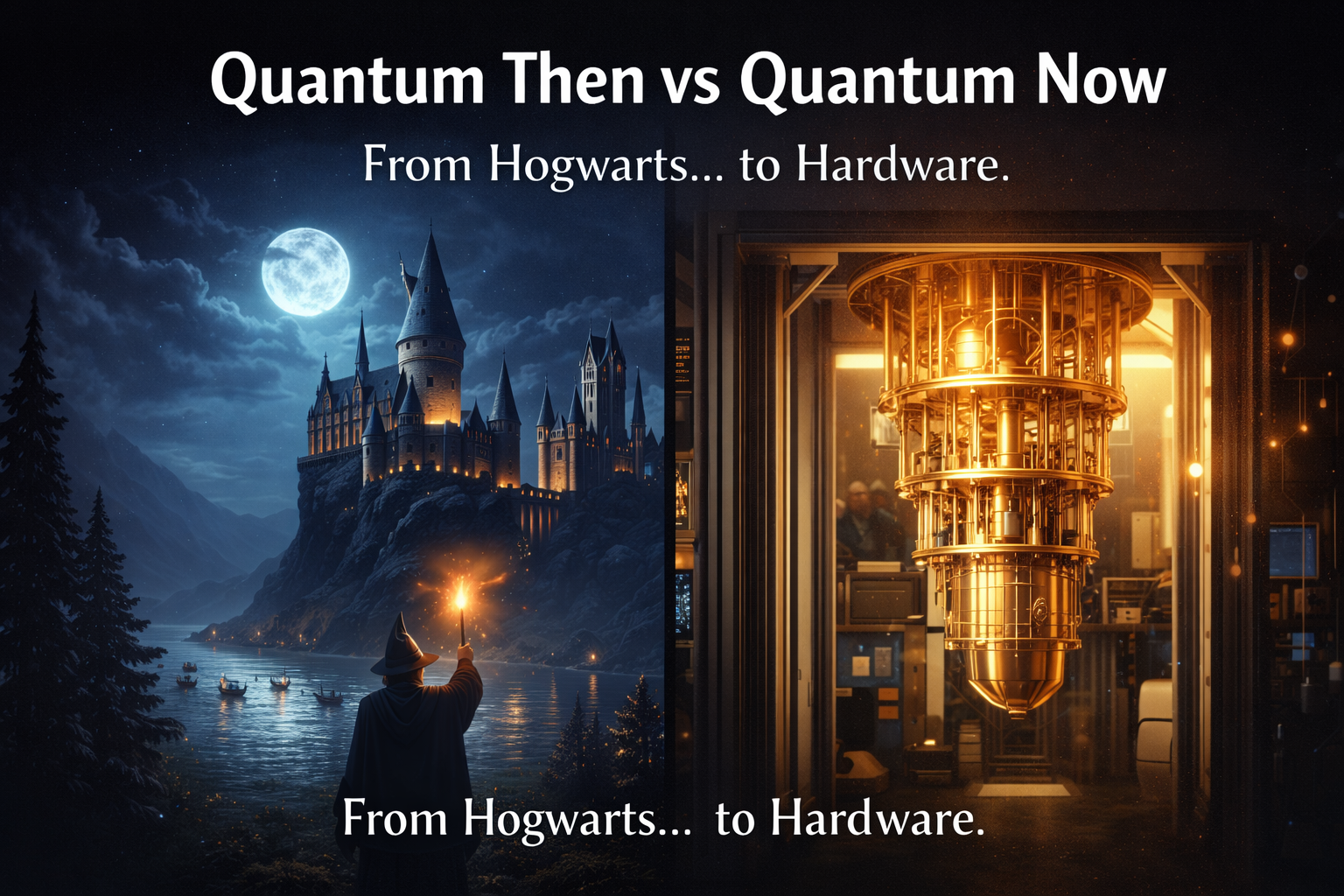
Paul Davies is no stranger to lofty titles or accolades, with an asteroid bearing his name and a host of honors including the Templeton Prize and Faraday Prize. Yet, it’s his role as a thinker and storyteller that shines through, his narrative weaving together threads of science, philosophy, and human curiosity. Through his compelling dialogue with Mason, Davies suggests that we stand on the precipice of Quantum 2.0—a new era that could illuminate both the staggering complexity and subtle simplicity of the cosmos.
Despite the daunting depth of the topics, Davies’ voice remains accessible, inviting us to ponder rather than prescribing definitive answers. There’s a humility in acknowledging the vastness still unknown, a recognition that perhaps it’s the questions we should cherish, not just the answers.
Considering our place within this quantum framework, Davies offers a compelling alternative perspective: while full comprehension of the universe might elude us, the pursuit itself enriches our experience of being. The universe, in its dance of probabilities and possibilities, mirrors our own quest for meaning.
As we look toward the future, guided by the light of what Quantum 2.0 might hold, the conversation comes gently to rest on a reflection—a forward-looking question for us all: How will this expanded understanding redefine what it means to be human?
The journey, as Davies portrays it, is as much about introspection as it is about exploration. In a universe that may never be fully knowable, perhaps clarity comes not from unraveling every mystery but from how deeply we choose to engage with it.
To delve deeper into these ideas, the full episode can be accessed via transcripts and show notes, offering a portal into the world of ideas where the arrangements of atoms meet the aspirations of minds.
- 🎧 Listen on Apple Podcasts
- 🎧 Listen on Spotify
Above all, this dialogue serves as a reminder: to question is to be alive. To understand is to glimpse the universe in shades richer and more vivid than we ever imagined.
—