
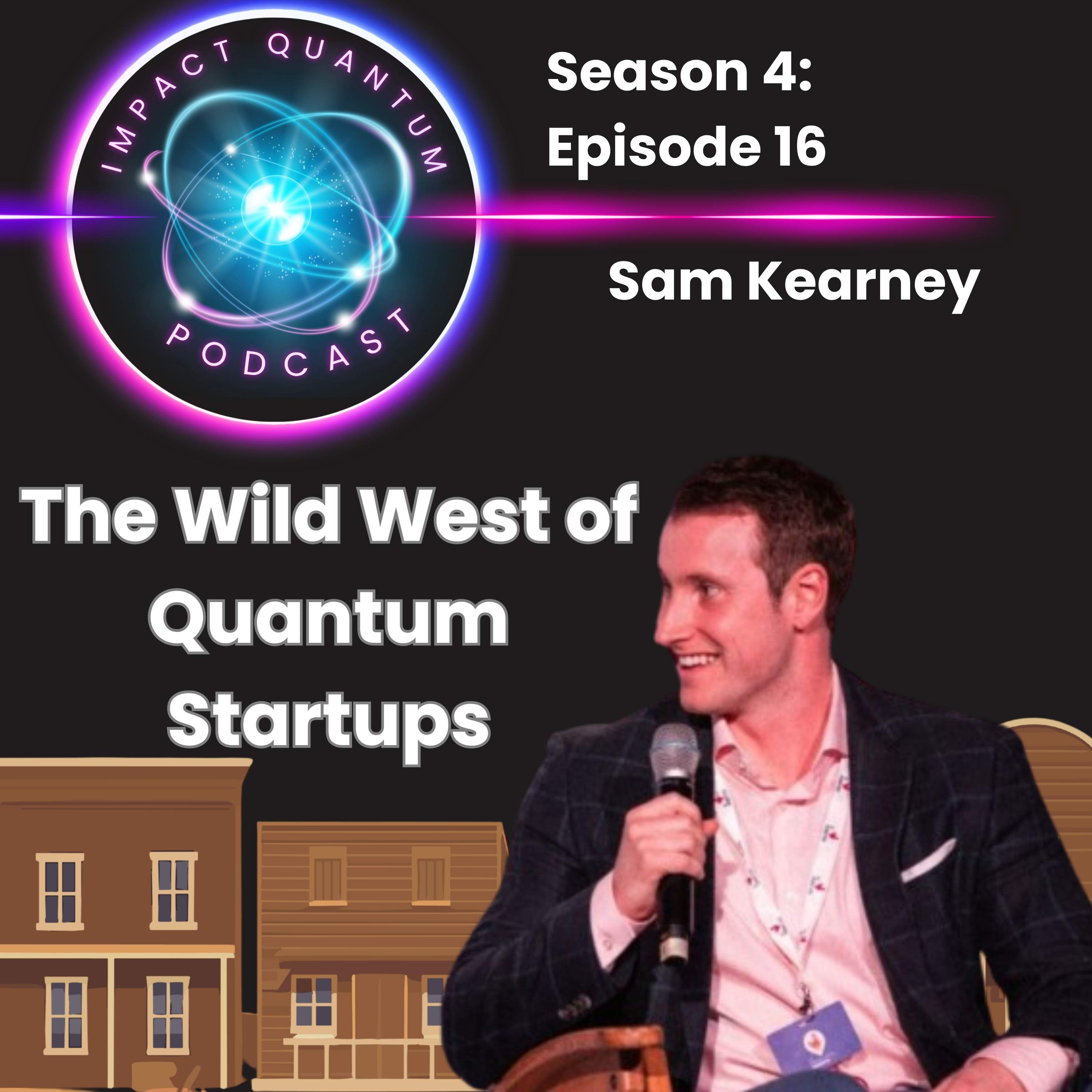
In today’s episode, we’re joined by Sam Kearney, Head of Growth at Haiku, who shares his unconventional journey into the world of quantum technology—proving you don’t need a PhD in physics to make a meaningful impact. Alongside Candice Gillhoolley, we delve into how “careful software for clumsy quantum computers” is helping push the boundaries of what’s possible, discuss the latest on quantum error correction, the intersection of quantum and AI, and the critical roles that curiosity, humility, and diverse backgrounds play in this rapidly evolving field. Whether you’re a quantum insider or simply quantum curious, this episode will spark your imagination about the future of technology and how you can be a part of it.
Links
- Sam’s LinkedIn https://www.linkedin.com/in/samkearney23/
- Haiqu.ai – https://www.haiqu.ai/
- Watch on YouTube – https://youtu.be/F0OQ9UlSlKM
Time Stamps
00:00 Choosing a job title
05:31 Learning about energy and quantum systems
08:57 Quantum startup boot camp experience
11:35 Focus on quantum error mitigation
15:20 Availability of logical qubits on cloud
19:01 AI and quantum computing convergence
22:07 Targeting top quantum research teams
25:39 Preparing for quantum computing
28:51 Impact of simulations on design
32:21 Exploring careers in quantum tech
34:53 Embracing ignorance in communications
38:51 Networking and reaching out for learning
41:00 Quantum startups and big tech dynamics
45:59 Photonic integration strengths
49:15 Investments in quantum hardware companies
52:13 Concerns about SPACs and investing
53:21 Quantum’s estimate on breaking RSA
Transcript
It sounds crazy, but your ignorance can be an asset in a way, as long
Speaker:as you're humble. So, like, welcome to Impact
Speaker:Quantum Podcast.
Speaker:Turn it up fast.
Speaker:Quantum Podcast, they're breaking the mold. Science has got
Speaker:beats and bold. Hello and welcome back to Impact
Speaker:Quantum. The podcast we explore the emerging
Speaker:field and industry of quantum computing where you don't need to be a
Speaker:PhD, you have just need to be a little bit curious. And with me
Speaker:on this cold day
Speaker:up in Canada, but reasonably warm day here in
Speaker:Baltimore, is Candice Hooley, the most quantum curious person I know.
Speaker:How's it going, Candace? It's great. And yeah, it's March
Speaker:and we're, we're basically expecting an ice storm.
Speaker:So, you know, hold on tight. You know, buckle up,
Speaker:buttercup. It's March, so you know it. March is
Speaker:like a box of chocolates. You never know what you're going to get. You never
Speaker:know what you going to get. Absolutely. So today we have
Speaker:the pleasure of speaking with Sam Kearney and he is the
Speaker:head of growth at Haiku. Hi,
Speaker:Sam, how are you today? Hey, happy to be here. Yeah, things are,
Speaker:things are going well. Good to see you both. Yeah, it's a
Speaker:similarly pretty cold day in Toronto. I guess we're both in Canada
Speaker:there and I feel like March gave us a little bit of a teaser of
Speaker:summer. So now that people are going to be complacent in the, in the new
Speaker:cold. So we'll see how those roads are. But good to be talking to you
Speaker:both. Yeah. So tell me, tell me, what
Speaker:is, what does head of growth do or chief of growth? Like, what does
Speaker:that, what does that mean? And for people who don't work in sales.
Speaker:Yeah. Well, I can tell you that that's my, my role is not actually what
Speaker:the, the title would typically imply with. Really? Yeah. Within
Speaker:a startup. Yeah. So essentially, you know, I was one of the first people who
Speaker:joined Haiku and essentially at that point
Speaker:it would essentially have probably been considered biz dev or business development at
Speaker:that time. But to be frank with you, we weren't trying to make sales. We
Speaker:were more looking at partnerships. We were looking at grants at the time. Really. We
Speaker:just needed relationships, things along those lines. And you know, head of
Speaker:sales or head of BD could potentially have like an abrasive effect, especially when you're
Speaker:talking to scientists, you know, people might shut off. So we chose head of growth
Speaker:actually for it to be just almost intentionally vague term.
Speaker:And the broader sort of starcraft startup ecosystem, there's of course like growth marketing Things
Speaker:along those lines. So the title actually likely will change
Speaker:but for now it's, it's out of growth. So in my day
Speaker:to day it's a lot of dealing with business development tasks. So you know, making
Speaker:relationships for the company, pushing things forward on that front, developing
Speaker:offerings, you know, communications. It is still a jack of all
Speaker:trades. You know, I'll still write the occasional grant or have my hands in any
Speaker:cookie jar that is essentially non technical. Everyone else in the team has a
Speaker:technical background and then I get to be the glue that matches it
Speaker:all together. I think that's the important thing to point out. Right. If you don't,
Speaker:you sounds like you don't have a background in physics or
Speaker:technology yet you're still able to be, you know, head of growth at a.
Speaker:We'll talk about Haiku because it looks like an interesting startup. I like their
Speaker:tagline. Was it careful software for. What does it say? Let me load
Speaker:it. Careful software for clumsy quantum computers which get into that.
Speaker:Clumsy hardware needs. Careful software was the original, original
Speaker:tagline there. And yeah, I think that is pretty indicative
Speaker:of sort of the, the nature of the, of the market. People would like
Speaker:to say maybe less so now, but I still think it rings true.
Speaker:And yeah, no, it is a good point. I do not have a quantum background
Speaker:in terms of academics. So I've been working in the space for around
Speaker:six years now, so quite some time but essentially have
Speaker:no, no formal training in. In science
Speaker:or even anything technical. So I mean I was my background, my public administration was
Speaker:what I studied for my undergrad. Did a Bachelor of Global affairs
Speaker:and here I am. So I worked a lot in different technical
Speaker:areas during that time but none of it had to do with quantum
Speaker:computing. So it's definitely. It is doable. So
Speaker:what first pulled you into the world of emerging technologies like
Speaker:AI and quantum. Sure, yes. I mean I guess
Speaker:part of it ended up being at the beginning with attraction to
Speaker:startups. So one of my first jobs out of undergrad was
Speaker:working at the incubator at the University of Ottawa and that always appealed to me
Speaker:of dealing with entrepreneurs trying to apply technologies.
Speaker:And then basically I ended up working. I got more into the policy space
Speaker:at my university of Global like the Master of Global affairs in Toronto.
Speaker:Essentially with that I was very interested in energy and energy policy, energy
Speaker:tech and with that essentially just networked my way into
Speaker:an energy tech startup. So essentially that was. I was the first
Speaker:employee at that company. It did not go very well. While
Speaker:it's. I mean apparently it's still alive and kicking.
Speaker:But yeah, that was one experience there but essentially had a lot of
Speaker:different experiences I could into regarding technology and tech and
Speaker:entrepreneurship. But it was more so from that startup angle rather than from
Speaker:me actually picking up the core capacity as far as
Speaker:technical understanding. Well, not
Speaker:every startup has a happy ending, right? We only hear about the ones that have
Speaker:awesome endings. Right? That's definitely true. Yeah.
Speaker:Billion dollar plus evaluations and things like that. Those are the ones
Speaker:that make the news. I would say that with, with the energy space like that
Speaker:was the first time where I had to. It was like building energy systems and
Speaker:things like that and getting things sort of. I sort of viewed it as like
Speaker:a challenge to learn about it, if that makes sense. And that was kind of
Speaker:fun. And then quantum was obviously an even more daunting sort of like, oh, let's
Speaker:work in this space where I have no idea anything about it and it's ultra
Speaker:technical, so let's see how I could do it. And yeah, it is
Speaker:sort of like a, like, oh you don't think I could do it, oh, watch
Speaker:me type of thing. That's got sort of a fun attitude that I didn't realize
Speaker:I had until the last few years, but absolutely. So
Speaker:what helped you personally cross the threshold from
Speaker:curiosity to understanding when in
Speaker:quantum computing, which can be very intimidating.
Speaker:So with quantum computing I had a. I guess
Speaker:as far as how I got into the field was through. Through networking. I had
Speaker:never met the people there before just reaching out for coffee chats. I graduated
Speaker:into Covid, probably had about 100 coffee chats
Speaker:with people who I've viewed as doing interesting things. One of those people
Speaker:happened to be leading the quantum stream at the Creative Destruction Lab.
Speaker:And I'm happy to get into what that organization is, but it's the basically
Speaker:the first ever quantum incubator that ever existed for quantum
Speaker:startups. It was propounded by Peter Wittick who is a
Speaker:renowned. He's no longer with us unfortunately but figure in the
Speaker:quantum space. And yeah, essentially I just, just through serendipity and through
Speaker:hustling through networking spoke to a guy named Sean oh who was
Speaker:working there at the time leading the quantum stream. And essentially at
Speaker:the time I was very set on actually working in clean technologies. So I was
Speaker:pretty set on that. I happened to have this conversation and he essentially, you
Speaker:know, sold me on the idea of, you know, this is the epicenter of
Speaker:a brand new technology. There's nothing like it. At the time,
Speaker:CDL is the only place for this. You should Reconsider
Speaker:should definitely, you know, check this out. And it was very compelling.
Speaker:So that was actually the story of how I got into this space. And then
Speaker:learning it, learning about it was very intense. The CDL program
Speaker:you're speaking to, you know, you're recruiting different quantum companies
Speaker:to join. You're surrounded by some of the world's best scientists in
Speaker:quantum. So it is sort of a, a very uniquely
Speaker:lucky place to be learning about quantum. But it is also like
Speaker:you have to get up to speed quickly in order to be useful and
Speaker:to survive there. So yeah, I think it was a, I was uniquely
Speaker:lucky to be there, but that, that's sort of how it, how it came to
Speaker:be. It was actually through a lot of serendipity and well, a lot of, a
Speaker:lot of talking to people to make opportunities happen, but serendipity nonetheless.
Speaker:Interesting. And CDL is probably
Speaker:your, the acronym for Creative Destruction Lab, not Commercial driver's license.
Speaker:Yeah, yeah, yeah, exactly, exactly. As much as I'd love to get into my,
Speaker:my driving certifications, which I'm happy to do, it would be very exciting. But
Speaker:yeah, it is a great instruction lab, which is a pretty interesting name for a
Speaker:company nonetheless. No, that's an interesting. So, so where was CDL
Speaker:based? Was that also in Canada? Yeah, so cdl, it's, it's a global
Speaker:organization, but essentially it was based in, it's based in Toronto
Speaker:now. It's got I think quantum sites all throughout the
Speaker:world or throughout Canada. I'm not sure. I haven't been able to keep totally in
Speaker:the loop with them. But should I just maybe introduce what they do or
Speaker:talk about what they do? I don't work there now, but I'm happy to talk.
Speaker:No, I'd be curious like because I mean it's, it sounds if I had to
Speaker:like throw a dart at the wall and make a guess, an educated guess sounds
Speaker:like Y combinator, but for quantum companies, yeah,
Speaker:it's, it's similar in some ways. So I guess the biggest difference is
Speaker:that it's a non profit so they don't take any money from companies
Speaker:coming through. Basically the companies that, that come
Speaker:through just pay by giving their time. And there's another difference
Speaker:which is that there was a boot camp. This doesn't exist anymore, but there was
Speaker:a boot camp where essentially you would just take individuals from around the world
Speaker:and put them in this boot camp and you give them training from
Speaker:successful entrepreneurs, from renowned scientists. So we had the
Speaker:former COO of Google Quantum AI, we had John Martinez at the time.
Speaker:So big hitters in the quantum space who would be giving them modules
Speaker:on both quantum science and on starting a company. And then we'd actually
Speaker:put them in teams, we'd get them on challenges and they would form companies in
Speaker:that boot camp. Oh wow. So that was like brand. It was basically like a
Speaker:small little petri dish where we try to encourage quantum companies
Speaker:starting. And that's actually where Haiku was formed was in, in that boot
Speaker:camp. After the boot camp, there's sort of like this like
Speaker:every two months there's. They meet with mentors who are scientists,
Speaker:entrepreneurs, people from industry and they get just like feedback on their challenge.
Speaker:They help them to set objectives. And around a third of all companies
Speaker:actually graduate the program. So most, most companies get cut.
Speaker:So every, every couple, couple months, if no mentor raises
Speaker:their hand, your company's just, just gone from the program. The last thing
Speaker:I'll say is maybe 20% of all quantum companies have either come through or
Speaker:partner with cdl. From when I was last there, I don't know if that status
Speaker:changed, but people don't hear much about them because they're a nonprofit
Speaker:with very little money. But they've. They. Most of the CEOs in this
Speaker:space know about it, but it's sort of more on the down low, I guess.
Speaker:Interesting, interesting.
Speaker:So I'm assuming the, the
Speaker:messy quantum computers is a reference to error correction.
Speaker:Yeah. So I guess like for, for listeners who aren't too, too
Speaker:clear, I will make one slight correction even though it might not be the
Speaker:most interesting to the, to the, to listeners. But there's sort of this
Speaker:idea of quantum computers right now have a lot of errors or they, they have
Speaker:more errors than, than classical computers as your listeners may know
Speaker:when we say error correction. So there's a lot of ways to deal with error
Speaker:errors. Error correction is often more, at
Speaker:least in my view, referred to in terms of error correcting codes.
Speaker:So more so for using multiple qubits to catch the errors
Speaker:and identify them and be able to correct them on the fly.
Speaker:So we think of like fault tolerant perfect computers of the future. That's
Speaker:typically with, with error correction. So what Haiku is more focused
Speaker:on in the near term are things like error mitigation. So you know, pre and
Speaker:post processing segments, optimization of
Speaker:circuits or compressing them, data loading, basically anything that you'd
Speaker:need to be able to run on current devices and devices
Speaker:as they grow. We try. That's, that's sort of what the
Speaker:impetus is. So when the founders were beginning the
Speaker:Company, they essentially were trying to build applications originally in the
Speaker:boot camp, as a lot of other companies were. So they were trying to look
Speaker:at finance optimization or pharmaceutical
Speaker:drug design, and they try to implement an algorithm
Speaker:they built on real hardware and you immediately just run into
Speaker:bottlenecks of noise or your circuits are too deep or whatever it may be.
Speaker:And they were like, let's just try to figure out the actual sort of underlying
Speaker:bottlenecks of running things on quantum and just do the quantum part and let other
Speaker:people use those tools. So that's sort of the idea
Speaker:there. I did also see many companies coming through cdl, so
Speaker:I probably spoke to literally every single company that existed in
Speaker:Quantum for those three years at cdl. And this
Speaker:is also quantum information, so there's also communications and sensing as well, but
Speaker:every computing company as well, regardless. And there were a
Speaker:lot of companies building like application specific. You know, we're going
Speaker:to build algorithms for logistics or algorithms for drug design.
Speaker:And many of those companies died or they just, they just
Speaker:swapped to classical. And I think part of the reason why is they were
Speaker:so focused on that high level stuff and they weren't really focused on like the
Speaker:actual nitty gritty. And there wasn't a tool set for them to like implement things
Speaker:as good as they can on, on, on hardware, which is very
Speaker:fraught with errors. And there's not that many qubits. So it is
Speaker:hence the tagline and, and hence the company. So
Speaker:interesting.
Speaker:Sorry, Candace, it looked like you were gonna ask a question, so. No, no, I'm,
Speaker:I'm trying to think like I know that there's like a race going on, you
Speaker:know, to figure out quantum error
Speaker:correction. And I wonder like,
Speaker:what we should be looking for to
Speaker:see like, what kind of
Speaker:breakthroughs, like, could we be looking,
Speaker:looking for as, as, you know, as this race towards,
Speaker:you know, quantum error correction continues.
Speaker:So as far as like, do you mean like, so do you mean like breakthroughs
Speaker:in order to be able to sort of achieve a false tolerance?
Speaker:Yeah, so on, on that front, I mean, the, the codes have been getting
Speaker:better and better regarding that. So. And by that I mean like
Speaker:the, the ratio of. So basically for
Speaker:every logical qubit you have, that's not just one qubit, that's a series of
Speaker:qubits in a. You can think of them in like a little
Speaker:array. And I'm not the most technical guy, so please forgive me if this is,
Speaker:you know, slightly inaccurate, but it should help to get the idea across.
Speaker:So you have a system of qubits and they're all working together. So if there's
Speaker:an error on one, they kind of talk to each other. You get the signals
Speaker:from all of these different qubits in order to tell if an operation is correct
Speaker:or not from the qubit you're trying to protect. You can imagine it's like an
Speaker:army protecting one qubit, which is your logical qubit.
Speaker:And essentially that ratio has been getting better and better. So essentially the
Speaker:ratio of physical qubits or the non logical qubits that it
Speaker:takes to support that error corrected one is getting smaller
Speaker:and smaller. So companies are being able to push that forward. It used
Speaker:to be within the thousands. I forget the exact number of people have reduced it
Speaker:to now, but I believe it's under 100 in some cases. So that
Speaker:is a sign of increasing proximity
Speaker:for me. Probably the most exciting signal that I'm looking for
Speaker:is whether logical qubits are even available on
Speaker:the cloud readily for people to use. I mean, we're not
Speaker:even there yet. So I would say that to me, is one that
Speaker:as someone who is constantly trying the different
Speaker:computers and devices, I'm very excited at least to
Speaker:see logical qubits that are readily available for people
Speaker:to experiment with. That would be one for me.
Speaker:But, yeah, I guess it is interesting seeing these companies reducing
Speaker:the thresholds that they need and then also looking at
Speaker:RSA encryption, encryption, for instance, which is a long way away. And by that I
Speaker:mean the encryption that we all use, people always use it as a benchmark
Speaker:of how many qubits do we need before we can crack that encryption. We're still
Speaker:very, very far away. But you see those estimates getting lower and lower.
Speaker:Y2Q. Yes, Y2Q. Yeah, exactly,
Speaker:exactly. And again, far away is a relative term. Right. Originally,
Speaker:heard about this, I heard mid-:Speaker:lucky. Now there's some people saying late
Speaker:s, early:Speaker:yeah, it's a moving target. Right. That. Why too. But the
Speaker:short of it is you got to get ready. You have to get ready regardless.
Speaker:Right. I'd be very, very, extremely surprised. Like,
Speaker:I don't know if Poly Market has a betting tool for this or if I.
Speaker:Oh, they totally should. Yeah. If I could be gambling on this, I. I will.
Speaker:I will ruin my life financially on this bad. You know, or, or
Speaker:make it. But I don't think that we're going to be breaking RSA before
Speaker:2030. I'd be very, very surprised if we reach that scale.
Speaker:I also think there's two Y2Q dates. Right? There's the Y.
Speaker:It's not like Y2K. When it was a fixed calendar date, you knew it was
Speaker:going to happen. Right. And it was very public. I think there's going to be
Speaker:at least two Y2K Y2Q dates. Right. The one
Speaker:that we know about publicly and the one that whatever nation
Speaker:state does it first. Okay. They're going to keep their
Speaker:mouth shut. Right. Like, so I would imagine,
Speaker:I would imagine. And there might be even multiple Y2Q dates. Right. Like, you know,
Speaker:us may have it one day, China may get it another and you know, a
Speaker:third country or whatever could, could pull it off. I don't know.
Speaker:Like, I just think that when it does happen, we may not
Speaker:know until decades later. And I know that sounds conspiratorial, but there's
Speaker:actually proof of this. The whole. There was a
Speaker:documentary, it's also on YouTube, but it was basically the Diffie Hillman
Speaker:exchange. I think in a previous episode we kind of geeked
Speaker:out on that. But basically it's basically the foundation of
Speaker:public private key. Right. Encryption. And
Speaker:it turns out that somebody at
Speaker:British Intelligence had worked it out about
Speaker:five years before Diffie and Hellman did, and we
Speaker:didn't know that till the:Speaker:So. Wow. Yeah, there's definitely, I mean, there's probably research going on that we're not
Speaker:aware of. So I wouldn't. I certainly hope so.
Speaker:Yeah. Given the amount of money spent in taxes on this around the
Speaker:world, I certainly hope that this is going to. Something. Air
Speaker:quotes. Useful. Yeah, I wouldn't, I wouldn't be surprised if things start being.
Speaker:Being useful before we hear about it in a sort of military or like
Speaker:intelligence sense. I mean, people are already gathering data, doing prep
Speaker:later, that's for sure. So, yeah, don't think that's out of the question
Speaker:at all. You know, people
Speaker:often talk about AI and quantum as separate revolutions.
Speaker:Do you see them as parallel tracks or do you see them
Speaker:as eventually converging? I
Speaker:think eventually they will converge.
Speaker:I think that for now you have a lot more of using
Speaker:AI for quantum purposes. So, you know, trying
Speaker:to use AI to detect and deal with errors or,
Speaker:you know, using AI to speed up quantum research workflows
Speaker:or to optimize circuits. Things along those lines are like,
Speaker:we're looking at how do we integrate, you know, our platform to be like
Speaker:easily accessible by AI or so people can figure out how to build an
Speaker:algorithm and run it, run it better through us so that's all,
Speaker:you know, relevant. I suppose there are ways that quantum
Speaker:computers can benefit AI,
Speaker:but I'd say that those are for the most part a bit farther out
Speaker:in terms of like when we'd actually be able to, to, to use them
Speaker:for, for those purposes, for those reasons. But
Speaker:those there are, they are available nonetheless. And I'm going to be honest though, it's
Speaker:not an area that I'm the most, I don't have the most expertise in. So
Speaker:I'd be, I'd be driving us both off a cliff if I, if I
Speaker:tried to give a lot of insights into Quantum for AI,
Speaker:to be honest with you. I mean, we're interested in qml, so quantum machine learning
Speaker:is definitely of interest to me and our team. So
Speaker:essentially with that we do think that quantum machine
Speaker:learning has potential both in the near term and the long term. And
Speaker:essentially the reason for that is because it can deal with small data sets
Speaker:so problems that don't have a huge
Speaker:abundance of data to deal with. So you know, for instance, if you think of
Speaker:like financial fraud, there's only going to be a couple fraud cases in a data
Speaker:set. There's a lot of variables that go into that of like what you're looking
Speaker:for. And so classical models struggle with that. Another
Speaker:example that would be relevant would be like anomaly detection for
Speaker:geology. So people are, I was meeting this company called
Speaker:Humanex, shout out to Humanex. But they do, they do basically a
Speaker:bunch of land analysis and essentially
Speaker:they can identify which areas are the most
Speaker:likely to have a deposit before they look for minerals. And with that,
Speaker:if you're looking at data sets you're training on, there's not really that many, there's
Speaker:not many anomalies. They're called anomalies for a reason. And with quantum
Speaker:you can get basically more information, more features out
Speaker:of a limited data set. So that to me is very interesting
Speaker:and I guess that would exactly be an intersection of AI and quantum.
Speaker:It's also one that's a little bit, I guess there's some
Speaker:there, there at least was historically some controversy over QML as to
Speaker:whether it would have advantage. But we think some of the empirical results have been
Speaker:coming out, have been quite promising. And yeah, we're pushing forward on that for
Speaker:sure. But that's, that's, that's an area that I do think is, is quite
Speaker:interesting
Speaker:when you're looking to find partners in, know,
Speaker:in this role of growth. Do you come across
Speaker:a common misconception that that is,
Speaker:that's going on Right now for quantum computing,
Speaker:I guess, let's see as far as,
Speaker:I guess with the people who I'm dealing with for the most part, like we're,
Speaker:we're really looking for, at least to begin with the
Speaker:most advanced quantum teams who are pushing forward the hardest. So
Speaker:like what we're, we're not like just trying to get people who've never
Speaker:heard about quantum onto a platform to learn about it. It's mostly
Speaker:for like we're at this point we're trying to get the like elite
Speaker:in the research side onto what we do. So I would
Speaker:say that like there's not that many big misconceptions that I encounter from like
Speaker:the people we're trying to target right now, but when I teach, speak to people
Speaker:at conferences and things like that and just in general like the much broader
Speaker:public. Absolutely, definitely see a lot of misconceptions. I think
Speaker:one that I would say is that yes, the space is advancing
Speaker:rapidly but I think just because of the nature of some of the pr,
Speaker:some of the tones that people are taking, everyone's claiming
Speaker:advantage or you know, claiming maybe more than they've achieved
Speaker:with some of their results, that it's easy for these people
Speaker:to think that we're already at phase of quantum advantage. We
Speaker:already have fault tolerant computers because people are talking about logical
Speaker:demonstrations etc. And so I think for, for people who are newer, it's, it's
Speaker:very easy to think that we're much more advanced than we are. For someone entering
Speaker:the space right now, I think it's, you know, I see some people thinking that
Speaker:it's already, Quantum computers are already being used in production
Speaker:all the time and that's just not the case. You know, you might be able
Speaker:to make the case for an annealing company like D Wave or something like that,
Speaker:but for the most part I would say that's, that's just a misconception.
Speaker:Some people do fall for the hype of course, and I can't blame them. I
Speaker:mean like, you know, they're, they're trying to learn about a space. Maybe they only
Speaker:spend a day scrolling on LinkedIn or something and then they can come out with
Speaker:that conclusion. And yeah, so I think that's, that's definitely
Speaker:a misconception. I think that that exists. Some people think we're much
Speaker:more advanced and then also if you look at some of the roadmaps
Speaker:and how they've, they've basically shifted back over time,
Speaker:I think there's reason to believe that it will not speed up as quickly
Speaker:as people might anticipate. So, for instance, if you look like when I joined this
Speaker:industry, the roadmaps of some companies who I won't name, but some
Speaker:ey'd have a million qubits by:Speaker:we are. Do we have million qubits? No. So
Speaker:there's been a lot of promises and a lot of shifting roadmaps that have happened
Speaker:over time and I'd love to have. So we're just trying to deal with
Speaker:essentially whatever hardware is actually available, what do they actually deliver.
Speaker:But it's very easy for people to read these roadmaps and then they believe them
Speaker:because they have, they don't know the historical context. And you know, I don't want
Speaker:to say that none of these roadmaps are correct, but I'm just saying, well, one
Speaker:of them will be. One of them will be. One of them will hopefully be
Speaker:correct. And I'm just saying there should be more than a
Speaker:couple grains of salt when people read these. Well, I think it's also fair
Speaker:too. Right. LinkedIn. I love LinkedIn. Right. But it is a hype
Speaker:vortex. Right. And that's only going to. It's gotten worse actually. But like,
Speaker:so you can't, if you, if you look at LinkedIn and
Speaker:you see that as your ground truth, reality, you have bigger problems.
Speaker:Yeah, yeah, that's true. Yeah. If I wake up and I ground
Speaker:myself with LinkedIn, I'm gonna be, I'm gonna be floating
Speaker:in the clouds or something. But
Speaker:absolutely.
Speaker:Any questions? I'm thinking about what should enterprise leaders
Speaker:be doing today to prepare for a quantum
Speaker:future? Yeah, I mean, if I was an enterprise
Speaker:leader looking for quantum future, I mean, I would be looking at
Speaker:my, I would try to be, trying to get quantum ready in terms of like
Speaker:just understanding where quantum could be applied within my, my company,
Speaker:then I'd start building, you know, algorithms for those and looking at which are the
Speaker:most promising and then just try to start scaling them up and being
Speaker:on the edge of what performance can be. I think that it's a
Speaker:dangerous trap to potentially if you just try to focus for
Speaker:future perfect devices and not actually implement anything on the
Speaker:real hardware. So some companies, for instance, will look and they'll say, okay,
Speaker:we're just going to build algorithms for once. We have a million qubits
Speaker:and we're not going to actually run anything before then. And in my opinion, there's
Speaker:a danger there of missing any value before we get to those scale of
Speaker:devices. And you know that that could be a longer Time than
Speaker:maybe some of these enterprise leaders have considered or understand.
Speaker:So my. Yeah, basically getting started on analyzing and then getting
Speaker:started on actually building and implementing to be on the frontier of performance.
Speaker:And then that way hopefully you can have, you know, your, your ability to be
Speaker:at advantage or close to advantage with, with your peers rather
Speaker:than trying to do catch up, which might take you more time to, than you
Speaker:think. So that would be my angle for, for most of them.
Speaker:Obviously if you're a banker, you're something that has a lot of encryption requirements.
Speaker:Start doing the transition to being quantum secure now rather than later.
Speaker:But that's sort of a whole other can of worms that I don't actually deal
Speaker:with anymore. Thank God. I, I don't really like to. I was, I,
Speaker:for some reason with you, like I just can't, I can't find quantum security
Speaker:interesting. I don't think I ever will. I, you know, it's, it's obviously hugely important,
Speaker:but I just can't do it. I don't, I don't know why. When I was
Speaker:at creative Destruction lab, yeah, I mean I'd be dealing with
Speaker:those, you know, that sort of stuff in the creative instruction labs is one of
Speaker:the buckets. And it's like, yeah, it's, I don't know, it's just, it doesn't get
Speaker:me going. So it's, but it is something that people should be thinking about.
Speaker:What real world applications of quantum computing excite
Speaker:you the most? Energy, medicine,
Speaker:logistics, material science.
Speaker:I'd say I'm too focused on the near term.
Speaker:I'll try to think in more of the, the ultra long term. But I
Speaker:guess to me the idea of novel materials is probably
Speaker:one of the most interesting ones. And I guess the reason for that is that
Speaker:like if you look at the world around you, you know, just the fact that
Speaker:people might not even notice it's from quantum computers. But if there's just better
Speaker:materials, if there's malleable materials that can, that can have different shapes, if
Speaker:there's know just everything in the world being better at its core
Speaker:or you know, being more flexible at its core, you know, different capabilities
Speaker:of materials, it's something that will be subtle in a
Speaker:way and influence the rest of technology and society as a whole. So it's,
Speaker:I think that to me is a very fundamental and interesting
Speaker:potential for quantum computers. Like if we could have better
Speaker:conductors or if we can have, you know, materials that
Speaker:can, can revert to different shapes more easily, um, all of those
Speaker:could just have very fundamental like impacts on, on the world around us.
Speaker:And I think that would be hugely interesting. Um, I think it's just for me
Speaker:it's when it comes to like impacting the, the physical world, that's always
Speaker:where it becomes more interesting. Like looking at even like
Speaker:computational fluid dynamic simulations. So the idea that
Speaker:when like we'll just be able to have way quicker
Speaker:iterations of any physical product. So it's like instead of having to build
Speaker:a huge wind tunnel to test a plane or to test a device or
Speaker:whatever it may be, you could just simulate that and have
Speaker:a, have a, your prototype a time that an
Speaker:aerospace or a car company or a product company can go from
Speaker:having the design to implementing can just be massively
Speaker:reduced. And so I would hope, you know, say, you know,
Speaker:hopefully they don't just build worse products quicker, which
Speaker:sometimes maybe the profit motive might incentivize them to do.
Speaker:But in a more ideal or with some companies who have a better mindset,
Speaker:it could mean that they just have drastically better designs and be able to maybe
Speaker:be more creative with their designs of any products that we have in our lives.
Speaker:So that to me is quite interesting. There's also
Speaker:other angles that are more ideal, like more interesting from like a
Speaker:morals perspective I think. But from just pure what gets
Speaker:me excited, I think those are probably them.
Speaker:So if quantum computers can accurately model molecular
Speaker:interactions, which industries would benefit from that? First?
Speaker:Energy storage, Pharmaceuticals,
Speaker:Advanced manufacturing, Something else.
Speaker:I'm actually, I'm not 100% sure which would be the first. I think that
Speaker:I guess the one that I would imagine,
Speaker:I'm not sure which one would be absolutely first probably like probably
Speaker:materials discovery just because there's less, less regulations involved. I think that
Speaker:that might be one that is, is easier to more of a low hanging fruit
Speaker:and just like you might get basically bottleneck by
Speaker:red tape in the pharmaceutical industry. So I'm not sure that that would necessarily
Speaker:be as useful. But to be frank with you, I'm not exactly sure which one
Speaker:I would put my money on as far as which one would get it first.
Speaker:Yeah, that's fair,
Speaker:Frank. No, I'm just thinking like it's, it's an
Speaker:interesting time to be in this and the fact that you come from, I think
Speaker:getting back to the inspirational point of this podcast was
Speaker:it's amazing because you don't have a background in this, but yet you do
Speaker:talk very eloquently about the technology. Right. So kudos to you for that. But
Speaker:like, I mean I think it's encouraging for folks that are
Speaker:not in this field who may feel intimidated by the physicists, the
Speaker:PhDs and things like that. To realize like this is going to require a
Speaker:village, right? Like you don't like quantum, you don't like the quantum security part of
Speaker:the story, right? But
Speaker:clearly there are those that do, right? Like so it's, it's an interesting.
Speaker:So I would encourage, I mean I, I mean I always encourage people to just
Speaker:look around and see what sparks their curiosity. Right. Maybe it's the quantum
Speaker:security thing, maybe it's business development, maybe it's, you know,
Speaker:you know, going around in this space. But I think it's an interesting, it's an
Speaker:issue. I think it's one of those few pivots in time when
Speaker:this is really going to upend a lot of
Speaker:industries. It's probably going to be
Speaker:a greater disruption than AI. I would say it's probably going to be on par
Speaker:with the transistor in the 50s and 60s.
Speaker:Yeah, I would encourage anybody as well to not be limited just by
Speaker:quantum computing. And when they're looking at a quantum information technology like sensing is
Speaker:also extremely interesting, like replacing gps,
Speaker:you know, having it basically just allows for a lot more independent
Speaker:navigation. So there's a lot of different angles that people can go to explore.
Speaker:And yeah, I definitely do think that if people are interested, they
Speaker:shouldn't necessarily feel they have to have, you know, a physics
Speaker:degree or they have to be have a PhD. Every
Speaker:company is going to need, are going to need people who don't have those
Speaker:backgrounds and it's unrealistic for these companies to expect people to have those
Speaker:backgrounds. Like we're looking for a marketer, are we going to find a marketer that
Speaker:has a quantum computing background? Maybe, if we're extremely lucky. And
Speaker:I've been hit by lightning three times in the last year and I'm like doing
Speaker:rituals outside to try and get better luck or whatever. No,
Speaker:the reality is you're going to need to bring on people onto the team who
Speaker:have other skill sets, you know, not just quantum and thank God you're gonna need
Speaker:that. You know, people who are going to be organizing things, who are going to
Speaker:be talking to people who are all, etc. So definitely I think people
Speaker:shouldn't be totally off put. People should have, you know, if
Speaker:it's interesting to you and it's compelling, then you know, learn enough to be conversational.
Speaker:That's, that's an achievable goal is like learning enough to speak about it at a
Speaker:high to like mid level, you know, even Just a high level to start,
Speaker:of course, that people shouldn't be totally off put by how
Speaker:like understandably daunting this field is. I mean, not
Speaker:only is it computer science is the intersection of that with
Speaker:probably the hardest area of physics. So yeah, I
Speaker:understand why it's intimidating, but it's doable. Well, one
Speaker:of the things that, that really helped us when we, when we kind of relaunched
Speaker:the show is somebody said the, you know, the quantum computing industry already has
Speaker:enough PhDs, right. And like, and he
Speaker:had, I think he had a PhD, so he was, you know, you know, a
Speaker:little self deprecating, but he's right. Right. You know, you, if you look at, you
Speaker:look at Apple, right? I think everybody around the world recognizes Apple, right? You had
Speaker:a was and you had a Steve Jobs, right. You know, you kind of need
Speaker:the yin and the yang, so to speak. Right. And I don't
Speaker:know if kids today even know who was is, but that would make me sad.
Speaker:But basically, if you think about Apple, Apple really had, you
Speaker:know, two primary co founders, right. Steve Jobs, I think everyone knows,
Speaker:but there was also Steve Wozniak who basically was the type of guy who could
Speaker:solder up stuff like in his garage and things like that. Like, he
Speaker:was, he was the brain behind the other brain.
Speaker:Yeah, absolutely. And I'd say there's definitely, there's room for a lot of that within,
Speaker:within Quantum. And the other thing is that like this sounds crazy, but your
Speaker:ignorance can be an asset in a way as long as you're humble. So. So
Speaker:like, I think that one thing that is very, very useful
Speaker:is when you're starting and you don't understand things and then especially in the area
Speaker:of communications. So say you're, you're at a, especially if you're at a newer company.
Speaker:But if you're, if you're looking at what you're actually putting out to the world
Speaker:or how you're communicating about things, when you don't understand something and you've
Speaker:been actually spending a couple months looking into this space, no one else
Speaker:will. So you're a perfect litmus test. You're per litmus. We're your perfect test
Speaker:for your company's communications. It's like, oh, I don't know what that means. Well,
Speaker:unless you're trying to target explicitly quantum engineers, then,
Speaker:yeah, they should probably change that to something that more people will understand
Speaker:or have a version of that communication that people will. And it's very
Speaker:easy for a team full of PhDs to be like, yeah, of course I
Speaker:understand. Yeah. The decoherence time obviously affects,
Speaker:you know, how the entanglement rate or whatever it may be. You know, it's like
Speaker:maybe you need to dumb it down a little bit so that the, the managers
Speaker:above those quantum engineers can understand it or just people in general. So
Speaker:there's definitely an asset to that sort of like that fresh eyes, that fresh
Speaker:perspective. And so I think that people shouldn't undersell the
Speaker:value of that. And there's really is a dearth of
Speaker:people who have any understanding of quantum and then have other
Speaker:skill sets. Like if you could be for instance, having a marketing background and you
Speaker:spend a year, you spend a few, you know, whatever time at a time
Speaker:becoming literate on this topic, you're an asset in this space. So
Speaker:definitely I think there's a lot of areas for people to be,
Speaker:you know, successful and it's still early days, so there's a lot of,
Speaker:it's a bit of a wild west. So you could make big moves here. There's
Speaker:a lot of opportunities for people who can act as translators and kind of ambassadors
Speaker:between these different worlds. Absolutely. Yeah. I
Speaker:don't. And like you just have to be curious. Right? That's, that's the reason why
Speaker:we changed the tagline, you know, for season three and four. So
Speaker:yeah, be curious and then be able be, be
Speaker:humble enough to ask dumb questions and not to be afraid of that. If you
Speaker:have those two traits then I think you're, you're set for success. It
Speaker:handles in with, with curiosity but you know, just the ability to be able
Speaker:to clarify, ask questions. If you don't understand,
Speaker:push forward, don't nod your head. If you nod your head without understanding,
Speaker:you've, you're. That's a, that's a dangerous slippery slope to, to
Speaker:become a fool in this space. So it's always better to be like hey wait,
Speaker:I actually don't, don't understand that part. Like be. Just. Just
Speaker:admit it. Just, just learn. Learn on the spot. Because otherwise you mentioned it twice
Speaker:and I think it's worth pointing out humility is, is an underappreciated
Speaker:aspect. Right. You know,
Speaker:Satya Nadella now he certainly has a lot of
Speaker:I, when I worked in Microsoft and he transitioned from
Speaker:bomber to him, he did have say he wanted to shift it from a
Speaker:know it all culture to a learn it all culture. And he talked about humility
Speaker:and is really the first step in learning and things like that. Now what's happened
Speaker:10 plus years since you know, was. But you know, he started off in a
Speaker:good place. But no, I
Speaker:mean he's right. Like you, you have to adapt a learn it all
Speaker:mindset, right. And all the things that you're talking about, like you have to kind
Speaker:of. I don't like the phrase, but I'll use it dumb it down. Right. You
Speaker:do have to water it down. Right? For non
Speaker:mathematically minded people and physics minded people. This is the same
Speaker:conversations people were having about 10, 11 years ago in AI
Speaker:or data science as it was, or machine learning depending on which year it
Speaker:was. It was called that. Right now it's just kind of now
Speaker:everybody and their cousin and their cousin's dog now is an expert and
Speaker:has a startup in the works. Right.
Speaker:So I think Quantum will probably follow a
Speaker:similar trajectory. So, and you said it best like
Speaker:now's the time to make big moves. 100. So yeah, I think if you've
Speaker:got listeners who are curious, then like keep fostering that is just to,
Speaker:you know, start talking to people as well. Like I'm always impressed when there's some
Speaker:people who will just like reach out for a coffee chat to learn. People
Speaker:are often like, you know, it's a numbers game, but people are often pretty receptive
Speaker:to that. Just if you, if you're genuinely just coming at it from a place
Speaker:of learning, like huge networking fans, that's where I've gotten all of my
Speaker:roles. I always encourage people to do it. But you can also just learn from
Speaker:people rather than just like going blind to the industry. And a lot of
Speaker:the roles that you might be applying for aren't necessarily the only
Speaker:thing that a company might hire for. If you're talking to a company, they know
Speaker:you're competent, then they're like, oh, I need this function and this person, I remember
Speaker:who I had a chat with a while ago and they actually seem like they
Speaker:might be a good fit. Like that happens too where they don't necessarily have everything
Speaker:posted on LinkedIn. Like you might be able to just be on their minds when
Speaker:they need somebody so strongly. If I have one message as well, it would be
Speaker:that for whoever's listening, yeah, the stealth job market is way bigger
Speaker:than I think people realize.
Speaker:So what role do you think startups will play compared to
Speaker:big tech companies in Quantum development?
Speaker:Compared to big tech companies. So
Speaker:I'm just trying to think of this. I mean I think
Speaker:a lot of the startups will
Speaker:enable the big tech companies as well as
Speaker:enable the non tech companies.
Speaker:What I mean by that is this. So when you look at
Speaker:and you know, maybe this won't be the case. But with quantum hardware,
Speaker:a lot of companies are building tools that would go into IBM or
Speaker:they would go into a Google device. Whether that model will work, time
Speaker:will tell. But I think that is one angle there. And also
Speaker:as far as like helping other companies, so looking at like
Speaker:non tech companies, and by that I mean like chemistry companies that have a
Speaker:quantum team or they're looking into to explore or
Speaker:you know, name a vertical, name an industry, those companies
Speaker:aren't going to be necessarily helped by huge corporates. And
Speaker:unless like maybe it's like certain, certain ones might like IBM, but for the most
Speaker:part companies aren't doing that work with, with, with their peers to
Speaker:help them get quantum ready, help them push forward, help them prototype, et
Speaker:cetera. And you see quantum startups, I mean, Haiku is one, but there's also people
Speaker:who are doing quantum chemistry for pharmaceuticals or quantum chemistry
Speaker:for quantum logistics. And they'll
Speaker:be very eager to do these POCs and get these companies ready.
Speaker:And so I think they're going to be a lot more active, I think
Speaker:in preparing the ecosystem and advancing it.
Speaker:Whereas the big companies like Google, aws, et
Speaker:cetera, I view them as, yeah, they are doing these
Speaker:projects as well and it's sort of in tandem with startups,
Speaker:but they're also more so just providing like the core that people,
Speaker:people are going to have to use like the, the hardware, the, the middleware, etc.
Speaker:That said though, I mean like we'll see who wins. Like the quantum race is
Speaker:not set in stone. I mean no one thought neutral
Speaker:atom computers were going to be in the, in the, in the conversation. Up until
Speaker:a few years ago they were a real dark horse like that and now they
Speaker:have many, many qubits. They, they've sort of, they're one of the most
Speaker:promising architectures. Their speed I won't get into.
Speaker:But it's not exactly, not exactly fast as every, every
Speaker:architecture has their downsides. But the point is, is that no one knows who's going
Speaker:to actually win or what segments they're going to win. And you know, whether I'd
Speaker:call them big tech companies, I'd say now they're still startups, they're still scale ups.
Speaker:So they might be providing some of that infrastructure layer or that
Speaker:core piece that people have to use. So the role of the big tech companies,
Speaker:I'm not sure. Yeah, I could get into it sort of depends on the
Speaker:big tech company as well. You know, Nvidia is doing some quite different things than
Speaker:IBM when it Comes to IR and other things. So it's a bit
Speaker:of a rabbit hole, but hopefully. No, that is a massive rabbit hole. And
Speaker:you know, I remember for a while, you know,
Speaker:topological qubits was thought of as impossible and then Microsoft
Speaker:put a lot of weight behind it. Then they found out it was maybe harder
Speaker:than they thought and then they kind of went silent
Speaker:talking about it for a while and then they had a breakthrough. Right. Like, so
Speaker:it's like, I mean, it's, it's a shifting sand. And I would recommend someone
Speaker:who's coming into to the space unless they have
Speaker:to be as agnostic as you can about the underlying hardware
Speaker:infrastructure, because that's going to change unless you have a background in physics,
Speaker:engineering, et cetera, et cetera. Right. If you're, if you're, if you're like a
Speaker:PhD level researcher and you're doing stuff in photonics, I would
Speaker:stay there. Yeah, stay, stay there for your job. But then it is always
Speaker:funny, like I'd also encourage anybody entering this space, like if you
Speaker:hear, if you're hearing someone's opinion on architectures and they have a background in
Speaker:that architecture, that person is the most biased person you can talk to about
Speaker:this. Oh, of course, yeah. Photonics is the only architecture that could
Speaker:win. Did I happen to study it for 20 years? Yes. Okay,
Speaker:well, you might be a little biased. There might be some cost of that. So
Speaker:it's always important to check someone's background when you hear what they're talking about and
Speaker:then definitely, as you say, weigh all the architectures
Speaker:differently, but make sure you have like a bird's eye view of them.
Speaker:I don't think that necessarily will be. One architecture wins all. I'm sure
Speaker:this has been maybe talked about on the podcast before, but I could easily see
Speaker:there being the case where it's segmented in value in terms of speed
Speaker:and accuracy, because all of these different architectures have just
Speaker:different benefits and different cons. Yeah, I think it's too soon to
Speaker:say how that's going to shake out. Right. I happen to think that
Speaker:Photonics will probably win the day. Honestly. What I think the platform
Speaker:that will ultimately win the day is the one that's going to work best at
Speaker:room temperature. Right. I think because if you think
Speaker:about, I was talking to somebody about this the other day and was talking about
Speaker:actually another Canadian startup, is it Tallis. They basically
Speaker:have a chip that you can run LLMs on the chip and it's something like
Speaker:you get. Normally, if you get:Speaker:per second. It's really good, it's really fast. This can
Speaker:theoretically get 17,000 tokens per minute right now. Is that going to
Speaker:be the best architecture going forward? Well, I don't know.
Speaker:But you know, and we were talking about this with a co worker
Speaker:about this and how that relates to hardware and hardware is kind of like a.
Speaker:Hardware doesn't change as quickly as software. That's why it's called hardware and software
Speaker:to begin with. But you know,
Speaker:x86 was never the, was never the
Speaker:fastest horse, you know, on, on the,
Speaker:on the track, but it was the most reliable and cross
Speaker:domain kind of working. So it kind of became the de facto standards up,
Speaker:you know, last couple years. So that's kind of what I'm saying. It's a
Speaker:roundabout way of saying that one of these platforms will probably win.
Speaker:Is it going to be the best? I think that's
Speaker:subjective, but I think that, I think the, the, the thing
Speaker:that everyone always mentions when you talk about quantum computing after error
Speaker:correction is the logistics around keeping it at, you know, one or two
Speaker:kelvins. Yeah, I would say there's the, there's that angle. I think
Speaker:photonic has, you know, good. They definitely have like easy integration
Speaker:as a big strength, you know, being able to integrate within
Speaker:the regular cable systems that we have at the moment and
Speaker:be able to just easily be adopted for sure.
Speaker:I guess what I more so meant is like even if that is the case,
Speaker:like let's say even if photonic architectures do win out on that
Speaker:majority share. What I more so mean is there could be cases where
Speaker:you want say a slower device, even if it doesn't have this
Speaker:integration, you call it over the cloud and it might be for,
Speaker:you know, something where you just need the greater accuracy but less
Speaker:shots. And so maybe you go for a trapped ion device or a neutral
Speaker:Atom device, etc. So I think that that's, I mean just sort of a
Speaker:segmentation of value even if, you know, there's. Yeah, I do actually.
Speaker:That's a good point though where the, the infrastructure
Speaker:ameliorability is probably just like probably a
Speaker:big factor for what we take the lion stake. And again
Speaker:don't accept that as the ground truth. Right. Because my background is
Speaker:ops and servers and things like that. Right. So I'm looking at it from that
Speaker:point of view. Right. Somebody's going to have to rack and stack this stuff,
Speaker:right? No, yeah, it's a valid perspective, definitely.
Speaker:Some companies have to, in order to be compatible with some of that infrastructure
Speaker:they have to go through processes that incur loss. Right. So
Speaker:they've got to basically translate that information through transducers that, you
Speaker:know, translated from, from different physical processes to be able
Speaker:to actually integrate to, to what we, what we use to communicate. So for
Speaker:quantum Internet or for, you know, large
Speaker:quantum communication networks, that becomes incredibly important and
Speaker:there's loss at every time they have to translate. So if it's like something like
Speaker:photonic where it can just natively integrate, then you don't have that loss.
Speaker:So yeah, definitely. Huge factor and, and should be,
Speaker:should be considered widely. Yeah, but, but also too like this is kind of
Speaker:worrying about overpopulation on Mars. Like it might be a problem
Speaker:one day. Okay. Yeah, I think this is, this is, this is
Speaker:a Y2Q 10 a decade or two out of
Speaker:the thing to really worry about. Yeah, yeah, yeah, it is, it is
Speaker:true. But it, I guess it would be for, for me and you right
Speaker:now probably. It is one of those questions. I guess it's more of a
Speaker:important question for a very select handful of people. And those people
Speaker:are the people who will be in sovereign wealth funds or got big
Speaker:governments and they're deciding which ones to fund. And then it's like they have that
Speaker:20 year timeline. For myself, sort
Speaker:of irrelevant at this point, but. Yeah, exactly. Yeah, but I think
Speaker:like maybe, maybe there's methods of. The madness of why Microsoft doubled down on
Speaker:topological qubits. Maybe they're thinking about how do we drop this into
Speaker:our existing data center footprint and things like that. That would be my,
Speaker:that would be my intuition. Is that it seem, it seems like an odd choice
Speaker:to double down on. Right? Yeah, but they, they
Speaker:doubled and tripled down on that. So I can imagine that
Speaker:there's always, there's always some kind of ulterior motive that they may not be sharing.
Speaker:Right. Whether that's ulterior motive has a
Speaker:negative connotation, but like not necessarily a negative
Speaker:connotation. Yeah, no, no, it's, it's true. But I'd also be curious.
Speaker:I mean some of these companies are simultaneously investing in other quantum
Speaker:hardware companies and you know, is that, is that a hedge?
Speaker:Like how do you read that? I'm not sure exactly how I read that, but
Speaker:I view it as a bit of maybe a hedging strategy or
Speaker:I'm not sure exactly how that works. I guess if they don't win the hardware
Speaker:race, but they have people using their cloud like for instance, so
Speaker:Microsoft, for those who don't know, they invested heavily in companies Like
Speaker:Photonic, which. Not a photonics company, just to be clear.
Speaker:They do spin qubits on silicon, but they, the name is
Speaker:confusing, but they're good and they're Canadian. Maybe when they registered the
Speaker:corporation and the domain names, they were in photonics and then they
Speaker:switched. I forget the tie, some
Speaker:photonic twist or some photonic angle. But regardless, Microsoft's
Speaker:invested in them. They have them available, I believe, or they
Speaker:will. And essentially it's interesting where they've done that and they've got atom computing on
Speaker:their platform, et cetera, and these others. And so it is interesting to
Speaker:see these big massive players who are themselves building quantum
Speaker:hardware, who are then in turn supporting what you could call their
Speaker:competitors. So I think that might be a symbol, you know, an indication
Speaker:of hedging. It could also be an indication of that value split that I was
Speaker:talking about. Like, maybe they don't believe that if some of these architectures went out,
Speaker:then they would actually replace the value from, say, a topological qubit system.
Speaker:So, yeah, it's an interesting dynamic to see play out. No, I think you're
Speaker:right. I think it's too soon to pick a winner with all these
Speaker:developments that are happening. It's incredibly exciting. But what has
Speaker:been the most meaningful or surprising to you?
Speaker:What has been the most meaningful or surprising as far as developments go? Let
Speaker:me. I haven't
Speaker:been super surprised by, by like that much. Like, it's like, it's always interesting to
Speaker:see. It's always like, exciting to see.
Speaker:Yeah, I don't know. There's not really, not really much, to be honest with you.
Speaker:I guess, like the, I'm surprised by the amount of, of
Speaker:SPACs that are going on and the amount of like, companies that are going public
Speaker:with, you know, questionable foundations
Speaker:for that. Like, that's sort of like. I mean, that, that to me is surprising.
Speaker:So you mentioned spac. Sorry? You mentioned spac. I want to, I want to.
Speaker:So I think I understand what that is, but it's a special
Speaker:purpose acquisition corporation. Like that.
Speaker:Exactly. Yeah, I believe so. And it's basically a
Speaker:way for companies that are not really, quote, unquote,
Speaker:really ready to go public can kind of like sneak in through a loophole in
Speaker:the law and become public way sooner than they probably should. I
Speaker:think Roblox is probably the most famous one to date. At
Speaker:least I have kids, so Roblox is part of our life.
Speaker:But I'm sorry I cut you off, but no,
Speaker:like when you say that they have a questionable technical foundation, it
Speaker:all seems A is very Wild west, right. So be careful out there if you're
Speaker:looking to actually put real money into this. Right. Like it's. Yeah, I would definitely,
Speaker:I would definitely be. Be careful. I mean, and you know,
Speaker:I more so mean just like they didn't, you know, a lot of these companies
Speaker:don't actually have sales. We don't know if their technology will work, you know, at
Speaker:scale. And somehow they're, they're all going, going public. And
Speaker:I think it's, you know, it's, it's easier I guess, to, to get people who
Speaker:are interested in Quantum in the public to put in money than sometimes than to
Speaker:convince, you know, sovereign wealth funds or venture capital firms
Speaker:to invest at that scale. So I think I understand some of the need, but
Speaker:that to me has been one of the more surprising elements that I didn't necessarily
Speaker:think would still be possible. I kind of thought the era of SPACs was,
Speaker:was behind us, but clearly not. So that part is interesting.
Speaker:And then, yeah, I guess, I guess for the, for the more technical developments
Speaker:or things around Quantum that have been. Yeah, there's,
Speaker:there's not too much that's been. Been extremely surprising, to be frank with you. It's
Speaker:been. Maybe it's just because I've been too ingrained in the space and watching things
Speaker:evolve at too, too granular of a pace,
Speaker:I think. You know, I'm always encouraged to see some of the demonstrations of
Speaker:reducing like RSA or these, these logical
Speaker:requirements. I think it's a company called Peak. Quantum
Speaker:is now estimates that, you know, the amount of logical qubits to break
Speaker:or the amount of qubits to break. RSA could be
Speaker:under a hundred thousand with their given codes. And so
Speaker:that was pretty exciting, I would say. And I haven't done my homework to
Speaker:know the exact details on that, but it definitely was, it was
Speaker:out of, out of, out of the ordinary for me to see and at a
Speaker:scale that was. Is not usually talked about. So that was definitely
Speaker:interesting. But yeah, sorry to not give a super great answer
Speaker:of what been. Has been like a watershed moment there, I
Speaker:guess. Um, yeah, this has
Speaker:been fantastic. Really. I mean, I've really,
Speaker:really enjoyed it. It's been different conversation but really important for the
Speaker:Quantum. Curious to see how they too can get in and they
Speaker:too are needed. I think that's very exciting.
Speaker:Well, thank you so much for, for this conversation. This is, this is really nice.
Speaker:This is great. Love what you guys are doing and, and thanks for having me
Speaker:on. Thank you very much. And we'll let our outro music play.
Speaker:The multiverse is skanking Skanking in time Black holes
Speaker:are wailing in a horn line so fine From Planck scales to planets they're
Speaker:connecting the dots Candace and Frank, they're the cosmic
Speaker:hot star.
Speaker:Quantum podcast, turn it up fast Candace and Frank
Speaker:blowing my mind at last Quantum podcast they're breaking
Speaker:the mold Science has got beats it's bold
Speaker:and it's gold.






Leave a Reply