Two developments in March highlight a growing reality across the quantum industry:
Quantum computing is no longer just a physics challenge. It’s a cybersecurity challenge.
As quantum hardware becomes more powerful, organizations are beginning to rethink how they protect sensitive data and research environments. In the past week alone, two announcements showed how security architectures are evolving to prepare for a quantum future.
Zero Trust Architecture Comes to Quantum Systems
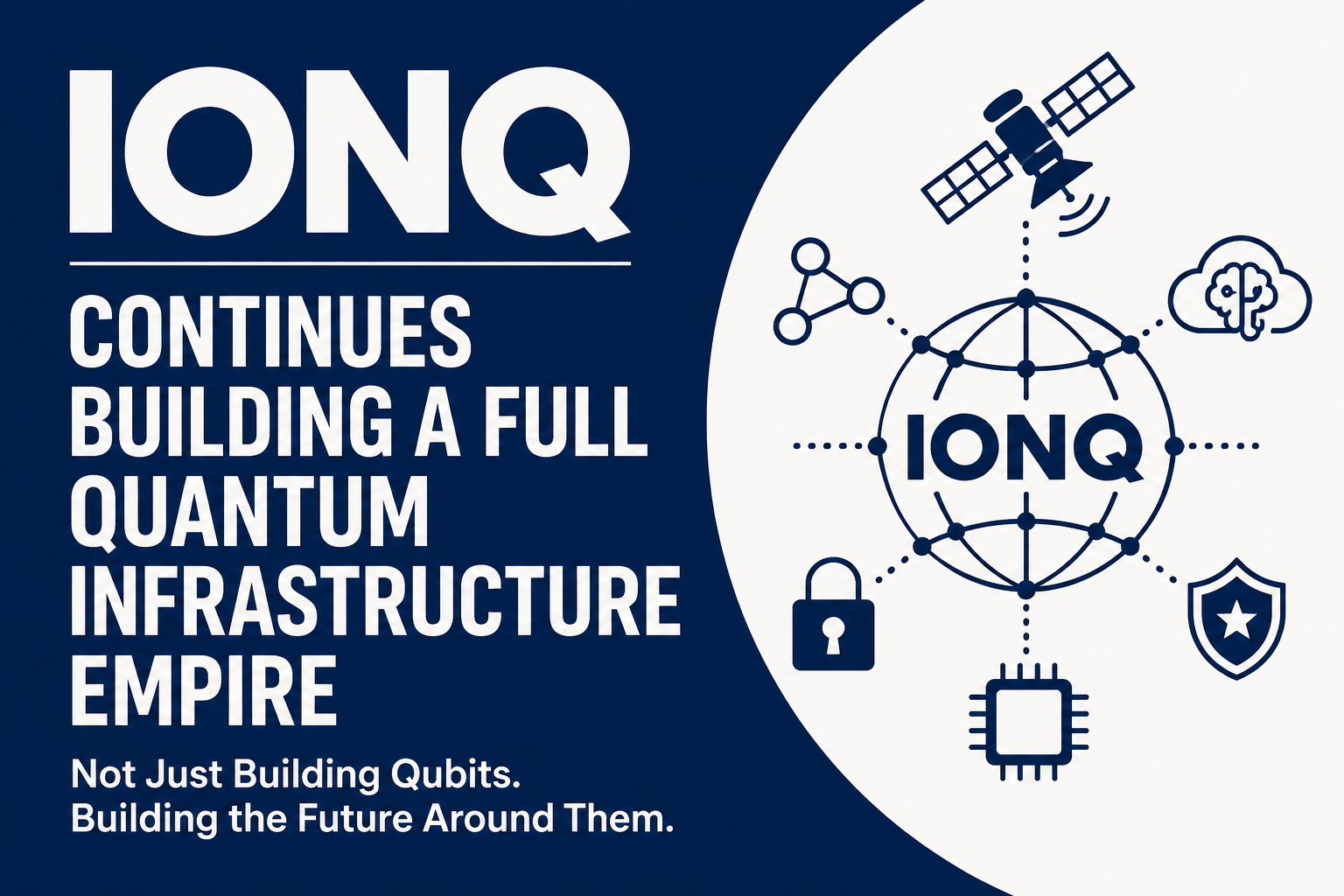
On March 10, both IonQ and Xanadu announced partnerships with the Applied Research Laboratory for Intelligence and Security (ARLIS) at the University of Maryland.
The collaborations support the SEQCURE program, an initiative designed to bring Zero Trust Architecture (ZTA) into quantum computing environments.
Traditional cybersecurity often relies on a perimeter defense model—protecting the outside of a network and assuming that anything inside can be trusted.
But modern computing environments no longer operate inside clear boundaries. Cloud computing, distributed research systems, and remote collaboration have effectively dissolved the traditional perimeter.
Zero Trust flips the model entirely.
Instead of assuming trust once a user is inside a system, every interaction must be continuously verified.
Applying this concept to quantum computing environments is especially important because these systems often process highly sensitive information, including:
- advanced materials simulations
- cryptographic research
- national security applications
- next-generation AI and optimization algorithms
The SEQCURE initiative focuses on securing these environments against a particularly concerning threat known as “harvest now, decrypt later.”
In this scenario, adversaries collect encrypted data today and store it, waiting for future quantum computers capable of breaking current encryption methods.
By implementing Zero Trust principles directly into quantum infrastructure, researchers hope to prevent unauthorized access to these high-value systems long before quantum machines reach that capability.
Post-Quantum Cryptography Moves Into Hardware
Just a few days later, on March 13, another important development emerged.
SEALSQ and Parrot announced an expansion of their partnership to integrate Post-Quantum Cryptography (PQC) directly into professional drones’ hardware.
This move represents a significant shift in how organizations approach future cybersecurity threats.
Most encryption used today—including RSA and elliptic curve cryptography—could eventually be broken by large-scale quantum computers.
Post-Quantum Cryptography uses new mathematical approaches designed to remain secure even against quantum attacks.
By embedding PQC directly into drone hardware, SEALSQ and Parrot aim to ensure that communications remain secure even if quantum computers eventually become powerful enough to break current encryption standards.
For industries relying on drones for:
- infrastructure inspection
- environmental monitoring
- defense and reconnaissance
- industrial operations
this kind of built-in security could become essential.
The Bigger Picture
These announcements illustrate an important shift in how the quantum ecosystem is evolving.
For years, discussions about quantum computing focused almost entirely on hardware breakthroughs and qubit counts.
Now, attention is expanding to something equally important:
How we secure the quantum future.
Zero Trust security models and Post-Quantum Cryptography are quickly becoming foundational technologies shaping the next generation of digital infrastructure.
As quantum capabilities advance, the race is no longer just about building the most powerful machines.
It’s also about ensuring those machines and the data they process remain secure in a quantum world.