IQM Quantum Computers announced the launch of the Aalto Q20, a new superconducting quantum computer installed at Aalto University in Finland. The system marks the fourth operational quantum computer deployed by IQM in the country, further strengthening Finland’s position as one of Europe’s leading quantum research hubs.
The Aalto Q20 is designed primarily for research and development, providing scientists and engineers with access to advanced quantum hardware for experimentation in areas such as quantum algorithms, error correction, and quantum materials simulation.
Unlike large-scale national supercomputers intended for broad enterprise use, systems like the Q20 play a critical role in the early-stage development of quantum technologies. They allow researchers to test new ideas directly on physical quantum processors and refine the hardware and software needed to scale quantum computing in the future.
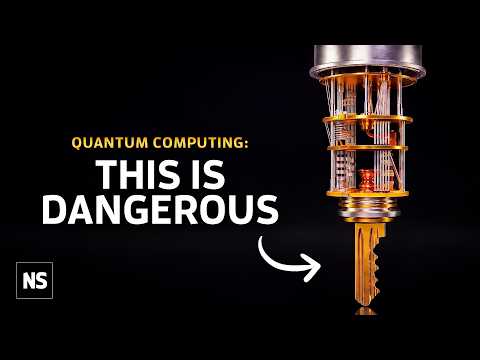
IQM, headquartered in Finland and Germany, specializes in superconducting quantum processors, one of the leading hardware platforms in today’s quantum ecosystem. These systems operate at extremely low temperatures—close to absolute zero—inside dilution refrigerators, allowing delicate quantum states to remain stable long enough to perform computations.
The Q20 deployment builds on Finland’s growing quantum infrastructure. The country has invested heavily in quantum research through collaborations between universities, national laboratories, and industry partners. Facilities like Aalto University serve as important testing grounds for new hardware architectures and control systems that could eventually power larger quantum machines.
By installing multiple operational systems across Finland, IQM is helping create a distributed quantum research environment, where academic researchers, engineers, and industry partners can collaborate more closely on next-generation quantum technologies.
For the global quantum community, deployments like the Aalto Q20 highlight an important trend: progress in quantum computing is increasingly driven not only by new processor designs but also by expanding access to working quantum systems for researchers.
As the quantum industry moves toward fault-tolerant machines, systems like the Q20 will play an essential role in training the next generation of quantum engineers and advancing the algorithms and hardware needed for practical quantum applications.