
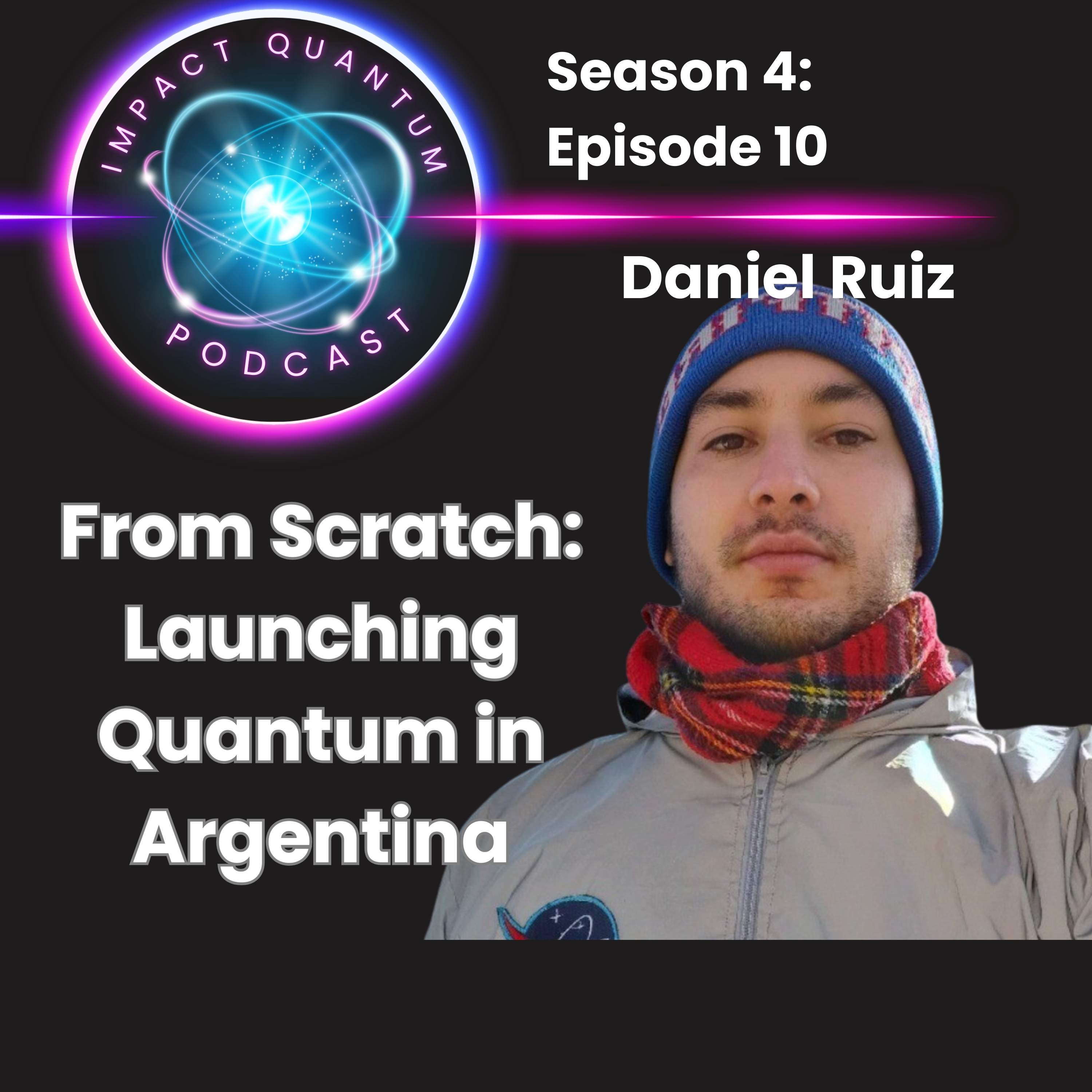
In this episode, your hosts Frank La Vigne and Candace Gillhoolley dive deep into the rapidly evolving quantum tech landscape of Latin America, with a special spotlight on Argentina. Joined by Daniel Ruiz, founder of QNOW, the conversation explores why Argentina and the broader LATAM region are emerging as surprising global leaders in quantum research, development, and application—particularly in the financial and healthcare sectors.
Daniel Ruiz shares insight into the unique challenges and opportunities for quantum startups in Argentina, from the abundance of technical talent to the barriers around funding, infrastructure, and brain drain. The discussion touches on the entrepreneurial spirit of the region, the role of government and academia, and how LATAM innovators are bringing fresh perspectives to a field often dominated by the US, China, and Europe.
Whether you’re a quantum enthusiast, a tech founder, or simply curious about the global impact of quantum computing, this episode offers an energetic and honest look at the paths, pitfalls, and potential in LATAM.
Stay tuned for practical lessons, misconceptions worth busting, and why the next quantum breakthrough might just come from south of the equator!
Links
- https://www.linkedin.com/in/luisdanielruiz-in/
- https://www.linkedin.com/company/qnow-tech/
Time Stamps
00:00 Argentina’s Quantum and AI Landscape
03:52 “LATAM’s Quantum Innovation Potential”
07:20 Tech Applications: Finance & Healthcare
13:09 Quantum Computing: Awareness and Investment
18:30 “Unlocking LATAM’s Research Potential”
20:52 “Latin America’s Growing Tech Potential”
26:36 Quantum-Driven Drug Discovery Process
28:32 “Argentina’s Quantum Potential Explored”
32:51 “Quantum Complements Classical Data”
37:41 “Embrace Unique Innovation Identity”
43:14 Quantum Innovation Challenges in Latin America
46:56 “The Right Team Drives Success”
49:15 Global Perspectives on Quantum Tech
Transcript
Even the LPs of the venture capitalists,
Speaker:you know, they have a lack of
Speaker:knowledge about quantum. They don't know what is
Speaker:quantum computing, what this kind of technology
Speaker:could be an impact in the
Speaker:future business environment, you know.
Speaker:Welcome to Impact Quantum.
Speaker:Uh, hello and welcome back to Impact Quantum, the podcast where we explore the emerging
Speaker:industry of quantum computing. Well, you don't need to be a PhD or
Speaker:have a PhD, uh, or even know anyone with a PhD in
Speaker:quantum physics. You just need to be curious. And with me is
Speaker:the most quantum curious person I know, Candace Cahouli. How's it going, Candace?
Speaker:It's great. Thank you for asking. Today, all
Speaker:the way from Argentina, we are speaking to Daniel
Speaker:Ruiz. He is the founder of
Speaker:QNOW. Hi, Daniel. How are you today?
Speaker:Hello, Candace. Hello, Frank. Thanks for
Speaker:having me. Thanks for the invitation. I'm good now.
Speaker:Happy to stay here and have a great conversation.
Speaker:Cool. So Argentina,
Speaker:when, when, when Candace was doing a lot of the research for our global
Speaker:reports, Argentina was a surprise, as was a lot of the
Speaker:tech scene in quantum tech scene in Latin America,
Speaker:which is further along, I think, than people think. When people think
Speaker:quantum, I think there's always this bias of US, China,
Speaker:maybe the EU. Um, but, um,
Speaker:what was their score, Candace? I gotta pull up the site. Uh, the score was—
Speaker:I can check it out. They're doing surprisingly very exciting what's going on in
Speaker:Argentina. It was something like third or fourth place, like
Speaker:behind like only the US, China, and, uh, Canada.
Speaker:Right. Um, let's see. Argentina has
Speaker:an index of 3. In the,
Speaker:ey have an active roadmap for:Speaker:So if you look at Latin America, I think there's enormous
Speaker:opportunity. And in my day job, I've seen that, right? In terms of AI,
Speaker:right? Like there's a lot of AI going on there.
Speaker:You have an interesting situation where in Latin America, you have
Speaker:somewhere between 30 to 40 different sovereign countries, right? There's only
Speaker:hyperscalers in, 3 or 4 of them. So
Speaker:there's a lot of opportunity, I think, in terms of research and on-prem
Speaker:and kind of work. So, so what's going on? What's the quantum scene
Speaker:look like in Argentina? Yeah, tell us a little bit about your journey. We're really
Speaker:excited. Okay, okay, cool. Let's, let's start.
Speaker:Well, I, my background is very technical. I'm
Speaker:specialized in software development.
Speaker:At the same time, when I
Speaker:was knowing about more
Speaker:emerging technologies. Around
Speaker:2019, I met quantum computing.
Speaker:So since:Speaker:this journey, learning every day,
Speaker:every day learning about quantum stuff. And at the same
Speaker:time, working with partners and
Speaker:with scientific and research
Speaker:teams that allow us to have a
Speaker:very big picture and an overview of
Speaker:who is the landscape here in LATAM.
Speaker:From that, I could say that here in LATAM, we have,
Speaker:specifically in Argentina, we have A lot of
Speaker:talented people, starting with the people, the talented
Speaker:people, and even the capacity to
Speaker:create qubits here in Bariloche.
Speaker:It has a lab team, a government
Speaker:lab team that has created qubits.
Speaker:Yes, not a quantum
Speaker:machine like that, but creating and
Speaker:stabilizing qubits. From
Speaker:that and from the capacity of creating software, quantum
Speaker:software, I would say that
Speaker:in Latin America, there is the opportunity to
Speaker:export these capacities
Speaker:from the hardware and into
Speaker:including to the software. What software?
Speaker:I could say that specifically in applications, yes.
Speaker:That is what we're doing right now in QNOW.
Speaker:We have two lead industries that
Speaker:we are interested in. One industry is the
Speaker:financial sector and the other industry is
Speaker:the healthcare sector. So I
Speaker:could say that that is the opportunity. Maybe
Speaker:creating hardware, maybe creating
Speaker:the QPUs, maybe LATAM is very,
Speaker:you know, it is not—
Speaker:maybe I could say that LATAM is
Speaker:or could be great not as hardware but
Speaker:at application level could be better or could be
Speaker:have this kind of opportunities.
Speaker:So you said you were involved in both financial and
Speaker:in the health, in the health sector. Okay,
Speaker:so which one do you think is going to develop
Speaker:first? Okay,
Speaker:I am here in LATAM. I have the opportunity to
Speaker:talk with
Speaker:leaders in banking, leaders of business in
Speaker:financial sector. Yes, they have the resources
Speaker:to sponsor a research. They have
Speaker:the resources and the knowledge
Speaker:and all they need to start getting
Speaker:involved now with quantum. Technologies, yes.
Speaker:But at the same time, there are some
Speaker:grade of literacy, you know, there
Speaker:is a lack of knowledge in this kind of
Speaker:technologies.
Speaker:Because they don't know
Speaker:where implement quantum technologies, they don't know
Speaker:how is the return of investment
Speaker:applying this kind of technologies. So,
Speaker:I would say that this sector could be the first one that
Speaker:implement this kind of technologies. But at the same time,
Speaker:must be the first one that get involved
Speaker:in the knowledge of this kind of technologies. Yes?
Speaker:Specifically, We have a partner called
Speaker:Falcon Day. Yes, our partner is
Speaker:especially focused on
Speaker:credit risk scoring. Yes, that
Speaker:could be helpful in the financial sector,
Speaker:applying different kinds of classification models
Speaker:to know who pays the credits and who
Speaker:probably, you know, pays the credit.
Speaker:So if you're asking for me, I could say that the financial
Speaker:sector will be the first one to apply.
Speaker:At the same time, here in Latin America, the
Speaker:healthcare sector, specifically in the
Speaker:drug discovery, drug design process,
Speaker:there are no investigations or there are not
Speaker:a lot of investigations here from LATAM. All the
Speaker:investigations are in Sweden,
Speaker:in Basel, but here
Speaker:the local people, the local resources that
Speaker:has this kind of research
Speaker:is very poor, yes. So I
Speaker:could say that the healthcare sector could be the second one, yes.
Speaker:But there is my
Speaker:projection, my perspective, but I
Speaker:could say that if the
Speaker:academic sector and
Speaker:us, as you know, the company sector,
Speaker:the private sector, could join the
Speaker:forces and start to create researching and start
Speaker:to create or those new techniques,
Speaker:new ways to solve the industry
Speaker:problems could be a great opportunity that
Speaker:the greatest companies in healthcare and
Speaker:finance start to see the work
Speaker:and start to implement this kind of
Speaker:data pipelines, of quantum machine learning models,
Speaker:this kind of technologies. In
Speaker:their operations. Yes.
Speaker:Yeah, that makes a lot of sense. That makes a lot of sense.
Speaker:So from QNow, we are doing
Speaker:that. We are trying to
Speaker:generate some value, generate genuine value,
Speaker:real value to this kind of
Speaker:industries. Yes. Starting, like I said before,
Speaker:with credit score and the drug design or drug
Speaker:discovery process.
Speaker:Okay. So, does your solutions—
Speaker:do your solutions involve as well using
Speaker:AI? Exactly.
Speaker:We can describe Q-NAU as a company that solves
Speaker:problems for automate and create
Speaker:autonomous systems for
Speaker:autonomous tasks. But what is the principle
Speaker:of that? We have created a technique
Speaker:based in knowledge graphs that allows
Speaker:today's LLM models
Speaker:to generate a kind of fact, a kind of
Speaker:knowledge, or a kind of memory, I mean,
Speaker:that allows to create this kind of
Speaker:automated process. Particularly, we have a—
Speaker:we are a 100% bootstrapped company. Yes, QNOW
Speaker:don't have at the moment investment. We are
Speaker:100% bootstrapped. And for make us
Speaker:traction and generate some revenue, we have
Speaker:find a niche, we have find a problem in the financial
Speaker:sector in what we
Speaker:have solving through classical AI.
Speaker:Yes, we have created a classical product,
Speaker:a classical problem solving that allows
Speaker:us traction to quantum
Speaker:stuff. So if you ask me if
Speaker:we have some AI in QAnon, of course,
Speaker:to through this kind of products that
Speaker:prepare from now the data of the organization,
Speaker:the data of our clients or of our future
Speaker:clients to in a near future
Speaker:add quantum value, add real value,
Speaker:preparing the data from today. Yes, I could say that.
Speaker:Okay. Interesting. So what is the
Speaker:startup scene like in Argentina, right? You're
Speaker:completely bootstrapped, which good on you because you have a lot of control.
Speaker:Did you— what does the startup
Speaker:scene look like? Are there a lot of bootstrap startups or are they— is there
Speaker:a heavy venture presence? I know with Quantum on a
Speaker:previous show, we talked about how national governments are getting involved in
Speaker:The quantum conversation largely for national security reasons,
Speaker:but like, you know, is there any kind of government assistance, funding,
Speaker:incubators, that sort of thing? Okay. Well,
Speaker:today, the picture of today
Speaker:is that even the
Speaker:LPs of the venture capitalists, you know,
Speaker:has a lack of knowledge about quantum. They don't
Speaker:know what is quantum computing, what this kind
Speaker:of technology could be
Speaker:impact in the future business environment,
Speaker:you know. So I could say that today in
Speaker:Argentina, maybe there are a couple of
Speaker:companies or startup that have
Speaker:the claim that they have the quantum
Speaker:flag, you know, the quantum technologies flag.
Speaker:But I don't really, I don't know
Speaker:how much investment or how much
Speaker:the private sector will be available
Speaker:to start promoting these technologies.
Speaker:I know there are some companies that
Speaker:are looking for investments,
Speaker:you know, paying some press release and all
Speaker:that kind of stuff just for attracting investment. But
Speaker:here in QNAU, we
Speaker:adopt the way to create genuine
Speaker:value to
Speaker:clients, you know. But at the
Speaker:same time, in a near term,
Speaker:create this kind of conversation with the government when
Speaker:we have a strong basis to
Speaker:demonstrate that the quantum industry or demonstrate the
Speaker:quantum solving problem will be interesting
Speaker:for, at least for these industries, healthcare and
Speaker:finance. At the same time, the government,
Speaker:they have some resources,
Speaker:but in the AI sector. At the quantum layer,
Speaker:there are not a lot of resources,
Speaker:even if in the company sector,
Speaker:even in the startup sector,
Speaker:yes. At this level, I could say that only in
Speaker:AI there are more, more, more things than
Speaker:quantum even. Interesting.
Speaker:So for the kids that are in school right now,
Speaker:do you see the young researchers in Argentina wanting to stay
Speaker:and build maybe their own companies locally,
Speaker:or do you think they feel that they need to leave in
Speaker:order to properly scale?
Speaker:Okay, that's a great question because here in
Speaker:Argentina, you know,
Speaker:the ecosystem is very entrepreneurial. Yes, there are
Speaker:a lot of big
Speaker:ideas and a lot of good things
Speaker:in the air, you know, because by
Speaker:culture, the Argentinian people is in that way.
Speaker:Yes, it's very, I can do the
Speaker:best, I'm the best. Yes, that's the That's a cultural point
Speaker:that I could say here. So
Speaker:recently we have collaborated with
Speaker:IBM, with Qiskit Fall Festival, you know, that is a
Speaker:worldwide event that passes through a lot
Speaker:of countries. And particularly the
Speaker:Qiskit Fall Festival that was here in Argentina.
Speaker:Let us say that is the way that you mentioned,
Speaker:Candance. There's a lot of ideas, there
Speaker:is a lot of young people getting involved now
Speaker:with this kind of events that has
Speaker:the vision to create their own companies,
Speaker:to start involving and create
Speaker:their own research in quantum technologies. So
Speaker:there's a lot to do right now in Argentina.
Speaker:And I can see that the people, the young people, is
Speaker:very getting involved in that kind of technologies.
Speaker:Interesting. I don't know if
Speaker:you have to come to here in Argentina.
Speaker:I would love to. I would love to go to Argentina. Yeah, I'd come in
Speaker:a second. It's summer there now, right? It's summer there now, so that
Speaker:helps. It's beautiful there. It is beautiful. The food, I hear
Speaker:the coffee is really good. I hear the steak is really good. So yeah.
Speaker:Yes, yes, the coffee, the Colombian coffee is good.
Speaker:What skills would you say Argentine
Speaker:quantum professionals bring? That global companies
Speaker:sometimes underestimate?
Speaker:Maybe—
Speaker:okay, maybe I could say that
Speaker:the opportunities to
Speaker:create research, basic
Speaker:research, Is
Speaker:the one thing that maybe the companies,
Speaker:you know, don't know or don't have
Speaker:the knowledge that here in Latin America and here
Speaker:in Argentina do.
Speaker:I could see that all the research
Speaker:things could be very
Speaker:underestimated. Things here in LATAM because
Speaker:there are a lot of talented people, there are a lot of
Speaker:private and public
Speaker:organizations that had good material, that has
Speaker:good researchers.
Speaker:Yes, maybe
Speaker:I could say that in the last 2 years
Speaker:at the academic level, it starts to create the
Speaker:first quantum congress at local level. Yes,
Speaker:we have the opportunity to, as ACUNAO,
Speaker:participate in these first congress.
Speaker:And I see that there is
Speaker:a lot of great things, but, you know,
Speaker:AWS or WEGATI or even
Speaker:IBM, they don't know how are the things
Speaker:here in Latin America. I
Speaker:could say that they must
Speaker:start getting involved here in Latin America. Like I said before,
Speaker:maybe not at hardware level
Speaker:or maybe yes, but at applications level, at
Speaker:application layers. Could be the best thing that
Speaker:from all sides, organizations could start to
Speaker:create that link, you know, for
Speaker:start creating and prepare applications that solve real
Speaker:problems. Okay. I mean,
Speaker:it's interesting because I think there's a certain bias in the tech
Speaker:industry to assume that it's either North America or Asia, right?
Speaker:And they're forgetting, you know, there's a joke about You know,
Speaker:US innovates, China imitates, and Europe regulates, but they're forgetting like
Speaker:one other player. Um, and you know, these
Speaker:are pretty sizable economies, right? Like people, I mean,
Speaker:like, and you know, I,
Speaker:I've been a big fan of since joining Red Hat, well, a lot of our
Speaker:successes have been actually in Latin America with our product. And it's just like,
Speaker:you know, this is a, this is this is a big market.
Speaker:And when you consider kind of
Speaker:the, just the sheer number of people, the sheer number of the
Speaker:demographics, like it, it's going to be a
Speaker:force to be reckoned with for sure, whether that'll be in 5 years or 10
Speaker:years. But I mean, the fact that there's so much quantum innovation happening,
Speaker:I think is a good sign. And, you know, I know some of it's quasi-government,
Speaker:some of it's not, like it's an interesting space. But
Speaker:one of the things that came up in a lot of Candice's research
Speaker:I'll let her talk to it because she did the research, uh, was the
Speaker:concern about brain drain. And she did kind of allude to that, right? Because
Speaker:that's a problem globally, right? And that's a concern in the U.S., it's a concern
Speaker:in China. Um, the idea that I'm going to educate
Speaker:all these kids on the latest and greatest and they're going to go to California
Speaker:or Beijing or, um, you know,
Speaker:or wherever, Shenzhen or whatever, like, is that a problem
Speaker:in Argentina?
Speaker:Yes, I could say that, yes, it's the same
Speaker:thing, it's the same thing. Like you said
Speaker:before, even the governments, even here,
Speaker:or the economic situations, you know,
Speaker:just the last 2 years, the economy has a
Speaker:big change here in Argentina. With a lot of
Speaker:new laws, a lot of new,
Speaker:you know, opportunities to, from outside Argentina,
Speaker:invest here in Argentina. So has maybe
Speaker:a play to, a
Speaker:favor to Argentina to start changing that
Speaker:point, yes?
Speaker:Because, you know, maybe We
Speaker:are incorporated in the US, in Delaware,
Speaker:yes, but we operate here in Argentina.
Speaker:Could be ideal that people like us
Speaker:that has to create their own business
Speaker:start here and incorporate here in Argentina, but you know,
Speaker:the taxes, all the barriers that we have
Speaker:as an entrepreneur You know,
Speaker:let us create some strategies to,
Speaker:you know, do the things in
Speaker:other ways. Yes. But it's
Speaker:the same problem globally, I think that.
Speaker:So you talked about the barriers and,
Speaker:you know, I'm assuming the biggest challenges might be funding or
Speaker:infrastructure or even market access. Is there other
Speaker:Are there other types of barriers that you're finding that the startups
Speaker:are facing in Argentina?
Speaker:Yes, I think that is a blend of
Speaker:these issues, the investment and
Speaker:the access to the markets, yes, because it's not the same,
Speaker:or well, it's not the same, the Brazilian market
Speaker:against the Argentinian market. You know, there is a lot of
Speaker:difference between that countries.
Speaker:But in Brazil, that is Latin— is South
Speaker:America, you know, Brazil has an other
Speaker:ecosystem more evolved than the Argentinian.
Speaker:Yes, in Brazil there are a lot
Speaker:of investment, a lot of other
Speaker:status of the quantum technologies, I could say.
Speaker:But here in Argentina, I That's the point.
Speaker:There are the barriers to start create
Speaker:value from here. Yes, the investment and
Speaker:the market access. So for that reason,
Speaker:we at QNOW have to create that kind of
Speaker:conversations with the business leaders
Speaker:to to start create from now this interest
Speaker:in the quantum technologies. Yes. Not only for
Speaker:investment, no, but even for
Speaker:create quantum strategies. Yes.
Speaker:Doing a kind of consulting services,
Speaker:you know, that allow to the
Speaker:big enterprises or big
Speaker:corporations here in Argentina no more about
Speaker:quantum technologies. Yes. Right.
Speaker:Interesting. I assume, I assume that must really kind of force you to be
Speaker:more creative and to
Speaker:be— to realistically create quantum
Speaker:applications because of the constraints that you face.
Speaker:I just was thinking. Yeah. Yes,
Speaker:yes, that is the reason that
Speaker:we choose as a research topic
Speaker:all the drug discovery and drug design process
Speaker:to apply quantum technologies. Specifically, we
Speaker:have developed a QSAR
Speaker:method. That QSAR method is a
Speaker:kind of a classifier,
Speaker:yes, to determine which compound
Speaker:is better than other, taking in mind
Speaker:even the toxicity of a compound,
Speaker:taking in mind the, the ATME,
Speaker:the process to know how solving
Speaker:via oral a medication could be absorbed
Speaker:by our bodies. So
Speaker:for that reason,
Speaker:we create or we choose to develop
Speaker:this kind of process implementing quantum stuff.
Speaker:That was the opportunity, that was the
Speaker:creativity that has in that time
Speaker:our team. To determine
Speaker:which line of research we should do
Speaker:and betting into the future that it
Speaker:could be a good problem to solve in the industry
Speaker:and has a, you know, a very opportunity to create
Speaker:value and business through that. Yes.
Speaker:So if we were to look at, take the next decade, what would need
Speaker:to change in Argentina to become a serious quantum
Speaker:startup hub? Okay, I think
Speaker:that,
Speaker:um, could be a must, yes, that the outside,
Speaker:a venture capitalist or,
Speaker:or outside, um, every adopters of
Speaker:quantum, come here, come here and start to
Speaker:see all the scene, see all the research
Speaker:that this big country has to
Speaker:demonstrate, yes? Because maybe
Speaker:in the coming 10 years
Speaker:could be appear a lot of unicorns, I don't know.
Speaker:Maybe, you know, or maybe
Speaker:a good
Speaker:company that has a very early breakpoint
Speaker:to start a big profit, you know, without
Speaker:investing, just through the real value through
Speaker:clients. Yes, maybe it could be that scenario.
Speaker:But I think that there's a lot of to create from here
Speaker:and to demonstrate to the outside of Argentina
Speaker:that what we are capable of, of what, no?
Speaker:But I think that from the company
Speaker:that all the companies that outside
Speaker:Argentina already has a path, already
Speaker:has a very strong roadmap, already has
Speaker:a lot of research could
Speaker:it could do a
Speaker:kind of knowledge transfer from here
Speaker:to LATAM and start to create this kind of
Speaker:conversation from South America to
Speaker:North America or from here to Europe.
Speaker:Yes.
Speaker:So what's one misconception about quantum computing that you wish
Speaker:more people would just drop?
Speaker:Maybe is the— that is
Speaker:in a certain point very technical.
Speaker:Yes, maybe becomes the conversation very technical
Speaker:because if
Speaker:you don't have knowledge about data,
Speaker:maybe when you try to create an answer to a
Speaker:Hamiltonian, or maybe when you try to create
Speaker:a fermionic
Speaker:Hamiltonian, you know, that is very technical terms,
Speaker:yes, maybe
Speaker:the people who feel that is not
Speaker:very understanding of the topic, so maybe the
Speaker:technicism could be the big barrier to drop
Speaker:this kind of technology, this
Speaker:kind of topic. But at the same time, I
Speaker:think that through the technology,
Speaker:through the knowledge graphs, through the LLMs
Speaker:application that we have today, we have
Speaker:the way to cut that
Speaker:learning curve, that learning that
Speaker:barrier,
Speaker:adopting this kind of AI system, but
Speaker:based in a validated
Speaker:knowledge and a great quality of
Speaker:knowledge, maybe could be a way to
Speaker:solve that barrier.
Speaker:Yeah. So when you talk to customers
Speaker:or prospective customers, like, what's their reaction when you say
Speaker:quantum? Okay,
Speaker:maybe some clients
Speaker:has this sensation, has the feeling of,
Speaker:wow, it is NASA.
Speaker:Right. Yes, but when we try to
Speaker:create, to start this kind of conversation,
Speaker:we always transmit to our potential clients
Speaker:that all becomes from data. Yes,
Speaker:all become from data and we can add
Speaker:value, real value to
Speaker:applying quantum technologies, quantum
Speaker:algorithms, solving that problem. Yes.
Speaker:So when we start this kind of conversations,
Speaker:we try to do in a very
Speaker:detailed way, yes, to know,
Speaker:not sending, not selling smoke,
Speaker:you know, don't enter in the hype. So
Speaker:for that reason, We choose that when we
Speaker:talk with this kind of potential clients,
Speaker:at the first step, we have
Speaker:to find the way that understood that the
Speaker:classical is a complement, the quantum
Speaker:is a complement of the classical. Yes. And how the
Speaker:quantum stuff could potentially
Speaker:exploiting the classical ways that
Speaker:they have today, making some
Speaker:benchmarks between the classical models and
Speaker:the quantum or hybrid models
Speaker:in a certain pipeline, in a certain
Speaker:process of this organization or these
Speaker:potential clients. So maybe the conversation we turn in
Speaker:that way.
Speaker:That makes sense.
Speaker:So what does success look like for you right now
Speaker:when you're working on something like a case
Speaker:study? Is it not in theory but in actual
Speaker:practice? What does success look like?
Speaker:I think that maybe
Speaker:if potentially
Speaker:in healthcare, yes, specifically in
Speaker:healthcare, maybe we can
Speaker:talk about success when
Speaker:we perform a metric, when we
Speaker:perform something related with resources,
Speaker:yes, with money, with time, we can say that
Speaker:that kind of problem solving is success,
Speaker:yes. I think in that way,
Speaker:so for that reason I could
Speaker:say that only if you move the needle
Speaker:in the path in the right way,
Speaker:you your project, your stuff has a
Speaker:success. At the same time, if no has success,
Speaker:it's great, it's fine, because that is knowledge
Speaker:that keep with us, you know, but
Speaker:in the very strict
Speaker:level, I could say that the success is only
Speaker:success when you has the
Speaker:capacity to add value that
Speaker:evolved in, you
Speaker:know, in ROI for our organization, in reducing time
Speaker:and resources, you know. I think in that
Speaker:way.
Speaker:Interesting. I'm
Speaker:fascinated to see kind of like what startup ecosystems look around the world.
Speaker:'Cause I think there's an assumption that even within the United States,
Speaker:honestly, there's an assumption that if you want
Speaker:to start up, you have to go to Silicon Valley, right? And obviously there are
Speaker:probably good reasons to go to Silicon Valley, but
Speaker:you have a number of, one of my jobs not
Speaker:that long ago was working in what we call civic technology, which is
Speaker:the idea of working with local city
Speaker:leaders across a bunch of cities around the US, right?
Speaker:And each one of them wants to be the next Silicon Valley. Each one of
Speaker:them wants to be like DC, certainly had that. New
Speaker:York. Well, New York is Silicon Alley. New York is kind of different. But,
Speaker:you know, every city I spoke to, you know, whether it was Detroit, whether it
Speaker:was Chicago, they all want to have their own Silicon Valley type
Speaker:setup. And one of the best bits of advice that I
Speaker:would tell them is like, don't be the next Silicon Valley, be the,
Speaker:the next, be the best version of you that's focused on
Speaker:the future. Right. So like, you know, obviously I live in the DC area, right?
Speaker:A lot of government adjacent, highly regulated industries, right? There's a good
Speaker:opportunity if you're a startup to be in that field, right? Like
Speaker:the startup mentality doesn't have to be just around tech. Tech is going to be
Speaker:part of it. Because tech is gonna be part of everything, right? So the whole
Speaker:idea in quantum tech, I think, is also following a very similar trajectory
Speaker:in that regard. And
Speaker:it's just fascinating about
Speaker:kind of like what that looks like. And not every culture— I know
Speaker:Argentina might be different— not every culture values entrepreneurship. That's one thing
Speaker:I kind of learned when I lived overseas was kind of like, you know, people
Speaker:look at it kind of with suspicion. Some people look at it like this. I
Speaker:think Argentina shares the American cowboy culture, although
Speaker:you guys call them gauchos, uh,
Speaker:you know, where you have that kind of rugged individualism, which I think does
Speaker:fit nicely with entrepreneurship. Is that, is that true? Is that like a thing,
Speaker:like the, the entrepreneurial spirit in
Speaker:Argentina? Yes, yes, I, I
Speaker:totally agree with that. It's, it's the same, it's the same
Speaker:spirit, it's the same a feeling, you know.
Speaker:And I'm from Colombia. Yes, I'm from Colombia,
Speaker:but I, I live in here in Argentina. And that's why you like the
Speaker:Colombian coffee. It is great coffee, like
Speaker:for real, it is great coffee. But like, no, but he made a point of
Speaker:that in the green room. Yeah, I was like, oh,
Speaker:more than the average, more than I would expect from the average Argentinian.
Speaker:So there you go. Okay. Yes, yes, that's the reason
Speaker:for the Colombian coffee. And I have
Speaker:been here in Argentina more than 10 years ago, yes,
Speaker:and I'm from outside of Argentina. I
Speaker:could see and I can feel this kind
Speaker:of, you know, sensations, you know.
Speaker:It's cultural that the gauchos the gauchos
Speaker:do a barbecue
Speaker:with only a piece of iron
Speaker:and maybe cool the fire with two
Speaker:pieces of grass, you know, that kind of spirit that
Speaker:invites us in a way to,
Speaker:you know, breaking that barriers, that
Speaker:barriers that don't allow
Speaker:you to do things. Yes, I think that this spirit
Speaker:is very interesting in that country, in this country.
Speaker:Yes, and maybe it's not the same
Speaker:feeling in all the Latin America's countries, you know,
Speaker:it's very different the culture and
Speaker:this kind of stuff. Yes.
Speaker:I don't know, at the same time, I
Speaker:love the skateboarding culture,
Speaker:and the skateboarding culture learns that
Speaker:to me, that if you want to do a
Speaker:trick in your skateboard, you have to
Speaker:try, try, try, falling, Then try,
Speaker:try until the trick has
Speaker:in the right way that you visualize in your brain.
Speaker:So it's very interesting, this kind of
Speaker:feelings that allow us to create
Speaker:things, to create companies, to create applications,
Speaker:to create things. So
Speaker:as a founder, What's a hard lesson you've learned
Speaker:that you wish more quantum founders would talk about
Speaker:openly?
Speaker:Okay. I could say
Speaker:that maybe
Speaker:the way
Speaker:in what we try to do things.
Speaker:Yes, I could say that maybe if
Speaker:we choose to be 100%
Speaker:bootstrapping or be 100% VC-funded, you
Speaker:know, this kind of stuff
Speaker:is the more decision
Speaker:things that allow us to start
Speaker:getting involved in in the world of
Speaker:entrepreneurial. Yes.
Speaker:I don't know if that
Speaker:answered your question or maybe could repeat the question.
Speaker:No, I mean, I just want to know about difficult lesson learned. I
Speaker:mean, obviously it's hard being a founder and I'm sure it's very difficult in the
Speaker:quantum space even more so. And, you
Speaker:know, like we talked about before, not everything is as open source and,
Speaker:you know, open knowledge as it could be. So I just
Speaker:wondered if there was something that you felt you wished more founders would talk
Speaker:about openly. Yes, yes.
Speaker:Well, this is a few founders here
Speaker:regarding the quantum technologies. Yes.
Speaker:See, maybe I could
Speaker:add to this thinking
Speaker:that maybe
Speaker:the compute resources. I don't know if
Speaker:you know that here in Latin
Speaker:America, we can access directly from D-Wave's
Speaker:hardware. Maybe this kind of
Speaker:barriers could
Speaker:be a very
Speaker:a barrier to start creating things or
Speaker:to start to use
Speaker:the real-world tools that
Speaker:are out there. Yes. This
Speaker:example, I could say that would be a big
Speaker:barrier for us as a founder and for
Speaker:all the quantum founders that that live here in
Speaker:this country or living in Latin America.
Speaker:Yes,
Speaker:I consider that
Speaker:interesting. I think it's interesting how
Speaker:we—
Speaker:yeah, I think it's interesting to see how the startup
Speaker:entrepreneurial culture changes from location to location.
Speaker:Even within the US, right? Like, you know, Candace and I both grew up more
Speaker:or less the same timeframe in more or less the same city,
Speaker:um, in New York, right? It wasn't always— at least for me,
Speaker:the pressure was always to get a job at a bank, right? Even if it
Speaker:was in tech, right? Like, you want to work at a bank, right?
Speaker:And the whole idea of working and starting your own company just seemed very
Speaker:I wouldn't say— yeah, it was kind of frowned upon, wouldn't you say?
Speaker:Yeah, it was. It absolutely was. But then something
Speaker:happened, you know, like I can say when I came to
Speaker:Montreal in:Speaker:noticed about Canadians was that every family I met,
Speaker:one person was an entrepreneur, one parent, and
Speaker:the other parent worked for a company. But that's also because
Speaker:we have some other safety nets here in Canada. But entrepreneurship
Speaker:was considered, you know, not like a
Speaker:luxury but almost like a necessity for, for future happiness for
Speaker:people. That is interesting because
Speaker:the French-Canadian part of my family, there actually is
Speaker:one branch of the family, um, actually
Speaker:did start their own engineering firm, and
Speaker:they're doing, they're doing real well for themselves last I heard. He lived in Colombia
Speaker:for a while, actually, one of my cousins. He was,
Speaker:um, I think he ended up going to Venezuela, then Colombia, because he worked in
Speaker:petroleum industry. Okay. So kind of like doing, uh, engineering
Speaker:consulting. So, you know, that's how I know
Speaker:about Colombian coffee and stuff like that. And so let me ask you this. Each
Speaker:Latin American country is very proud of their, their coffee culture. Sorry,
Speaker:let me— no, no, let me ask you this. So how do you keep motivated?
Speaker:Because You know, quantum can go slow,
Speaker:right? And it's hard sometimes. The timelines are
Speaker:long and sometimes results aren't as visible as you want them to
Speaker:be. So how do you keep up momentum? How do you stay motivated?
Speaker:Okay, okay, cool. I could say that my team—
Speaker:with a right team, you can affront a lot of
Speaker:barriers in that way. Yes.
Speaker:Through these last 2 years that I'm
Speaker:become an entrepreneur, you know.
Speaker:I was be with a lot
Speaker:of people that I
Speaker:would think that was the, you know, the dream thing, the
Speaker:dream team, yes. But through the
Speaker:years, the real
Speaker:life showed me that not all
Speaker:the people has the, you know, the spirit
Speaker:to create from scratch this kind
Speaker:of companies, yes, not for all, it's not for all,
Speaker:but at the same time,
Speaker:I think that the same life, you know,
Speaker:having me to the way that Right now
Speaker:I have, or I feel that I
Speaker:have the right team. Yes, we have 4
Speaker:founders and at this moment we have
Speaker:passed through a lot of obstacles that you can imagine,
Speaker:you know, and that is one thing that
Speaker:keeping me motivated to
Speaker:keep creating, to keep
Speaker:investigating, to keep researching, to keep start
Speaker:to get
Speaker:grants for computing time, to
Speaker:create some partnerships
Speaker:for consulting services with one
Speaker:team, for research with one team. That is my
Speaker:fuel to not give up and
Speaker:keep going and going. Until
Speaker:we have arrived to our
Speaker:goal. You know, I could
Speaker:say that is the team, is your team.
Speaker:I'm excited, Candace. You know why? Because we always talk about, we talk to Europeans,
Speaker:we talk to Canadians, we talk to Americans. We don't think we've talked to the
Speaker:Chinese, anyone in kind of the Asian side of Quantum yet. I
Speaker:think mostly that's because of time zone issues. But like, it's
Speaker:cool because like, I want to spotlight kind of like the— I know
Speaker:from my experience at Red Hat, I know like the tech scene in Latin America,
Speaker:Argentina in particular, Argentina and Brazil are the two ones I'm most familiar with.
Speaker:They're really sophisticated. I've had some customer calls with those folks and
Speaker:it's like, wow, these guys are really like on top of their
Speaker:game. It makes me want to redo a couple of—
Speaker:which this will probably come out before or maybe this other thing come up before,
Speaker:but I want to redo a couple of the country reports because there
Speaker:are certain countries that have exploded in the past 6 months,
Speaker:you know, since I did the reports initially in May. And so I would really—
Speaker:Argentina is definitely one of them that I want to, I want to explore and
Speaker:investigate. So, Daniel, thank you so much for, for representing
Speaker:and, and sharing what's going on with Q now.
Speaker:And, you know, keep in touch with us. We'd love to hear more.
Speaker:And to hear how everything is progressing.
Speaker:The multiverse is skanking, skanking in time. Black holes are
Speaker:wailing in a horn line so fine. From plank scales to planets, they're
Speaker:connecting the dots. Candace and Frank, they're the cosmic
Speaker:hotshot.
Speaker:Quantum Podcast, turn it up fast. Candace and Frank
Speaker:blowing my mind at last. Quantum Podcast, they're breaking
Speaker:the mold. Science It's bold
Speaker:and it's gold.







Leave a Reply