
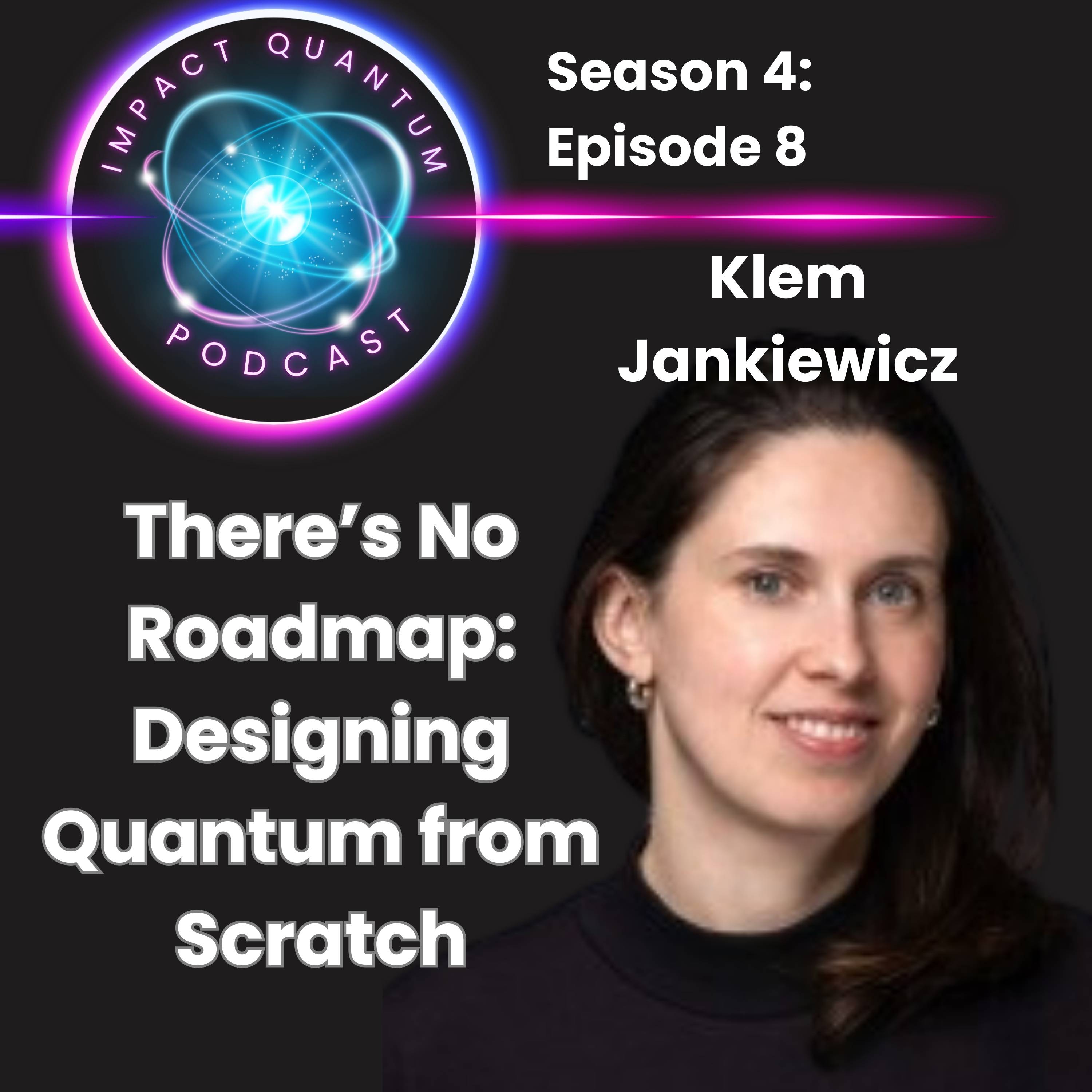
Today, we dive into the fascinating intersection of design and quantum computing. Our guest, Klem Jankiewicz, Head of Design at Classiq—a leading quantum software company—joins Candace Gillhoolley and Frank La Vigne to explore how creative minds like designers, marketers, and educators are becoming essential players in the quantum ecosystem.
You’ll hear Klem Jankiewicz share her journey from industrial design to quantum labs, discuss the importance of intuitive user interfaces, and reveal how visual tools are opening up quantum technology to more people than ever before. She explains why designing for quantum is unlike anything else—there’s no roadmap, and every project is a chance to invent new ways of making this complex technology accessible.
We’ll touch on the evolution of industry culture, hear about groundbreaking projects like Quantum Flytrap, and get tips for anyone thinking about entering the quantum-tech space. Whether you’re a physicist, a developer, or simply quantum-curious, this episode shows why the future of quantum is brighter—and more welcoming—than ever.
Stay tuned as we connect the dots between science, creativity, and the next generation of tech innovation!
Links
- Klem’s LinkedIn Profile – https://www.linkedin.com/in/klem-jankiewicz/
- Classiq – https://www.classiq.io/
Time Stamps
00:00 “Quantum Tech: Diverse User Interfaces”
04:20 Journey Through Quantum and Technology
10:51 “Designing Quantum’s Uncharted Frontiers”
13:30 “User-Driven Features and Impact”
15:57 “Designing Inclusive Tech Interfaces”
19:43 Designing Visuals for Complex Science
23:04 Collaborating with Physicists is Inspiring
28:26 Interactive Quantum Algorithm Visualization Tool
29:40 Advancing Quantum Circuit Visualization
36:39 “Following Fascination Over Career Paths”
38:36 Unexpected Career Evolution
42:30 Collaborating Across Disciplines
45:32 Explaining Quantum Computing Simply
47:59 “Connect via Classiq or LinkedIn”
Transcript
Show this and this visually. This is the way we know you
Speaker:interact with this kind of technology. So
Speaker:this is something— there's like no roadmap. And that's really,
Speaker:you know, fascinating from a designer's perspective because we can actually
Speaker:design things for the first time. Quantum
Speaker:computing can feel abstract, even intimidating.
Speaker:But what if the real breakthrough isn't. Just in the physics? It's
Speaker:in how we interact with it. Welcome to Impact Quantum.
Speaker:Well, hello and welcome back to Impact Quantum, the podcast we
Speaker:explore, continuing to explore the emerging field
Speaker:of quantum technologies. And you don't need to be a PhD
Speaker:in particle physics. You just need to be a little bit curious.
Speaker:So with me, as always, is the most quantum curious person I know, Candice
Speaker:Cahouli. How's it going, Candice? It's great. Thank you so much.
Speaker:Hello. Hello. Today we have someone really
Speaker:exciting. We have Clem— I'm going to
Speaker:mispronounce the name and I apologize— Jankovic.
Speaker:Yeah, I didn't do that right. But she is the head of design
Speaker:at Classic. And Clem, can you please pronounce your name properly for us?
Speaker:Hi, so first of all, thank you for having me. It's very
Speaker:exciting for me as well. And you said it
Speaker:nearly, nearly okay, so it's Clem Iankiewicz
Speaker:with a bit of a Polish accent and the emphasis.
Speaker:On that middle, some middle syllable, I guess. Yeah,
Speaker:so awesome. So you are the second person we've had from Classic, and
Speaker:it's funny because the last time we spoke I learned that it was not
Speaker:classic, it's Classiq with a Q.
Speaker:Yes. So
Speaker:what do you do at Classiq? So I'm the head of
Speaker:design and
Speaker:I'm a designer. My background is in, it's actually in industrial
Speaker:design. And at Classiq, we're making
Speaker:quantum computing software. So my
Speaker:role is leading all the design
Speaker:initiatives for the software. So the user
Speaker:experience and
Speaker:the interface design. Which I
Speaker:think is important because I think, you know, well, one, I have a
Speaker:lot of questions, but it's important. I've always been a big fan of good user
Speaker:experience. I think humanity is also a
Speaker:good fan. If you take a look at Apple's market share, right?
Speaker:They are kind of a— I don't know if they're the best, but they're held
Speaker:up certainly in terms of software as the gold
Speaker:standard, for lack of a better term. But so tell me,
Speaker:like, who are the users, right? Because that's the first question. Are these
Speaker:developers? Are they physicists? Are they business analysts? Who is
Speaker:the primary user of Classiq software?
Speaker:So of course, the developers, the
Speaker:physicists, a lot of students, I think in general,
Speaker:in this industry, a lot of the users are people who are studying
Speaker:quantum-related fields. But also,
Speaker:you know, like, we can think about users in terms of business
Speaker:stakeholders. So I think the kind of entire
Speaker:quantum industry, and I think everyone needs
Speaker:a different way. And it's not only classic, I think in general, the
Speaker:quantum technologies. So we need those, all those different
Speaker:ways to interact with this technology depending on the user, but also
Speaker:depending on the use case. And sometimes, or most of the
Speaker:time maybe, code is the best one. But
Speaker:I do believe that there's also place for the
Speaker:interactive and more graphical user interfaces
Speaker:that I design.
Speaker:So what inspired you initially to take your industrial
Speaker:design skills and bring them into the quantum computing
Speaker:sector? Yeah, so I
Speaker:would have been working with the quantum industry for over
Speaker:6 years now. So
Speaker:in the last 2.5 years, around 2.5
Speaker:years, a bit more with Classiq. And before that, I
Speaker:worked with a few different companies and research centers.
Speaker:And before that, I did a lot of different— I
Speaker:worked with a lot of different industries, a lot with the culture,
Speaker:with education. And at a certain point, I was interested
Speaker:in researching unusual ways we interact
Speaker:with technology. This was before
Speaker:I discovered the quantum industry, but it was interesting
Speaker:in, you know, the interfaces beyond the typical
Speaker:interface that would, you know, we just like open our phone or
Speaker:laptop. And I was doing projects with theater, for example,
Speaker:where the actors would use
Speaker:some interactive electronic installations I designed, or
Speaker:I did projects for children. And at a certain
Speaker:point through those projects, I was invited to CQT,
Speaker:that's Center for Quantum Technologies at the University,
Speaker:National University of Singapore. I was invited there
Speaker:because of those interests to work on a game,
Speaker:computer game about quantum physics.
Speaker:And I, you know, I had no knowledge about the quantum industry
Speaker:and quantum physics before that. And
Speaker:I went there. We were a group with, there were a few
Speaker:physicists, software developers, and
Speaker:I joined from the design side. And then I
Speaker:discovered, wow, this is the most interesting
Speaker:industry I've seen, and it's something that I want to
Speaker:continue working with. And yeah,
Speaker:so that's how it started. And yeah, and
Speaker:definitely I love this industry since then.
Speaker:I'm going to be able to— that proves our thesis that we had, like, you
Speaker:know, you're going to need marketers, you're going to need designers, industrial designers, right?
Speaker:This is going to be an ecosystem that is that is being
Speaker:built, right? And, you know, not every— if you take a
Speaker:look at, you know, let's pick on NVIDIA, right? Because
Speaker:they're a $5 trillion company, right? Not everyone there is a
Speaker:gamer. Not everyone there is a chip
Speaker:designer, right? You need an entire ecosystem. And I think that's really
Speaker:where the majority of the opportunity is for
Speaker:everyone, right? Like, you know, what was your first reaction when they asked
Speaker:you to write a quantum, you know, go to the Quantum Institute? Like, you were
Speaker:like, what's this quantum stuff? Like, I'm just curious, like, what was your first thought
Speaker:that ran through your mind? Oh, to be honest, you know, I
Speaker:thought it's going to look so funny on my resume.
Speaker:I didn't think of it, you know, as a career or
Speaker:more as like, you know, a very interesting project that
Speaker:I'll do. And, you know, and it's going to Singapore
Speaker:and working with scientists. So I thought it's like, oh, it's going
Speaker:to be really fun and something to try. But I
Speaker:didn't, I I definitely didn't think that it would become a
Speaker:career, and that's something that I discovered there. I just thought
Speaker:it was just so fascinating. Very cool.
Speaker:So you've actually— I'm sorry, go ahead, Karen. No, no, no, go ahead, Frank, go
Speaker:ahead. So you've, looking at your LinkedIn,
Speaker:you've worked at more than one quantum firm. So
Speaker:clearly, like, this isn't just a one-off. This is a,
Speaker:it seems like that And, you know, whatever that first
Speaker:gig was, like, really did change the direction of your career.
Speaker:Oh, definitely, definitely. And
Speaker:so it started like after CDQT because it was
Speaker:just a few months long project. Me and the
Speaker:physicist who actually brought me to this project, Piotr
Speaker:Migdał, we decided to keep working on this and
Speaker:we turned this game about quantum
Speaker:physics into a virtual lab,
Speaker:virtual quantum lab with visualization and
Speaker:simulation of quantum physics.
Speaker:And we've been working on this for a few
Speaker:years, and it's actually still being used like
Speaker:on a lot of universities. A lot of
Speaker:educators are still using this
Speaker:tool, it's called Quantum Flytrap. Anyone can use it
Speaker:online for free. And then we
Speaker:did a project with our team for Pascal, so
Speaker:the French quantum computing company.
Speaker:Also, we built a visual interactive interface
Speaker:for their technology. And then I worked
Speaker:for a while on a project with Xanadu with Penny Lane team.
Speaker:And then I, I started working with,
Speaker:with CLASSIQ. So, yeah, so there have been
Speaker:already a few, a few quantum-related
Speaker:places that I managed to, to work with.
Speaker:Okay. So you mentioned, so you mentioned the virtual labs. Do you also
Speaker:work now in real-world lab experiences?
Speaker:Or is it all virtual lab?
Speaker:So what I'm doing, it's much more relevant for the virtual
Speaker:experience. I would love to do something with
Speaker:hardware related because maybe because of my
Speaker:industrial design background, that's something that's, you know, I
Speaker:really love the hardware part, but I feel that
Speaker:my experience is just much more relevant
Speaker:for the software part. Of the quantum
Speaker:computing stack. Although, who knows?
Speaker:Maybe, yeah, maybe in the future.
Speaker:Interesting.
Speaker:What was the biggest thing that surprised you in terms of industrial design or
Speaker:graphic design or about quantum computing? Like, what was the concept that—
Speaker:obviously you like it, right? So obviously,
Speaker:what fascinated you the most, really? Like, what made you think, wow, This is
Speaker:cool. Yeah. So, I mean, on the one
Speaker:hand, it just, you know, not
Speaker:even in
Speaker:regardless of design, it's just quantum physics and
Speaker:quantum computing. I think it's fascinating and just really for me, it's
Speaker:really fun to work in an industry that I can
Speaker:keep learning. And that's just really interesting. But
Speaker:from the design perspective, The fact that
Speaker:we're dealing with things that are so unintuitive many
Speaker:ways, and we don't have this one way that, you know, we know this
Speaker:is how we show this and this visually. This
Speaker:is the way we know you interact with this
Speaker:kind of technology. So this is something, there's like no roadmap.
Speaker:And that's really, you know, fascinating from a designer's perspective,
Speaker:because we can actually design things for the first time.
Speaker:And this is something that nearly doesn't happen. I mean, there are nearly
Speaker:no chances to work on something that really no
Speaker:one yet worked on, on the kind of
Speaker:interfaces that are in a technology in general that
Speaker:really is innovative. So this is,
Speaker:you know, from the design perspective, is just fascinating.
Speaker:And yeah, so I'm very happy to have
Speaker:a privilege to be part of this. So how
Speaker:do you define success for the user experience
Speaker:in a virtual lab environment?
Speaker:So do you mean virtual lab is the project that I mentioned that we did?
Speaker:Right. Yeah. Oh, so in that project,
Speaker:it's, I think, because we didn't monetize it and it's, you know, it's open
Speaker:to everyone. So there was no part on
Speaker:like this typical commercial part,
Speaker:but I think the success is that it's still being used. And it's, you know,
Speaker:it's being used at the top universities like Stanford or Oxford.
Speaker:I know they're using it at NYU during their
Speaker:summer internship program at the
Speaker:Physics Institute. And
Speaker:one of the professors from NYU just published an
Speaker:introductory book to quantum computing that I know that he's using
Speaker:our lab there as well. So I
Speaker:think, you know, the fact that users are actually using it,
Speaker:this is definitely a success
Speaker:with this project. And from the beginning, we were developing this
Speaker:project with the users. So a lot of features there, a lot of
Speaker:functionalities were developed because
Speaker:someone asked us for this. Someone would, you know, email us
Speaker:and say, listen, like, I really want to use it with my students, but I
Speaker:really want to show them this in this experiment. Can you add this
Speaker:functionality? And we would be like, oh, actually, it's something we can do.
Speaker:So this is something that I actually really like about this project. And
Speaker:I think it's not always that easy to capture, even for, you
Speaker:know, much bigger companies with large budgets, to
Speaker:be so close with the users and to actually make something that people are
Speaker:using. Because, you know, we never had any marketing, and especially now that
Speaker:we don't actively work on this project anymore, and it's still just
Speaker:living its own life and people are still using it. And I know a lot
Speaker:of students, a lot a lot of physics students are
Speaker:using this. Interesting.
Speaker:I was at some physics conference a while
Speaker:ago and I was presenting some
Speaker:things we do at Classiq and I
Speaker:met a physics professor from
Speaker:one of the universities in Europe and
Speaker:we spoke and I told him what I do and what we do at Classiq.
Speaker:And he told me like, listen, you need to see this project. I'm using it
Speaker:a lot with my students. And then he told me about
Speaker:Quantum Flytrap. So the virtual lab that
Speaker:I designed, the project
Speaker:that came out of CQT. So I think
Speaker:this is the success that someone tells me
Speaker:about the project I did that, oh, you need to see it. It'll be very
Speaker:interesting for you. Yeah, so I think this is
Speaker:definitely the success. The success here
Speaker:is the users that are still using it and liking it and
Speaker:still helps them. That's really cool. Like,
Speaker:and people know you for that. And I would imagine people are still coming up
Speaker:to you. That's really, that's a cool feeling.
Speaker:Yeah. What's the one thing you wish people understood more?
Speaker:About your industry? The industry
Speaker:as the quantum technology
Speaker:design? The design. Can you, can it be the design aspect
Speaker:within quantum? Oh yeah.
Speaker:You know, I think so. My perspective on
Speaker:why I think it's important what I do
Speaker:or why this design perspective in quantum is important,
Speaker:and I do think a lot of people understand it, but maybe not everyone.
Speaker:So So I see user interfaces,
Speaker:any kind of user interfaces, as those different
Speaker:doors we have to the technology.
Speaker:So, you know, we have typical code interfaces, voice interfaces,
Speaker:the graphical interactive interfaces. So all different
Speaker:ways to interact with this technology. And all those different
Speaker:doors that we open, they suit different people or
Speaker:different use cases. And the choice
Speaker:of what kind of interface we provide for this technology
Speaker:and how we design this interface is actually a choice of who can
Speaker:participate in this technology and how and to do
Speaker:what. And I really do believe that there is
Speaker:a place for those graphical interactive
Speaker:interfaces, not, you know, instead of
Speaker:code, of course, like, you know, code will always be probably
Speaker:the main interface for quantum industries, but I I think there is
Speaker:a lot of users, there's a lot of use cases when the different
Speaker:types of interfaces are very important. And
Speaker:especially if we talk about, you know, broader
Speaker:participation about technology that can affect everyone's lives,
Speaker:I think there's a lot of value in it. And it's not just,
Speaker:you know, sometimes I think design is perceived as making something,
Speaker:you know, not like pretty or nicer. And I think there is much more to
Speaker:it. And it's actually opening this technology to,
Speaker:to different users and for a
Speaker:broader participation.
Speaker:Okay, interesting. When you first begin a new
Speaker:project, what are the first
Speaker:decisions, design decisions you typically lock into?
Speaker:So it really depends on the project, but usually,
Speaker:you know, it always starts with a lot of people
Speaker:together. So it's never me or,
Speaker:you know, designers. We don't design it in, you know, just
Speaker:like we're not closing ourselves and design
Speaker:it by ourselves. It's always a lot of brainstorming.
Speaker:You know, it would be like software developers, physicists,
Speaker:product managers. So there's a lot of people with those different
Speaker:perspectives that we work together. And
Speaker:usually, yeah, it just starts with brainstorming and with some
Speaker:very, you know, broad concepts,
Speaker:like, you know, like first ideas. And then I try to sketch them very fast
Speaker:because it's always easier to talk about things when you see them visually.
Speaker:And then, you know, I would show this to the team and then we can
Speaker:talk about it again. And see what should be
Speaker:changed, what direction to take. So it's— there's a lot of
Speaker:iterations and definitely there's a
Speaker:lot of people involved.
Speaker:So have there been any like user behaviors that have surprised you
Speaker:when you've been running one of these
Speaker:simulations? Has there ever been anything that's really just kind of surprised you and made
Speaker:you rethink? You know, what, how you were going about
Speaker:it? During the design process
Speaker:with the team, right? So for
Speaker:example, I remember when I was working
Speaker:with Penny Lane for a few months
Speaker:on a project. So I was working there mostly
Speaker:with their algorithms team where everyone, they
Speaker:were all physicists. And it was really
Speaker:interesting because, you know, they— I was trying to understand
Speaker:those specific, some specific topics they were telling
Speaker:me about that I had to then find a way to visualize it and to
Speaker:think, you know, how do we show it in a visual way?
Speaker:So, you know, they will try to describe this to me and they—
Speaker:then I would make the drawings and then
Speaker:I would show it to them and they, I remember a few times, like
Speaker:they would be like, oh, actually when I see it now,
Speaker:drone, like I actually think that it should be different. So I
Speaker:felt like it was very surprising for me because I felt like it's kind of
Speaker:we're making this new language to describe
Speaker:something because there is this mathematical language and this is just the one way
Speaker:to, it's a great way, of course, it's the best way to describe the
Speaker:quantum phenomena. But when you need to find a different— build
Speaker:a different language to describe this, suddenly you need
Speaker:to think about it in a different way. So I at least hope that
Speaker:sometimes this— it's also beneficial
Speaker:for the other side, for the
Speaker:physicists to work, for example, with designers where
Speaker:it's— yeah, you need to look at the the problem from a
Speaker:different perspective.
Speaker:Interesting. I mean, that makes a lot of sense.
Speaker:So what do you consider right now to be your top
Speaker:professional achievement to date?
Speaker:Oh, that's a, that's a good question.
Speaker:I think the fact that, you know, I can
Speaker:work like that all those years, I keep working
Speaker:with the industry and I'm
Speaker:working on tools, you know, I'm working with the most talented,
Speaker:amazing people and that we're working
Speaker:on tools for this new technology
Speaker:and people are actually using it and
Speaker:it's like, it feels like an actual real impact.
Speaker:Where I have this, my, you know, tiny part, but I do feel
Speaker:this impact. And of course, it's
Speaker:still the beginning. But yeah, I'm
Speaker:very happy about it. And I'm very happy that, you know, I feel
Speaker:like I can contribute something meaningful to the
Speaker:industry. So that's as a non-physicist,
Speaker:that's not a scientist, I feel very
Speaker:lucky about it. That's a good point you bring up because I would imagine
Speaker:that physicists are kind of the top dog. Physicists are the top dogs in this
Speaker:field, right? What's it like being a non-physicist
Speaker:in a physics-heavy industry?
Speaker:So I actually really love working with physicists, and I
Speaker:think that's one of the things I discovered at CQT
Speaker:and probably with scientists in general. And
Speaker:maybe it's a bit that, you know,
Speaker:when I was a small child, I always loved
Speaker:math and drawing. And sometimes
Speaker:we say that, you know, whatever we liked as children, it's what
Speaker:we keep liking for, you know,
Speaker:forever. So sometimes I feel it's like I chose
Speaker:this creative direction for my life, but maybe this gives
Speaker:me back a bit of, you know, I'm a bit
Speaker:closer to science and to math that I always liked
Speaker:as well. Yeah, but I really like
Speaker:it. And, you know, probably the physicists
Speaker:that I meet and I work with are the ones that also like to
Speaker:work with non-physicists and with, you know, with the creative
Speaker:people from the creative industry and creative side.
Speaker:But I feel that, you know, like the people that I've
Speaker:learned so much from, and
Speaker:it's just very interesting. Yeah.
Speaker:Very cool. Now, I often wonder, like, what's that like?
Speaker:You know, because I think in a few years, a lot of people are going
Speaker:to be entering the quantum field, so
Speaker:to speak, and I was just wondering what kind of like
Speaker:what's it like in terms of how folks are
Speaker:reacting? And, you know, because I would imagine that this was a very
Speaker:quiet field, you know, 5, 10 years ago. Now
Speaker:suddenly venture fund money starting to flow, there's going to be a lot more
Speaker:people showing up who are not physicists. And I
Speaker:was just wondering what the culture is like. Has the culture kind of in the
Speaker:quantum space changed any? Since
Speaker:you joined, since you started doing this work?
Speaker:I mean, so I think I feel that the quantum
Speaker:industry is very welcoming
Speaker:and it's like a nice industry. People are nice
Speaker:and at least comparing with maybe some other
Speaker:tech industries. But I do feel there is a change
Speaker:that it It's like, it feels more real.
Speaker:And with this, like, more real, as in, you know, it's
Speaker:getting closer and closer. Like, it's more in the market,
Speaker:it's more professional, maybe. So probably
Speaker:it might be that, you know, there will be less place for,
Speaker:you know, just creative projects and everything
Speaker:will be more focused on the users and clients
Speaker:and the market. So, but it's good, right?
Speaker:Like, I mean, the development is amazing and
Speaker:that's good. But I definitely can see, you know, even when I joined
Speaker:like those 6 years ago, it was still,
Speaker:I feel it was still a very different time. Right. I
Speaker:mean, 6 years ago, you weren't really, you weren't hearing about
Speaker:AI on the news constantly. And you certainly
Speaker:weren't hearing about quantum, right? So everyone must have thought, what is she
Speaker:actually working on? And not understanding it
Speaker:at all, because unless you're like within certain
Speaker:circles, right? Yeah, I think, I think 6 years ago
Speaker:it was still like, you know, saying that, you know, I'm going to Hogwarts
Speaker:or something like this. And right now, and you mentioned
Speaker:AI, and I think there's a lot of, a lot of hype about quantum,
Speaker:right? It's based on AI. So it feels like, oh, maybe we missed the
Speaker:AI a bit, but then like we can't miss the next
Speaker:the next train, which will be quantum. But it definitely feels
Speaker:like something much more real.
Speaker:So how do you, how do you yourself keep updated? I mean,
Speaker:you're, you're on the cusp of emerging tech, but you
Speaker:still want to keep up to date on
Speaker:other emerging trends. So how do you keep updated
Speaker:on what's going on in the industry?
Speaker:So with the quantum industry, to be honest, it's mostly that
Speaker:first of all, I work within the industry. So
Speaker:there's a lot that I hear from my colleagues, you know,
Speaker:conferences and the company,
Speaker:LinkedIn. I think that's probably newswise
Speaker:from the quantum side. That's probably my main
Speaker:source. Um, yeah, and, and, you know, like,
Speaker:whenever there is an interesting, uh, link, then
Speaker:to read something more. I don't know if I'm that updated,
Speaker:but, uh, probably a bit
Speaker:enough for the design part, at least.
Speaker:So is there something that you're currently working on that you can
Speaker:speak about that you're excited that's really excited about,
Speaker:or can you talk about it in a particularly
Speaker:vague way? So
Speaker:there is, for example, a project we released recently
Speaker:at Classic. It's interactive visualization.
Speaker:It's something I actually presented at
Speaker:last year at the APS Global
Speaker:Summit. So we have
Speaker:in our software, so the, in
Speaker:our software, users can write algorithms
Speaker:in this high-level language we call QMod.
Speaker:And then there is a compiler that takes this high-level
Speaker:algorithm and produces this
Speaker:gate-level quantum circuit that can be
Speaker:also optimized for different hardware. Different
Speaker:preferences, constraints, depending on whatever the
Speaker:user wants. Then we made this visualization tool
Speaker:that takes both this algorithm, the intent of the
Speaker:algorithm, and the gate-level implementation
Speaker:and showcases it in an
Speaker:interactive way. Users can vary
Speaker:in a very intuitive way. Even with the huge
Speaker:algorithms, they can
Speaker:see the different parts, they can debug easier, but they can
Speaker:also use it
Speaker:for presentations, for conveying
Speaker:whatever they were working on for easier collaboration.
Speaker:And then from there, of course, it can be also executed on different
Speaker:simulators or hardware. But
Speaker:it's really interesting because we're basing this on the
Speaker:visualizations of quantum circuits. So there
Speaker:are, you know, both what you see in papers, but also there
Speaker:are like a number of interactive tools. But I think we added there
Speaker:a few different features that make it, first of all,
Speaker:very, very useful for large circuits and large
Speaker:algorithms. And the number
Speaker:of qubits wouldn't even matter that much, at
Speaker:least in just, you know, visualization-wise.
Speaker:And I think it's something that is very exciting for me because I
Speaker:think it has a lot of value and it
Speaker:kind of has this, you know, I feel like we're
Speaker:looking to the future a bit where at certain point
Speaker:we will be talking about much larger algorithms and
Speaker:much more qubits to be used.
Speaker:So it's something that it's already released, but we're constantly working on
Speaker:this and we're adding more and more features.
Speaker:That makes a lot of sense. Okay.
Speaker:How do you mentor or support others
Speaker:who are entering your field? Do you— have
Speaker:you been a mentor? Have you been affected by having a great
Speaker:mentor?
Speaker:So first of all, there are just so many people, of course, of course,
Speaker:that I've met and I've worked with that
Speaker:helped me enter this field and
Speaker:then to understand this field. Because when you enter
Speaker:this field without any prior knowledge, it can feel a
Speaker:bit intimidating. And I think that's something that a lot of people
Speaker:feel. And I found that
Speaker:people were actually really welcoming and really wanted to share
Speaker:their knowledge. So I think especially all the physicists that
Speaker:I've met and I've worked with along the way, That's something
Speaker:at some points I felt that, you know, it's this
Speaker:amazing situation where I have all those,
Speaker:you know, people who are experts in quantum physics and
Speaker:they are teaching me this and it's part of my job. I'm getting
Speaker:paid for this. So I feel like that's, you know, that's a dream job.
Speaker:And but I do also have, you know, like people sometimes
Speaker:asking me, people who want to enter this field, or,
Speaker:you know, maybe someone who's working with me and they're just starting. So,
Speaker:so it's— I always try to, to help them because I
Speaker:feel like, you know, I understand that it can be intimidating to be a
Speaker:non-physicist in, in this field. And also I
Speaker:feel like physicists sometimes forget that not
Speaker:everyone knows this very specific language
Speaker:they use to describe quantum physics. So I feel I
Speaker:still remember a bit better that, you know, not everyone knows what
Speaker:superposition. Yeah. So, so,
Speaker:so, so that's— yeah, definitely really like to
Speaker:talk with anyone who, who needs
Speaker:help or has questions. What would be your advice to
Speaker:someone who is looking at this field,
Speaker:whether they're an industrial designer like you, uh, or a
Speaker:marketer, uh, or just a developer, right? Like,
Speaker:or, you know, what— or even salespeople,
Speaker:like, what would be your advice, right? Because you did bring up some interesting things,
Speaker:right? So like, what would be your advice? Are there any books that you could
Speaker:read or any webinars or anything like that to kind of get familiar with this
Speaker:space? So I think if this is a more
Speaker:technical person, especially for, you know, like from the software development
Speaker:side, there's a lot of hackathons. There's a lot of
Speaker:courses. There are, you know, a lot of great resources.
Speaker:So I think it's definitely good to start there also because many times
Speaker:the companies are maybe sponsoring part of the
Speaker:hackathon. Maybe they're doing some challenges. So you also have a,
Speaker:you have an opportunity to meet people from this company.
Speaker:But also in general to reach out to people, I think Again, I think
Speaker:it's still a very friendly industry and it's quite a small industry.
Speaker:So I think people are very, very open usually.
Speaker:It's definitely good to, you know, there's, I think right now
Speaker:there's quite a lot of introductory books
Speaker:and, you know, podcasts,
Speaker:videos. Pennylane, you
Speaker:know, they have so many amazing resources.
Speaker:Qiskit, of course. Classic as
Speaker:well. So I think it's
Speaker:just good to, you know, just start by watching different things.
Speaker:And it's also— it's not an industry for everyone, I think. So
Speaker:it's— if someone feels it's interesting, then I think there's more and
Speaker:more resources to
Speaker:find. It's a good way to put it. That's a good way
Speaker:to put it. Where do you think
Speaker:the quantum industry is going to go? I mean, I think it's nowhere to
Speaker:go but up, really. What are your thoughts on that?
Speaker:Well, I'm definitely hoping for that.
Speaker:Yeah, I feel, you know,
Speaker:I think there is a lot of funding now and
Speaker:there's a lot of of amazing people working on this.
Speaker:So I do feel, and there's a lot of development, constant development.
Speaker:So I think at this point, everyone kind of
Speaker:believes that it's just a matter of
Speaker:time. So yeah, so definitely,
Speaker:definitely, I cross my fingers for the quantum
Speaker:industry. That's a good way to put it.
Speaker:What?
Speaker:I totally lost my train of thought. Candace, I'm sorry. Go ahead. That's okay. So
Speaker:if you could go back to the beginning of your career,
Speaker:what advice would you give yourself knowing what you know
Speaker:now? You know,
Speaker:so one thing that I like about my career,
Speaker:and maybe it's not for everyone, but I feel
Speaker:like I always followed what was interesting for me.
Speaker:And that's not always maybe, you know, best
Speaker:for, you know, if you're very like career-driven and you
Speaker:want to, you know, immediately go to, you know, the best, I don't
Speaker:know, best-paying jobs. Or I
Speaker:think, you know, I made all sorts of decisions that
Speaker:weren't, you know, I would change my career suddenly.
Speaker:I would look for different things that were just at the moment really interesting.
Speaker:But for me, it really worked. And for me, it's something that in the end
Speaker:means that I can work on the projects that I'm
Speaker:personally really interested in and I find fascinating.
Speaker:So I don't think it's good advice for everyone
Speaker:because it might take time. It also might mean that you're
Speaker:not finding what you're looking for. But
Speaker:for me, it's something that I'm really happy about.
Speaker:You know, I have a 9-year-old daughter and I really want for her
Speaker:to, to be curious and to look for things in life that are interesting
Speaker:for her. And I think, you know, obviously she'll
Speaker:choose whatever she wants, but I would like this for her
Speaker:more than, you know, just going, you know, having this very
Speaker:straightforward path, career path. And
Speaker:I find it more valuable.
Speaker:And also, I think it's important today to be able to change
Speaker:industries and to, you know, kind of start
Speaker:over and to start in a new industry.
Speaker:I think that's something valuable, and I think it's something that we'll need more and
Speaker:more because there are just, you know, the changes are so fast now.
Speaker:That's a great way to put it because the amount of change that we're seeing
Speaker:just in my own career, right? And, you know, I mean, I
Speaker:guess I'm old, but I'm not that old. But I mean, I started writing,
Speaker:you know,
Speaker:Visual Basic applications on Wall Street, right? And these were
Speaker:like for, you know, Windows 3.1 or, you know, or NT. And
Speaker:like, I think about what I do now is just so radically different than what
Speaker:I anticipated I would be doing when I was in university.
Speaker:You know, I don't want to speak for Candace, but I would imagine that quantum,
Speaker:you know, working on quantum computing, you know, podcasts is probably
Speaker:not, it's probably not on your radar. Although your
Speaker:dad was working in quantum physics and you probably,
Speaker:I know like her dad was a big shot. She'll be modest, but he was
Speaker:a big shot researcher at IBM back in the day
Speaker:doing a lot of this kind of early work. And, you know, I mean,
Speaker:I mean, who would have thought, like, you know, you know, you would—
Speaker:it would come— it would become a family business, so to speak.
Speaker:It's true. I mean, it was in the '70s and talking about, you know,
Speaker:quantum algorithms. And I was the kid that went to school and had no idea
Speaker:what her dad did for a living. And I couldn't even, like, remotely
Speaker:explain it. But, you know, I was thinking about— you
Speaker:mentioned— you mentioned curiosity. You mentioned flexibility
Speaker:and adaptability. As things that you, you
Speaker:really value in a skill set. Are there other
Speaker:skills that you found that have been critical
Speaker:to, critical to your success?
Speaker:Definitely the ability to work with, with people and
Speaker:with people from different industries, to listen to
Speaker:people. You know, it may be like, sounds
Speaker:obvious, but I don't think it is for everyone.
Speaker:And, you know, I never feel that I
Speaker:have like this ownership even over the design
Speaker:part of the project because many times the ideas come from the
Speaker:non-designers or many times my ideas, you know, I think
Speaker:it's a great idea, but then others don't think so. And that's
Speaker:okay. And I think this is really important. And
Speaker:to do a good project, it's always teamwork. And I
Speaker:really love working in teams where we all come with a very different
Speaker:background. I think I think this is what makes for
Speaker:interesting projects. Yeah,
Speaker:and you see a lot more of that. It used to be like, you know,
Speaker:you would have kind of like one industry, one this, one that. But over
Speaker:the last probably two decades or so,
Speaker:like, you know, it becomes like, you know, you have people
Speaker:who work in a chemistry company, right? They're doing AI, right? Well, what are they
Speaker:doing AI for, right? There's, you know, research, there's
Speaker:marketing, there's, you know, kind of like it's all these different
Speaker:I think the idea of being in one discipline and kind of just
Speaker:staying in that discipline for the rest of your working career
Speaker:is, um, is going to be
Speaker:looked back as a very quaint notion of, you know, the 20th century.
Speaker:I think it's even hard to do this anymore.
Speaker:It's really— it would be really tough. Like, and I know people that have kind
Speaker:of found that kind of like little groove and stayed in But there's really
Speaker:no growth there. And the ones that did stay there,
Speaker:there are very larger reasons why they
Speaker:can't afford to stay there. Not all of that is entirely
Speaker:lack of will. It's just kind of like there's no
Speaker:incentive to change. And hey, man, if you can make it work for you, go
Speaker:for it. But I don't think that would work for me. My
Speaker:attention span is too short.
Speaker:Yeah, no, definitely. I mean,
Speaker:I love working with non-designers and, and
Speaker:it, I feel it. I mean, I also love working with designers, right?
Speaker:But yeah, throughout my career, I think
Speaker:I always really like working with, you know, the domain experts
Speaker:or people that are experts in something very different. For
Speaker:example, with Classic on the project that I told you about the
Speaker:visualization. So we were, you know, like this
Speaker:core team that at the beginning we were working
Speaker:on the whole idea of this. And then of course there was a lot of
Speaker:people involved and all the amazing software engineers and
Speaker:so on. But at the beginning, a lot of work was, for example, with
Speaker:a person who's
Speaker:a language designer. And this was really interesting for me
Speaker:because we needed to find this visual
Speaker:representation for the language, the
Speaker:programming language that he was designing.
Speaker:So it's really interesting and it's something that, you know, like I would
Speaker:never have this perspective or this knowledge to,
Speaker:you know, to be able to do this. So I think this is those,
Speaker:all those complementary skills and
Speaker:all the different experiences that we have.
Speaker:I think that's when it's combined, that's when the interesting things
Speaker:happen. That's a good way to put it. I think
Speaker:that we live in a very— actually, tell
Speaker:me more about this language designer, right? So, like, I mean, you did say
Speaker:computer programming language, but not necessarily human
Speaker:language. So, what does that look like? And, like, how does that— because I would
Speaker:imagine that there's probably significant overlap with industrial design with that.
Speaker:Or maybe there isn't, I don't know. So I
Speaker:don't know if I have much to say about his work. It's
Speaker:probably maybe you can invite him. But
Speaker:so this is the person, the main person behind the, again,
Speaker:obviously it's teamwork, but the
Speaker:person behind the programming
Speaker:language that we're developing at Classic.
Speaker:So, and he's an expert in this. This is something that he did
Speaker:before as well. So this is from my design perspective that was
Speaker:really interesting because we suddenly had to find
Speaker:a way to visualize certain things that
Speaker:they designed in code
Speaker:for this different kind of interface. Yeah.
Speaker:Interesting. No, it's all very fascinating. Like, all this stuff is just—
Speaker:there's just so much going on. It's, it's, it's
Speaker:kind of in some ways very frustrating, but in some ways very
Speaker:cool. I don't know, maybe I'm not explaining. It right, but
Speaker:I mean, we learn new things with every interview that we do, and then
Speaker:when we think we are understanding something, then something else just
Speaker:kind of opens it up completely, and then you realize No, I
Speaker:didn't quite understand that quite yet. There's more to learn. There's more to
Speaker:grasp, right? I mean, when you have to— I usually
Speaker:ask this obviously earlier in the interview, but because you're involved,
Speaker:although you're involved in the design in quantum
Speaker:computing, quantum computing is just—
Speaker:a lot of people still can't wrap their minds around it.
Speaker:So like, how do you explain what you do?
Speaker:Within the sector of quantum computing to, for
Speaker:example, a completely non-technical individual?
Speaker:That's a great question. That's a good question. And
Speaker:I'm working on this for, for the last 6 years, and
Speaker:I don't know if I'm getting any better, but
Speaker:sometimes I lose people when I say quantum computing and that's it.
Speaker:They're like, okay, That's enough.
Speaker:Yeah, but I'm saying that I'm working on the
Speaker:graphical user interfaces for
Speaker:quantum computing, which is this new developing field.
Speaker:And I'm working a lot with scientists.
Speaker:And yeah, and we're working on something that is different and it's
Speaker:a way to interact with this totally new, weird
Speaker:technology that isn't always intuitive, and we try to make it more
Speaker:intuitive.
Speaker:That's perfect. Good way to put it. That's a good way to put it. I
Speaker:think also an excellent place to end the show because I want to be respectful
Speaker:of your time, and I know it's late where you are. Where
Speaker:could folks find out more about you and about Classique?
Speaker:I did it again, Candice. I know. It's the Q. It's the Q.
Speaker:You want it to be special. So she lives in Montreal and
Speaker:half my family is from Montreal. So like I see
Speaker:the IQ ending and immediately like the Francophone
Speaker:inside my head goes off. Like, yeah, exactly. That circuit fires
Speaker:and it's like classic. So Classic,
Speaker:where can folks find out more about you and Classic?
Speaker:Yeah, so Classic, I guess the website would be the
Speaker:best place and you know, the social media
Speaker:profiles. People at Classiq are very
Speaker:friendly, so it's always good to reach out as well.
Speaker:And, you know, if someone wants to reach out to me, I love
Speaker:this as well. And I guess LinkedIn is usually
Speaker:the best way to
Speaker:be in touch. Excellent.
Speaker:Podcast,
Speaker:they're breaking the mold. Science and Scott beats it bold and
Speaker:it's gold.
Speaker:The multiverse is skanking, skanking in time. Black holes
Speaker:are wailing in a horn line so fine. From Planck scales to planets, they're
Speaker:connecting the dots. Candace and Frank, they're the cosmic
Speaker:hotshot.
Speaker:Quantum Podcast, turn it up fast. Candace and Frank
Speaker:blowing my mind at last. Quantum Podcast, they're breaking
Speaker:the mold. Science has got beats, it's bold
Speaker:and it's gold.






Leave a Reply