Something interesting is happening in 2026.
SPACs are back.
If that sentence makes you pause, you’re not alone. The first SPAC wave left a mixed legacy. Some companies soared. Others struggled. Investors learned hard lessons about hype cycles, forward projections, and what it really means to take frontier technology public.
But this time feels different.
Because this time, the target isn’t electric scooters or space tourism. It’s quantum computing.
And quantum isn’t a trend. It’s infrastructure.
From CPUs to GPUs to QPUs
Every major computing era has had its defining chip.
The CPU defined the personal computing revolution.
The GPU powered AI and machine learning.
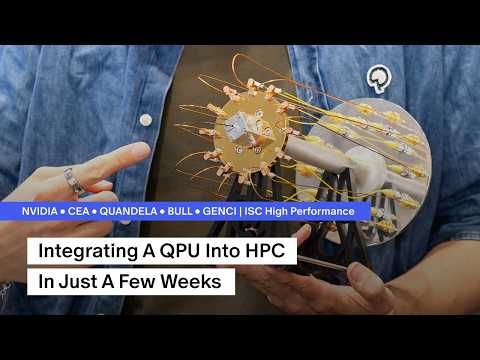
Now investors are looking toward the QPU the Quantum Processing Unit.
Quantum computers don’t just run faster. They operate under a completely different set of rules. Instead of bits that exist as 0 or 1, qubits leverage superposition and entanglement to evaluate multiple possibilities at once. Certain calculations that would take classical supercomputers thousands or millions of years may eventually take minutes.
That potential has created a new capital frontier.
Public quantum computing players like IonQ and D-Wave have already established market caps in the $10-$20 billion range. They are no longer experimental footnotes. They are part of the public market conversation.
But SPACs are reopening the door for earlier-stage quantum companies to access public capital and for investors to access quantum before it becomes fully institutionalized.
Xanadu and the Photonic Bet
One of the most-watched transactions is the planned merger between Xanadu and Crane Harbor Acquisition, which values Xanadu at roughly $3.1 billion.
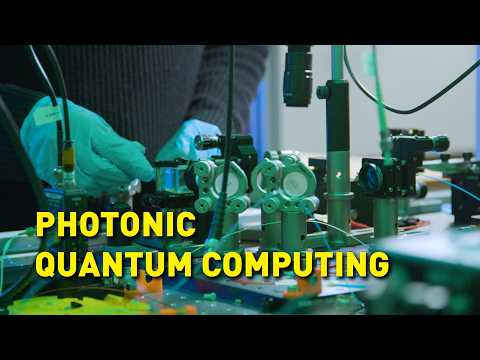
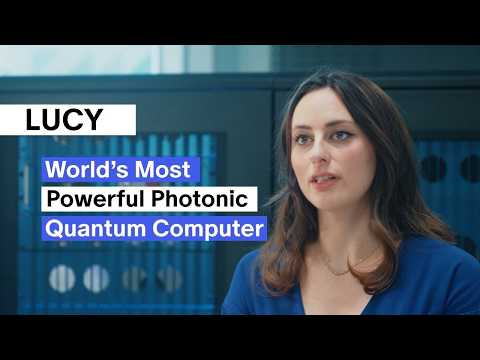
Xanadu represents something distinctive in the hardware race: a photonic architecture. Instead of superconducting qubits or trapped ions, the company is building quantum systems based on light.
That matters.
Because the quantum race is not just about scaling qubits. It is about which architecture scales most efficiently, most reliably, and most economically.
What is particularly notable about this transaction is the PIPE financing. Institutional investors, including AMD, BMO, and CIBC, have committed substantial capital to the deal.
That is not retail speculation. That is institutional underwriting.
For many investors, that backing serves as validation. It suggests that thorough due diligence has already been conducted behind closed doors.
Inflection and Hardware Optionality
Another deal attracting attention is the merger between Infleqtion and Churchill Capital X, which values Infleqtion at approximately $1.8 billion.
Infleqtion operates in neutral-atom quantum systems, another architectural pathway in the broader hardware race.
The valuation is lower than that of more established public peers, which analysts describe as “upside optionality.” If the company executes well and the market re-rates it closer to companies like IonQ or D-Wave, the upside could be significant.
Again, the presence of institutional PIPE financing, including capital from firms such as Morgan Stanley, signals that sophisticated investors are willing to fund the long term.
And make no mistake.
This is the long game.
The Basket Strategy: A Rational Approach to Uncertainty
Let’s be honest about something.
Quantum computing is still a frontier technology.
Error correction remains a scaling challenge. Competing architectures are still in play. No one can say with certainty which hardware approach will dominate superconducting, photonic, trapped ion, neutral atom, or something we haven’t fully seen yet.
That uncertainty is why many institutional voices advocate a “basket approach.”
Rather than betting on a single winner, investors diversify across multiple architectures and companies. It is a portfolio thesis built around inevitability rather than individual prediction.
The inevitability is this: quantum capabilities will eventually integrate into national infrastructure, cybersecurity frameworks, materials science, energy modeling, pharmaceutical design, and financial optimization.
The unknown is which company arrives first.
The Risk Is Real
We cannot romanticize this.
SPAC-backed frontier tech carries volatility. These are capital-intensive companies. They require sustained R&D investment. Revenue timelines are still emerging. Some will succeed spectacularly. Others will not.
In early-stage quantum investing, there is always the risk that a company becomes a brilliant science experiment rather than a durable enterprise.
But here’s the shift in 2026.
Quantum is no longer theoretical.
Governments are funding it. Enterprises are preparing for post-quantum cryptography. Defense sectors are aligning budgets. Semiconductor supply chains are adjusting. Academic labs are partnering with industrial players.
Capital is flowing because the strategic stakes are real.
A More Calculated SPAC Era
The return of SPACs in 2026 does not feel like a replay of 2021.
It feels more targeted. More specialized. More infrastructure-driven.
Rather than speculative consumer narratives, these vehicles target foundational technologies, including quantum hardware, AI infrastructure, and advanced semiconductors.
The public markets are being invited into the build phase of the next computing era.
And that is significant.
Because when QPUs mature with error correction scales, when enterprise integration stabilizes, the companies building today’s prototypes may become tomorrow’s platform giants.
The quantum frontier is not just a scientific milestone.
It is a capital cycle.
And in 2026, that cycle has reopened.
For those watching closely, the question is no longer whether quantum enters the public markets.
It already has.
The question is how you navigate the frontier thoughtfully, diversified, and fully aware that the future of processing power is being built in real time.
The original report was shown here.