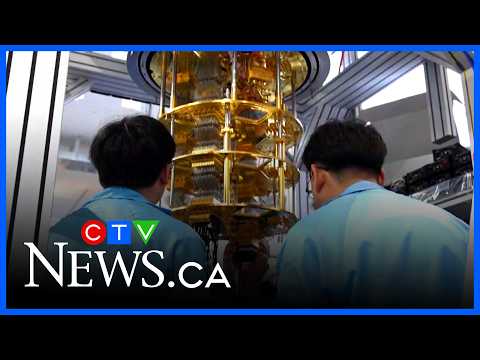
On February 13, 2026, something subtle but seismic happened.
Quantum computing stopped sounding like a lab experiment… and started sounding inevitable.
When Bloomberg Tech: Europe aired Quantum Computing and AI Boom: Inside the High-Stakes Tech Race, the tone wasn’t speculative. It wasn’t “someday.” It was clear, grounded, and urgent. The question is no longer if quantum changes everything.
It’s when. And who leads?
The “Willow” Wake-Up Call
Let’s start with the moment that made everyone sit up straighter.
Alphabet’s processor, called Willow, solved a problem in five minutes that would take the world’s fastest classical supercomputer 10 septillion years.
That number is almost absurd. It’s longer than the age of the universe. And yes, it was a benchmark problem. Yes, we can debate practical applications.
But the point is architectural.
Classical computers think in bits: 0 or 1. Sequential logic. Deterministic pathways.
Quantum computers think in qubits. Superposition. Entanglement. Parallel exploration of possibilities. Instead of marching through one solution at a time, they evaluate vast outcome spaces simultaneously and collapse onto the correct answer.
This is not faster Excel.
This is a different physics engine.
And once you understand that, you stop asking whether it matters.
It does.
Europe Is Not Sitting This One Out
One of the most interesting threads in the episode was Europe’s posture.
Jan Goetz, CEO of IQM Quantum Computers, made something very clear: Europe is not a spectator in this race.
In fact, Europe currently has more quantum startups than the United States and more quantum systems deployed in data centers. That surprised a lot of people.
But here’s the nuance.
The U.S. has Big Tech. IBM. Amazon. Google. Deep capital reserves. Massive infrastructure. Military-aligned research budgets.
Europe’s strength is different. It’s ecosystem-driven. Specialized. Research-rich. Collaborative.
But Goetz also made the tension clear: if Europe wants a real seat at the table, it must control its own quantum supply chain. Academic brilliance isn’t enough. Industrial leadership is the next step.
This isn’t just about science.
It’s sovereignty.
The Real Bottleneck: Error Correction
Then came the part I care deeply about because it’s where hype meets engineering reality.
We are no longer just trying to build qubits.
We are trying to scale them.
Today’s best quantum systems can perform around 1,000 operations before noise and decoherence introduce errors that overwhelm the computation. To reach meaningful commercial impact, we need trillions of error-free operations.
That gap? It’s everything.
This is where companies like Riverlane, Phasecraft, and New Quantum step in. Quantum error correction is essentially a real-time inference problem. The machine must detect and correct its own mistakes as it runs.
That is wildly complex.
But here’s what’s different in 2026.
Leaders on the panel agreed that we have turned a corner. The timeline for commercial impact is no longer vague. Most aligned with the late 2020s to early 2030s.
That’s not science fiction.
That’s budget cycle planning.
The Telescope of the 21st Century
One phrase from the broadcast stayed with me: quantum computing is the telescope of the 21st century.
I love that.
Because telescopes didn’t make us faster. They made us see differently.
Quantum allows us to simulate chemistry at the molecular level. Not approximate. Not simplified. Real quantum interactions.
That changes:
- Drug discovery. Designing molecules in silico instead of relying on years of trial and error.
- Materials science. Better batteries. Stronger composites. Cleaner industrial processes.
- Fertilizer optimization. Sustainable agriculture through quantum-enabled chemical modeling.
- Logistics and financial optimization. Risk modeling across complex, multi-variable systems.
When we talk about climate, healthcare, and energy transition, this is where quantum fits.
Not everywhere.
But precisely where classical computation fundamentally struggles.
The Encryption Shock No One Wants to Talk About
Now the shadow side.
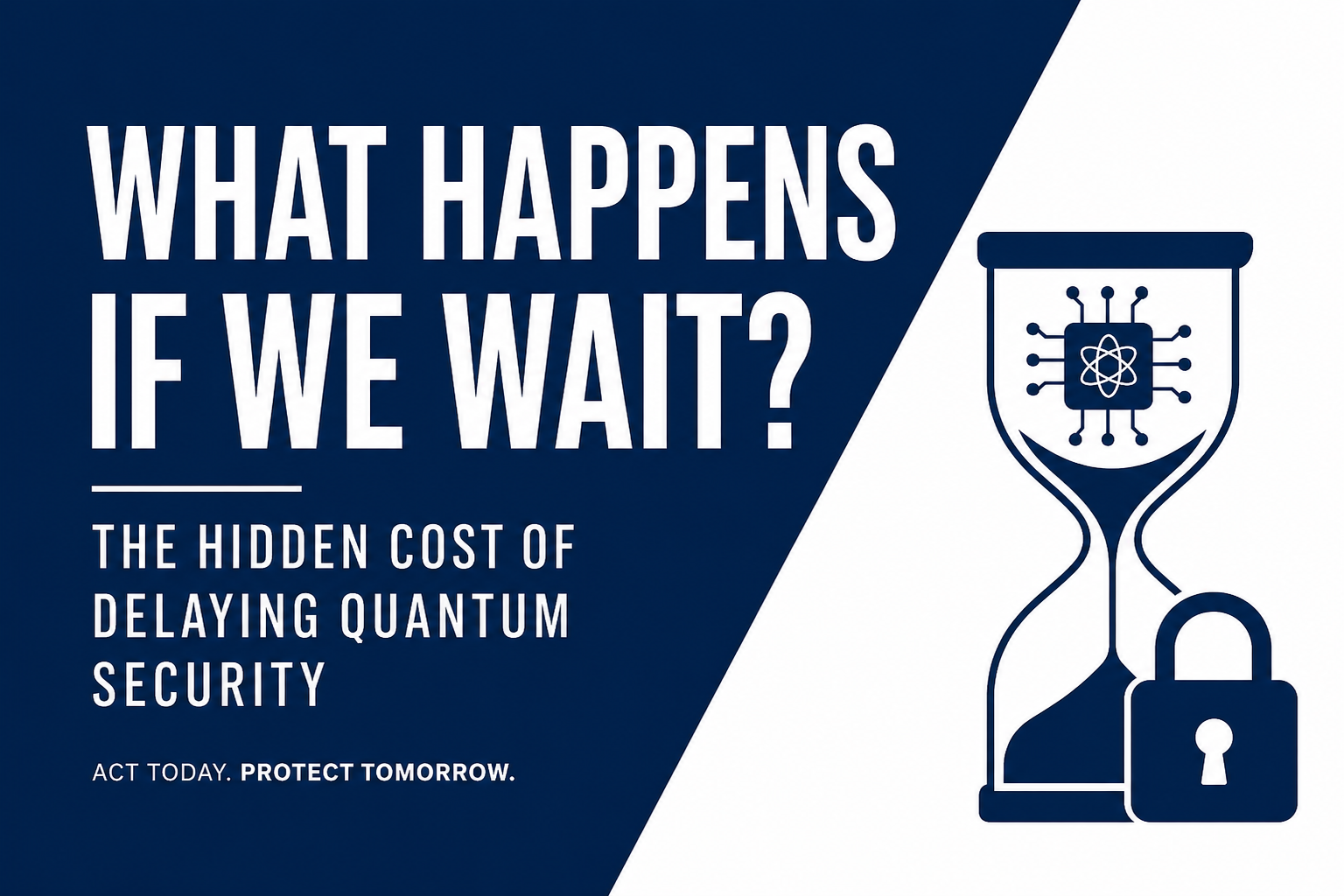
Public-key encryption underpins global finance, defense systems, and secure communications. And quantum computers, once sufficiently powerful, will be able to break much of what we use today.
This isn’t hypothetical. It’s structural.
The phrase “harvest now, decrypt later” keeps surfacing for a reason. Adversaries can collect encrypted data today and wait until quantum computing capabilities mature.
If your data needs to remain secure for 10 or 20 years, the transition to post-quantum cryptography needs to happen now.
This is not panic.
It’s governance.
And it’s why quantum is not just a research story. It’s a boardroom story.
A Global Race with Very Local Stakes
The Bloomberg segment made something else very clear.
This is geopolitical.
The U.S. brings capital scale. China brings state-backed momentum. Europe brings ecosystem density and specialization.
And the rest of the world is watching, building, and aligning.
The winner of this race does not just get a faster computer.
They get leverage over supply chains. Materials discovery. Defense systems. Financial infrastructure. Drug pipelines. Climate modeling.
They get to shape the next computational paradigm.
And here’s the truth.
We are no longer waiting for the quantum future.
We are engineering it.
Right now.
Watch the full report: Bloomberg Tech: Europe 2/13/2026