
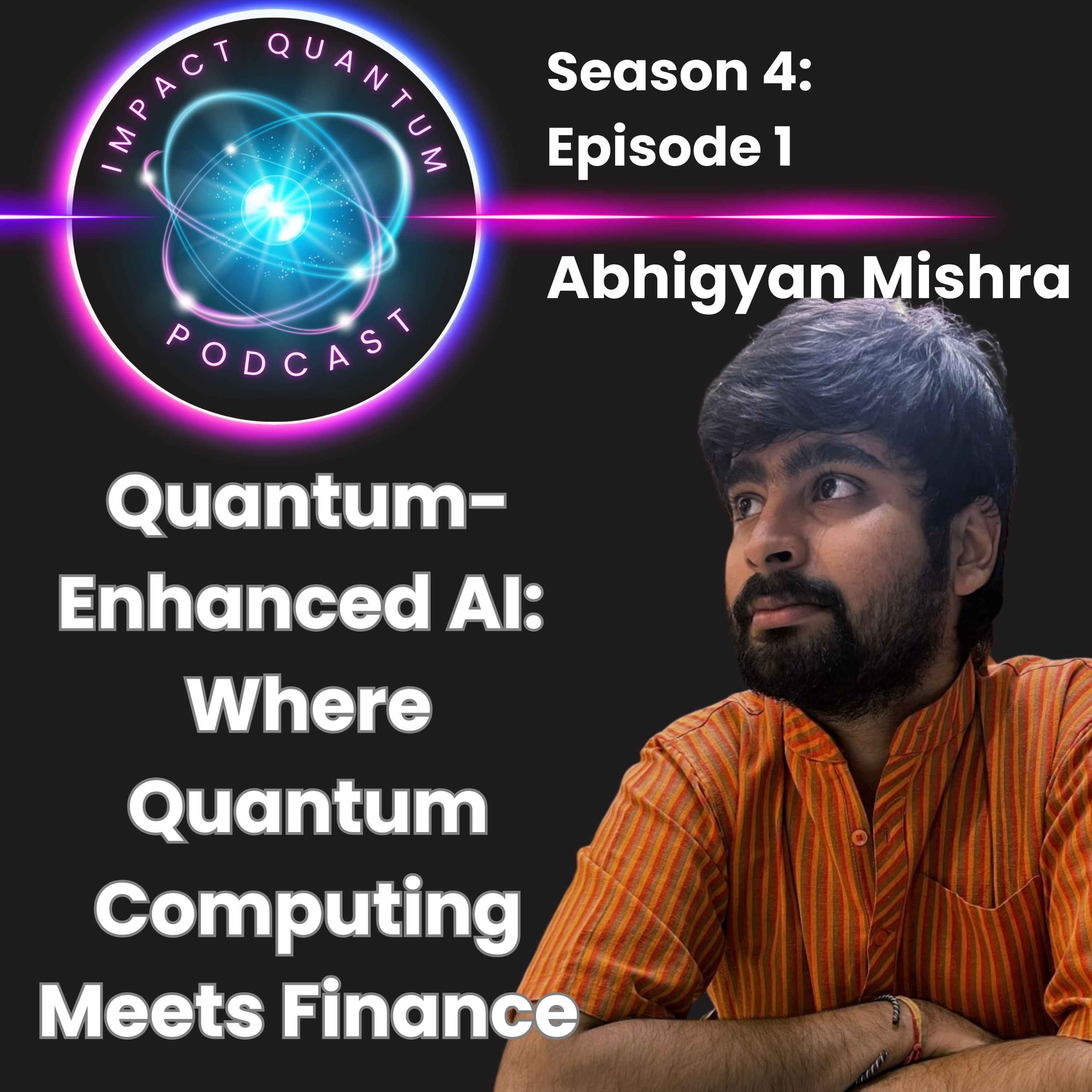
In this episode, Frank La Vigne and Candice Gillhoolley are diving into what’s actually working—and what’s just hype—in the world of quantum computing. Today, they’re joined by Abhigyan Mishra, Quantum Director and co-founder of Rune Technology, for an enlightening conversation on real-world quantum advantage, especially in the finance sector.
You’ll hear how Abhigyan Mishra and his team are merging AI with quantum approaches to tackle market intelligence in innovative ways, and why being “quantum-ready” might be more important than you think. He breaks down why quantum won’t solve every problem, how to spot when quantum truly creates value, and why intuition—and not just math—is key for those curious about breaking into the field. Plus, we get practical advice for aspiring quantum engineers, a candid look at quantum’s adoption curve in finance, and what real ROI from quantum could look like in the next decade.
Whether you’re a quantum newbie or a seasoned tech enthusiast, this episode will give you a fresh, accessible perspective on where quantum tech is now—and where it’s really heading.
Time Stamps
00:00 “Quantum-Enhanced AI for Scalability”
06:27 AI Missteps in Finance
09:47 “Ethics Follows Technology Adoption”
12:16 “Data Complexity and Approximations”
15:58 “Navigating Quantum Learning Challenges”
20:18 “Quantum Computing: Start with Intuition”
23:50 Quantum Computing: From Struggle to Progress
25:36 “Future of Quantum: What’s Next?”
29:29 “Introducing Quantum Tech in Education”
33:25 “Rethinking Entropy and Insights”
37:37 “Quantum Mechanics: Confusing Yet Fascinating”
41:44 “Problem-Solving in Quantum Computing”
43:35 Building a Quantum Team Philosophy
47:41 “Cloud Access Drives Quantum Innovation”
51:44 “Embracing Quantum Computing’s Potential”
Transcript
Quantum computing is everywhere right now. But what actually
Speaker:works and what's still just hype.
Speaker:Today we're joined by Abhighyan Mishra to talk about real world quantum
Speaker:advantage finance. And building quantum ready software today.
Speaker:Hello and welcome back to Impact Quantum podcast. We
Speaker:explore the emerging industry of quantum computing,
Speaker:quantum sensing, quantum biology, all that good stuff
Speaker:that's out there. You don't need to be a PhD.
Speaker:You just have to be curious. And with me is the most quantum curious person
Speaker:I know, Candace Gooley. How's it going, Candace? It's great, Frank.
Speaker:Thank you so much. I'm so happy. I know it's silly, but the
Speaker:weather's actually warmed up. So it's like just hovering it
Speaker:freezing. So it's like time to go outside in shorts. I'm very
Speaker:excited. That's like summer. That's almost summer weather in Montreal,
Speaker:I'm. Telling you, downright balmy. Downright balmy for Montreal,
Speaker:Quebec. Candace. We're getting
Speaker:above freezing today for the first time in like three days, which. Oh my God,
Speaker:it's a big deal for us. Yeah. Yeah. Well, hopefully it doesn't refreeze
Speaker:then. And then all turned up. Oh, it totally will. It totally will. So there
Speaker:you go. Okay, so today we're lucky. We
Speaker:have Abby Mishra and he is the Quantum
Speaker:director and co founder of Rune Technology.
Speaker:Hi, Abby, how are you doing today? Yeah. Hey,
Speaker:Candice. Pleasure to be here and looking forward
Speaker:to a good conversation. Awesome. So what can
Speaker:you tell us about Rune Technology? Rune Technology
Speaker:itself without going too much in detail because it's a financial
Speaker:related company. I cannot reveal too much because that's where our bread and butter
Speaker:lies. But what we do differently is
Speaker:we look at the market with a different perspective. We are a quantum enhanced AI
Speaker:based company. Obviously we provide signals and everything.
Speaker:And what we do differently is obviously we look. We
Speaker:enhance the already existing AI models with a representation
Speaker:given by a quantum based approach. So that's to
Speaker:sum it up in a very few lines. That's what root technology does.
Speaker:Oh, very cool. Very cool. You
Speaker:mentioned signals. I assume you're meaning kind of what other people would call
Speaker:market intelligence. Being able to read the market and kind of pick up on things
Speaker:before other people do. Is that roughly kind of what you do?
Speaker:And we lost this camera.
Speaker:I can see that. And I have no idea why that happened. Just give me
Speaker:a second. That's okay. Yeah, I should be back now. Right?
Speaker:Yep. Yes. I was saying. Yeah, you're exactly right and on point with that. You
Speaker:know, Signals is basically Exactly. You know, you can say the information on which other
Speaker:people acts and trade. So yeah, that's exactly, you know, you're, you're
Speaker:on point with that. And like, like, you know, what we do
Speaker:differently is, you know, we don't, you know, just limit ourselves to one particular market.
Speaker:Right. You know, you can have information from different sector, different market and
Speaker:obviously, you know, at that point the problem becomes about
Speaker:scale. And when you think of scale, that's
Speaker:where the AI and the whole compute cost and everything comes into picture.
Speaker:And I'll say that's something interesting as well, how we
Speaker:put quantum in this whole aspect of it. And when we say quantum enhanced,
Speaker:where exactly this quantum come in? To put it very simply,
Speaker:we sort of compress the market data in a way that
Speaker:the AI models can better understand. The AI itself, a different
Speaker:game, that's a different architecture. It's also very sophisticated in itself,
Speaker:but, but obviously the data in itself and the purity of data. That's
Speaker:where I'll say the quantum part comes in.
Speaker:Interesting. So your solution is AI and quantum
Speaker:together, is that what you're saying? It's a
Speaker:quantum enhanced AI? I'll say that's the precise way to put it,
Speaker:yeah. So how, how would
Speaker:you explain to a non technical person what it is that you're
Speaker:doing? See, to a non
Speaker:technical person in general, what do you do? You mean in reference to Rune
Speaker:technology or in general, what do I do? In general,
Speaker:what are you doing? What is Rune trying to do? What
Speaker:problem do you want to solve? In general, I'll
Speaker:say that my expertise particularly lies in
Speaker:bringing technology like quantum computing, which probably and
Speaker:everyone thinks is a very niche tech, into something so basic
Speaker:and so rudimentary at the same time, so complicated like financial
Speaker:market. And what I do is I try to figure out
Speaker:where in the pipeline, the classical pipeline, where the bottleneck lies, the
Speaker:right point, the right spot to even think about, you know, anything quantum
Speaker:related. So that's where my expertise lies. That's what I do. And in
Speaker:reference to quant in this root technology, as I suggested, you know, as
Speaker:obviously I cannot deep dive into it. But as I suggested, the, the
Speaker:complex, the, the, you can say the alpha or the, the elegance
Speaker:really lies in the fact that you, in a different way, which
Speaker:allows us to kind of collaborate or compress
Speaker:more data so that the AI architecture
Speaker:can better understand it and give the results, whatever
Speaker:these signals, whatever we generate.
Speaker:Interesting.
Speaker:How widespread is quantum and finance
Speaker:now? Is it still kind of. It's definitely still cutting edge. But I
Speaker:mean, is it kind of fringe, Is it, is it, is it
Speaker:kind of almost mainstream? Is it? You
Speaker:know, we all know the big stories, hsbc, JP
Speaker:Morgan. But like, I know banking has a
Speaker:rigid hierarchy of like, you know, who's the top dog and things like that.
Speaker:But all, you know, like, obviously if the top dogs are looking at it, right,
Speaker:there's gonna. I don't want to name people, I don't want to name banks because
Speaker:they're going to get upset that you didn't rank them among the top dogs. But
Speaker:obviously the top global banks, they're looking at it
Speaker:very clearly. They're seeing some initial success. But what about kind of like the.
Speaker:Somewhere bigger than regional? Like,
Speaker:what's their take on this? I think that's a very interesting
Speaker:question. And I'll say, I mean, I'll take an
Speaker:example of AI in this particular case because
Speaker:AI has always been a thing of interest in the financial market in financial sector
Speaker:as well. But, you know, the issue with,
Speaker:you know, this particular industry in general
Speaker:is, right, they jump into this before they
Speaker:truly understand the, you know, the scale and the
Speaker:understanding of what the sector really brings in. And
Speaker:I mean, I can say the same for AI, right? You know, you can probably
Speaker:find AI research team in every other hedge fund and, or every
Speaker:other financial. Not even talking about banks in general, in every
Speaker:other major financial firm. But how
Speaker:well are they implementing into the practical pipeline is something
Speaker:kind of, you know, iffy, if you'll say. And there's a very strong reason about
Speaker:it. And I'll say, like I said, because before this, before
Speaker:diving into the financial sector, I do have some around four or five years
Speaker:of experience in automotive, automotive sector,
Speaker:aerospace sector. And I'll say there's some similarity which lies
Speaker:from that sector to this sector, which is exactly the,
Speaker:the resilience to a change. Right. And, and the
Speaker:how. And how hard is it to penetrate these kind of, you know, these kind
Speaker:of sectors. So, you know, as you said, there's a hierarchy involved
Speaker:in this. And the people, they are pretty, I would
Speaker:say, comfortable with the legacy methodologies, you know, which have already worked.
Speaker:And, you know, they're comfortable because they understand that.
Speaker:Right. So, yes, you know, technologies like
Speaker:quantum computing, artificial intelligence are making their impact in the
Speaker:financial sector. But I'll say there's, there's still, I
Speaker:think now it's, it's more prominent. But this, the wave of actual
Speaker:acceptance and adoption of the technology has, I'll say, have started in a
Speaker:very, very recent, I'll say, past. So the same goes
Speaker:for quantum computing. To, to, to answer your question in, in short. Right. That
Speaker:you know, yes. You know, major firms do have quantum computing as one of
Speaker:the. Or of their team, but it's most mostly R
Speaker:D. Right. And when it comes to practical application, yes, there are,
Speaker:there are a lot of limitations of how you implement that tech. But I feel
Speaker:like the approach there is kind of diluted and I
Speaker:cannot blame the R D team for that. It's, it's about, you know, how much
Speaker:acceptance you get from the, the higher ups as well,
Speaker:you know, before you actually try to implement anything to the
Speaker:practical world. Yep. So
Speaker:given the highly regulated nature of banks around the world,
Speaker:and I know this has been a factor with AI, Right. Like you have to
Speaker:have some kind of explainability.
Speaker:What's the current state of regulation around quantum in finance? Right.
Speaker:Is it still too new? Because I live in the
Speaker:D.C. area. Right. And there was a joke that technology is not real and
Speaker:actionable until the government decides to start regulating it.
Speaker:So where do we stand? Where does
Speaker:the. Particularly in finance? I think finance is usually one of the first regulated
Speaker:fields. So is it pretty much no regulations yet
Speaker:somewhere in the middle?
Speaker:I'll say yes. And this is pretty much very new.
Speaker:And as I said that the adoption is still very low
Speaker:and you don't see that many
Speaker:legal aspects and ethics come into the picture until that
Speaker:option becomes to a point where, I think
Speaker:to a point where we are not talking about it as a niche
Speaker:technology, but we are talking about as a necessity.
Speaker:If you think always. I always go back to AI when you talk about quantum
Speaker:because I feel AI was exactly where quantum is right now
Speaker:around a decade ago. And if you look at it right now, and if you
Speaker:think what's the major reason why ethics became a subject when you
Speaker:study AI is obviously because of the adoption of AI in
Speaker:mainstream technology. When you start to think about
Speaker:it, if every other man has access to such cutting edge AI
Speaker:technologies, then you also have to consider ethics.
Speaker:So I will say that right now, as long as the adoption rate does not
Speaker:cross a certain threshold, ethics wouldn't be a thing. And
Speaker:as you said, the jokes, I mean jokes and your stereotypes are more
Speaker:or less based on real facts. So as long as you know the adoption doesn't
Speaker:reach a particular threshold. Yeah, you're not going to see any kind of ethics involved
Speaker:with quantum compute. There are ethics on cryptography. Yes. But
Speaker:that's. That I feel is kind of like on a different
Speaker:paradigm and not on quantum computing. And you know, the
Speaker:computation based problems well, that's fair.
Speaker:Sorry Candace, I don't want to monopolize the mic. So many financial
Speaker:problems are already well served by classical hpc.
Speaker:What specific characteristics make a finance
Speaker:problem genuinely quantum advantaged?
Speaker:Well, that's a very interesting question and I think that's
Speaker:where most of the research lies. And as a spare said,
Speaker:especially in my case, you know, that's where some, that's something where,
Speaker:you know, I feel like I spend the most time on, well, to be frank,
Speaker:you know, you know, for strictly honest. And there's this financial
Speaker:sector is the newest sector which have dived into. So I have less than a
Speaker:year experience in this. As I said before this I was in automotive at aerospace
Speaker:industry. So. But although I will
Speaker:answer your question in reference to that because I feel they share a lot of
Speaker:correlations. It's, it's a different, I mean it's the same
Speaker:thing. Package is a different stuff. And what I mean by that is,
Speaker:see, both of these problems basically suck from high volume of data
Speaker:and high velocity of data in overall, you know, you have a
Speaker:huge data coming in group every second. So the
Speaker:problems are, I'll say, I'll say not same but same thing
Speaker:but in a different paradigm. So to answer your question, yes,
Speaker:there are algorithms out there, you know, HPC algorithms,
Speaker:approximation algorithms. So I do have a PhD in computer science, so I understand
Speaker:that there are, you know, these algorithms. But the thing is that
Speaker:these algorithms at, at the very core, at some point of time have to
Speaker:take an approximation if it crosses a certain threshold,
Speaker:right? Like for example, if you think about it, the very simple case I can
Speaker:tell you is that, you know, if I say, if I, if I ask you
Speaker:to map the dynamics of a multi particle system,
Speaker:if you have multiple particles in the system, even in physics, which is
Speaker:like the purest form of one of the purest form of science, you have to
Speaker:take an approximation if you want to solve the problem of
Speaker:a particle in a box problem. And when you do so you
Speaker:lose information. I think that's where the quantum
Speaker:really helps in. So obviously I never say, and I'll repeat
Speaker:it again, quantum is not one solution to all problems. It is
Speaker:the job of people like me and other experts like
Speaker:me to identify in a pipeline where exactly
Speaker:does the quantum really and help to unclog,
Speaker:let's say a bottleneck which was really overall reducing the
Speaker:performance. But to say that quantum is going to rebuild the whole thing,
Speaker:that's insane. Quantum is not that kind of computing. It's just
Speaker:another way of looking At a problem. But yes, you have to identify a problem
Speaker:where you think there does lie and expertise like
Speaker:one of the most common one in financial market is portfolio optimization.
Speaker:And there's a very good reason why that is so relevant. Because if you think
Speaker:about it, what is portfolio optimization but not a multi particle
Speaker:system? You know, you have one asset, two assets, 10 different assets.
Speaker:You need to find a perfect, you know, path from point, you know, perfect
Speaker:path or I would say a perfect graph out of this whole network
Speaker:which can give you the maximum profits. There are SPC
Speaker:algorithms for it. Yes, true, but if you represent this
Speaker:problem as a, as a quantum computing problem, you get better results,
Speaker:is as simple as that, you get better scalability. So it's as simple
Speaker:as that. There's, I mean, I don't want to complicate it any further. It's as
Speaker:simple as looking at a problem, identifying where, you know, this
Speaker:bottleneck lies and if quantum can solve it. Because not
Speaker:every bottleneck is going to be solved by quantum computing. There is only specific
Speaker:problems. But those problems might lie in one of the, you know, can
Speaker:say the core pipeline of the whole thing, of the whole industry.
Speaker:That's it. That's a fair way to put it. That's a
Speaker:fair way to put it. Right. Like it's. Quantum is not going to solve. I
Speaker:think that's one of the biggest misconceptions. It's going to solve everything. Well, not everything.
Speaker:Right. Again, who knows what the future will bring like 50 years out? Because
Speaker:I doubt that the people working on transistors and Bell labs in the 40s and
Speaker:50s were thinking about TikTok, right?
Speaker:Who's to say? But I think in the near term, probably a decade or
Speaker:so, I think it's safe to say, like it is a very finite problem set
Speaker:that quantum can, can, can work on. Yes,
Speaker:that having been said, you know, beyond that, who knows? Sorry.
Speaker:No, no, no. How do you think we can make advanced topics
Speaker:like quantum computing more accessible to broader
Speaker:audiences without diluting the complexity?
Speaker:Again, that's a good question. And
Speaker:personally I have tried to do that actually. You know, it's funny because, you
Speaker:know, I started my quantum journey, the first venture, you know, which
Speaker:I went ahead with, was my own venture and it exactly targeted this.
Speaker:And because I myself do
Speaker:not come from a quantum physics background, I come from a pure computer science, theoretical
Speaker:computer science kind of a background with a master's and PhD in the same. So
Speaker:I felt the same, that you know, it could be very
Speaker:daunting, you know, the maths itself, you know,
Speaker:and it, and obviously, you know, when you study about algorithms in
Speaker:a pure quantum algorithms, it does get very daunting. The maths, they do
Speaker:say it's just linear algebra. They never tell you how
Speaker:complicated it gets so soon, you know, you didn't even get time
Speaker:to, you know, grab your mind around it. But
Speaker:at the same time I also felt that, you know, it's an intuition
Speaker:which, you know, we get out of these things because.
Speaker:Yes, okay, yeah, yes. You know, you, you
Speaker:need to understand quantum physics to get a complete understanding of quantum computing.
Speaker:But at the same time, do you really need to understand
Speaker:everything from top to bottom to know if it even makes sense
Speaker:in your business? Obviously, you know, you would need
Speaker:a guy like with a PhD in quantum physics to make the hardware
Speaker:for it. There are going to be guys like that. You obviously need Someone with
Speaker:a PhD in quantum and quantum physics to, you
Speaker:know, really, you know, write the math for the algorithms. Yes, but you
Speaker:also need someone who can understand the intuition because like see,
Speaker:for in my case I cannot understand financial market from A
Speaker:to Z. That's true, but I need to know it enough.
Speaker:But I need to know my stuff enough to form a bridge between the two.
Speaker:So to answer the question, how do you make so complicated topics? Simple, you explain
Speaker:the intuition, you make them understand
Speaker:what really is happening from an intuitive point of view at least,
Speaker:I mean, that's how I feel. At least, you know, anyone from, you know, who
Speaker:is looking to get into this sector should have an understanding profit of an
Speaker:intuition. If they like it and if they want to dwell into it,
Speaker:obviously deep dive into the maths, get a better understanding. The more
Speaker:you go in, the better you feel, the better you get a grasp of things.
Speaker:But start with intuition, that's how you slowly get your way
Speaker:to the end.
Speaker:Okay, very cool. Where do you see the most
Speaker:promising near term real world impact
Speaker:of quantum technologies across industries like finance and
Speaker:optimization or cryptography?
Speaker:Obviously cryptography and optimization is always
Speaker:the lowest hanging fruits because these are two sectors where
Speaker:you can actually use the scale because that's where the
Speaker:scale of the problem for optimization, the scale of the problem becomes a
Speaker:complexity. And for cryptography it's a completely different regime. There
Speaker:the encryption and decryption, all those cryptographic algorithms, they come to the
Speaker:picture. But these two fundamentally, if you think about it, are very
Speaker:mathematical problems. Right? And within those maths
Speaker:lies. I can, I can argue not, I mean, you can't
Speaker:quote me on that, but you can, I can argue, it's just Linear algebra at
Speaker:its very core, both of these problems. So there
Speaker:are, I'll say very low hanging fruits in both of these
Speaker:sectors. And whenever a real quantum, I'll say not real, but
Speaker:a fault tolerant, full fledged quantum system with enough qubits to
Speaker:solve these problems. I think these will be the first two sectors which will be
Speaker:obviously influenced and targeted from about the financial point of view. And
Speaker:I'll say in general point of view as well. And
Speaker:after these two, if I want to say,
Speaker:well yeah, no, I think, I mean I, I'll say within optimization there's
Speaker:a lot of things which could be done because within optimization I'll say the machine
Speaker:learning also comes into the picture. Quantum machine learning, qml.
Speaker:Now that also I think will fall under optimization. So yeah, I think these two
Speaker:sectors particularly.
Speaker:Very cool.
Speaker:What advice would you give someone trying to break into
Speaker:quantum engineering as a career today?
Speaker:I'll say again, same thing which I said before that, you know, start
Speaker:with building an intuition as a book. I really liked,
Speaker:you know, quantum Computing for computer scientists. I mean I have
Speaker:bias because I am a computer scientist, so I have a bias towards that. But
Speaker:I'll say now there are a lot of lectures out there, so
Speaker:go through those lectures and yeah, one important thing is I'll
Speaker:strongly suggest to, you know, participate in hackathons, these
Speaker:quantum hackathons. And I do so because
Speaker:that's how you get to understand, you know, how are people thinking
Speaker:about a problem and how are they mapping the problem to an algorithm?
Speaker:Because you know, you can study all the algorithms you want, you can study Shor's
Speaker:algorithm, you can study Simon's algorithm, you know, digestors
Speaker:algorithm, but where do they map into a real world
Speaker:problem? Obviously you know, they are, they're simple obvious
Speaker:answers. But when you meet people in hack, because that's how I started my
Speaker:journey and that's, you know, one of my personal advice to anyone who's starting the
Speaker:journey is you start to see the insight at the thought process
Speaker:which people have when they think of a problem and how they map it to
Speaker:a solution. Solution being the, the limited set of algorithms which we
Speaker:have or whether it makes sense to, you know, go towards this or not.
Speaker:I think once you start to build that intuition of how to map any
Speaker:classical problem into a plausible quantum problem,
Speaker:that's where I think, you know, the real, you know, the real edge lies.
Speaker:I'll say it's the hardest thing also. But that's something, you know, you should start
Speaker:building from day one because the maths and the
Speaker:Quantum physics part. It will take time. You know, it will take time.
Speaker:You'll have to go through a lot of lecture. You'll have to watch the famous
Speaker:lectures from Mr. Payment and you know, you have
Speaker:a lot of go through a lot of lectures to get to that, get that
Speaker:point of time. But at the same time, I think, you know, this is important
Speaker:to, you know, kind of build an intuition in your journey.
Speaker:Yeah. What first drew you into
Speaker:quantum computing and how, how did your early
Speaker:experiences shape your approach to both research and
Speaker:advocacy?
Speaker:I don't have, I'll say very, I have a very anticlimactic answer to that.
Speaker:Before quantum computing, I was actually working on blockchain and before that
Speaker:I was working on iot. Okay. So.
Speaker:And you know, I started with quantum back when, you know, the COVID started.
Speaker:I mean, blockchain back then was starting to, you know, get some
Speaker:hype. But I wanted to, I was looking for something new and
Speaker:I, I saw this video on YouTube. It's, it's, it was
Speaker:from Microsoft. It's a world video. I think right now it would be around six
Speaker:or seven years old. So it wasn't from background. It was a like
Speaker:introduction to quantum computing from a computer scientist perspective or something.
Speaker:I watched the video, I liked it. And around same
Speaker:time, IBM was conducting, I think it's second quantum hackathon or something.
Speaker:So I got to know about it. I participated, obviously.
Speaker:And yeah, and rest is history. And
Speaker:what happened was that to be very on. What happened was that this happened around
Speaker:the time when I was about done with my bachelor's. So I was already looking
Speaker:for, you know, something solid, like, okay, now I have to make a career.
Speaker:It's, it's fine. You know, I've been doing all this cool stuff like IoT
Speaker:and blockchain. Now I have to pick something, you know, I have to make a
Speaker:career out of something. I would say it was pure luck that, you know,
Speaker:I just stumbled upon quantum computing and just picked it up. And
Speaker:to answer your question about how the initial journey was,
Speaker:I'll say from, at least from India,
Speaker:we didn't have many people like, other than me. They were like
Speaker:three, four more people, you know, who were really interested
Speaker:and was a part of this hackathon and everything. So, yeah, there was a lack
Speaker:of community initially, I agree. But at the same time,
Speaker:how things have went, you know, from that to, you know, where things are right
Speaker:now, I feel any kind of difficulty which I had
Speaker:with, you know, finding resources online because all of the books were
Speaker:mostly quantum Mechanics book. It was for quantum physics people, not for
Speaker:someone from, like, there were one or two books, you know, which as a computer
Speaker:scientist could study and, you know, grasp some intuition. But mostly it was for physics
Speaker:people. But now I think, you know, you can just go on
Speaker:YouTube and just type quantum computing and just type the
Speaker:word intuition or lectures, and you'll get
Speaker:thousands of results. So, yeah, things are much better now. And
Speaker:I like the fact that it's that. It's that because now in India
Speaker:also, you know, we have a lot of. A huge community of, you know, enthusiasts
Speaker:from content. Like, I have every day I get at least one or two messages
Speaker:on LinkedIn asking that, you know, we want to get into the sector, how do
Speaker:we do this and that? So, yeah, from then to now,
Speaker:obviously, you know, things have escalated a lot. It has really gained
Speaker:a lot of hype. And that's why I always say that, you know,
Speaker:quantum right now is what AI was around 10 years ago. People
Speaker:were interested, they wanted to get in. They didn't know exactly what
Speaker:was happening. But, yeah, it still hadn't got that, you know, that
Speaker:adoption thing. But it was getting some hype because hardware was coming in.
Speaker:Right. So, yeah, I think we are at the same thing with the quantum plate
Speaker:now. I think that's fair. I think that's
Speaker:a fair way to put it. Interesting.
Speaker:o go? Like, what do you think:Speaker:going to have in store for Quantum? I know that's a really tough thing, but
Speaker:I think if I had to sum up:Speaker:can confirm or deny was kind of, wow, this
Speaker:is, this is going to be a thing. This is going to be an industry.
Speaker:Where do you think we go from here? Like, what, what, what?
Speaker:You know, imagine a year from now, we're talking and we're like, well, how could
Speaker:you put:Speaker:be. Is it going to be kind of like,
Speaker:wow, that was a year, or is this going to be like, oh, man, that
Speaker:was a year. How do you think
Speaker:it'll go? I know it's hard to predict the future. That's, that's, that's. I think
Speaker:that would be the hardest question you can probably ask me
Speaker:to answer that. I feel, I
Speaker:personally feel it's. It's just gonna be a year, I
Speaker:think. Yes, okay. Yeah, it's just gonna be here. I don't think something very major
Speaker:happening right now. And I'll tell you why, because
Speaker:2025 was a banger and banger in a sense that, you
Speaker:know, a lot of big names, big companies kind of
Speaker:revealed a, you know, a good sense of their timeline, I'll say.
Speaker:So if you're talking from a hardware, hardware development,
Speaker:that's what your feed would be. Just like saying that, you know, Nvidia
Speaker:tomorrow comes up with a new architecture, it's like saying that. So I don't think
Speaker:that's going to be something which really happens on the other hand on the software
Speaker:side of things. Well, I think it would be, it's
Speaker:going to be very, very interesting. And I say that
Speaker:because, I mean if, if we had like 100 startups
Speaker:in, in last year, we're gonna have 100 more and I'll say 200 more this
Speaker:year. Quantum is getting edge. So software side is
Speaker:always what every year of our quantum software is going to be something new, something
Speaker:interesting because the last thing to close it
Speaker:out. The more people you have interested
Speaker:in something, the more possibilities you have. And I think
Speaker:that's going to really pay off now.
Speaker:Interesting.
Speaker:You've participated in beginner focused discussions
Speaker:and podcasts about quantum roadmaps.
Speaker:What's one piece of advice that you consistently give to beginners?
Speaker:I think again for beginners it's always to build an intuition first
Speaker:because. And not to be scared from the maths. Right.
Speaker:And you know, if you can kind of focus and
Speaker:map whatever you learn, you know, in your journey
Speaker:to real world applications is that you're on the right path
Speaker:even if you don't understand the maths, you know, don't be scared.
Speaker:It's, it's something you know, which takes time, you know, the math takes
Speaker:time to understand. It's, you know, as they say, if you understand
Speaker:quantum mechanics, you don't understand it. That's how they put it.
Speaker:So you don't need to understand it from day one, but you do need to
Speaker:understand what it means and how you do. You apply
Speaker:it to any problem. So yeah, just focus on that as a beginner.
Speaker:That's all you can do. And to expect something more out of you is,
Speaker:you know, it's kind of putting yourself under the kind of pressure which
Speaker:you can't get enough. Cool.
Speaker:How should policymakers and educators collaborate
Speaker:to build a quantum ready workforce and lessen
Speaker:the gap between hype and expertise?
Speaker:I think that's, that's one of the, I think
Speaker:one of the most future looking question. I'll say yes, I think this should
Speaker:be the case. It obviously makes sense to
Speaker:integrate such a Promising technology like
Speaker:quantum computing into the coursework. And
Speaker:I don't mean it in a way that they should understand everything about it,
Speaker:but I mean the other day one
Speaker:of my cousins, she's in 10 standard right now and she's
Speaker:studying about AI and ethics in AI, by the way,
Speaker:which baffled me because I was like
Speaker:back then AI was something I wasn't even aware about. AI was
Speaker:supposed to be a subject which we studied when you reached in your bachelor's final
Speaker:year and in your masters, we had no idea what AI was.
Speaker:And even then AI was just about deep neural networks,
Speaker:RNNs and all of these things, just the mathematical stuff and these
Speaker:things. So similarly, I feel like quantum technology
Speaker:can be part of one of those kind of one of those things, one of
Speaker:those curriculum where they understand what this technology
Speaker:is about. At least they could, they can know what a qubit and what a
Speaker:bit is like they can understand what
Speaker:kind of advantage these technology is mean thought to
Speaker:have, right? So just a bit like, you know, they can, they can have
Speaker:a basic understanding of what cryptography means, what, what quantum sensing means,
Speaker:what quantum computing means. At least they should know and be able to differentiate
Speaker:between three. And so that I think is, I
Speaker:think it's pretty rudimentary, but at the same time it gives them an
Speaker:understanding because later, later in life, right, let's say
Speaker:they do build an interest in this and they go on to
Speaker:pursue a full time career in quantum computing. Good for them.
Speaker:But even if they don't, let's say they do become some big
Speaker:executive, right? Or they join the, you know, the mid level
Speaker:executive. They should understand quantum computing enough to be able
Speaker:to know whether it's a good fit for the problem which we are having
Speaker:or not. Because that I think is the biggest gap in the market
Speaker:right now. The mid level executive, because I know
Speaker:quantum is a buzzword, you know, and you know, you can
Speaker:kind of pitch any problem and say, you know, we'll just improve it using
Speaker:quantum. But yeah, I think we need more people at executive
Speaker:level who doesn't need to do the whole technology but just have enough
Speaker:understanding to know, okay, this is bullshit. So yeah, I think that's,
Speaker:that's why I feel, I mean it's a fair. Way to put it. That's a
Speaker:fair way to put it, right? We, and that's kind of the basic premise of
Speaker:the show since we rebooted it last season, was
Speaker:it was based on something somebody had told us that there's enough PhDs in this
Speaker:field already. We don't need more. It's basically kind of what
Speaker:he said. And I'm not discouraging anyone who has a PhD or
Speaker:wants to pursue PhD in this because, you know, go for it. Because, you
Speaker:know, you all are going to be the core of the
Speaker:engine. But even if you think of, you know, extending the engine metaphor even further,
Speaker:right. To build a car, you need not just the engine, the transmission, you need
Speaker:the wheels, you need the windshield, you need, you know, the car seats,
Speaker:the airbags, the.
Speaker:It's very cold here as we were talking about, like, you need the seat heaters.
Speaker:Right. As well as a new feature, I discovered a
Speaker:heated steering wheel, which is completely new to me.
Speaker:You know, it sounds like a complete waste of time until it gets really
Speaker:cold. Yeah, you live in Montreal, and it's a must have. It's
Speaker:a must have. I'm telling you, after you scrape that ice off your
Speaker:windshield, your hands are cold, so. Or you have to
Speaker:shovel or whatever, and you're like, ah. You get in the car, you're like, oh,
Speaker:yeah, sorry, that's a bit of a sidetrack. So what's,
Speaker:what's a quantum concept that you initially misunderstood yourself?
Speaker:And how did that aha moment change how you explain
Speaker:it to others? Now.
Speaker:That'S, that's a question I'll, I'll take a minute to think about.
Speaker:That's because the reason
Speaker:I do so is because I have misunderstood a lot of concepts.
Speaker:And that's, I mean it when I say that, you know, as I went ahead,
Speaker:I, you know, understood more and more. I'd say
Speaker:entropy is one of the
Speaker:things which I was really wrong, you know, I
Speaker:really, you know, was pretty wrong about it. I used to think
Speaker:it's always a bad, you know, it's always a bad thing to have high
Speaker:entropy. But, you know, when, when
Speaker:you, when you start to work on it, you know, especially with the, the finance
Speaker:sector, you start to notice that, you know, entropy in itself is a
Speaker:representation of a lot of things. And it is
Speaker:something, you know, which is bound to always, you know,
Speaker:the thermodynamics will always bound to just increase. But if you
Speaker:can map how, at the rate of change of it, change and, you know,
Speaker:and you can map it to certain physical properties and everything,
Speaker:it reveals a lot about a system, whether it's the financial sector, whether
Speaker:it's a particle system, whatever. So entropy, I will say,
Speaker:what's the aha moment? Actually, but I'll say
Speaker:the most impactful one in itself is
Speaker:how entanglement and correlation could be, you know,
Speaker:interrelated. And entanglement gives you a superior.
Speaker:More information than, you know, your usual correlation matrices. I think these
Speaker:two were always something, you know, which I. I
Speaker:mean, that's what I can think of at least. But, yeah, right now that's all
Speaker:I have. Okay. As someone who's
Speaker:active in advocacy. How do you avoid
Speaker:oversimplifying quantum ideas. While still keeping
Speaker:newcomers engaged?
Speaker:I'll say by asking them, you
Speaker:know, to stay in touch. And I say that in a
Speaker:way that. And because I don't want to scare them away.
Speaker:You know, if someone is interested in this sector, even I will
Speaker:end up maybe sometimes oversimplifying it. And when I say oversimplifying,
Speaker:maybe I also will, you know, say that certain
Speaker:concepts in a way that on the theoretical level is not
Speaker:the best way to explain it. But might be the best way to explain to
Speaker:the other person. So I always say that, you know, to stay in
Speaker:touch. And I always, you know, try to at least, you know.
Speaker:Or, you know, try to, you know, just touch. Touch base with them whenever I
Speaker:get time, obviously. But I try to do so. And by doing so. And the.
Speaker:And the. And what I do is. And. Okay. Another thing which I do is
Speaker:after, you know, I meet anyone who asks. Who probably, you know, ask me for
Speaker:my opinion and to, you know, ask experience something. I always share a
Speaker:video or a lecture, a theoretical one, obviously,
Speaker:always. So that, you know, after I'm done.
Speaker:So that if he has some understanding, he should go back to the lecture. And
Speaker:I have noticed mostly, you know, they come back and they have some more
Speaker:actually legit questions. And. Yeah. And by the time,
Speaker:you know, they have reached that state of mind where, you know, they can ask
Speaker:legit questions, it's already done. You know, they
Speaker:already, you know, are on the right way. That's usually how I
Speaker:handle it. But, yes, I'll say this is
Speaker:also not with me, but with everyone who tries to,
Speaker:you know, advocate quantum computing or, you know, tries to
Speaker:work, let's say, talk about intuition. You'd end up
Speaker:oversimplifying things sometimes. Like, you know, you end up
Speaker:explaining superposition with a flip of coin. I mean, it's.
Speaker:It's. It's just a. It's just a very crude representation of what it really
Speaker:is. But at the same time, it helps you draw, you know, have
Speaker:a picture in your mind. Because I have to say, because I cannot explain
Speaker:quantum mechanics to you. And I can expect you to have any picture in your
Speaker:mind. Because I cannot have an picture in my mind when I talk about it.
Speaker:So, yeah, yes, we do oversimplify things, but in my case, I usually
Speaker:follow it up with theoretical lecture or something.
Speaker:So that helps. At least for now. That has helped.
Speaker:Well, quantum. Quantum mechanics is a hard thing to get your head around, right?
Speaker:I mean, Richard Feynman had the
Speaker:famous saying about, you think you understand that you
Speaker:don't understand it, right? Like, and it, it's just so counter to the
Speaker:world we live in, the world we experience kind of some of these quantum
Speaker:phenomena that
Speaker:if you're confused by it, one, you're paying attention
Speaker:and two, you're in good company. Like, if Richard Feynman was a
Speaker:smart guy, right? And you know, Einstein
Speaker:himself kind of was very skeptical of it because he said it sounded, you know,
Speaker:the spooky action at distance was his term.
Speaker:You know, it was a derisive term. Like, it wasn't like, he was. Yeah, he
Speaker:was. He. He called. He stopped short of calling it bs,
Speaker:right? Like, so.
Speaker:So, yeah, I mean, if it is hard to get your head around, and I
Speaker:think that that's solid advice, right? Like, you know, don't feel bad if you don't
Speaker:understand it because it's. Some of this is really hard to understand.
Speaker:And exactly how you put it, man, I mean,
Speaker:it's the fact that you don't understand this is the fact that
Speaker:you're putting really your time into it,
Speaker:and that will always be the case. And
Speaker:you can say that Einstein's. That whole thing led to the EPR paradox
Speaker:and that led to proving itself how quantum mechanics really
Speaker:act. So I think it's always the curious people, even though you are
Speaker:in favor or against quantum mechanics and is, you know, what really
Speaker:helps? Right, Right. That's the case.
Speaker:What do you think the, the quantum industry still gets wrong
Speaker:about timelines and how should practitioners
Speaker:communicate uncertainty more honestly?
Speaker:I'll say. I'll say that, you know, one of the,
Speaker:one of the things which I think would really use some
Speaker:better point of view is that, you know, you don't
Speaker:have to wait for the right hardware to start working on the
Speaker:technologies. I personally advocate for this thing called
Speaker:quantum being quantum ready. And you're writing quantum ready software.
Speaker:And I'll say just to explain, you know, what quantum
Speaker:ready means is it's more of a quantum inspired algorithms, but
Speaker:it's capable of being ran on a real quantum system once
Speaker:it reaches a particular point of maturity.
Speaker:So it's like saying that, yes, you know, I mean, I have the code, which
Speaker:works right now. I use HPC systems to simulate and get
Speaker:results and still get minor benefits in the future. When we
Speaker:have the right QPUs and quantum processing units,
Speaker:we can just switch over and work on that. So I think that's one of
Speaker:the sectors which I feel should be focused more, at least from a
Speaker:software point of view. Because, yes, I obviously, I cannot, I cannot deny the
Speaker:fact that hardware is the backbone of the sector, like any
Speaker:other set, like artificial intelligence, AI. Right. If you don't have
Speaker:the right GPUs and the GPU architectures, you can't even
Speaker:probably imagine running half the things
Speaker:which we come up with. But at the same time, you still have to come
Speaker:with things. You have to find better ways to do it on
Speaker:the current system. Meanwhile, the architecture is being
Speaker:built for the future system. So I think that's one of the things which I
Speaker:think is probably lacking in the timelines. They talk about the hardware and then
Speaker:they talk about the software. They always say that this is how software will look
Speaker:like, but the hardware reaches this point. But what about in between? I think
Speaker:that that would probably have some work.
Speaker:Interesting. So what's, I'm sorry, go ahead, Frank.
Speaker:No, no, this is interesting. I was going to say. So what
Speaker:skills outside of physics and math do you think
Speaker:are the most undervalued for quantum engineers today?
Speaker:I, I'll say, I'll, I'll argue and say, you know, computer science
Speaker:as a, as a, as a skill really helps
Speaker:in quantum computing. And, and why
Speaker:is that? Is, you know, I think quantum
Speaker:computer science really helps you build a problem solving
Speaker:capability. So what I mean to say when I say computer science, I mean to
Speaker:say a problem solving skills is something which is really undermined, you know,
Speaker:because people usually talk about, yeah, you need to know maths, you need to know
Speaker:your quantum stuff. But what about problem solving? Yeah, I have this
Speaker:information. Let's say, you know, I am expert, I have a PhD. I mean, as
Speaker:I said, we do need, we do need PhD. Yes, but I feel more than
Speaker:that, we need PhDs who knows how to apply their
Speaker:thesis in real world applications. Yeah, I mean, yes, obviously you could
Speaker:have the best thesis, you could have the best results, but
Speaker:if you can map it to a real world problem or a problem of
Speaker:a sector which initially when you thought about it, it wasn't for that
Speaker:sector, but later you figured it out that, okay, this also could be an
Speaker:application of my work here, could also be applied here. So
Speaker:I think problem solving and mapping problem to a solution,
Speaker:a very undervalued skill, very important. Skill for a niche
Speaker:technologies where I'll say, people talk about it, people say
Speaker:that it's a very difficult industry. I say that there's a lot of
Speaker:potential here. You really have the canvas, you know, you have the
Speaker:algorithms. You have all the world problems of the world.
Speaker:If you can map it, you can get the money. I
Speaker:don't. I think that's also one of, one of the ways to look at this,
Speaker:you know, whole thing as well. So if you
Speaker:were going to build your own quantum team from
Speaker:scratch, what mix of backgrounds
Speaker:would you prioritize and why?
Speaker:I'll say I'll always get a software development
Speaker:guy, obviously, because, you know, you need someone to write the good code,
Speaker:you know, good quality code. And I'll get someone
Speaker:who has a very good understanding of the maths and, you know,
Speaker:these, this quantum stuff and obviously. And
Speaker:I'll get someone like me who can bridge the two. So,
Speaker:I mean, and that's the kind of the, that's kind of my philosophy when back
Speaker:when, you know, in one of my previous corporation where I was
Speaker:leading the quantum team, that was my philosophy. You
Speaker:know, I always had one Ph.D. or one, usually
Speaker:a bachelor's or a master's guy and a guy, you know, who
Speaker:was just an enthusiast. He was like a jack of. Jack of
Speaker:both. He was not best at both. I'll say I'm never good at. I
Speaker:never say that I'm very good at quantum physics or I'm very good at, you
Speaker:know, coding. I'm somewhere in between. I can do both. And
Speaker:that's what, you know, if I had my ideal team, that's how would I like.
Speaker:I would like to have it because that allows me to do, is that I
Speaker:can give these three people one problem. I'll say that, okay,
Speaker:work on solving the partial differential equation on quantum computer.
Speaker:And you know, we have a coder, we have a physics guy, and we have
Speaker:someone who can just help both communicate. That's it. That's all you need.
Speaker:Communication. It's important that you have the people that know how to communicate
Speaker:this. It's always important for us that, you know, those folks are
Speaker:vital. Right? Yes, yes.
Speaker:It's such an underrated skill for a lot of things. Right? For
Speaker:sure, for sure. If you can't put your point ahead
Speaker:in the right way, it becomes an issue.
Speaker:So if you were to look ahead 5 to 10 years, what would
Speaker:success in quantum computing actually look
Speaker:like to you? Beyond headlines about
Speaker:qubit numbers? I'll say it would be about
Speaker:bringing roi, you know, to the stakeholders.
Speaker:Because that's something which I personally had
Speaker:to deal with in one of my previous ventures.
Speaker:That yeah, you can explain all the tech, you can explain all the
Speaker:theory and you can explain all the potential advantage.
Speaker:Right. But at the end of the day it's about
Speaker:money. I mean whether we like it or not. You
Speaker:know, if someone is going to put in billions of dollars because
Speaker:that's, that's the amount of money you will need to run anything on real quantum
Speaker:computer. If somebody's going to put that, they need an
Speaker:roi, a return on investment. So I think
Speaker:that's one of those things which will really separate
Speaker:an R D focused company from a real
Speaker:quantum industry tech. I think that's something which will really be
Speaker:the case. You can have all the qubit numbers, but
Speaker:if it takes you 1 million to solve
Speaker:a 500k problem, then
Speaker:it's just going to be limited to being a research paper and nothing else. So
Speaker:the real edge would future would lie to solve a 2 million problem with 1
Speaker:billion compute. Let's say just example.
Speaker:Okay.
Speaker:What'S one of the biggest misconceptions
Speaker:that you have heard about quantum computing?
Speaker:That it can solve anything. Okay,
Speaker:that's fair. You give it anything and it
Speaker:will just give you a solution faster with the higher convergence
Speaker:rate. That's not how it works, unfortunately. I wish it did.
Speaker:And if it did. Yeah then we would be going places. At least
Speaker:I would be going places. That's not the case.
Speaker:What role do you think cloud access
Speaker:will play in shaping who actually gets to
Speaker:experiment meaningfully with quantum systems?
Speaker:I think cloud access is the most, I'd
Speaker:say it's like, it's like an underdog. But the,
Speaker:I said the backbone of any kind of, you know,
Speaker:exposure and any kind of, I'll say the exponential growth
Speaker:which you know, the quantum as has seen as an industry
Speaker:because it allows you to, you know, get access to,
Speaker:you know, world class technologies and you know, world class
Speaker:devices just from your home. So
Speaker:I think that's always going to be one of the most
Speaker:primary agents, you know, which really drives any kind of innovation in this
Speaker:sector. Because obviously I say that in a two tier way.
Speaker:Right? Obviously as a corporation you get
Speaker:all these accesses and everything
Speaker:from your own company. You can just send a
Speaker:process which needs to be run on their, let's say
Speaker:quantum processor and get a result, which is a good thing because that means that
Speaker:there's a data security involved in this. And as an individual who wants to
Speaker:get into this sector, I do not need to Spend millions and
Speaker:thousands of dollars just to get 5 minutes or 10
Speaker:minutes on running a real system. Something on a real system.
Speaker:So I think, yeah, I mean the cloud access is one of those things which
Speaker:has really led to whatever growth in
Speaker:exposure and the popularity of quantum computing which we have seen so
Speaker:far. I think it was same for AI if I'm not wrong. Right. I think
Speaker:it was the access to these especially players
Speaker:like AWS and Azure. It was that the fact that
Speaker:they came into existence and these cloud services allowed companies to just
Speaker:put their architecture there and scale as they go. So I think
Speaker:cloud in general, quantum or AI or any other technology
Speaker:is always the driving force because nobody
Speaker:could, I mean if you can't possibly ask a startup with
Speaker:no funding actually to just get access
Speaker:to these H100 all those kind of
Speaker:systems which probably will cause them their kidneys actually.
Speaker:So I think it's always a cloud which drives innovation. Yes, as
Speaker:same as the case with quantum. Okay,
Speaker:okay. So
Speaker:where could people find out more about
Speaker:Rune, about your company, about
Speaker:what you're working on?
Speaker:Well, about what I'm working on. You know, probably you can follow follow me on
Speaker:LinkedIn and connect with me on LinkedIn. As I said, you know, I'm very
Speaker:open on, you know, connecting on LinkedIn. You can probably text me and you
Speaker:know, if you have any questions from this, you know, just hook me up and
Speaker:I'll probably answer it for root for Roon technology. I'll
Speaker:same, I'll suggest that you know, you reach, you know, visit our LinkedIn page.
Speaker:We also have a website. I'll probably, you know, give you the link if you
Speaker:want that you can just put it there with this recording.
Speaker:But yeah, I think, But I think LinkedIn texting me directly would be the
Speaker:best way if you want to know anything about quantum computing or
Speaker:related stuff. Yeah, you can just probably reach out to me on LinkedIn.
Speaker:That's excellent. Well, thank you.
Speaker:Thank you. This is, this is great. Like I love talking not just to like
Speaker:experts in the field, but also founders and co founders because like, you know, clearly
Speaker:you went from, you know, maybe you had it like you're
Speaker:putting your butt on the line. That's basically what I'm saying. Like, you know, you're
Speaker:a true believer, right. And it's also an inspiration to other people. Right. Like
Speaker:for people who are sitting in a cubicle somewhere or not happy with what their
Speaker:current career path looks like and
Speaker:the urge to pick up a book on quantum computing is far less risk than
Speaker:the risk that you've taken. Right. So go out there, kids,
Speaker:learn something new is basically what I'm saying. Exactly. I love
Speaker:it. I love it. This has been great. Thank you so much. So,
Speaker:so much. And we'll play the opposite.
Speaker:Sorry, go ahead, go ahead. I'll let you finish. Yeah, I was just, I was
Speaker:just concluding, saying that, you know, it's always a pleasure to talk about quantum computing.
Speaker:And you know, as I said, you know, I like to advocate for quantum
Speaker:computing itself because with AI getting so much
Speaker:traction and everything, right. I feel the next big thing might
Speaker:be quantum, even if, even if it's not the case, right? You learn
Speaker:something and, you know, you can always apply it to your own
Speaker:use case, whether it's a big thing or not. Because I don't
Speaker:like. One last thing before I conclude is one, I don't like the fact that
Speaker:people get into quantum thinking that it's going to be the next big thing.
Speaker:Get into it thinking that if it can help you or not, if it becomes
Speaker:the next big thing, good for you. If it does not, you learn
Speaker:something new and you learn how to apply it to your use case. And trust
Speaker:me, man, trust me, if you really do something that becomes a big tool,
Speaker:that's it. I agree, I agree. Always learn. As Frank
Speaker:says, always be learning. Right? Always be learning.
Speaker:Always be learning. Awesome. Now we'll play the outro music.
Speaker:They're sharing a glance Frank's got a joke about a quantum
Speaker:romance Candace drops knowledge like a trumpet Flare the
Speaker:speed of their banter Nothing compares String theory
Speaker:strumming reality humming the cosmos is bopping and we
Speaker:keep on drumming
Speaker:Quantum podcast Turn it up fast Candace and Frank
Speaker:blowing my mind at last Quantum podcast They're breaking
Speaker:the mold Science and sky beats its bold and it's soul.
Speaker:The multiverse is skanking Skanking in time Black holes
Speaker:are wailing in a horn line so fine From Planck scales to planets they're
Speaker:connecting the dots Candace and Frank they're the cosmic
Speaker:hot shots.






Leave a Reply