Imagine for a moment a world where digital security as we know it is turned on its head—one where even the early untouched Bitcoin wallets, including those once managed by Satoshi Nakamoto himself, which are now worth around $200 billion, are not beyond the reach of technology. This isn’t a scene from a cyberpunk novel; it’s a possibility that quantum computing might soon bring to our doorstep.
The conversation I recently immersed myself in revolved around a compelling dialogue with Scott Aronson, a seasoned quantum computing expert. Scott’s depth of knowledge crystallized some significant advancements and theoretical predictions about quantum computing’s trajectory. Let’s delve into the repercussions and promises that these advancements signal, particularly focusing on cryptocurrency and cybersecurity.
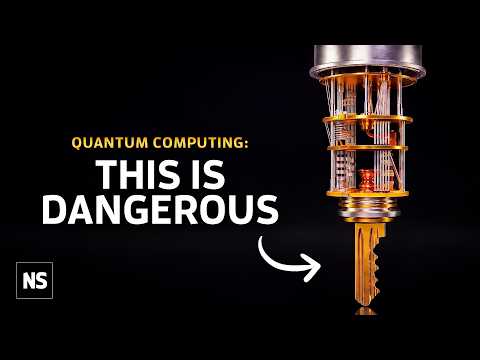
This video is from The Quantum Bull.
Firstly, the notion of quantum computing transforming or undermining Bitcoin’s cryptographic foundation is not just speculative; it’s grounded in a palpable reality that we are inching closer to each day. The cryptographic algorithms like elliptic curve cryptography, which currently secure billions in Bitcoin, could potentially be broken by quantum computers. This isn’t just an alarming hypothetic stretch; it’s a wake-up call to the security paradigms we’ve been reliant on so far.
Elliptic curve cryptography has its vulnerabilities laid bare by quantum computing’s potential. The promise (or threat) here revolves around Shor’s Algorithm, which could ultimately crack the digital signatures that secure Bitcoin transactions. Thus, quantum computing doesn’t just introduce a new toolset; it serves up a ticking clock, urging a shift to quantum-resistant cryptographic methods.
Yet, the pivot to quantum-resistant algorithms like lattice-based cryptography isn’t merely a precaution—it’s becoming an imperative transition. However, implementing this on networks designed to be decentralized and autonomous, like Bitcoin, poses unique challenges. Without centralized governance, transitioning to new cryptographic standards requires broad consensus, an endeavor more complex and politically textured than the technical shift itself.
Beyond the technological arms race between cryptographic stability and computational power, this dialogue with Scott illuminated quantum computing’s broader role. Quantum computers, once fully operational, could effectively become an accelerated conduit for simulating quantum physics and complex chemical interactions, high-energy physics, and new materials potential. These capabilities articulate quantum computing’s value beyond cryptographic conquests; they map its role in driving substantial scientific and industrial advancements.
However, discussions about quantum computing’s future often teeter towards hyperbolic. The hype, at times, shadows the nuanced, incremental nature of scientific progress and leads to misconceptions about instantaneous capabilities. As intriguing as the possibilities are, it’s equally vital to anchor our expectations in the gradual yet steady advancements we observe in hardware capabilities and error correction methodologies.
Thinking ahead, the integration of quantum computers in data centers or having them co-exist with classical systems isn’t just an architectural consideration; it’s potentially revolutionary. It envisages a future where specific, optimally-suited tasks could be dispatched to quantum systems, leaving others to the efficiencies of traditional computing. This hybrid computational ecosystem could mean faster, more efficient processing capacities, adaptable to tasks deemed suitable for quantum acceleration while leveraging classical systems where they perform best.
Quantum computing’s narrative is intertwined with threads of vast possibilities, impending challenges, and the perpetual dance between theoretical models and practical applicability. As we step closer each day to realizing quantum computing’s full potential, it nudges us constantly to rethink our approach to data security, computational methodologies, and the very fabric of problem-solving through technology.