Every time quantum computing makes the news, it’s usually dressed up in numbers too big to feel real. You know the drill: headlines shouting about qubits, “quantum supremacy,” and the world being on the brink of a computational awakening. And yet, most of the time, if you look a little closer, it’s more of a press release than a paradigm shift.
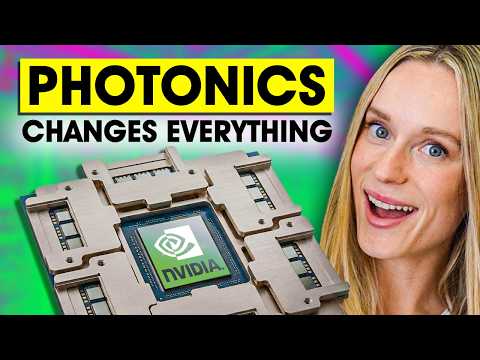
But sometimes you get a signal that something actually moved. Not just a lab breakthrough, but a nudge in hardware evolution. A new path is opening up that might bypass some of the old roadblocks. That’s what’s happening with the new photonic quantum chip unveiled by a Chinese research team and reported by South China Morning Post and Tom’s Hardware. The attention-grabber? A claim of being 1,000 times faster than traditional processors for specific tasks.
Now, that “1000×” number practically begs for an asterisk. It’s splashy, but not the main character in this story. What matters more is what this shift represents: photonic quantum computing, long the quieter cousin in the quantum tech family, is stepping closer to commercial—and maybe even practical—relevance.
And if you’re working at the intersection of AI, quantum, and scalable infrastructure, you should be paying very close attention.
Wait, what is photonic quantum computing again?
Let’s back up a second. Right now, most of the big names in quantum are throwing their weight behind systems like:
- Superconducting qubits (IBM, Google)
- Trapped ions (IonQ, Quantinuum)
- Neutral atoms (QuEra, PASQAL)
- Spin qubits in silicon (Intel, Delft, UNSW)
These approaches involve a significant amount of cooling, trapping, isolating, and essentially manipulating nature to facilitate computation.
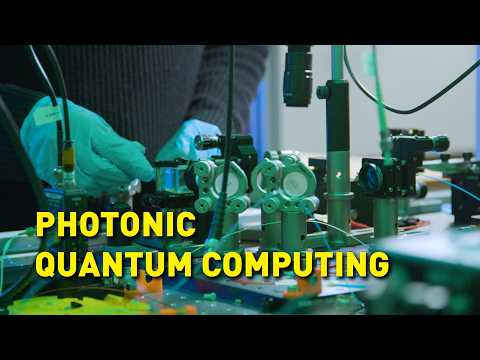
Photonic quantum computing takes a quieter, more elegant route. Instead of locking atoms into cages or chilling chips to near absolute zero, it uses light—literally photons—as the information carriers. Qubits live in the properties of light: polarization, frequency, path, and time bins.
Photons don’t really want to interact with their environment, which makes them excellent for quantum info. They’re stable. They’re fast. And they’re already fluent in the language of optical networking, which powers the AI infrastructure we use every day.
For years, the photonics approach seemed promising in theory but impractical at scale. The challenge has consistently been generating, routing, and detecting a large number of photons cleanly and consistently, all on a single chip. But now? That gap is closing.
What Did the Chinese Team Actually Do?
According to the reports, this new chip achieves:
- On-chip generation and manipulation of light-based qubits
- Specialized acceleration for specific quantum workloads
- A potentially staggering throughput, yes, the 1,000× kind, for a narrow class of problems
That last part’s key: it’s not a general-purpose quantum processor. This is more akin to a quantum co-processor an accelerator designed for particular problems. Think of it like a TPU or a graphics card in the early days of computing. Nobody expected GPUs to do all the computing, but they were phenomenal at what they were built for.
If you’re feeling déjà vu from how we moved from CPUs to hybrid compute environments, that’s intentional. This could be the beginning of something similar in quantum.
Why This Actually Matters
1. Photonics Might Scale Where Others Stall
Superconducting systems need massive refrigerators. Ion traps need vacuum chambers and lasers. Photonic chips? They could potentially run at or near room temperature. That’s a game-changer for deployment.
Imagine slotting a quantum photonic accelerator into a data center without needing to build a physics lab around it. For enterprise, HPC, and AI workloads, that opens real, near-term possibilities.
2. Specialized Quantum Hardware Is the Next Frontier
Just like GPUs unlocked deep learning and ASICs turbocharged crypto, photonic quantum accelerators could specialize in:
- Boson sampling
- Optimization problems
- Quantum simulations
- Graph analytics
- ML subroutines
The focus is narrowing from “quantum everything” to “quantum something, done really well.” And that’s how real adoption starts.
3. It Plays Well with AI Infrastructure
Here’s the subtle but powerful thing: photons are already deeply embedded in AI and data infrastructure. Optical interconnects, photonic computing frameworks, fiber-based systems—they’re all photon-native.
A photonic quantum chip could integrate more naturally into these systems than other quantum modalities. It’s not just about “quantum–AI synergy” in a buzzword sense, it’s about building hybrid architectures that don’t fight each other.
Imagine a photonic preprocessor that extracts quantum-encoded features before feeding them into a classical AI model. That’s not a sci-fi leap—it’s within reach.
But Let’s Not Lose the Plot: Context Is Everything
As with any breakthrough in this space, we need to pause before we pop the champagne.
- The 1000× claim? Almost certainly workload-dependent. Great for narrow tasks. Not your one-chip-to-rule-them-all.
- Fidelity and error rates? Still unclear. Photons don’t decohere easily, but accurately routing and detecting them at scale is challenging.
- Manufacturability? Still TBD. Making one lab chip is not the same as fabricating thousands for deployment.
- Software support? Crucial. If the chip isn’t programmable, integrable, and compatible with classical workflows, it’ll hit a wall.
Strategic Implications Especially for Industry Players
For organizations trying to time their entry into the quantum arena (looking at you, Mountain Quantum), this is a quiet wake-up call.
Key questions to watch:
- Does the chip require exotic cooling, or can it operate at a higher temperature?
- What kind of packaging and interconnects are supported?
- How many qubits can it handle simultaneously and with what fidelity?
- Which workloads map best to this hardware, and are they commercially relevant?
- How well does it play with AI and HPC environments?
These are not footnotes. They’re the roadmap for determining whether photonics will go from niche to necessary.
Final Thought: Don’t Let the Lack of Noise Fool You
This isn’t the kind of breakthrough that screams from the rooftops. It’s not a headline designed to panic CTOs. It’s the kind of shift you notice if you’re paying attention, if you care about how quantum systems will actually integrate into the computing stack of the future.
And photonics? It’s quietly gathering momentum in all the right places.
So if you’re quantum-curious, AI-savvy, or just trying to stay one step ahead of where computing is headed next, don’t sleep on the light.
Literally.
This is where the next wave is starting. Quietly. Strategically. And very, very fast.