For most of us, the word “quantum” still evokes images of sci-fi plots, chalkboard equations, or scientists whispering to lasers in underground laboratories. But one of the most profound quantum breakthroughs is happening far from Hollywood special effects. It is quietly unfolding inside global banks, government networks, and research labs. And it promises something remarkable: a future where our digital secrets are truly unbreakable.
If that sounds dramatic, it is. But it is also grounded in real technology, real deployments, and a very real need to rebuild the foundations of cybersecurity before quantum computers reach maturity.
This is the world of quantum cryptography, a field that blends the strange physics of atoms with our everyday need to keep information safe. And for the quantum curious, it offers a powerful glimpse into how the quantum revolution will impact all of us long before general-purpose quantum computers become a reality.
Why Our Digital Locks Are Breaking
Almost every secure interaction we make, from logging into a bank account to sending a private message, relies on classical cryptography. These systems protect information by employing mathematical complexity. For example, public-key cryptography, such as RSA, relies on the fact that classical computers cannot quickly factor extremely large prime numbers.
However, there is a catch: the strength of these systems depends on how long it would take a classical computer to break them.
For modern algorithms, the estimated time is longer than the age of the universe. So far, so good.
However, quantum computers fundamentally alter the math. Because of their use of qubits—quantum bits that can be in multiple states at once—they can run algorithms that classical computers simply cannot handle. The most infamous example is Shor’s algorithm, which can factor prime numbers exponentially faster than the most powerful supercomputer on Earth.
In other words, once sufficiently powerful quantum computers exist, today’s digital locks will snap like twigs.
This looming transition is often referred to as the quantum threat, and it is driving a global shift toward a quantum-secure future.
From Bits to Qubits: The Quantum Advantage
To understand why quantum cryptography feels like a leap into a new era, it is helpful to know what makes quantum information so distinct.
Superposition: A Coin That Is Both Heads and Tails
A classical bit must be either a 0 or a 1. A qubit can be in a superposition of states until it is measured. Imagine a spinning coin—it has not yet committed to heads or tails. This property enables quantum systems to explore multiple possibilities simultaneously.
Entanglement: The Quantum Bond
When two qubits become entangled, they share a connection so deep that measuring one instantly affects the other, regardless of distance. Einstein famously referred to it as “spooky action at a distance,” and it is one of the pillars of quantum communication.
These strange, beautiful behaviors enable quantum systems to encode and share information in ways that classical physics cannot.
Quantum Cryptography: Security Based on Physics, Not Math
Here is where the magic really begins.
Quantum cryptography does not rely on hard math problems. Instead, it depends on the laws of nature themselves.
The most advanced and widely deployed form of quantum cryptography today is Quantum Key Distribution (QKD). In simple terms, QKD allows two parties to exchange encryption keys by sending single photons—particles of light—over a channel. Because quantum states collapse when measured, any eavesdropper trying to intercept those photons leaves a detectable trace.
It is not just secure. It is provably secure, in a way classical methods can never be.
This is why governments and financial institutions are already deploying QKD in pilot programs around the world:
- Banks are using it to secure high-value transactions and long-term data storage.
- Government and defense agencies are using it to protect classified information.
- Critical infrastructure systems—like energy grids—are exploring it to safeguard control signals.
Quantum cryptography is no longer theoretical. It is becoming part of the cybersecurity backbone of the next era.
The Rise of Post-Quantum Cryptography
But quantum security is not solely about sending photons through fiber.
A second pillar of the future is post-quantum cryptography (PQC). These are new classical algorithms running on today’s computers that are designed to resist attacks from future quantum machines. PQC is flexible, software-based, and scalable across the billions of devices we use every day.
Where QKD protects the channel, PQC protects the data itself.
Most experts expect the future to be hybrid:
Classical systems fortified with PQC, combined with quantum-physical protections like QKD for high-value networks.
The Challenges Ahead
The road to universal quantum security is exciting, but not effortless. Several engineering challenges remain:
Distance Limitations
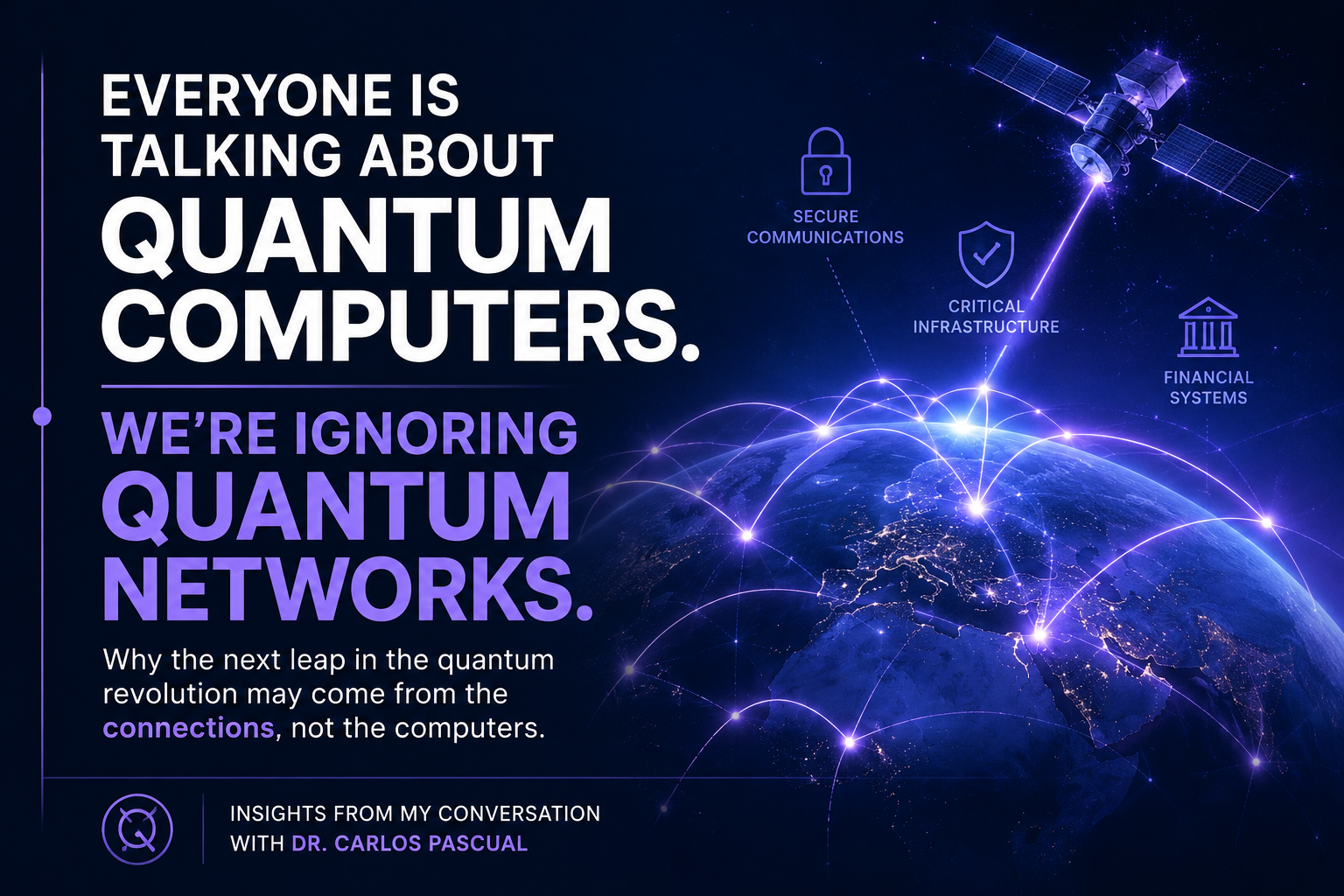
QKD works best over short to moderate distances, limited by today’s fiber optics. Extending it across continents requires trusted nodes or quantum-enabled satellites.
Hardware Costs
QKD requires specialized devices—single-photon detectors and sources—that must integrate into existing internet infrastructure.
Quantum Repeaters
To build a genuinely global quantum network, we need quantum repeaters that can amplify signals without destroying delicate quantum states. This is one of the most significant engineering challenges remaining to be solved.
Despite these hurdles, the progress is accelerating.
When Will Quantum Security Be Everywhere?
We are in the midst of a multi-decade transformation:
- Today: QKD protects niche, high-security links. PQC standards are emerging now.
- Next 5 years: Businesses and institutions begin migrating to quantum-safe systems. Crypto-agility becomes standard.
- Next 10–15 years: Quantum-safe encryption becomes the norm across nearly all digital systems.
This transition matters now, particularly in the context of harvest-and-decrypt later attacks, where adversaries collect encrypted data today with the intention of unlocking it once quantum hardware becomes available.
Your encrypted medical records or financial history may already be stored in a secure vault, waiting.
The Quantum Takeaway: Stay Curious, Stay Secure
Quantum cryptography is not just a technical upgrade. It is a fundamental shift in how we trust the digital world. By combining the mind-bending physics of qubits with the everyday necessity of secure communication, we are building a future where privacy can be guaranteed by nature itself.
For the quantum curious, this is a moment of transformation.
For the global digital economy, a race is already underway.
And for all of us, it serves as a reminder that the quantum future will shape our lives long before we ever encounter a quantum computer.