Albert Einstein once dismissed quantum entanglement as “spooky action at a distance,” a phrase that captured both his skepticism and the wonder of the phenomenon. Today, the same “spooky” connection, where two particles remain mysteriously linked across space, is quietly shaping the future of medicine. Entanglement is no longer just a curiosity of physics; it’s becoming a cornerstone of next-generation healthcare.
The Diagnostic Bottleneck
For decades, one of medicine’s most significant challenges has been the early detection of diseases. Traditional imaging and biomarker testing often can’t identify disease until it’s well underway. The need for non-invasive tools capable of sensing the faintest biological whispers has become urgent.
Enter quantum sensor devices that exploit the fragile, interconnected nature of entangled particles to detect subtle changes in magnetic fields, molecular vibrations, and tissue properties. Their sensitivity borders on the astonishing, revealing what even the best conventional instruments miss.
Beyond MRI: The Quantum Imaging Revolution
Among the most promising breakthroughs is quantum-enhanced imaging. A quantum MRI (qMRI) could utilize entangled particles to dramatically enhance signal clarity and resolution, generating sharper scans in significantly less time. For neurodegenerative diseases like Alzheimer’s or Parkinson’s, that means a window into the brain’s microstructures and early activity patterns—potentially years before symptoms appear.
Quantum sensors can even detect the invisible. Each neuron emits an ultra-faint magnetic field when it fires, far below the limits of current instruments. Quantum devices, however, can pick up those minute signals with extraordinary precision, enabling real-time brain mapping at nearly single-cell resolution.
Entangled photons also bring new depth to tissue imaging. Unlike ordinary light, these photons stay correlated even when scattered by dense biological material. That stability could make it possible to visualize micro-tumors or lesions deep within the body—no incisions, no radiation, just pure light and quantum math at work.
The Quantum Edge in Precision Medicine
Quantum sensing isn’t only about seeing more clearly; it’s about understanding more deeply. These sensors can identify and measure molecules at the atomic level, pushing precision medicine into new territory. Treatments could be adjusted dynamically to match an individual’s real-time biological response. Imagine continuous molecular monitoring that alerts doctors before symptoms even surface, allowing earlier, gentler intervention.
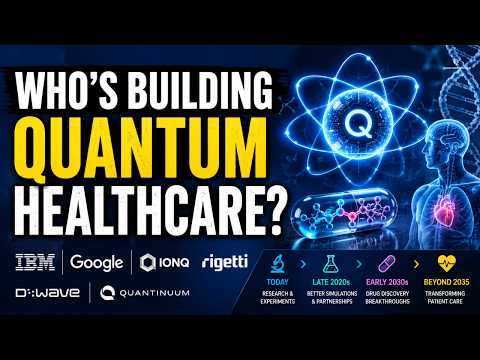
In drug discovery, quantum technologies are accelerating research by simulating and sensing molecular interactions with unprecedented accuracy. By understanding how compounds behave at the quantum level, scientists can predict efficacy and side effects before a single trial begins, reducing development costs and improving safety. As IBM researchers have noted, this kind of quantum-informed modeling could make personalized drug design a practical reality within the decade.
Toward Quantum-Guided Therapies
If quantum sensors are today’s revolution, quantum-guided therapies may be tomorrow’s. Imagine radiation treatments that target only diseased tissue, leaving healthy cells untouched. Or photodynamic therapies that use entangled light to activate drugs with pinpoint precision.
Though still in early development, these ideas show how quantum mechanics might one day direct healing at the smallest possible scale—reshaping how we define “precision treatment.”
With such power comes responsibility. Ethical frameworks and regulations will need to evolve in tandem with these innovations. Collaboration between physicists, clinicians, and policymakers will be crucial to ensure that progress remains transparent, equitable, and patient-centered.
Challenges on the Horizon
Quantum sensors, for all their promise, remain delicate instruments. They’re exquisitely sensitive not just to biological signals but also to noise, vibration, and temperature shifts. Creating stable, miniaturized versions for hospital use poses enormous engineering challenges.
Cost is another barrier. However, governments and private investors are investing billions to close that gap, funding initiatives such as the U.S. National Quantum Initiative and Europe’s Quantum Flagship program. With rapid advances in materials science and photonics, what seemed theoretical a few years ago is now inching toward clinical reality.
A New Era of Medical Insight
We’re witnessing the dawn of quantum medicine, where the same principles that once confounded Einstein are now being harnessed as tools of healing. Quantum sensors promise a shift from reactive to predictive healthcare, offering earlier diagnoses, personalized therapies, and continuous health insight.
Imagine a future where illness is intercepted before it takes hold, where doctors interpret the body’s quantum signals as naturally as they read a stethoscope. It’s a future of extraordinary intimacy with our own biology—made possible by a phenomenon once deemed too strange to trust.
The echo of entanglement is growing louder, resonating through both physics and medicine. In that resonance lies the sound of a new kind of healing—one that listens not just to the body, but to the quantum music beneath it.