What if the next significant shake-up in global trade doesn’t come from a ship wedged in a canal but from something you can’t even see? Forget traffic jams at ports or labor strikes—those are visible tangles, easy to point to and photograph. The real revolution (and risk) quietly brewing beneath our supply chains is quantum: invisible, powerful, and already humming beneath the surface of global commerce.
It sounds like science fiction, but it’s not. These unseen quantum threads could soon pull our entire network of trade into a new era of breathtaking efficiency—or unexpected chaos. From the phone in your hand to the sneakers on your feet, everything that moves across oceans and borders could soon be caught in the same shimmering web.
To understand what’s at stake, imagine the global supply chain as a vast, intricate highway system where a living network of trucks, ships, satellites, and data streams keeps the world stocked and spinning. It’s impressive, but it’s also showing its age. Built for yesterday’s pace, it now strains under the weight of today’s digital deluge. When a single small part falters, such as a storm, a cyberattack, or a single clogged port, the whole flow stutters. Prices climb, deliveries stall, and shelves start to look emptier. The ripple travels fast.
That’s where the quantum realm makes its entrance. Tiny, strange, and astonishingly powerful, it promises not just to repair this creaking infrastructure but to reinvent it entirely. And it begins with a new kind of computer.
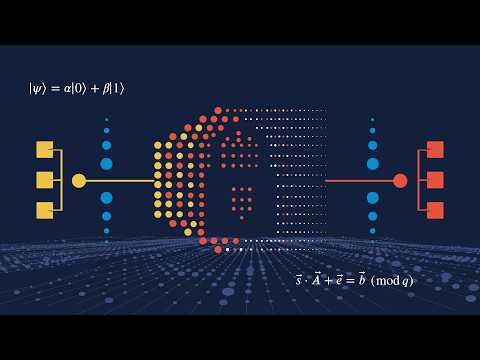
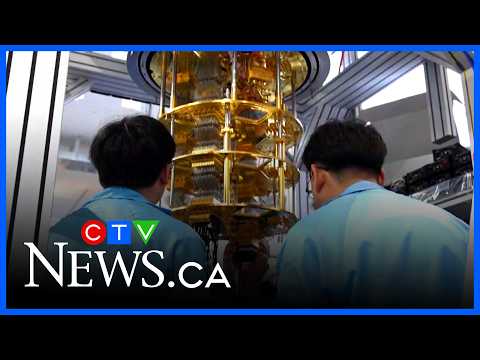
If classical computers are light switches—either on or off, one or zero—quantum computers are more like dimmer switches that can be on, off, and every state in between, all at once. This shimmering state, known as superposition, allows them to process countless possibilities simultaneously. For supply chains, that’s revolutionary. It means being able to calculate the most efficient route for every cargo ship, every truck, and every last-mile delivery concurrently. Quantum computing could make optimization look effortless, slicing through logistical puzzles that today’s fastest supercomputers can barely approach.
But computing isn’t the only magic trick in quantum’s repertoire. Alongside it comes a quieter force: quantum communication. It uses the peculiar laws of physics itself to create encryption that can’t be hacked, spied on, or faked. In an era when data moves across borders faster than cargo containers, that kind of trust is priceless. Every manifest, payment, and trade secret could soon travel under an invisible, unbreakable shield.
And here’s where things start to accelerate. Once quantum technologies begin to intertwine with logistics, they won’t just change how we ship things; they’ll change how we think about the entire flow of goods and information. Supply chains could evolve into something that feels alive, adaptive, and eerily intuitive.
Picture shipping networks as ecosystems. Quantum-powered systems could juggle real-time data on weather, fuel costs, port delays, and political events, constantly rerouting shipments to keep everything moving. Your sneakers might skip a port, hop onto a different flight, and still arrive sooner than expected. At the same time, quantum-enhanced early warning systems could scan global patterns, like economic tremors, climate shifts, and even social unrest. Alerting companies to reroute weeks before trouble hits. Instead of reacting to crises, we’d be anticipating them, gracefully stepping aside as disruption passes by.
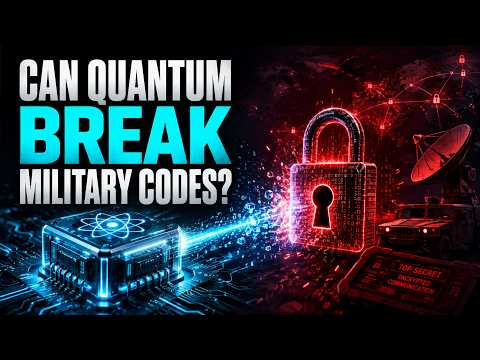
But of course, every bright thread has its shadow. The same quantum power that can protect and optimize could also unravel everything. Most of today’s digital infrastructure relies on encryption so complex that even the fastest classical computers would need centuries to break it. A large-scale quantum computer, however, could do it in seconds. That’s the dark current beneath the quantum wave: a potential flood of quantum attacks capable of exposing trade secrets, banking systems, and even national defense networks. The very locks that secure our digital world could one day be unlocked by a single quantum key.
Still, suppose we can harness this technology wisely. In that case, it might carry us toward what some experts call The Efficiency Singularity, a tipping point at which supply chains become so optimized that they almost seem to think for themselves. Companies could predict demand with uncanny precision. Warehouses would hold exactly what’s needed, exactly where it’s needed. Picture factories humming in sync with quantum forecasts, perfectly attuned to global rhythms.
The same intelligence could extend to maintenance. Machinery might whisper before it fails: quantum sensors detecting the faintest vibration, a hint of friction, or a heat rise, then alerting an AI that says, “Fix it tomorrow, before it breaks.” Downtime could nearly disappear. And behind the scenes, quantum-secure smart contracts could handle international agreements in seconds, executing themselves automatically, transparently, and without the drama of human error or fraud.
Of course, revolutions rarely lift everyone equally. Countries, corporations, or creative startups willing to wade into quantum’s complexity will leap ahead. Their supply chains will be faster, greener, and nearly impossible to hack. Yet others may fall behind, trapped on the wrong side of the digital divide. The gap between quantum-ready and quantum-vulnerable could widen into a canyon, leaving smaller businesses and developing nations struggling to compete. In this new landscape, economic power won’t hinge on who controls the seas, but who understands the qubits.
So the question becomes: how do we navigate this invisible future? The answer, perhaps surprisingly, begins not with fear, but with cooperation. We’ll need global standards for quantum-secure communication so that one nation’s encryption can safely converse with another’s. We’ll also need education that bridges physics and practicality, because the logistics manager of tomorrow will need to understand how to use one.
Ultimately, this isn’t just a story about technology. It’s a story about trust, adaptation, and imagination. The unseen quantum threads are already weaving themselves into the fabric of modern trade, and we have a rare chance to guide the pattern before it’s fully set. If we pay attention, we can shape a system that’s resilient, equitable, and secure. But if we look away, the weave could twist into something far more challenging to untangle.
The next era of global trade won’t be powered by ships or satellites, but by the smallest particles in the universe and by our collective ability to see the invisible before it sees us.