For over a century, physicists have wrestled with the strange dance of particles that seem to vanish, split, or communicate faster than light. Quantum mechanics has always felt like a kind of cosmic prank—a universe that behaves sensibly at breakfast but pulls a rabbit from its hat by lunchtime. Yet what if “quantum weirdness” isn’t weird at all? What if the problem isn’t the universe, but the way we’re looking at it?
The long-standing assumption in science has been that quantum rules such as superposition, entanglement, and probability apply only to the microscopic realm of atoms, photons, and the delicate world of the very small. Once you zoom out to trees, planets, and people, those effects supposedly fade away, replaced by the tidy determinism of classical physics. But what if that line isn’t as clear as we think?
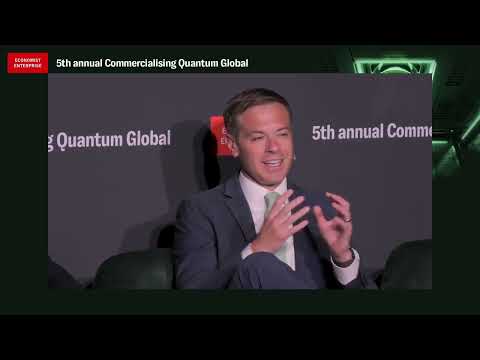
The idea that the quantum world and the classical world are separate might be more about our perception than about reality itself. As the speaker in the transcript reminds us, both quantum and classical “objects” are modes of knowing, ways in which consciousness interacts with the universe. What we call “reality” is filtered through the narrow window of human senses, which are themselves instruments of observation. Our eyes detect only a sliver of the electromagnetic spectrum. Our nervous systems move at glacial speeds compared to the dizzying dance of subatomic particles.
In other words, classical physics might describe the limits of our biological interface rather than the full picture of the universe. Like the icons on a computer desktop, the classical world is the operating system we evolved to survive, not a mirror of what’s really going on beneath the surface. Cognitive scientist Donald Hoffman once put it this way: “Evolution gave us an interface, not the truth.”
This is where the conversation turns radical. What if consciousness isn’t an emergent property of matter, as traditional science claims, but the other way around? What if consciousness is the fundamental ground from which matter, energy, and even spacetime emerge?
It’s an audacious suggestion, but it neatly sidesteps one of modern science’s thorniest puzzles—the so-called “hard problem of consciousness.” How does subjective experience arise from physical processes in the brain? How does the warmth of sunlight or the taste of coffee emerge from neurons firing in gray matter? If consciousness is primary—if the universe itself is a field of awareness—then experience isn’t a byproduct of matter. Matter is a byproduct of experience.
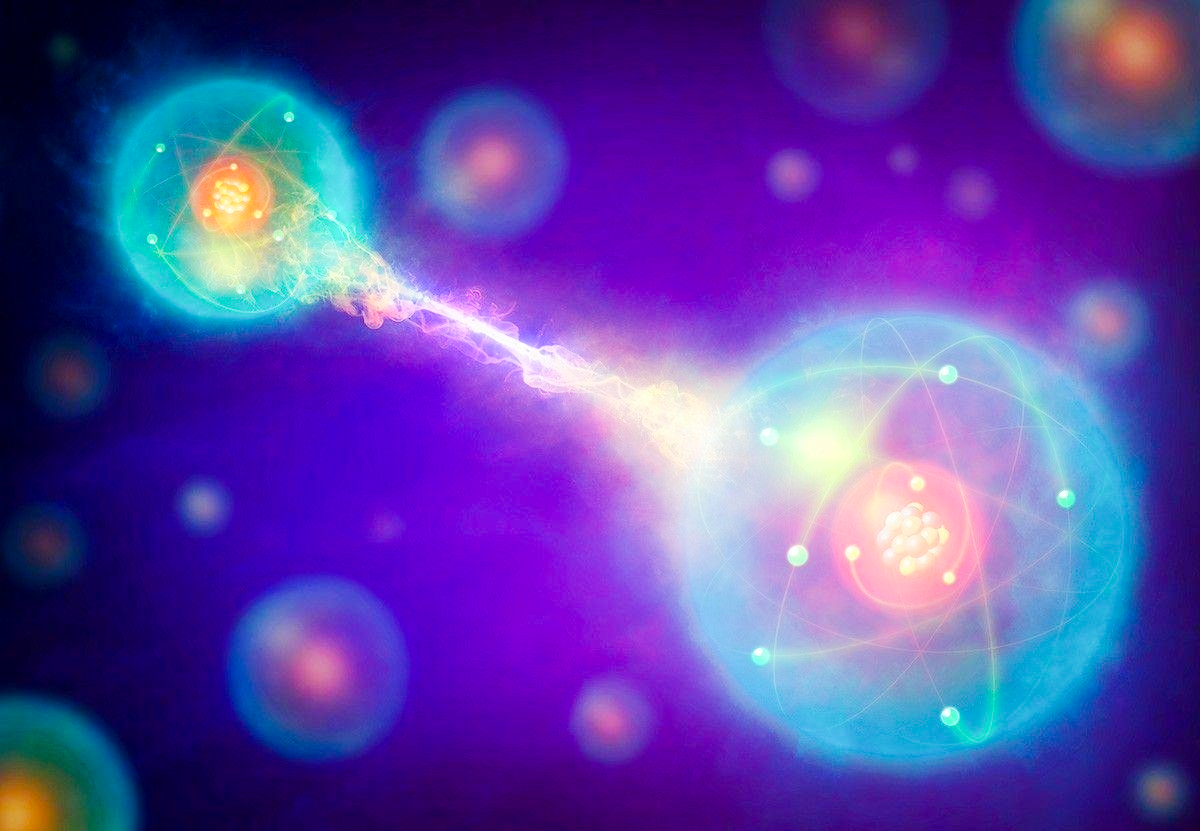
This view has echoes in both ancient philosophy and cutting-edge physics. From the Vedic idea of Brahman to Max Planck’s assertion that “consciousness is fundamental,” thinkers across millennia have hinted that mind and matter are two sides of one coin. Even in the lab, experiments like the double-slit and quantum entanglement continue to reveal an unsettling truth: observation doesn’t just record reality, it participates in its creation.
That idea, known as “participatory realism” by physicist John Wheeler, suggests that every act of measurement—every glance, thought, or experiment—helps shape the cosmos. The universe isn’t a static thing out there waiting to be observed. It’s a living collaboration between consciousness and form, a kind of cosmic jazz where awareness provides the rhythm and matter the melody.
If that’s true, then “quantum weirdness” is only weird because we’re trying to watch a 4K movie on an old 1980s television. The universe isn’t chaotic; our resolution is simply too low. When we say something “decoheres,” what we might really mean is that it becomes too complex for our senses to track. The quantum symphony doesn’t stop—it simply fades beyond the range of our biological microphones.
Embracing consciousness as fundamental could spark a revolution not just in physics, but also in philosophy, medicine, and technology. Quantum biology is already exploring how quantum effects may operate in photosynthesis, bird navigation, and even the brain’s microtubules. Quantum computing, too, hints at a future where information and awareness are intertwined at the deepest levels.
Meditation, in its own way, might be a kind of “inner quantum technology,” a method for tuning consciousness to subtler frequencies of reality. When attention steadies and sensory noise quiets, what emerges isn’t some mystical escape from the world, but a clearer perception of its underlying unity.
In this model, objectivity doesn’t mean detachment. It means collaboration. Reality becomes a conversation, not a lecture—a co-creation between observer and observed, self and cosmos.
And if that’s true, the implications are profound. We’re not isolated biological machines in a meaningless void. We’re participatory nodes in a vast network of awareness. Each thought, breath, and observation ripples outward through the quantum field.
Maybe quantum weirdness was never weird at all. Maybe it’s just the universe whispering, “Look closer. You’re part of this.”
When we start to see consciousness as the foundation of reality rather than its side effect, the walls between science and spirituality begin to dissolve. The microscope and the meditation cushion turn out to be studying the same thing from different angles: the luminous fabric of being itself.
As the speaker concluded so simply, “Quantum weirdness isn’t weird—it’s normal.” Perhaps the real revolution isn’t happening in particle accelerators or philosophy journals, but in our willingness to see that everything—stars, atoms, and thoughts—is already entangled in one seamless, conscious whole.
The original video can be found here.
Stay Connected
Follow our journey and be part of the conversation:
🔗 Find us on LinkedIn
📬 Join our mailing list
📺 Subscribe to our YouTube channel