When we think of a quantum physicist, the image that often comes to mind is someone buried in equations, chalk dust on their hands, lost in the abstractions of math and theory. Years of formal training. A mind sharpened by logic. But some of the most compelling stories in science don’t start in the lab—they begin in a music studio, behind a drum kit, or in the raw improvisation of sound.
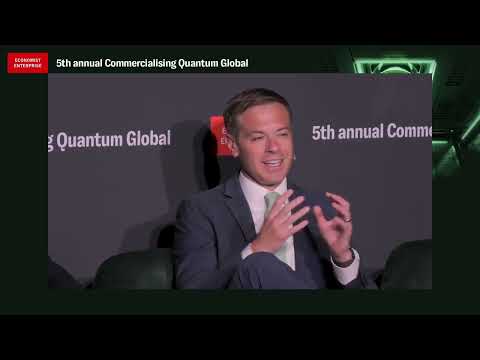
Take Shahaf Asban, a mathematical physicist and head of research at Classiq. Before qubits and stochastic processes, there were drumbeats, mixing boards, and an obsession with sound waves. His transition from rhythm to research reveals something quietly profound: creativity isn’t confined to the arts. It’s a transferable force—a way of thinking, listening, and making sense of the world that transcends discipline.
Music and physics, after all, aren’t strangers. They’re intimately connected. Rhythm, harmony, and resonance aren’t just aesthetic qualities—they’re mathematical patterns. The same equations that shape a drumbeat also describe the interference of particles, the resonance of atoms, or the probabilistic dances in quantum mechanics.
Asban’s path—from acoustics to algorithms, signal processing to quantum sensing—illustrates how curiosity in one system (sound) can naturally evolve into curiosity about another (matter and energy). It wasn’t a leap; it was a flow.
This journey reminds us of a truth that education systems often forget: creativity is the bridge between disciplines. Scientific insight is driven by the willingness to ask “what if,” listen for hidden patterns, and draw analogies across seemingly unrelated fields. It’s how breakthroughs happen, not by staying in a lane, but by exploring the entire highway.
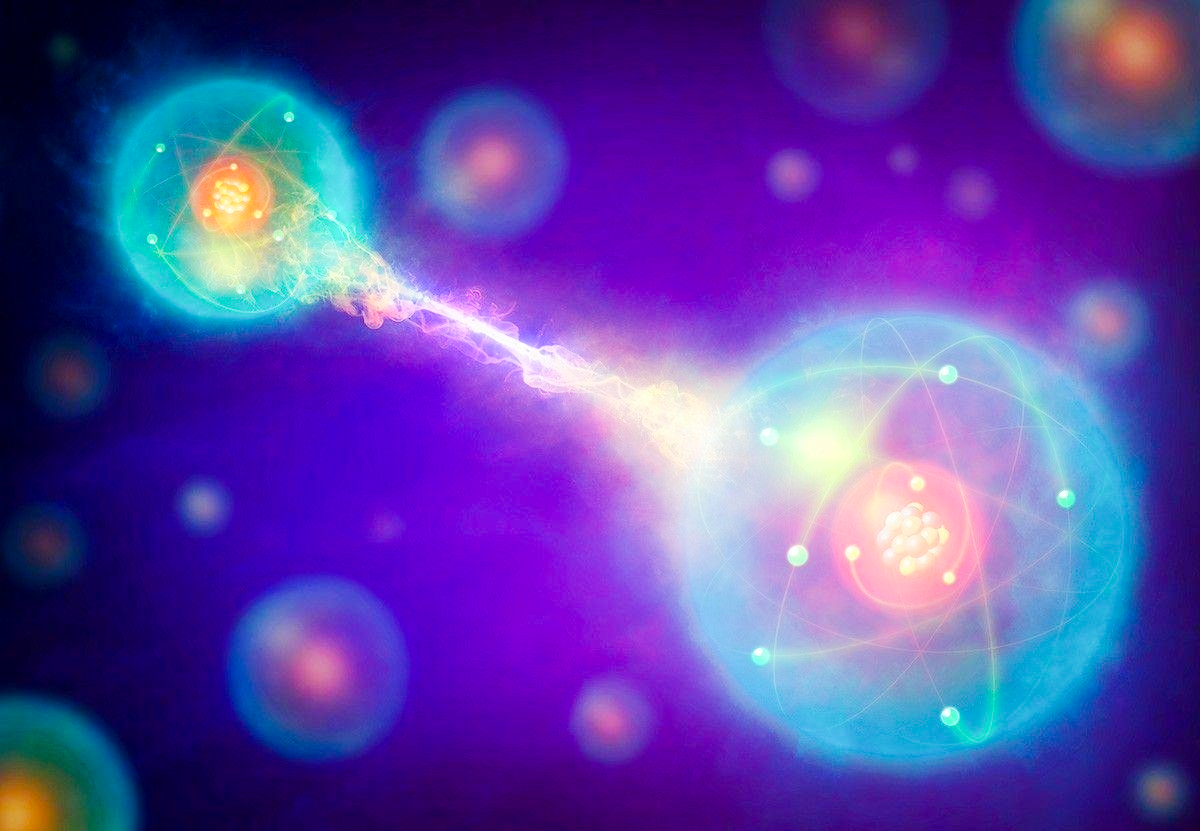
In quantum physics, where the rules defy our everyday intuitions—superposition, entanglement, decoherence—creativity is essential. It’s not just about solving equations. It’s about choosing the right metaphor, seeing a new angle, and imagining something that hasn’t been built yet. When reality itself behaves like a riddle, you need a mind that’s comfortable dancing with the unknown.
Creativity not only fosters connections between disciplines but also softens the boundaries between them. It allows physicists to think like poets, musicians to act like engineers, and researchers to find structure in ambiguity. In quantum science, where certainty is elusive, this mental flexibility becomes a survival skill.
From drums to data, from rhythm to research, the thread is unmistakable: breakthroughs are born not from rigid boundaries, but from cross-pollination. Whether you’re tapping out a beat or mapping the behavior of qubits, the same spirit applies—a spirit of curiosity, of exploration, of listening closely to the world and asking what else it might become.
Creativity is not the opposite of science. It’s the quiet engine behind it.
Stay Connected
Follow our journey and be part of the conversation:
🔗 Find us on LinkedIn
📬 Join our mailing list
📺 Subscribe to our YouTube channel