What I Learned from Henning DeKant, as a Quantum-Curious Business Human
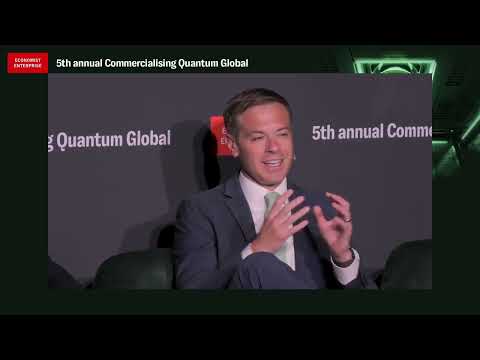
It started like most good stories do—with curiosity, confusion, and that persistent itch that something big is brewing beneath the surface. When you’re a business-minded soul with a side obsession for what’s next in tech, quantum computing tends to sit on your radar like a comet: beautiful, mystifying, and blazing across your field of view too quickly to grasp fully. And then Henning Deccant showed up on Impact Quantum, and suddenly, that comet slowed down just enough for me to get a better look—and realize it might actually land in my backyard.
Here’s what I learned from Henning, a physicist turned AI pioneer turned quantum entrepreneur, and why it matters not just to physicists or data scientists, but to people like me—folks navigating markets, strategy, startups, and edge-of-the-map thinking.
1. Quantum Is Not Waiting for Perfection
Let’s get this out of the way: you don’t need error-corrected, textbook-perfect quantum computers to see value. That’s a myth—and Henning was adamant about it. He calls it the most dangerous misconception in space. Because if we wait around for flawless machines, we might miss the messy magic already unfolding.
There’s real utility today in “noisy” or “near-term” quantum systems. Especially when you stop trying to treat them like classical computers with cooler branding, these are different beasts—and they excel at various kinds of problems. Quantum advantage isn’t a singular event. It’s evolutionary. It shows up quietly, unexpectedly, in particular domains, and it will belong to the curious, not the perfect.
2. Hybrid Systems Are the Future—and the Present
Henning dropped something that stuck with me: the idea of sequential quantum computing. Picture this — you run a problem through IBM’s gate-based quantum chip, then funnel the output into D-Wave’s annealing system to optimize the result.
It’s like asking your most logical friend for advice, then passing that answer to your artist friend to reimagine it — and together, you get a solution neither could achieve alone. This hybrid approach isn’t theoretical. It’s happening. Right now. In labs and startups. It’s gritty and quiet, but it’s real. And it tells us something important: Quantum isn’t going to replace classical computing. It’s going to collaborate with it. And collaboration is a business mindset we get.
3. Quantum Machine Learning Isn’t Dead — Just Patient
I’m an AI girl, through and through. And when Henning explained how the rise of large language models temporarily outshined quantum machine learning (QML), I nodded in recognition. He made a point I keep thinking about: LLMs are impressive, but they’re also constrained. Convincing, but prone to weird errors. And once that shine wears off? We’ll remember we still need better tools — tools that don’t just parrot but reason, that model uncertainty, that understand context.
Enter QML. Especially things like Bayesian networks that offer transparency and interpretability. They’re harder to train, sure. But when paired with quantum power? Henning believes they’ll become viable again — and essential. And as someone who believes deeply in ethical tech and explainable systems, that gave me hope.
4. Quantum Smackdowns Are Part of the Growth Cycle
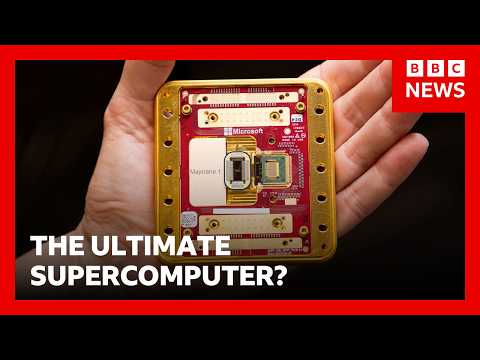
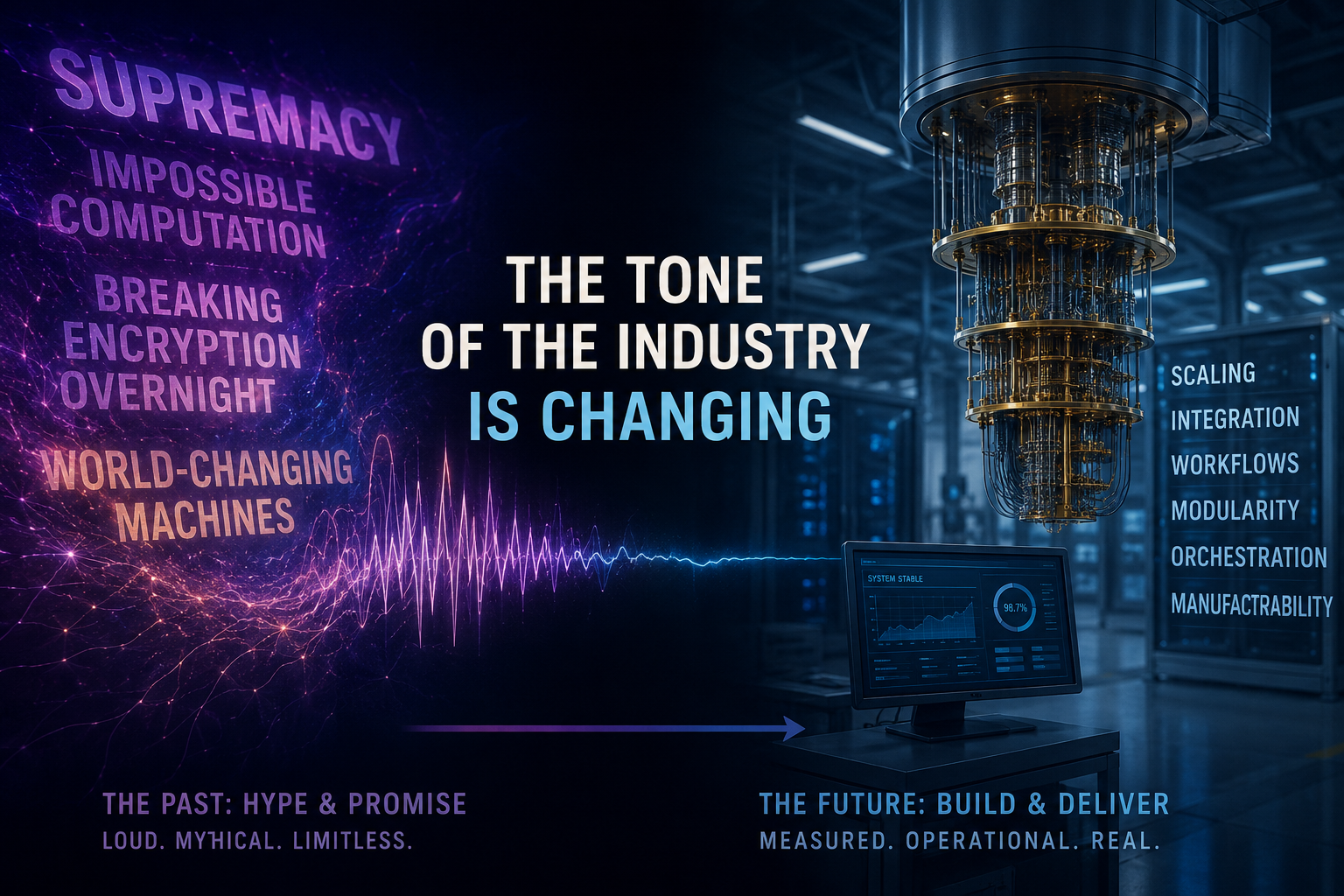
Henning has seen it all: the D-Wave rumors, IBM’s cautious optimism, Microsoft’s infamous “we put a Majorana on a chip” flex (and the internet’s reaction). What stuck with me was how he reframed the public takedowns — not as failures, but as fuel. Every bold claim, even the ones that get mocked, opens the door for innovation. They make people look. They make people talk.
Sure, the hype cycles can be brutal. But if no one risks being wrong, no one moves forward. I think that’s a business lesson as much as a quantum one.
5. We’re Closer Than We Think — Especially in Material Science
Henning’s background in physics still shines through when he talks about what excites him most — not finance, not cryptocurrency, not advertising optimization. No. It’s solid-state physics.
Imagine designing materials that can channel heat in one direction. Or that never dissipates energy. Quantum chips are now modeling those behaviors — not hypothetically, but actually. That’s the kind of breakthrough that could ripple into every industry, from batteries to biotech to architecture. We always talk about the next industrial age. Henning made me realize: we might already be in it.
6. Being Quantum-Curious Is Enough — for Now
You don’t need a PhD. You don’t need to write your own Hamiltonians. What you do need is openness. Willingness to explore. Maybe a little tolerance for ambiguity.
Henning encouraged people — from students to founders — to start playing on the platforms that exist. IBM’s Qiskit, Germany’s PlanQK, D-Wave’s Leap, and others. But he also warned: don’t fall in love with the first tool you learn. This is a shape-shifting field. Don’t build a career on one model. Build a mindset.
Final Thought: Strategy Is Quantum
As a strategist and technologist, I couldn’t help but hear echoes between what Henning described and what I try to practice every day.
Quantum thinking embraces uncertainty. It seeks patterns without always needing complete data. It resists binary decisions. It rewards curiosity, even when there’s no guarantee of payoff.
And maybe that’s what I learned most from Henning: quantum isn’t just a technology. It’s a way of thinking. And in a world that’s accelerating faster than our ability to understand it? That mindset might be the real edge.
So thank you, Henning, for the clarity, the nuance, and the very human reminder that even in quantum space — curiosity matters more than certainty. Let’s keep being gloriously confused together.
— Candace 🌀