Ever stumbled upon a concept or technology that sounded like it belonged more to the realm of science fiction than everyday reality? Quantum computing often feels just like that—a dazzling promise perennially perched on the horizon of technological breakthroughs. That’s why D-Wave’s bold assertion, “quantum future is already here,” truly piqued my interest and deserves a deeper dive.
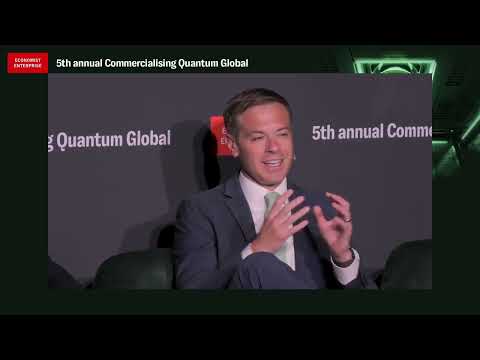
This video is from ImpactQuantum.
It seems that D-Wave is charting a course to transform quantum computing from a theoretical marvel into a practical toolkit. This is no small feat. Traditionally, the quantum world has been cloaked in layers of academic theory and complex physics, more accessible to the scholars in lab coats than to businessmen in ties. However, according to conversations around the impacts of D-Wave’s technology, the company is currently making strides in applying quantum computing to solve real-world, operational problems for businesses.
One might wonder, what kind of “real-world” impacts are we discussing here? It’s quite groundbreaking. D-Wave isn’t merely unveiling theoretical models or conducting isolated experiments; they’re tackling massive, practical problems. Think of optimizing mammoth supply chains that span continents or enhancing blockchain technology to bolster security and efficiency. These are substantial challenges in today’s global economy, ones that require revolutionary solutions—which quantum technologies are beginning to provide.
So, how exactly is D-Wave achieving these feats with quantum technology? The magic word here is “hybrid.” D-Wave employs quantum annealing based and hybrid quantum systems that cleverly integrate quantum processors with classical computing. This approach allows them to handle more complex and larger problems than what could be tackled by either technology alone. It’s a bit like a tag team where each member brings their unique strengths into the ring, enhancing their combined power.
In this scenario, D-Wave isn’t holding out for the perfection of a universal quantum computer. Instead, they’re pragmatically using today’s quantum capabilities to enhance classical solutions. This method underscores a shift from hoping quantum will solve future problems to actively utilizing it in solving today’s issues. It’s a meaningful pivot from the theoretical potential of quantum computing to its practical application and immediate benefits.
This immediate utility of quantum solutions is not just being talked about in cloistered tech circles but is being showcased across various industries and forums. From the Seicon Taiwan focusing on supply chains to the Quantum World Congress, and not forgetting the Fintech Nation 25—an event underscoring the financial industry’s interest in these advancements. Fintech Nation 25, in particular, highlights the diversified approach D-Wave is taking, identifying and addressing specific industry challenges where quantum computing can essentially change the game.
Within these forums, D-Wave is not merely presenting a speculative vision of quantum’s potential. Instead, they’re providing tangible proofs of concept that demonstrate practical solutions, specifically optimized logistics and financial modeling that previously seemed unimaginable without quantum technology. Such practical demonstrations are essential. They turn the abstract promise of quantum computing into concrete benefits, showcasing its ability to revolutionize industries fundamentally.
The emergence of quantum computing in practical, operational settings signifies a tremendous shift. It’s moving from a fascinating yet elusive idea to a tangible asset that can navigate and optimize some of the most intricate problems facing businesses today. As we watch this unfold, it’s a reminder of how the realms of technology continue to evolve, bringing once distant futures into our present with startling speed.
The real takeaway? The quantum future isn’t on the distant horizon—it’s here, reshaping industries and offering solutions that were once the stuff of dreams. And for those of us passionate about the pulse of technology, it’s a vivid example of how innovation continues to transcend boundaries, turning the once-impossible into the possible.