As we dive into the intricate world of quantum computing—an area that feels much like exploring an uncharted galaxy—one can’t help but marvel at the leaps and bounds we’ve witnessed in this arena. Wrapped in tech-speak and echoing visions of a sci-fi future, quantum computers represent a radical departure from traditional computing. Instead of the binary digits (bits) that have long been the mainstay of computing, quantum computing utilizes quantum bits, or qubits, which can hold a multitude of states simultaneously. This capability hints at massively parallel computations that could solve problems beyond the grasp of our current supercomputers.
This video is from ExplainingComputers.
2025 has been designated as the international year of quantum science and technology, and attention in this domain has never been more acute. Investment has surged, with over a billion dollars pumped annually into the development of quantum hardware and software. By 2030, the industry is predicted to burgeon into a $5 billion market. Yet, even with such optimistic forecasts and groundbreaking advancements, quantum computing still predominantly resides within the research and development phase.
Let’s explore five pivotal developments over the past year that are setting the stage for a future dominated by quantum capabilities. Starting with Google’s new quantum processor, Willow, a leap forward in quantum processing technology has been achieved. With 105 superconducting qubits, Willow showcases an ability to reduce quantum error significantly—surfacing as a potential game-changer in building scalable quantum computers. Google’s efforts in surface code quantum computing, where they achieved quantum error correction below the threshold level, present a prototype that blurs the lines between present achievements and future possibilities.
Microsoft is not left behind. Their processor, Major One, introduced topological qubits, a new form that promises enhanced stability and control. This development is part of Microsoft’s larger vision to scale quantum processing into realms of commercial applicability, making quantum computing an essential player in the tech landscape.
Another exciting endeavor is SCIQuantum’s Omega, a quantum computing photonic chipset designed for utility-scale operations. Their approach utilizes integrated photonic technology, allowing for the on-chip generation and manipulation of photonic qubits—a key step towards manufacturing fault-tolerant quantum computers.
Atom Computing, supported by Microsoft, is revisiting the quantum landscape with a fresh outlook, focusing on neutral atom technology where qubits are encoded in the spin of an atom’s nucleus. This approach has showcased promising scalability and stability, leading to DARPA’s endorsement in their quantum benchmarking initiative.
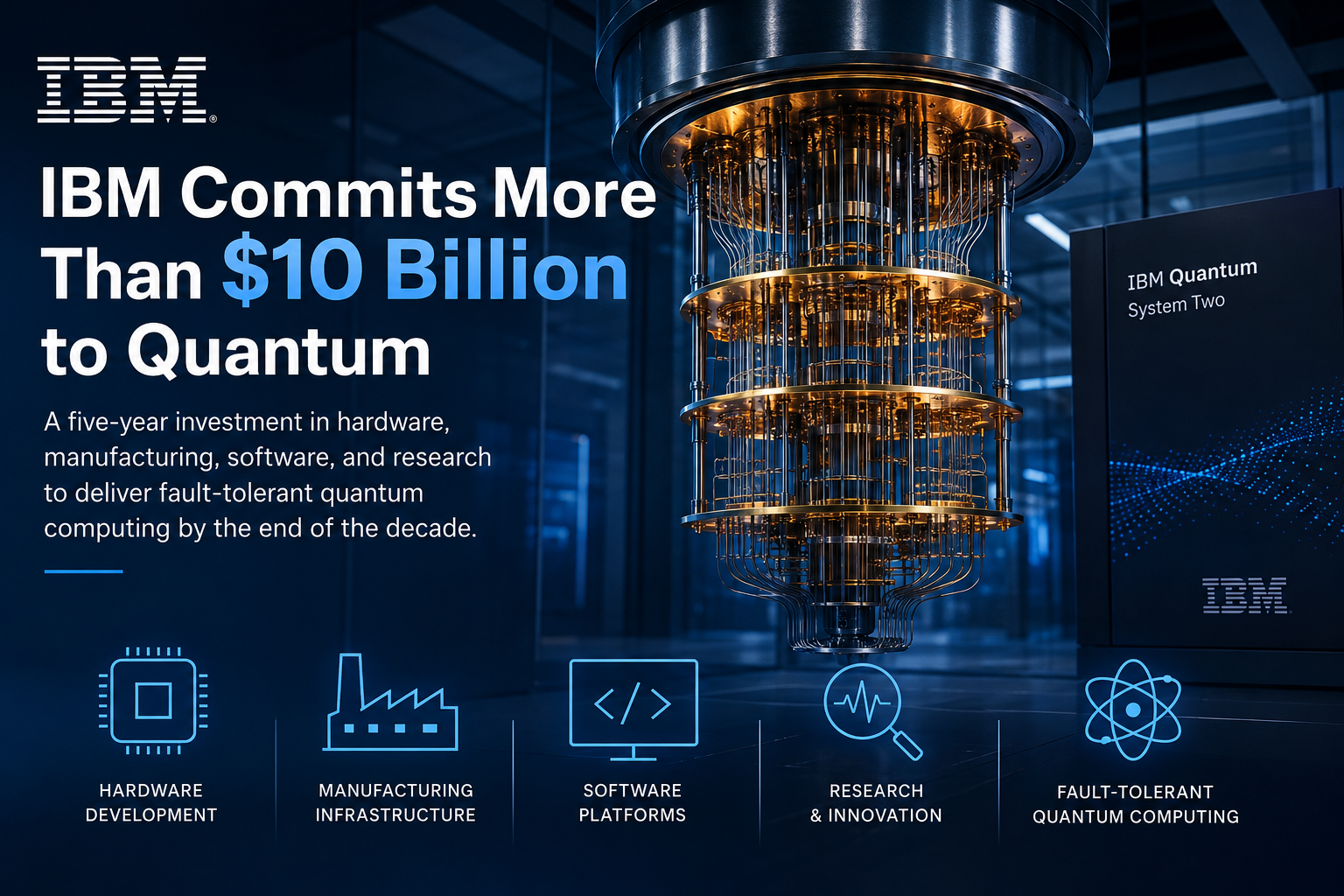
Lastly, IBM’s consistent march towards quantum efficiency is exemplified in their upcoming IBM Quantum Staling system, set to drastically increase quantum gate capacities and deliver a large-scale, fault-tolerant quantum computer by 2029.
These advancements underscore an essential point: while the physical qubits form the skeleton of quantum computing, it is the logical qubits—more resilient and less noisy—that will ultimately fuel the quantum evolution. This shift from focusing solely on quantity to quality in qubit production could herald the true dawn of commercially viable quantum computing.
As we look towards the horizon, quantum computing promises to redefine the landscape across industries, from pharmaceuticals to finance, and beyond. Yet, the road ahead is filled with both promise and profound technical challenges. As businesses and governments invest more into this revolutionary technology, the potential applications seem limitless. Will we cure diseases faster? Will encryption become unbreakable? Or will we find new, as-yet-unimagined uses for this quantum leap in computing power?