Imagine you’re watching a magician deftly shuffle cards faster than your eyes can follow. That sense of awe, of barely grasping the speed and skill, is a bit like what I felt when learning about the leaps in quantum computing recently announced by tech giants like Google, Microsoft, and Amazon. Each of these behemoths of tech is promising that the near-impossible could soon be routine—completing tasks in minutes that today’s best supercomputers couldn’t finish in millions of years.
Quantum computing isn’t new. In fact, it’s been a staple dish at the buffet of futuristic technologies for decades. However, what’s changed recently is both fascinating and potentially transformative. To understand this shift, let’s break down quantum computing—or QC, a term playfully clarified as ‘Quite Complicated’—and explore why it might matter more than ever.
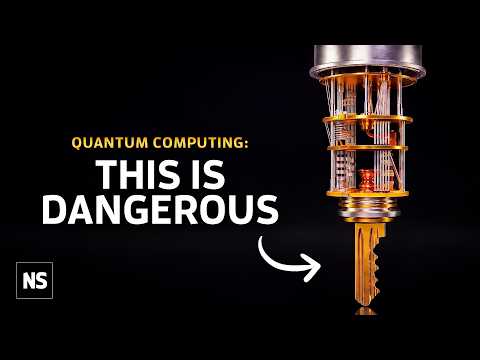
This video is from Undecided with Matt Ferrell.
QC operates on the principles of quantum physics, a field where the usual rules you and I live by don’t always apply. Traditional computers use bits as the basic unit of data, famously represented by 1s and 0s. Quantum computers use quantum bits, or qubits, which thanks to quantum weirdness like superposition and entanglement, can handle being 1s and 0s simultaneously or linked across distances. This allows quantum computers to process vast amounts of data incredibly fast, making them potent tools for certain types of computations that are impractical with classical computing.
Now, onto the big news. Recently, the tech world has been abuzz with Google’s launch of the Willow chip, Microsoft’s introduction of Myrono 1, and Amazon’s unveiling of Ocelot—each approach to quantum computing promises striking advancements particularly in managing quantum error correction. This is key because quantum systems are incredibly delicate; they’re like intricate sandcastles vulnerable to any wind of cosmic disturbance, thus prone to errors.
Understanding these companies’ diverse methods to this common challenge is like peering into a workshop where each craftsman uses different tools to carve the same block of wood. Google is increasing its qubit count, aiming to outpace errors through sheer volume. Microsoft takes a more theoretical path by experimenting with Myerana particles, which could potentially offer superior error protection. And Amazon? They seek efficiency with a unique architecture that could reduce the need for constant error checks and corrections.
Yet, with these advancements comes a mixture of hype and skepticism. How much of this is real progress versus tech optimism? Here’s where nuanced sources and tools like Ground News play a crucial role. This platform helps unravel the threads of truth from marketing by providing insight into how different news outlets cover these stories, giving anyone a clearer picture of what’s really going on.
Despite the strides, there remain enormous challenges before quantum computing can enter mainstream use. For instance, the software necessary to run these machines is lagging, and even if these technological hurdles are cleared, quantum computers won’t replace traditional ones. They’re too specialized, tackling specific problems that ordinary computers can’t manage efficiently.
Looking ahead, it’s hard to pin down when quantum computing will become a daily reality. The technological readiness levels vary, but most breakthroughs are still in experimental stages. Optimistically, many in the field expect significant advancements by 2032. What’s certain is the trajectory—progress, however slow, points towards an era where quantum computing will play a pivotal role in solving some of our biggest mysteries, from material science to complex economic models.
So, will we see quantum computers in our lifetime? It’s more likely than not, but expect them to be tools for specific jobs rather than general-purpose devices. As these developments evolve, they remind me to keep an eye out for both the magnificently real and the artfully exaggerated. Stay informed, stay skeptical, and above all, stay curious.