
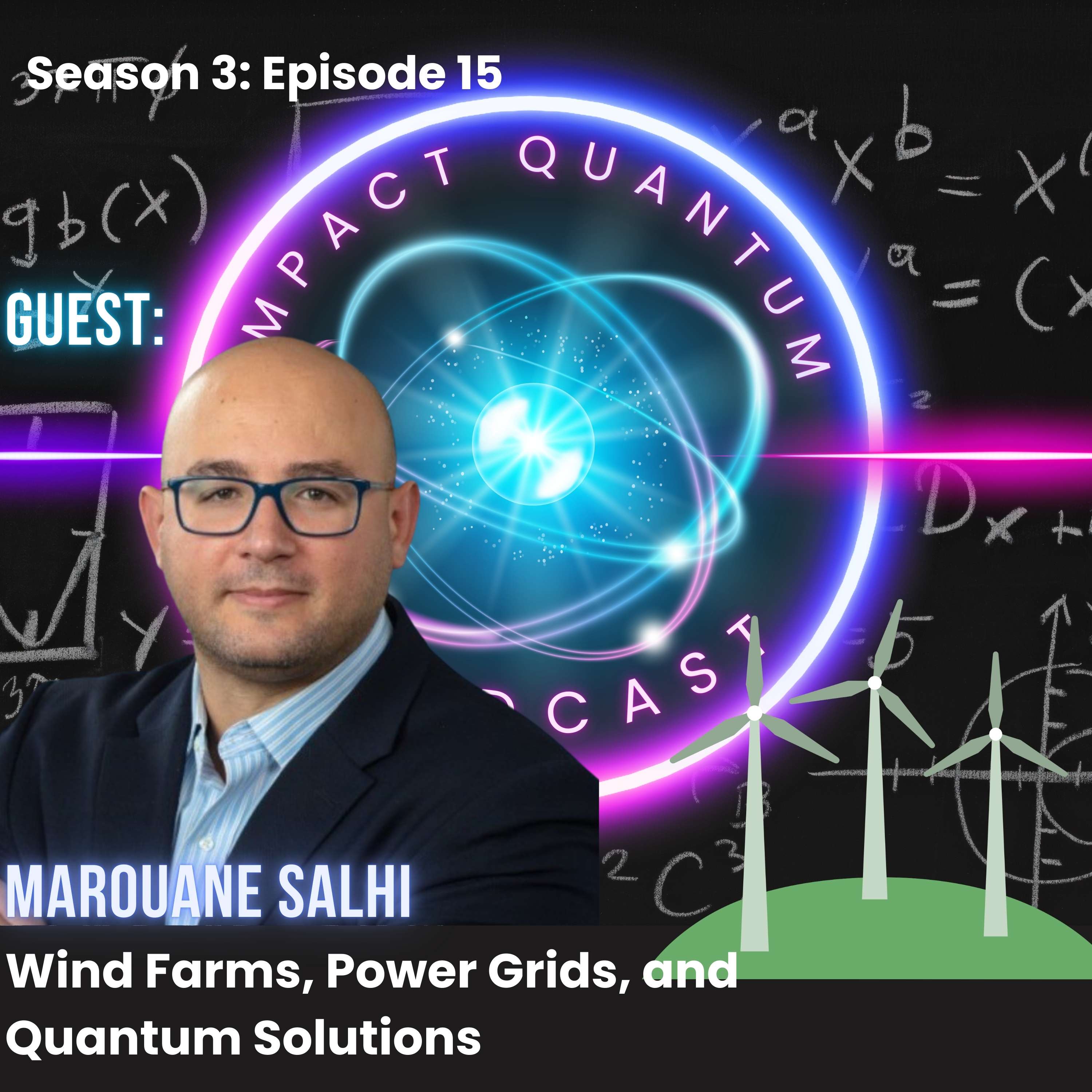
Welcome back to Impact Quantum, the show for everyone from the quantum curious to the truly entangled enthusiast. In this episode, we venture beyond Schrödinger’s cat and into the very real world of quantum-inspired engineering with guest Marouane Salhi, a physicist and CEO of Qubit Engineering. Hosted by Candace Gillhoolley, Frank La Vigne, and BAILeY, this conversation dives into how quantum optimization is already tackling some of the planet’s biggest infrastructure challenges—think wind farm layouts and power grid management—not with futuristic quantum computers, but with innovative quantum-inspired algorithms and simulators.
Marouane walks us through the journey from theoretical quantum physics to practical engineering impact, revealing how “boring” problems like turbine arrangement and network switch toggling are paving the way for quantum innovation. The discussion covers the realities and myths of current quantum hardware, the rise of quantum-inspired solvers, and why interdisciplinary teamwork is essential for this fast-evolving field. Whether you’re a student, developer, investor, or just love to say “quantum” at dinner parties, this episode offers invaluable advice on how to get involved, what skills matter, and what the next 10 to 15 years of quantum technology might hold. Tune in for grounded insights, practical strategies, and a glimpse of how quantum thinking is quietly reshaping our world—sometimes, in the most surprisingly unglamorous corners.
Timestamps
00:00 Quantum Optimization Startup Leadership
03:53 Quantum Computing: Finding Use Cases
07:21 Turbine Hub Altitude and Size
12:00 Bridging Research Tools for Industry
16:15 Shift to Quantum-Inspired Solvers
18:27 “Quantum Solvers Improve Optimization”
23:14 Quantum Computing in Molecular Simulation
26:49 “Quantum Computing Development Insights”
28:55 Future of Quantum Engineering Insights
33:24 Rethinking Engineering Problem-Solving
37:28 Quantum Engineering Problem Optimization
41:28 “Start Preparing for Quantum Computing”
44:08 Interdisciplinary Collaborative Workforce Vision
47:02 Quantum Collaboration in Energy Solutions
49:32 “Embracing Quantum Tech Opportunities”
54:32 Advancing Understanding Through Complex Problems
57:20 Quantum’s Present Impact
Transcript
Welcome to Impact Quantum, the podcast for the quantum curious
Speaker:and the entangled enthusiast alike. Today,
Speaker:we're diving deep into the fascinating world where theoretical physics
Speaker:meets real world engineering with none other than Maruan
Speaker:Salhi, physicist and CEO of Qubit Engineering.
Speaker:Forget Skrodinger's cat. We're talking about the kind of quantum that
Speaker:optimizes wind farms and power grids, not
Speaker:feline survival probabilities. Maruwan shares
Speaker:how his team is tackling massive engineering challenges using
Speaker:quantum inspired approaches, all without needing a
Speaker:working quantum computer yet. From turbine
Speaker:layouts to toggling thousands of grid switches like it's a game of
Speaker:high stakes Tetris, this episode is proof that
Speaker:sometimes the most boring problems are where the real
Speaker:innovation happens. So if you've ever wondered how quantum
Speaker:computing is quietly reshaping our infrastructure, this
Speaker:one's for you. Let's jump in.
Speaker:Hello and welcome back to Impact Quantum, a podcast for the
Speaker:quantum curious. And with me today is the most quantum
Speaker:curious person I know, Candice Kahooli. How's it going,
Speaker:Candace? It's good, it's good. Thank you so much. I'm so happy to be back
Speaker:and happy to talk to our guest today. That's good to see you back
Speaker:in the studio. And we have a really interesting guest today,
Speaker:Marwan Salhi, who is a
Speaker:physicist and he's also the CEO and co founder of
Speaker:Qubit Engineering. And I love the tagline that
Speaker:they have. It says harnessing the power of the quantum realm.
Speaker:Getting a very distinct ant man and the wasp
Speaker:kind of vibe from that. And judging by
Speaker:the look on your face, I'm not the first person to say that
Speaker:in the virtual green room. We talked about some of your work and
Speaker:you've lived in Maryland for a time, so. So
Speaker:tell us about yourself. Welcome to the show. Yeah, thank you. Thanks for
Speaker:the invite, Frank. Happy to join you. Candice, here.
Speaker:So, yes. So I am a physicist. I'm computational
Speaker:physicist, slash theoretical. I did my interest in
Speaker:quantum physics, actually in quantum computing to be precise, started
Speaker:early on, but you know, we only saw
Speaker:the availability of quantum computing machines, quantum
Speaker:machines, only in the last few years
Speaker:we to be kind of precise, that's when you can actually have
Speaker:more. You have an actual access to play with the machine and visit.
Speaker:So a quantum physicist would focus on quantum
Speaker:optimization. I am also the
Speaker:CEO and co founder of Qubit Engineering, an optimization
Speaker:startup for
Speaker:quantum formulating to quantum to formulate problems in
Speaker:engineering in. In a way that we can run it on
Speaker:actual quantum computers. I co founded the
Speaker:Cubit Engineering with my colleague
Speaker:George is also a physicist. He's a professor at University of
Speaker:Tennessee in quantum information science. And also
Speaker:our third co founder is Hatton, he's
Speaker:an engineer. We, we kind of got
Speaker:him into working with us and helping us in building our software
Speaker:for, for quantum applications. Very cool.
Speaker:Very cool. I, I just have a, a lot of questions because there was.
Speaker:What types of engineering problems have you or are the most popular?
Speaker:I've just wondered about that. That's a good, that's a good question.
Speaker:So I would say it's not, it's not about how
Speaker:popular, it's about finding the right use case.
Speaker:A lot of effort in the community is to identify which
Speaker:problem can benefit from quantum computing, from quantum
Speaker:algorithms, from quantum optimization that we can see advantage over
Speaker:classical methods, over classical approaches. So
Speaker:and that's, that's also how we, how we looked at it. We looked at
Speaker:the. So in fact, in fact as I said, we're, we're
Speaker:not engineers to start with, but we are physicists working in the
Speaker:engineering now industry. And the first thing
Speaker:that we started thinking of, okay, what kind of problems can we
Speaker:solve? What kind of problems can we see real
Speaker:impact or quick impact or the
Speaker:low hanging fruit kind of we can capture using
Speaker:quantum optimization approaches. And the
Speaker:answer comes from a mathematical, it's purely
Speaker:mathematical. So we needed to understand the type of problems
Speaker:that, that have interest in the engineering industry, have an
Speaker:impact, but also something that the quantum
Speaker:optimization can, can contribute to.
Speaker:And the, the, the answer for us is, is
Speaker:not not only for us, but the answer for, is basically any problem,
Speaker:any engineering problem that we can represent
Speaker:as a network of nodes and edges. For
Speaker:people who are familiar with the quantum annealer machine D wave,
Speaker:try to think of this, the
Speaker:topology of the D wave machine, it's
Speaker:built of qubits and connections. So you need to find a
Speaker:problem that cannot be mapped into that. And you'll
Speaker:be surprised in our engineering world how many
Speaker:problems are. And one of the problems,
Speaker:the first problem that you started working with is the design of
Speaker:wind farms. Wind farm layer optimization. Yes.
Speaker:And maybe you don't see it that way, but let me, let me kind of
Speaker:hint into that. Turbines in a wind farm, if you, if you look
Speaker:at the wind farm, so
Speaker:actual turbines, you can think of them as nodes.
Speaker:And then the wake interaction between any two
Speaker:turbines, you can think of it as the edge connecting them.
Speaker:And that changes based on the relative position of these
Speaker:turbines depends on
Speaker:the distances, depends on their altitude. So
Speaker:it's actually physically, if you look at it from a physics
Speaker:perspective, it's a perfect network
Speaker:of what we call a fully connected system that
Speaker:matches, you know, this, the type of problems we're looking for. And that
Speaker:was a choice. That's how we selected the first use case.
Speaker:Interesting. I, I would not have thought that.
Speaker:I mean it makes sense now that you say it, like turbulence and things like
Speaker:that. Um, because these windmills are, are massive. Like I,
Speaker:I mean I've never been more, less
Speaker:than maybe a mile or
Speaker:two from them. And they're just massive like you just.
Speaker:And, and I would imagine, I mean they're like airplane wings basically, right? I mean.
Speaker:Yeah. So I mean the, the, the hub altitude, the
Speaker:altitude of the hub, the center of the turbine where I feel ways
Speaker:of rotating. I mean it can go
Speaker:up to 120, 140
Speaker:meters in the big ones. So the
Speaker:actual diameter of turbines, the big ones, I think they can
Speaker:go to, yeah,
Speaker:116. I think that's the biggest you've seen.
Speaker:So they can be really huge. Again, the way
Speaker:we look at it doesn't matter the, the, the size.
Speaker:From a study perspective, there are
Speaker:a point or in a network, of course we
Speaker:associate with that particular, and obviously not a point but a variable in
Speaker:our system. But that particular variable is associated
Speaker:with a power generation. It's associated
Speaker:with altitude, exact position,
Speaker:it's associated with wake effect. It's
Speaker:causing. And it's also submitted to a kind of
Speaker:feeling the wake of other. Generated by other turbines around.
Speaker:Interesting.
Speaker:How specifically do quantum computers help with that? In ways
Speaker:that, you know, a classical computer wouldn't like. What
Speaker:is, is it just a good old fashioned optimization you're trying to
Speaker:find? Is that what it is? So, so,
Speaker:so let me, let me, let me step back a little bit. What we are
Speaker:solving, we're solving challenging optimization
Speaker:problems which are as I said, are built
Speaker:in the form of the network of nodes and edges.
Speaker:And what this does to the problem, it
Speaker:creates almost an infinite
Speaker:search space of possibilities you have.
Speaker:So the best example we can give a simple, a good
Speaker:example would be if you have a room with
Speaker:100 seats and you have 50 guests and you're trying to
Speaker:distribute these guests, there is almost
Speaker:an infinite number of possibilities. The exact number would be 10 to the
Speaker:31. Oh, wow. Okay. If you, if you
Speaker:want. And, and we did actually this calculation with our, with the, with
Speaker:a collaborator from the supercomputer at operational lab. And we
Speaker:said if you want to do a brute force and consider all
Speaker:possibilities, how much time would we need
Speaker:using your supercomputer. That time was Titan, which is,
Speaker:I think at that point was maybe the first or the second
Speaker:fastest supercomputer in the world. This is, this is just a few years ago.
Speaker:And the answer was around 31 years.
Speaker:I think with the new machine available at ORL now
Speaker:Frontier, it's probably maybe 30 years
Speaker:or something. Wow. But it's, it's
Speaker:so, so that's, that's how rich these, this type of problems
Speaker:now. The, the. And that's why
Speaker:quantum computing can make, can make a, can make a huge
Speaker:impact in the future because it can navigate
Speaker:this space not through
Speaker:trials of looking at every single possibility,
Speaker:but just by literally zooming in through that space and
Speaker:finding the optimum configuration.
Speaker:Interesting. I mean, how long. What's the, what's the time on a quantum
Speaker:computer to compute? So, so, so on a
Speaker:quantum computer, this, this, this problem is like microseconds.
Speaker:It's very physical. But okay, this, this
Speaker:problem of 5,000 from A.
Speaker:And, and this is a very, it's not, from an engineering perspective, very
Speaker:interesting. It's simple. It's also kind of boring. You know,
Speaker:it's not like the, you know, we're gonna change the world, we're gonna do this,
Speaker:we're gonna break encryption, we're gonna cure cancer, map all the
Speaker:protein folds and whatnot. Right? Like, it's pretty, to be
Speaker:blunt, basic. But you know what, boring
Speaker:is where the money is, right? Like, there's a lot of these financial
Speaker:gurus. The more boring something is, the less competition is going to
Speaker:be. I don't want to go down that rabbit hole, but it
Speaker:sounds like boring tends to pay the bills. Right?
Speaker:That's a good point. In fact. In fact, you know,
Speaker:in general, industry only care about what
Speaker:kind of advantage you can provide them. It doesn't matter whether you're using a quantum
Speaker:computer or simple Excel sheet. This is, this is the reality.
Speaker:But of course, we will reach a point where sophisticated
Speaker:or, you know, basic tools are not the solution, and
Speaker:even some sophisticated classical methods cannot even
Speaker:cut through. And that's why you need to start thinking about
Speaker:new innovative approaches and what we really do. And the way I look
Speaker:at what I'm doing over the last few years is bridging the gap
Speaker:between some interesting tools that are mainly used
Speaker:in research, that usually engineers are not trained to
Speaker:use them and bring them back to the engineering and say,
Speaker:hey, using these tools, we can get this serious advantage.
Speaker:In fact, you know, we've been doing this. As
Speaker:I said, our first use case was in the wind farm. The first, the first,
Speaker:the first. You know, the first. When we
Speaker:started working on this and we did not start on our own, we started
Speaker:collaborating with actual wind engineers, with actual
Speaker:wind farm developers. The companies, different companies
Speaker:from almost everywhere. The first thing I say, you guys, you're not
Speaker:wind engineers. What are you doing here? What, what, what's the, you know, what's the
Speaker:purpose? And say, hey, we have some, some cool tools for
Speaker:optimization and we want to test them with you guys and want to see how
Speaker:this. And then after a couple of weeks, you know,
Speaker:once we exchange the data and show them the results, the, the.
Speaker:They are basically now they want to know more. How did, how did you do
Speaker:this and why are you getting so. And then actually
Speaker:even they get surprised with the results we can capture. They say, hey, we want
Speaker:to do this test again like we
Speaker:think. I mean it almost seems like a little bit.
Speaker:You got lucky on this one. Let's, let's try again. Let's change the problem. Let's
Speaker:increase the size a little bit. But it's not,
Speaker:it's not magic or Sonia. It's not. It's basically a new way
Speaker:of solving a problem that they've been using the same method for the last
Speaker:three, four decades now. I'll give a simple
Speaker:example. When it comes to the wind farm layout optimization,
Speaker:the way, the way it's done, basically there is a
Speaker:program, software, you commercial ones,
Speaker:sometimes some developers develop their own internal system
Speaker:and they, the way it starts, they. They
Speaker:basically pick the lands, they have all the data required for the
Speaker:project and then they start from a random design,
Speaker:just random one. And the way they do it, they basically starts
Speaker:moving one turbine at a time from one location to the
Speaker:other while watching how the
Speaker:energy of this change and going up and down. And of course this
Speaker:goes through an iterative process, you know, as long as possible
Speaker:until they see that there is no more progress. Then
Speaker:they stop the calculation. This numerical search and they say
Speaker:we got. This is the, this is the best we can do.
Speaker:We don't do that. We. The way we do it is basically
Speaker:by selecting the position or
Speaker:selecting configuration from
Speaker:thousands of possibilities. Just like the selection
Speaker:of where to place your guests in the room. 50 guests in 100 room.
Speaker:We generate thousands of potential sites for the turbines
Speaker:and then we select the exact number that we want. The
Speaker:advantage here is that you're selecting one
Speaker:coherent configuration rather than
Speaker:moving one turbine
Speaker:which will impact, maybe it will improve the
Speaker:production of one. Basically ease up a little bit on the wake for One
Speaker:turbine, but maybe it will increase the week on another one. And which is an
Speaker:iterative process. So this is, this is a very, it's a very
Speaker:different approach. It's a combinatorial optimizer, which is
Speaker:what quantum computers are meant to. And
Speaker:you know, I will start talking about quantum and maybe I should, I should hint
Speaker:to this. We've been doing. We, we started using
Speaker:quantum annealing machine machine. We built our, our main
Speaker:system using one maneuvering machine or four quantum
Speaker:machine. And and, and slowly we,
Speaker:we, we, we shifted a little bit to using
Speaker:slowly we shifted to using simulators or what
Speaker:we call quantum inspired solvers.
Speaker:I believe this,
Speaker:this name quantum inspired solvers or quantum inspired
Speaker:optimization was introduced to us by
Speaker:Microsoft Azure Quantum. They were pushing for
Speaker:it and today it's,
Speaker:it's the way to go for to support the development
Speaker:of new quantum applications. So the challenge for
Speaker:quantum engineers or quantum application engineers is that they are,
Speaker:they've been trying to map
Speaker:some large engineering, complex engineering problem
Speaker:into a quantum machine that is very
Speaker:limited. The number of qubits, number of connectivity in the,
Speaker:you know, that's submit to, that's subject to noise and errors and so on.
Speaker:And that actually
Speaker:impacted a little bit. So that shifted the focus from
Speaker:developing the application. We're trying to match your application
Speaker:with the current hardware. If we fast forward in the future
Speaker:and we'll have the best quantum computer,
Speaker:then we will never worry. As a quantum
Speaker:application engineer, you will not worry about the machine. You'll just
Speaker:worry and focus on developing your problem, on developing your application.
Speaker:So today the engineer is divided
Speaker:between not only trying to rethink this
Speaker:problem to map it into a quantum machine, but also worrying about
Speaker:the capacity of the machine that he'd be running his problem.
Speaker:So this was kind of clear to us and the
Speaker:opportunity of shifting
Speaker:towards these quantum inspired solvers.
Speaker:What it does first, it actually
Speaker:let you focus on the application rather than on
Speaker:the limitation of resources, rather than on limitation of the number of qubits
Speaker:and of connectivity. You can ask me and
Speaker:say, oh well, you know, you can build the problem
Speaker:however you want and you build your application. But
Speaker:yes, it's not going to run the same way if it's running on a
Speaker:quantum computer versus running on a classical CPU and GPU
Speaker:machine. That's true, but we don't have that machine
Speaker:yet. And another
Speaker:very interesting point is that what we realized
Speaker:by rethinking the problem, we're actually
Speaker:saving a lot of this search space. We're simplifying a little bit this
Speaker:huge search space which is allowing us to
Speaker:achieve and get better solution than classical
Speaker:approaches. When you are selecting
Speaker:a full configuration of a wind farm,
Speaker:you have more chance to get better solution than
Speaker:iterating on moving one turbine at a time
Speaker:based on whatever resolution you have based on doesn't matter
Speaker:the number of iteration you do, you will be stuck in
Speaker:local minimum. Definitely you'll be struggling there.
Speaker:So yes, this
Speaker:quantum formulated wind farm layout optimization problem is not
Speaker:running on the actual quantum machine, but it's running on
Speaker:a solver that's
Speaker:behaving or trying to behave like a
Speaker:machine. And we still get significant advantage.
Speaker:So this is, this is something we've been advocating
Speaker:for and we think this is the lowest hanging
Speaker:fruit. And it is clear
Speaker:today that there is a big shift or towards
Speaker:or there is a serious consideration to quantum spike
Speaker:optimization. And
Speaker:this is, this is in fact if we want to
Speaker:say the priorities today are as follow of what, what
Speaker:can you possibly do? The best thing you can do is to develop
Speaker:applications for quantum inspired solvers. One the
Speaker:next step, which we're not there yet,
Speaker:a lot of companies are open. This is running a problem on
Speaker:a hybrid system, classical, you
Speaker:know, basically a system made
Speaker:up classical computer and quantum computer.
Speaker:The next level would be running it fully on the quantum
Speaker:computer, I believe even running on, on
Speaker:a hybrid system, the classical slash.
Speaker:We are still struggling there because we were
Speaker:not really sure how to decompose the problem
Speaker:between the CPU and the qpu. How can we
Speaker:divide our optimization problem between. It's interesting
Speaker:you say that because what is the,
Speaker:a lot of people will kind of scoff at simulated
Speaker:quantum machines. What's your
Speaker:thought on that sort of debate? Or is it kind of just
Speaker:one of those silly debates that people like to get into?
Speaker:So, so I'm here, I'm talking,
Speaker:I'm focusing on simulated quantum
Speaker:optimization, simulated solvers for,
Speaker:for, for,
Speaker:for quadratic and constrained binary optimization or quadratic constraint
Speaker:binary optimization or even if we consider polynomial
Speaker:problems, not just quadratic. Now the,
Speaker:I would, I would say if you, if we're talking about
Speaker:general simulating a quantum physics system, that's a
Speaker:different story. Simulating a molecule, there is nothing
Speaker:better than actual qubits to simulate molecules.
Speaker:And that particular
Speaker:discussion, it's very, it's, it's,
Speaker:it's clear that the quantum system is multiple.
Speaker:It's better. The challenge there again is how big of a molecule
Speaker:can you simulate today? Right.
Speaker:If you want to do that on, on a classical computer. I mean
Speaker:people have been doing this for Decades now, you know, people are
Speaker:studying molecular dynamics and
Speaker:just trying to simulate the quantum physics of
Speaker:molecules and atoms. They've been doing a lot
Speaker:of good job and a lot of
Speaker:applications and a lot of similarities have been built for that.
Speaker:And their main challenge is that every time they need
Speaker:more and more bigger machines
Speaker:because it doesn't scale up, you know, the same way as a
Speaker:quantum system when it comes to, so, so
Speaker:that's what, that's what mostly uses simulating on a
Speaker:quantum computer for, for when it comes to material size.
Speaker:I think quantum systems will be, will
Speaker:be, would be the best. And some
Speaker:sophisticated high performance
Speaker:computing kind of modules have shown very,
Speaker:very good results and they made a lot of good progress
Speaker:there, but they're still very expensive computation. In
Speaker:fact, the impact, one of the most
Speaker:expected impacts of quantum computing
Speaker:and the industry is on the pharmacology,
Speaker:designing new drugs, designing new molecules. Right.
Speaker:Biochemistry and all that.
Speaker:What we are working on, on terms of simulation is, is
Speaker:purely mathematical. In terms, we are mapping
Speaker:engineering problems, formulating them mathematically in a
Speaker:way, mathematically in a way that we can
Speaker:solve them on these solvers and these quantum spirits.
Speaker:So, so these are two different kind of
Speaker:fields. So when you're trying to simulate the quantum physics
Speaker:system, you better simulate that on an
Speaker:actual quantum computer. But that definitely, it's more natural. But
Speaker:we are taking an engineering problem which, like wind farm design
Speaker:and then now trying to optimize it and simulate it.
Speaker:In fact, what we do, we do simulate the interaction. We take
Speaker:the whole problem, the whole dynamics of it arm and map
Speaker:it into this network of qubits.
Speaker:And we basically, you know,
Speaker:literally match every
Speaker:turbine with an actual qubit and the different interaction it has
Speaker:with the other qubits, everything. So we kind of simulate
Speaker:data. But as I said, the challenge is the machine, the size of
Speaker:the machine, the number of qubits, the number of connectivity you can have and so
Speaker:on. Right.
Speaker:Does this make sense? Yeah, go ahead, take us a little bit away from
Speaker:this for a moment to speak to some of the, you know, the interests and
Speaker:concerns of audience members. So I'm going to ask you. So for
Speaker:someone looking to get involved in the quantum computing field, whether
Speaker:as a student, a developer or an investor,
Speaker:what's the most unexpected piece of
Speaker:advice you would offer? I mean, your experience is quite
Speaker:extensive and the way you talk about everything, I mean, clearly you've
Speaker:got, you've got the skills involved. So what skills do you
Speaker:believe will be the most valuable in this rapidly
Speaker:evolving landscape?
Speaker:That's a Very, very good question. And
Speaker:I have to say this. You know, let
Speaker:me, let me, let me just point something. There are lot of people are working
Speaker:on different things when it comes to quantum computing from
Speaker:the hardware to the software to the error corrections
Speaker:and everyone is contributing to, from, from its own
Speaker:position. The,
Speaker:There are, there are two ways to be part of this
Speaker:game, this, part of this
Speaker:development, the technology development of quantum. Whether
Speaker:you're looking at contributing to it
Speaker:at a earlier stage or in
Speaker:the long run. I believe the investors who are
Speaker:involved in developing and investing in,
Speaker:in quantum hardware, they have the long term vision
Speaker:where they say hey, we want to be, we want to contribute to building this,
Speaker:this, this fabulous machine. This, it's sophisticated machines
Speaker:but it takes time and they look at it that way,
Speaker:they understand it and even you know,
Speaker:as we move forward we will. Right now
Speaker:the space is divided in with superconducting
Speaker:photonics. I don't know, you know,
Speaker:cat cubits.
Speaker:Exactly, all kind of, all kind of qubits.
Speaker:At some point we will see some kind of
Speaker:preference and say oh actually
Speaker:the winner is whatever it is
Speaker:from starting from superconducting to iron traps to
Speaker:neutral atoms to whatever you want to call it, photonics.
Speaker:Right. So, but it's,
Speaker:it's part of you know, investing and, and so on. It's part of the,
Speaker:the vision and the risks that people do. I think we're all learning
Speaker:from, we're learning what is happening from the iron trap side. We're
Speaker:looking from the superconducting, from the photonic. So
Speaker:it's nothing is wasted, everything is useful and we're learning from.
Speaker:Now from. If you look at it from the perspective on an
Speaker:engineer who's trying to be involved, this
Speaker:depends. They want to be part of the hardware. It's different
Speaker:than if they want to be part of the software. I
Speaker:believe there are efforts that will be limited in time.
Speaker:I mean at some point, let's say Microsoft,
Speaker:you know, the majorana, the new topologically protected
Speaker:qubit will be an actual reality
Speaker:and we'll have much better
Speaker:qubits than a lot of the work that we've done so
Speaker:far. And some of these,
Speaker:noise reduction, error correction, all that. Maybe
Speaker:we don't need that anymore. So, so, so I think
Speaker:I, as I said it depends. So you need to choose what,
Speaker:where, what you want to play now. You want to be part of the,
Speaker:the, you want to contribute now early. This is what we need today.
Speaker:That's what we're trying to understand or you want to be part of the future
Speaker:in terms long term. And I don't think there is an
Speaker:answer for one answer for all of them,
Speaker:whether for investors, whether for engineers,
Speaker:whether for entrepreneurs. It depends how you look at it. Let me
Speaker:share what the way we looked at it, we
Speaker:looked at problems that are
Speaker:coming from the engineering. In fact I do. I still
Speaker:remember my first presentation at the IEEE Quantum Week
Speaker:when I said we're, we're looking at an energy problem using
Speaker:one. The first and natural reaction
Speaker:was like we're, we're still talking about atoms and molecules
Speaker:and you're talking about energy. I mean today
Speaker:we're working on power grid. We moved
Speaker:from turbines. So, so if we progressed
Speaker:like I don't know what they would say to me. They say hey, I'm trying
Speaker:to solve power grid management optimization today.
Speaker:But the, the, the idea is that you want to look at it differently. It's,
Speaker:what we are doing is
Speaker:we are mapping the mathematical
Speaker:dynamics, physics dynamics into a theoretical model.
Speaker:It doesn't have to be molecule, doesn't have to be atoms. It's,
Speaker:it's a pure optimization. What
Speaker:it does it give us access to some
Speaker:solutions. Let's call it configurations. Let me give another
Speaker:example that we've been working on for the last three years
Speaker:now. I started with the wind as an example. We're still
Speaker:working a little bit on the way but the focus right now is on power
Speaker:grid management for many reasons. But
Speaker:the good, the Sorry, I lost it.
Speaker:You know, going from
Speaker:there is this idea of finding a problem
Speaker:that has a specific mathematical structure
Speaker:where you can access a solution that you cannot
Speaker:extra sophisticated is feasible through this new way of solving
Speaker:problems, this discrete combinatorial optimization. Let's call it
Speaker:quantum combinatorial optimization. The idea
Speaker:why, in fact why, why we want to solve combinatorial
Speaker:problems using quantum computer. So
Speaker:quantum computer of qubits. They, they actually
Speaker:embed this idea of having all possibilities at
Speaker:the same time through superposition. It's almost like
Speaker:packaging all possibilities in fewer variables,
Speaker:fewer smaller systems and they can navigate through very
Speaker:fast. And that's why they offer an
Speaker:opportunity to solve this problem that in
Speaker:a. From a classical engineer. When I mean classical, I mean
Speaker:using classical methods. This who's trying to
Speaker:avoid what they call the combinatorial explosion.
Speaker:It's literally they say hey, number of possibilities is exponential. I can't
Speaker:deal with this. Yes, of course. That's why you need to change your
Speaker:approach. Now going back to where I started, I said
Speaker:the way we look at it, we saw that there is an opportunity in Engineering
Speaker:where we can map some of these exponentially growing.
Speaker:In fact the correct term of using it called anti hard problems.
Speaker:We can navigate this
Speaker:space slightly better and faster to get
Speaker:results or solutions we cannot get before. And in fact
Speaker:we learned from it. In fact, that's why right now,
Speaker:for example, we're solving, we're solving large
Speaker:scale problems in this discrete space which
Speaker:wasn't very clear, wasn't very
Speaker:intuitive to many scientists or engineers. The beginning when you said,
Speaker:when we suggested this, this, this approach.
Speaker:Let me, let me connect another example.
Speaker:So I mentioned the grid. You can think that the
Speaker:grid is, is, is a very large infrastructure. It's very important, it's
Speaker:critical. The way, to be specific.
Speaker:Yes, yes, the electric power is good. The electric power grid, the
Speaker:way we look at it through our algorithms,
Speaker:if I may to simplify this way, it's a bunch of
Speaker:switches that you have maybe thousands, tens of thousands and
Speaker:you're trying to find which one to keep on, which one to turn on.
Speaker:It's again another combinatorial optimization.
Speaker:And for that you
Speaker:need, you cannot do it the classical. You cannot do brute force. You cannot do
Speaker:classical where you try one at a time. You need to have a little bit
Speaker:more sophisticated approach. And quantum. As I
Speaker:said, people always expected that the quantum computing
Speaker:contribution is only coming from the hardware.
Speaker:What we learned over the years. No, it's also
Speaker:coming from the way that the new way of
Speaker:thinking the problem, we look at it differently. We're
Speaker:solving now a network of
Speaker:nodes with branches, different vices, different
Speaker:coupling. I see what you mean.
Speaker:So quantum inspired algorithms also play into this.
Speaker:In fact, in fact, I believe
Speaker:now the GOE Office
Speaker:of Science, at least they showed in the last presentation I attended
Speaker:that they are prioritizing now quantum inspired optimization,
Speaker:then hybrid quantum computing, then quantum computing,
Speaker:then the actual algorithms. So this, this is the first time I saw
Speaker:it. In fact I took a picture of it. I was so excited to see
Speaker:that they kind of got the message in a way.
Speaker:And, and, and as I said,
Speaker:you need to, you need people to invest in the quantum hardware. You need people
Speaker:to work on developing the machines and which is a long term
Speaker:kind of things. But you need also to be ready by
Speaker:getting a community of quantum engineers developing new
Speaker:applications. And the main motivation is
Speaker:it's not, we're not just building the application
Speaker:for, to be used when the quantum computers we know we
Speaker:can use it. And they are actually offering us an advantage today.
Speaker:Right. And even more in the future when the quantum
Speaker:hardware will be right. So
Speaker:this, this Is this is. So this
Speaker:is honestly stepping back a little bit out of the hype
Speaker:that people talk with a quantum and say
Speaker:to some extent, okay, in the next year or two or three, we're getting a
Speaker:quantum hardware. No, we don't know that. But we
Speaker:can actually do something useful. We can
Speaker:rethink our problems, we can rethink our algorithms and have
Speaker:an impact today. And also we will saving time
Speaker:by bridging and connecting some engineering problems like the one
Speaker:we are doing at Qubit, engineering energy problems that people
Speaker:never thought that we can actually cast them
Speaker:and project them into
Speaker:a formula like an anon one that we. So if you ask me
Speaker:what we do or core expertise is in the quantum
Speaker:formulation of the problem, this combinatorial optimization, which
Speaker:involves a significant domain expertise, you need
Speaker:to understand really well the application. You need also to understand
Speaker:how to build your quantum formulation of your problem.
Speaker:You know, so of course there's a debate. Say you're
Speaker:running it on classical systems, why you want to call it.
Speaker:I would say yes, it's running today on a classical systems. It's generating
Speaker:better results than, you know, the
Speaker:classical approaches that been developed for the last two, three
Speaker:decades. But also it can run on a quantum
Speaker:computer, if you give me one now. And you will not be
Speaker:able to match the results that I would get out of it.
Speaker:Interesting.
Speaker:Very interesting.
Speaker:Okay, so let me ask you this. Looking further out, let's say
Speaker:10 to 15 years from now, what's one moonshot
Speaker:application of quantum computing that
Speaker:you personally find the most exciting or transformative?
Speaker:Even if it seems speculative today,
Speaker:what fundamental breakthroughs would be required to make that a
Speaker:reality?
Speaker:So that's a, that's of course very good and very
Speaker:hard questions, but I'll, I'll try. Yes,
Speaker:I believe our
Speaker:next challenge is to
Speaker:understand how we can
Speaker:connect classical computers with
Speaker:quantum computers. How can we divide? So this is a more
Speaker:general kind of concept in the sense that I think hybrid quantum
Speaker:computing will be our next challenge for the next 10
Speaker:to 15 years. And in fact we see it
Speaker:as a continuation of developing
Speaker:applications and running quantum applications on a
Speaker:simulant. So the simulator right now is
Speaker:limited to CPU soon, once we
Speaker:have a better idea how to incorporate
Speaker:part of the calculation on the quantum
Speaker:while running it on this, on the, on the classical system. That's going to be
Speaker:the next. That's the next. That, that will have a very
Speaker:serious impact. In fact, in the future
Speaker:it's not going to be purely
Speaker:quantum. Even in theory age, when we have a very good Computer. I
Speaker:believe this idea of running
Speaker:classical and quantum computer at the same time is,
Speaker:is the winning course. We're not going to
Speaker:be able, we need to even rethink the
Speaker:problem now even more in the sense that
Speaker:where and how to connect classical and quantum computer when
Speaker:it comes to our optimizations now
Speaker:for the applications and the use cases,
Speaker:this is what,
Speaker:in 10, 15 years, I think whatever applications
Speaker:we are doing today, whatever use cases we are developing
Speaker:today, will continue and will get even better.
Speaker:And that's why we need to start now.
Speaker:Actually, not to interrupt you, but like, I think
Speaker:I want to click on starting now, like the importance of starting now because I
Speaker:think there's a lot of people and you're a trained physicist, right?
Speaker:And you even said like, you know, you're not primarily an engineer.
Speaker:So what could people who are not physicists do, like
Speaker:software engineers, AI engineers?
Speaker:Because I think that's really. One of the
Speaker:people asked me about this a lot, like what do I think about what they
Speaker:should do about quantum computing? I was like, well one, if you're in the C
Speaker:suite or the corner office, you should really start thinking about
Speaker:being ready for post quantum encryption, right? That's kind of the
Speaker:first thing, right? I used to be an emt, right. And the first thing is
Speaker:you remove the body from the burning vehicle
Speaker:when you start treating it. Right. But I think the second thing is
Speaker:in terms of career projections, I tell people, just get
Speaker:used to it, right? Just get used to the content
Speaker:concepts, right? Get ready. Because a lot of
Speaker:what traditional computer science people, myself
Speaker:included, we kind of have to unlearn what we've learned in a
Speaker:very real way. It's not that I have to throw
Speaker:out everything, but I kind of have to stop and think
Speaker:a little differently. Am I, am I on target with that? Am I off
Speaker:base? What do you think? I, I would say we are,
Speaker:we're going or we're moving forward by being a little bit more
Speaker:interdisciplinary and to some
Speaker:extent complementary, right. I, I
Speaker:think every different kind of engineer,
Speaker:they build certain way of reasoning and they are used to
Speaker:some kind of input, some kind of output and, and
Speaker:a process in the middle. Right now
Speaker:you're, you're talking about a different dynamics,
Speaker:a different, slightly different engineering, quantum engineering.
Speaker:So you need to be comfortable a little bit
Speaker:understanding the dynamics of. And
Speaker:I wouldn't say throw, absolutely not, but
Speaker:it's more adding on top of it. But
Speaker:you could be a computer science and you, you have, you have a
Speaker:background and you have a good, clear understanding of
Speaker:how to write programs or softwares in
Speaker:classical way. Now you need to learn some new skills when it comes
Speaker:to. And again, I don't think
Speaker:moving forward. What, what,
Speaker:what the way I see that the workforce will be, we
Speaker:will need to be able to build teams that
Speaker:are complementary. We're not expecting one
Speaker:person to know everything or to totally go
Speaker:from computer science to quantum computing,
Speaker:but we want him to be able to work with quantum
Speaker:physicists, to connect the dots and to
Speaker:basically, you know,
Speaker:have that flexibility and that of communicating with, with
Speaker:other colleagues, doing that and, and using their language and,
Speaker:and so on and even building something together with them.
Speaker:That's, that's the idea. So we are moving
Speaker:slowly towards an interdisciplinary kind of team set
Speaker:where the engineering is getting. And of course it
Speaker:depends on the application, it depends on what you're building, but
Speaker:it's getting more and more interwind and
Speaker:you need collective efforts. You know,
Speaker:even, even computer science or in software engineering, you have people say
Speaker:hey, I'm a front end developer. Hey I'm a back end developer. I'm,
Speaker:you know, I'm full stack. Right, here we go.
Speaker:So, so, so I think, I think this way. So I don't, I don't see
Speaker:a problem. I don't see it as a, as a challenge. Oh, you need to
Speaker:shift, you need to unlearn. Absolutely not. No, you need to continue
Speaker:and build on top of it. And I don't think even there is this
Speaker:concept of unlearning anything. I think we only can keep learning something.
Speaker:Right. Maybe the better way to phrase it is drop assumptions.
Speaker:Yeah. You know, so,
Speaker:so, so let me, let me bring. So I know this is, this is me,
Speaker:this is two website but let me, let me put this.
Speaker:I think there are. As we are, we're moving
Speaker:forward. The quantum industry
Speaker:is getting better at identifying its main challenge.
Speaker:It's getting better at understanding what use cases
Speaker:we can build, what kind of skill you need in fact
Speaker:for what we do, optimization. And you know, have
Speaker:to be careful right now even because when we
Speaker:say quantum optimization, I mean as I said, the debate whether
Speaker:you're running on a quantum computer. Yes, we did run on the quantum. And the
Speaker:leader by the way. Yes, we, we. I love, as a physicist, I
Speaker:loved running on actual quantum machine because you're
Speaker:you. Especially when you have access to the different knobs and, and you
Speaker:see how the output is changing and how you.
Speaker:It's very exciting. But now
Speaker:what I'm trying to, if there is a. The message I want to say is
Speaker:that we're not.
Speaker:We need to have combination of the skills
Speaker:when it comes to the application, the domain expertise and you need to have that
Speaker:quantum. So having it in one person, sometimes it's hard.
Speaker:But working in a group, in a team, that's where you can build
Speaker:something. In fact, that's for, for our team, that was the
Speaker:reason we started working the energy space because it's physics and we understand the
Speaker:physics and then we have the background in the quantum computing, then we can solve
Speaker:the problem. There is a, there is. I mean let's, let's
Speaker:say, let's, let's point out the elephant. I mean quantum optimization now the
Speaker:financial market, all the portfolio optimization effort that
Speaker:a lot of companies are trying to solve this problem. And one of
Speaker:the main challenges is that you all, you need one guy who is
Speaker:really experts and the actual problem in finance and
Speaker:understanding how the market goes and what parameters
Speaker:really have influence versus others and
Speaker:you need to have someone who can formulate that problem and
Speaker:so on. So combining these two
Speaker:expertise is I think the way for a successful
Speaker:development of the solution.
Speaker:Of course, what, what happens here is that either you have people
Speaker:who've been doing this the classical way, they're trying now to understand the
Speaker:quantum computing and trying to implement what they learned there, or
Speaker:the other way you have quantum computing
Speaker:experts who trying to understand more the finance and so on. At
Speaker:the end of the day, what you will end up doing, you'll end up doing
Speaker:working with teams
Speaker:made up or of different skills and they need to be able to
Speaker:communicate and collaborate
Speaker:and to. To solve the problem.
Speaker:Interesting.
Speaker:So what would be your. I'm sorry Candice, go ahead. No, I've hogged the mic
Speaker:the whole time. I genuinely. No, I genuinely did have something to say. I just
Speaker:absorbing. Please continue. Go ahead. What's your
Speaker:advice for people today that are in school,
Speaker:whether they're in physics, whether they're in engineering, whether they're in compi,
Speaker:marketing, etc. Like what, what would be
Speaker:your advice to someone who wants to
Speaker:get into
Speaker:get ready for the quantum shift.
Speaker:You know like you call it, it's a quantum shift.
Speaker:It's. It's moving fast, it's
Speaker:changing depending on the,
Speaker:you know, the interest and so on. I
Speaker:think the, the idea of, I
Speaker:think what the most valuable in this evolving
Speaker:time because we're talking about things that are changing
Speaker:every day, whether it's algorithm, whether it's hardware, whether
Speaker:it's technology and so on. I would say the,
Speaker:the best thing I would do is to
Speaker:work join any team
Speaker:that can offer the opportunity of looking at
Speaker:quantum technology from different perspectives,
Speaker:whether from the algorithm side, whether from the, the
Speaker:hardware side. Doesn't mean you need to work on both,
Speaker:but you have that, that possibility of interacting.
Speaker:I think that would be the best when it comes to building the
Speaker:actual quantum machines in the future. So the ability to see you're not
Speaker:just focused on the hardware itself, but also on the interface,
Speaker:connecting the hardware and communicating. Right.
Speaker:On the application side,
Speaker:I mean, there are, the application is. All
Speaker:applications are moving towards quantum computing or
Speaker:quantum. Of this new way of doing hybrid quantum computing in the
Speaker:future and having a better understanding
Speaker:of how we are building these quantum algorithms will be
Speaker:a huge plus. It will be, it will be as important as
Speaker:learning your, you know, analysis and
Speaker:algebra to solve some of your
Speaker:engineering problems. That's, that's, that's how we are going. That's what we are
Speaker:moving forward. So it will be a tool. You need to
Speaker:understand it, get comfortable with it. And of
Speaker:course you need to understand the application that you're developing. And
Speaker:so it's so, so having that, that, that
Speaker:one answer, I don't think it's an easy, it's, it's possible.
Speaker:But for any fresh
Speaker:engineer, I would say, for any young engineer, I would say
Speaker:try to understand your, your application as much as possible and try to
Speaker:think of quantum algorithms, quantum optimization, quantum computing
Speaker:as an important tool that you need now to
Speaker:master. And you will use it. Because
Speaker:think about it. In the future, all of these quantum computing
Speaker:companies, when their machine are ready,
Speaker:they will say, okay, here we go. Other machines, go ahead
Speaker:and use them. You can do so much. You need to be ready by then.
Speaker:You have the software, you have the application. You understand how can you can
Speaker:run your application, your problem on the left machine,
Speaker:you know, so
Speaker:it's, it's very, it's very dynamic.
Speaker:Interesting.
Speaker:We're almost at time and any
Speaker:other recommendations you would give or. Candace, do you have a question?
Speaker:You know, he gave advice to our, to our listeners on what they should
Speaker:think about considering and how they need to get involved. That's always
Speaker:usually the basis of my questions that I like to ask.
Speaker:I asked him for his thoughts on the future as well. So
Speaker:I'm going to say right now I feel like we've gotten a lot of
Speaker:great advice and information, so I'm going to say no.
Speaker:Do you have anything that you'd like to ask right now? I, I mean,
Speaker:I, I asked all the questions. I mean, we could probably go on for another
Speaker:couple hours, but you Know, but, but I think it's interesting to get,
Speaker:you know, you've been in, you know, if you looking at your resume on LinkedIn
Speaker:and whatnot, like you've been doing quantum or quantum networking for quite some time.
Speaker:So it's good to get your perspective which I think is probably been the most,
Speaker:one, some of the, one of the most grounded conversations we have. Like you know,
Speaker:this is, you know, don't get, you know,
Speaker:it's very grounded, right, because like, you know, it's the boring stuff. Windmill arrangement, right.
Speaker:Very critical. Right. These windmill farms are massive. They're
Speaker:not insignificant amounts of money are being put on the line. But it helps you
Speaker:can get the most out of it. And I think that's really,
Speaker:you know, it's the optimization problems, right. It's not
Speaker:that are going to really, I think make the most waves for
Speaker:business and you know, those are not going to be
Speaker:glamorous, cure cancer, figure out protein folding,
Speaker:photosynthesis and all that like sort of thing and optimize that. But I mean
Speaker:those, those types of problems I think are going to be crucial
Speaker:towards solving a lot of these intractable problems.
Speaker:Correct the learning part of it absolutely. What we are really.
Speaker:Yes, the problem may sound boring when you think of
Speaker:new drug and discovery, but the, the basis
Speaker:and the learning is actually helping us slowly getting into
Speaker:a way better, you know, much better understanding of
Speaker:how things work and what we need to do better
Speaker:and so on. And just like we did, we, we started working
Speaker:on wind for the last, now over the last couple of years we've been
Speaker:working on grid transferring that knowledge, the idea
Speaker:of the ability to solve these complex problems
Speaker:and so on. And I think, and
Speaker:I think this is, this is the. Like you said, maybe, maybe
Speaker:you know, it's first these are problems we need to solve that difficult
Speaker:today, especially with the grid. So what happens and the blackout happens in,
Speaker:in Spain recently and in Greece and southern France
Speaker:and, and we're started. And maybe I should say one, one
Speaker:thing about this. You know, one of the biggest machines we've
Speaker:built as humans is the electric power grid infrastructure.
Speaker:It's huge, it's complex and we are reaching a point and
Speaker:we kept growing it. Every year, we kept growing
Speaker:it and we reached the point today that
Speaker:we cannot manage it using even our supercomputers.
Speaker:This is a serious problem to them. We built a machine
Speaker:that we are barely maintaining using
Speaker:classical. And we need to rethink our tools. We are, we need to
Speaker:rethink the way we manage it and we solve it
Speaker:and right, here we go. These
Speaker:techniques, this. This different way of looking at problems, the way
Speaker:we're navigating the. The space of possibilities. Like I said, it's
Speaker:a bunch of switches. You need to know which one. You're not going to just
Speaker:turn on and off randomly. Absolutely not. Right. So you need to be
Speaker:a little bit more sophisticated. And that's what this new way
Speaker:of thinking of quantum optimization and the way you were dealing it and
Speaker:solving it will be the answer for that.
Speaker:Interesting. That's awesome.
Speaker:So we want to be respectful of your time and thanks for coming
Speaker:on the show. And where can folks find out more about you and your company?
Speaker:Yeah, so
Speaker:cubatengineering.com that's our website. Please
Speaker:reach out. You can find me on LinkedIn too. We're
Speaker:happy to answer any questions, collaborate,
Speaker:connect. And yeah,
Speaker:excellent. Fantastic. And we'll let our AI
Speaker:finish the show. And there you have it. Quantum optimization,
Speaker:wind turbines, power grids, and a healthy dose of
Speaker:reality From Maruan Salhi. We've journeyed from
Speaker:theoretical physics to practical engineering without so much as
Speaker:collapsing a single wave function. If
Speaker:today's conversation has shown us anything, it's that
Speaker:quantum isn't just about the future, it's about rethinking the present.
Speaker:Whether you're a physicist, an engineer, or someone who
Speaker:just enjoys saying quantum at dinner parties, there's a place
Speaker:for you in this evolving landscape. Be sure to visit
Speaker:Quite Engineering. Come to learn more about the work
Speaker:Maruan and his team are doing. And as always, if you
Speaker:enjoyed the show, subscribe, leave a review or
Speaker:shout superposition into the void. We'll hear it. Until
Speaker:next time, stay curious, stay coherent,
Speaker:and remember, in the quantum world, even boring can be
Speaker:revolutionary.






Leave a Reply