In the nuanced realm of quantum chemistry, we often encounter the hydrogen atom as our gateway, our first touchstone in the vast landscape of atomic behaviours. The 1s orbital of hydrogen stands as a foundation, a perspective from which principles unravel into comprehensible reality. Its simplicity is, paradoxically, what allows complexity to emerge with such clarity, prompting us to explore the mathematics and physics of this tiny universe.
Based on content from EziChem
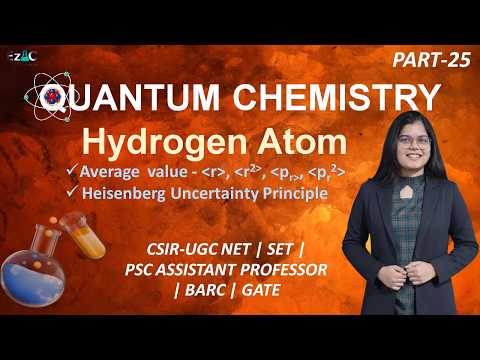
Let’s consider the concept of the average value of r, the radial distance in the 1s orbital. It’s an idea that initially seems tied to mere geometric distance, but the true narrative is in the realm of wavefunctions. As we measure these distances, capturing their essence using probability distributions, we wander through the algebra of quantum mechanics—a journey riddled with insights.
This is where the Schrödinger equation makes its emphatic appearance, unraveling into solutions that abide by physical boundaries and symmetries of the hydrogen atom. The calculated average value of r consequently tells us where the electron ‘prefers’ to be, supporting our observations with a mathematical backbone.
Transitioning to the average value of r2, we step into a realm where the square of the distance doesn’t merely amplify its magnitude—rather, it reframes our understanding of electron distribution, intertwining momentum and radial distance under the same observational umbrella. This insight is crucial for those navigating the intricacies of quantum chemistry exams such as the MPSET or GATE, where discerning these energetic subtleties can make a significant difference.
Momentum itself, particularly the average value of momentum, pr, echoes another story—a dual narrative that binds spatial localization with specters of momentum variance. The Heisenberg Uncertainty Principle hums quietly in the background, a reminder of the inherent trade-offs in precision between r and p. In the 1s orbital, this principle is profoundly felt, shaping our approach, not unlike an artist who knows that every bold stroke must be balanced with subtle detail.
Wavefunctions, while mathematical in their emergence, whisper the nature of probability walls, painting the surreal beauty of quantum mechanics where the static becomes dynamic and vice versa. Each function, a testimony to the unseen vibrations occurring at atomic levels, defines the very essence of the hydrogen atom experience. It’s worth contemplating how these wavefunctions inform operator functions, impacting the infinitesimal decisions an electron ‘chooses’ as it glides along its probable paths.
Yet, amidst this whirlwind of complexities, what holds significance for aspiring chemists—especially those aiming to crack competitive exams—is the translation of these abstract concepts into manageable and memorable pieces of information. It’s here that detailed notes, strategic preparation, and a daily dose of disciplined study make a difference. This blog, this conversation with the enigmatic hydrogen atom, serves as a beacon for such an endeavor.
But complexity has its dance partners—alternative perspectives that invite us to question and broaden our understanding. Consider, for instance, the pragmatist’s view: in the real world, where chemistry marries applications, how much does the precise value matter? Does it suffice, perhaps, to know the conceptual map rather than to stringently follow each step? Empirical chemists might argue that while theoretical models guide, it’s the explorations and experiments that bring them home. It’s a debate worth having—a gentle tension between theory and practice, underpinning the charm of chemistry.
As we draw this reflection to a close, the forward-looking chemist is left with a curiosity: How might these principles evolve, not only within the controlled paradoxes of a hydrogen atom but in exotic elements or in realms beyond our current grasp? In what unknown corridor might the next breakthrough dwell, rewiring the conversations of today?
It is in this pursuit of understanding that we learn not just to memorize, but to engage, to connect the dots between atomic behavior and cosmic happenings. So let us keep observing, keep questioning, and allow chemistry’s equations and principles to reveal the narratives that await their turn to surface.
—