Imagine a world where doctors can detect diseases like Alzheimer’s and cancer long before traditional methods would allow. Now, stop imagining, because thanks to the burgeoning field of quantum sensing, this future is fast approaching. It might sound like something straight out of a science fiction novel, but the science behind it is very real and incredibly promising.
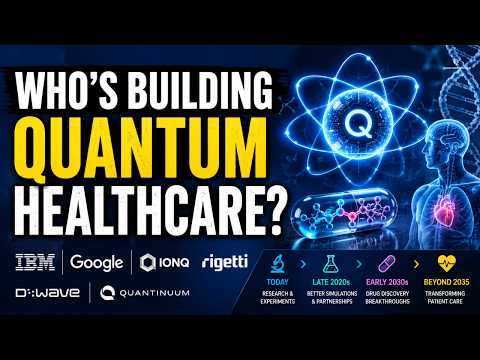
This video is from ImpactQuantum.
At its core, quantum sensing leverages the weird, often counterintuitive principles of quantum mechanics—like superposition and entanglement—to measure phenomena with astonishing precision. Superposition allows particles to exist in multiple states at once; entanglement links particles over any distance. It’s these phenomena that enable quantum sensors to detect the minutest changes at the atomic and molecular levels in biological systems. And yes, while it sounds incredibly high-tech, the potential applications in medicine truly bring this technology down to earth—right to where it can do the most good.
Let’s break down just how these quantum sensors work. One type involves diamond-based detectors, which utilize so-called nitrogen vacancy (NV) centers. These NV centers can measure magnetic fields with incredible sensitivity and without the need for the bulky superconducting apparatus typically used. Another fascinating innovation involves optically pumped magnetometers (OPMs), which use lasers to detect the very weak magnetic fields produced by the human brain. These devices are more compact and cost-effective than ever before—shifting from room-sized equipment to something potentially as handy as your smartphone!
The implications of this improved sensing capability are enormous, especially when it comes to medical diagnostics. Quantum sensors could revolutionize how diseases are detected and managed by capturing data that current technology can’t. For instance, consider early disease detection. Quantum sensors are being researched for their ability to identify specific biomarkers associated with diseases like Alzheimer’s or various cancers much earlier than is currently possible. This could facilitate timely interventions that significantly alter patient outcomes for the better.
Similarly, in neurology, quantum sensors could track subtle changes in brain waves that signify neurodegenerative diseases. In oncology, there’s the potential for non-invasive biopsies, as quantum dots could target cancer cells directly, lighting them up for precise visualization without the need for cutting into the body.
Even the familiar MRI machine gets an upgrade with quantum sensors. Integrating these sensors can provide much higher sensitivity and detailed imaging. Moreover, this enhanced capability can be achieved often without the need for contrast agents or radiation, which are staples of current imaging techniques. Quantum sensors could make MRI scans safer and more comfortable for patients while delivering better data to physicians.
The future could also see the integration of quantum sensing into wearable technology, providing continuous monitoring of one’s health and offering a heads-up to both patients and doctors at the earliest signs of disease. This shift from reactive to proactive healthcare isn’t just a convenience; it signifies a monumental leap towards truly personalized medicine.
Of course, while the possibilities seem limitless, quantum sensing does face significant hurdles. Many quantum sensing technologies are still in the “proof of concept” stage, needing further validation and refinement. Other practical challenges include the costs, the need for infrastructure development, and navigating regulatory pathways for new medical technologies. There’s also the potential for overdiagnosis—a paradox of such precise technology might detect abnormalities that would never cause a problem, leading to unnecessary anxiety or treatment.
Despite these challenges, the promise of quantum sensing in medicine hinges on its potential to significantly boost the quality of life with much earlier disease detection and less invasive treatments. As these technologies develop, they might redefine not just health diagnostics but the very fabric of medical practice.
It’s clear that we’re standing on the brink of a new era in healthcare—a quantum leap, if you’ll pardon the pun. As quantum sensing technologies evolve, they will undoubtedly unlock new potentials in medical science and patient care.
Stay curious,
Frank