The Quantum Internet: Redefining the Future of Trust
We’re standing at one of those rare junctures in history, the kind where technology doesn’t just improve our tools but reshapes our understanding of what’s possible. Forget passwords that need changing every two weeks or those text-message codes you can never seem to receive in time. The next frontier of cybersecurity isn’t about better software. It’s about physics.
Imagine a world where stealing data isn’t just hard, it’s physically impossible. That’s the wild, beautiful promise of the quantum internet.
Cracking the Uncrackable
Currently, most of our digital security relies on mathematics. Encryption systems like RSA transform information into puzzles so complex that even a supercomputer would require millions of years to solve them. But here’s the problem: math can be beaten by faster math. And as quantum computers inch closer to reality, our “unbreakable” codes are starting to look more like sandcastles waiting for the tide.
That’s where quantum networking comes in. Instead of relying on human-made algorithms, it depends on the laws of the universe itself, the strange and wonderful principles that govern the subatomic world.
Two of these principles are especially mind-bending:
Superposition means a quantum bit (a qubit) can exist as both 0 and 1 at the same time. It’s like being able to walk two paths simultaneously and still arrive at one destination.
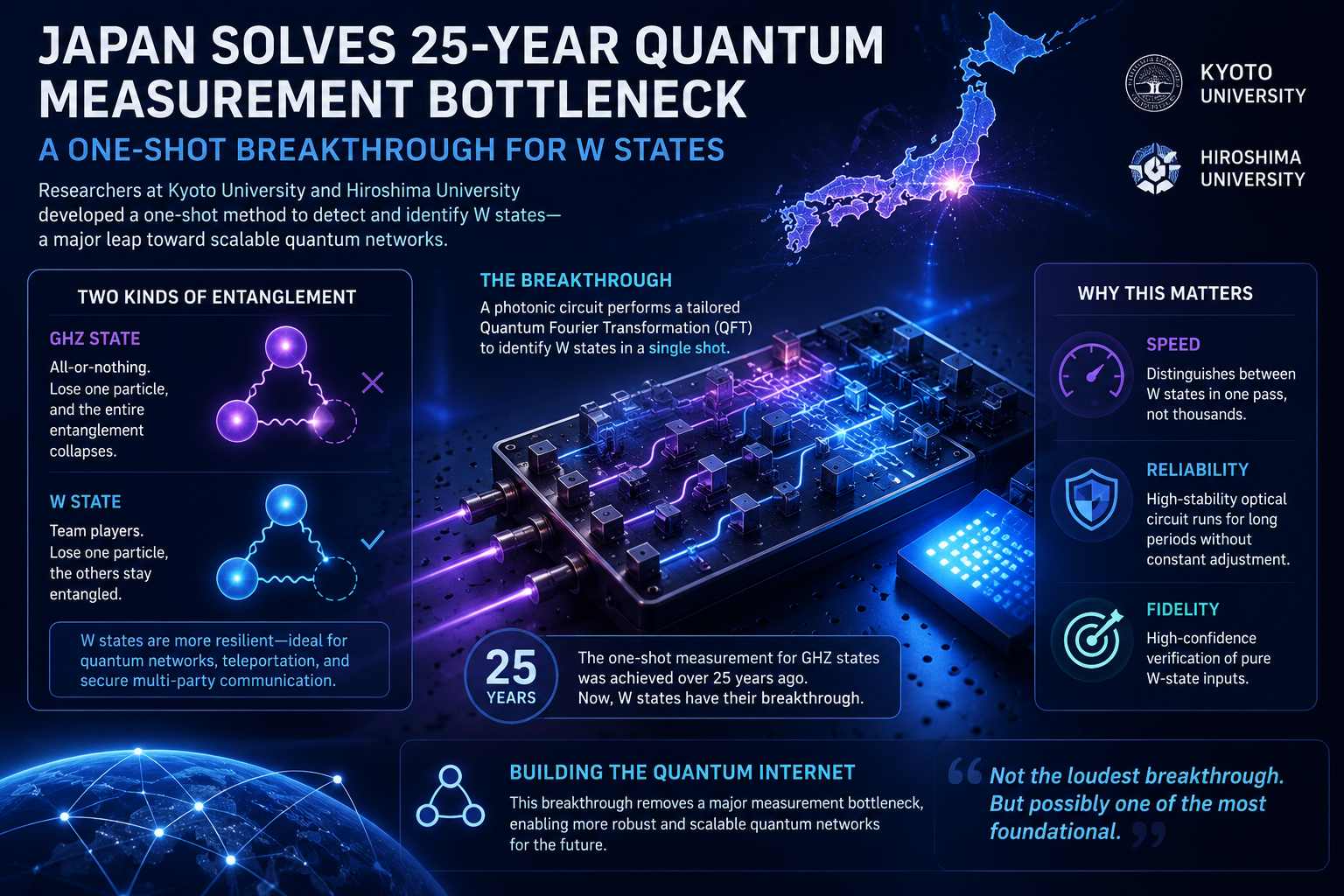
Entanglement links two qubits so intimately that measuring one instantly determines the state of the other, even if they’re galaxies apart. Einstein called it “spooky action at a distance.” Today, we refer to it as the foundation of unhackable communication.
How Quantum Key Distribution Works
At the center of this new world is something called Quantum Key Distribution (QKD), a method for securely sharing encryption keys that makes eavesdropping not only illegal but also impossible.
Here’s the simple magic of it:
Messages are encoded into photons, tiny particles of light. These photons carry information in quantum states that can’t be copied or observed without changing them. So, if someone tries to intercept the transmission, the act of spying itself leaves fingerprints in the form of errors.
When the sender (traditionally referred to as “Alice”) and the receiver (“Bob”) detect those errors, they discard the compromised data and start again. The system literally heals itself.
That’s the brilliance of QKD: it doesn’t stop people from trying to spy on it, but it makes it useless to do so.
To scale this up for a global network, researchers are developing quantum repeaters (to boost signals over long distances), quantum memory (to store entangled qubits), and superconducting processors that can stay stable at near-absolute zero. Together, they form the architecture for a future internet woven from light itself.
From Theory to Reality
As of late 2025, this isn’t science fiction anymore—it’s a race already underway.
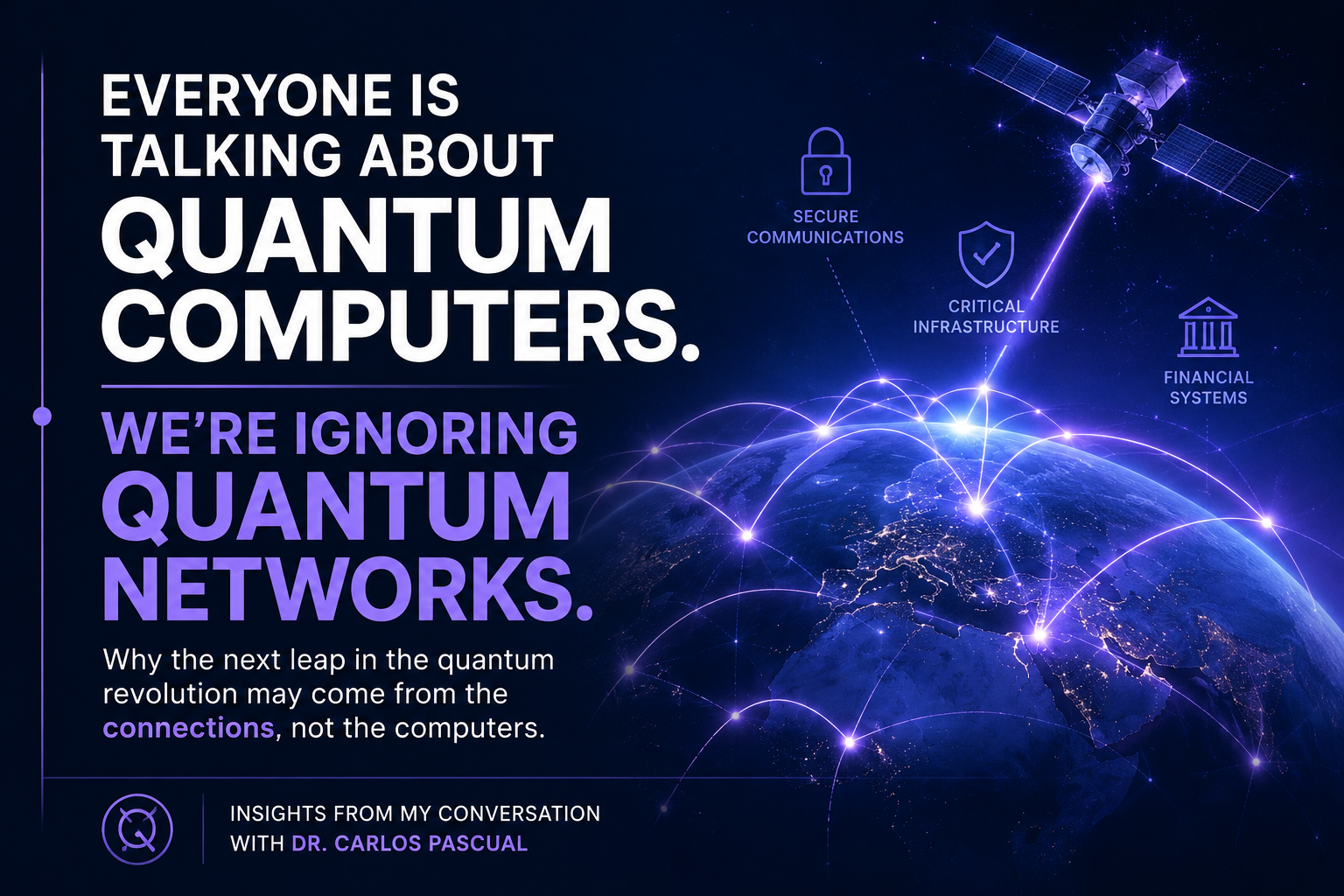
China’s Micius satellite demonstrated long-distance quantum communication nearly a decade ago, sending entangled photons between Earth and space. Europe followed suit with the EuroQCI initiative, building a continent-wide network that blends fiber optics with quantum satellites. Research teams from MIT to Tokyo are now working to connect quantum nodes across cities, forming prototypes of a true quantum web.
The challenge? Quantum information is delicate. Photons can lose their coherence over distance, and even slight environmental noise can break the entanglement. Building global networks that maintain stability will take extraordinary precision and patience.
But make no mistake: the scaffolding of the quantum internet is already being built, one photon at a time.
The Quantum Paradox
Of course, every revolution casts a shadow. The same quantum principles that promise unbreakable security also threaten the encryption systems that keep our current internet safe.
Once fault-tolerant quantum computers go mainstream, they’ll be able to run algorithms like Shor’s, which can break classical RSA and ECC encryption almost instantly. Experts refer to this potential moment as “Q-Day,” likening it to a cybersecurity equivalent of a meteor strike.
Even now, some organizations are quietly stockpiling encrypted data, waiting for the day they can unlock it effortlessly with quantum power. This “harvest now, decrypt later” tactic is already reshaping how governments and industries think about long-term privacy.
To bridge that gap, researchers are developing Post-Quantum Cryptography (PQC) algorithms that can withstand quantum attacks but still run on traditional hardware. The U.S. National Institute of Standards and Technology (NIST) has even begun standardizing them.
Together, PQC and QKD form a dual defense system: one for today’s devices, one for tomorrow’s physics.
But there’s a deeper ethical question hovering under all this: what happens if only a few nations or corporations control quantum-secure communication? Would absolute privacy become a privilege? In a world where data equals power, trust itself might become the rarest resource of all.
The Road Ahead
A fully functional, global quantum internet, one capable of transmitting not just keys but quantum data, is probably still a decade or more away. But when it arrives, the implications will ripple across every corner of society.
Finance: Instant, tamper-proof transactions that make fraud a relic of the past.
Defense: Communication lines so secure they could change the balance of global power.
Healthcare: Patient records and genomic data shared safely across continents.
Science: A new era of collaborative quantum computing that links processors across the planet.
But beyond the technical marvels, this is a story about redefining trust.
For decades, our digital world has been built on fragile layers of code, complex but ultimately human-made. The quantum internet offers something radically different: a network protected not by passwords, but by the very laws of nature.
It’s easy to view this as purely technological, but it’s also deeply human. Every innovation in quantum communication begins with the same impulse that drives us to build bridges, share knowledge, and protect what matters most.
The future isn’t just encrypted; it’s entangled.