The quantum computing landscape is rapidly evolving, bringing with it both excitement and apprehension. Recent developments suggest that quantum computers may be on the brink of cracking the cryptographic codes that secure our digital lives, including cryptocurrencies. In this blog post, we explore two new papers that have shifted the conversation around quantum cryptographic capabilities.
Based on content from Dr Maria Violaris
Quantum Security: Google’s Latest Whitepaper
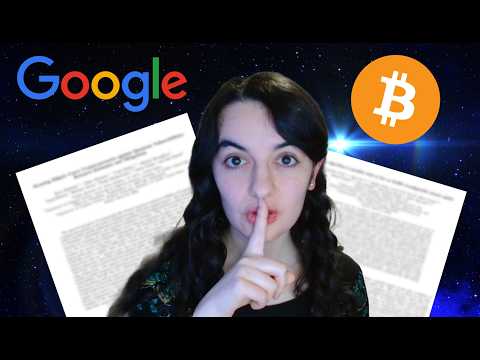
Google has unveiled a whitepaper delving into the security of elliptic curve cryptocurrencies against quantum attacks. A cornerstone of the paper is its zero-knowledge proof algorithm — essentially a method to show that a statement is true without revealing any specifics about the statement itself. This approach adds a layer of protection while still urging the cryptocurrency community to swiftly adopt post-quantum cryptography by 2029.
Oratomic’s Ambitious Claims
Meanwhile, a new startup, Oratomic, claims to harness Shor’s algorithm with just 10,000 qubits using a neutral-atom quantum computer. While the headline figure is striking, the details reveal that practical applications might still need a more substantial setup — potentially up to 26,000 qubits for successful elliptic curve cryptography exploits within a feasible timeframe.
Understanding the Technical Jargon
The disparity in these numbers arises from the variety of quantum architectures. While past estimations focused on superconducting systems, Oratomic explores neutral atoms which offer different constraints and capabilities. These papers illustrate two main attack types: “on-spend” (real-time transaction tampering) and “at-rest” (post-transaction data decryption). Understanding the clock speed of quantum devices is essential here, as ‘fast clock’ systems (like superconductors) can tackle tasks more swiftly than their ‘slow clock’ counterparts (such as neutral atoms).
Future Implications and Final Thoughts
As developments continue, it’s crucial for the cryptography community and companies with vested interests in security to remain vigilant and proactive in transitioning to quantum-resistant algorithms. The narrative surrounding quantum computing shouldn’t incite panic but rather inspire preparation and adaptation to the eventual technological transformations on the horizon.
For the curious minds and those wanting to delve deeper into quantum computing’s intricacies, don’t miss Dr. Maria Violaris’ “Intro to Quantum Computing” series on YouTube for a comprehensive beginner’s guide.