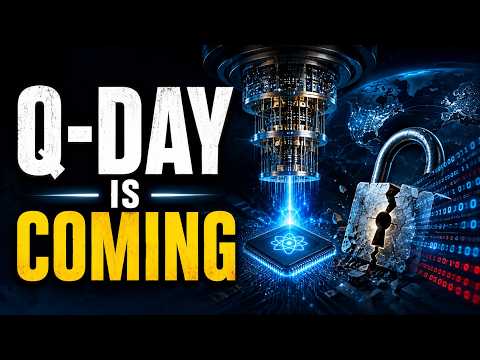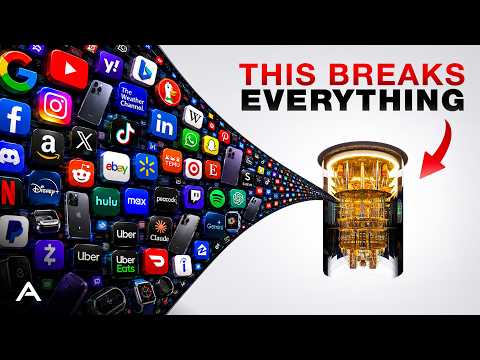
There’s an unsettling silence enveloping the digital corridors of Google, Microsoft, and IBM — tech giants stoking the quiet embers of a threat so massive it may dismantle the digital infrastructure built over the past 70 years. This threat is ominously known as Q-day. It’s the day when quantum computers might irreversibly break every form of encryption woven into the fabric of our online lives, laying bare our secrets and undoing decades of secure communication.
Based on content from Aperture
To grapple with Q-day, a first step is understanding the bedrock beneath our digital world. All digital computing—whether the humble email or complex AI models—rests on binary code: a finely orchestrated dance of ones and zeros. However, every classical computer, no matter how powerful, is constrained by this binary limitation. Enter quantum computing, which discards this traditional dichotomy by employing qubits that, thanks to the laws of quantum physics, exist in a superposition of states—enabling them to be one, zero, or both, simultaneously. It’s a principle that feels almost ethereal, quite outside our usual comprehension, yet it’s a doorway to vast computational possibilities.
While classical computers check one possibility after another in a linear march towards solving problems, quantum computers explore a multitude of possibilities all at once, hovering through a higher-dimensional space of options. This potentiality offers profound promise yet harbors equally profound peril—particularly for encryption, the guardian of our digital secrets.
The Looming Threat: Shor’s Algorithm and Q-day
Modern encryption strategies are predicated on complexity; they are intentionally arduous for classical computers to decipher due to sheer computational demands. An example is the RSA encryption, which secures everything from online banking to government communications through a grueling game of factoring large prime numbers. For a classical computer, this involves a searching needle of a task, taking longer than the universe has existed to brute-force find solutions. But with quantum computing, stability and scale merely make such tasks trivial through the application of Shor’s Algorithm, which exploits quantum superposition to solve these impenetrable equations within hours.
Recent advancements like Google’s Willow chip—a 105-qubit processor—mark substantial leaps in quantum capability. This, alongside IBM’s roadmap for fault-tolerant quantum systems and Microsoft’s Majorana 1, underscores a race not just about emerging technological prowess but about safeguarding or unspooling the very bedrock of digital trust.
The Disruption Beyond: What Changes When Encryption Breaks
Consider the days surrounding Q-day not merely as abstract threats but as seismic shifts to our practical world—a changed landscape where HTTPS no longer guarantees a secure connection, where financial transactions and private communications flicker with newfound volatility.
This potential upheaval extends beyond the overt. Some adversaries are contemplating “harvest now, decrypt later” tactics, collecting encrypted data today with the expectation of breaking it open with future quantum means. This pervasive harvest can target identities, financial data, and more, becoming a fortune-trove of exploitation once Q-day arrives.
Reimagining Security in a Post-Q-Day World
Yet, amid this layered uncertainty, a quiet resilience stirs. The urgency of Q-day has propelled many industries and governments to already start weaving post-quantum encryption solutions, safeguarding us from potential breakdowns in security. Traditional locks may become vulnerable, yet new encryption tactics arise—designed to be quantum-resistant, proposing longevity amid the digital whirlwind.
The persistent question lies in our readiness: are we evolving as swiftly as the threats? Are we acknowledging the potential for change, preparing not just technologically but socially and politically for a vastly different digital landscape? Challenges abound, but within them lies the spark of innovation, inviting us to ponder anew how we secure and sustain our digital futures.
Quantum computing poses a two-edged sword: harboring the chaos of digital upheaval while simultaneously igniting new frontiers in medicine, materials science, and optimization at a civilizational scale. As we stand on the brink of this quantum revolution, the narrative is only beginning, paying homage to both our vulnerabilities and our unyielding march forward.
—