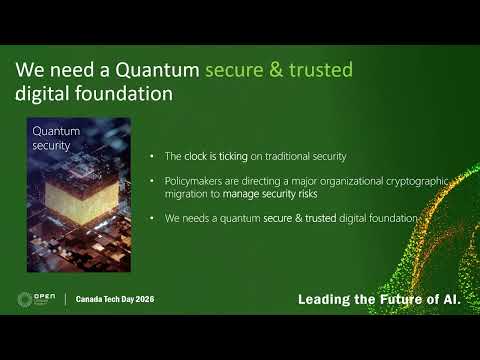
As we advance towards a future where quantum computing has the potential to unravel complex cryptographic codes, the realm of cryptography is on the cusp of a revolutionary transformation. A noteworthy discussion by Dr. Mike Pound from the University of Nottingham delves into the intricacies of post-quantum cryptography and why it is imperative to begin preparations now.
Based on content from Computerphile
Quantum computing holds the promise of solving computational problems previously deemed insurmountable. However, this capability also extends to breaking cryptographic schemes that underpin secure systems we rely on daily. Although a quantum computer capable of such feats does not yet exist, it’s possible that we may build one in the future, potentially within the next few decades.
Dr. Pound elucidates on two primary quantum algorithms of concern: Shor’s algorithm and Grover’s algorithm. Shor’s algorithm, for instance, threatens RSA encryption by factoring large numbers efficiently, while Grover’s impacts the AES key search process by reducing brute force attempts exponentially. Although Grover’s algorithm has only a marginal effect, Shor’s presents a significant vulnerability should quantum computers advance further.
Why should this concern us today? The notion of ‘harvest now, decrypt later’ is a tangible threat where sensitive communications could be stored now for decryption in the future once quantum computers are powerful enough. This foresight has prompted governments and organizations to explore and implement post-quantum-resistant cryptographic methods.
This shift is already underway through collaborative efforts spearheaded by organizations such as the National Institute for Standards and Technology (NIST), which has been evaluating and ratifying new cryptographic algorithms that could withstand quantum attacks. Among the potential solutions are lattice-based schemes and hash-based algorithms, which are currently deemed robust against both classical and quantum intrusions.
The dialogue around post-quantum cryptography highlights an essential balance between preparation and practicality. It’s about deploying hybrid systems today that combine traditional cryptographic methods with their post-quantum counterparts, thus safeguarding against future risks while maintaining current security standards.
The world of cryptography is rapidly evolving, and as we stand on the brink of a quantum breakthrough, the discussion led by Dr. Pound underscores the critical need for informed decision-making in the face of potential upheaval. As we venture into this new era, the vigilance and adaptability of both institutions and individuals will be key in navigating the uncertainties of a post-quantum world.
For those enthusiasts seeking a challenge, Jane Street, Computerphile’s channel sponsor, offers an intriguing neural net puzzle devised by their machine learning team. Check out their website for a chance to unravel this brain-teaser and explore potential career opportunities for those interested in the future of technology.