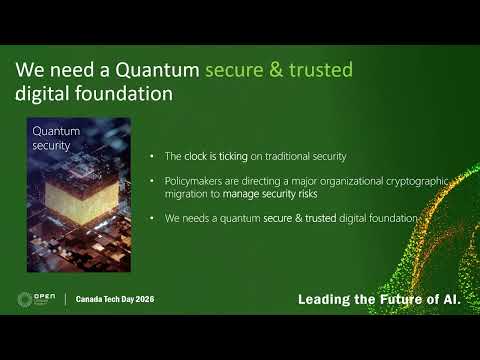
The looming threat of quantum computing isn’t just a concept reserved for sci-fi novels—it’s quickly becoming a real-world challenge that has the potential to upend our current cryptographic systems. This pivotal moment, ominously referred to as Q-Day, marks the point when quantum computers gain the capability to break classical cryptography, rendering many of our current security measures obsolete.
Understanding the urgency of Q-Day requires a basic grasp of our current cryptographic systems—symmetric and asymmetric encryption methods that keep our data secure. Symmetric cryptography, like the Advanced Encryption Standard (AES), relies on a singular key to encrypt and decrypt data. In contrast, asymmetric cryptography, such as RSA, uses a pair of mathematically related keys. This dual-key system underpins much of today’s secure communications and digital interactions.
Based on content from IBM Technology
The concern arises from algorithms like Grover’s and Shor’s, which quantum computers will potentially run, posing threats to both symmetric and asymmetric encryption. While Grover’s algorithm will challenge key lengths, compressing the time required for brute-force attacks, Shor’s algorithm directly targets and disrupts asymmetric cryptography. The necessity thus arises for post-quantum cryptographic solutions, integrating new algorithms and, for symmetric systems, extending key length to 256 bits.
Why should this concern you? Imagine a world stripped of secrets—where personal, financial, and company data becomes public domain. Not only would our privacy be at stake, but the very foundation of trust in digital transactions would crumble. Whether it’s verifying identities or ensuring that the terms of agreements remain intact, all these processes depend on cryptographic certainty, which Q-Day threatens to invalidate.
The big question remains: when will Q-Day occur? The frustrating truth is that no one can predict with certainty. Estimates range from five to ten years, but the actual transition could already be unfolding silently, known only to those who have crossed this threshold. The presence of state actors or stealthy hackers acclimating to post-quantum capabilities means the effects of Q-Day might manifest unbeknownst to the public for some time.
For organizations, what follows is a wake-up call. With data transformation timelines that could extend beyond a decade, waiting until the last minute is not a feasible option. Not only would the rush escalate costs, but the chance of being caught unprepared with vulnerable data is high. The looming reality and the “harvest now, decrypt later” tactic of data thieves further underscore the importance of immediate action. If data is captured today, it merely awaits the capability for future decryption.
Now is the time for both awareness and proactive measures. Moving towards post-quantum cryptographic systems isn’t merely a precaution—it’s an imperative to secure data integrity and confidentiality in a post-Q-Day world. Start converting your systems today. Your future self, and indeed your entire organization, will be glad you did.
And while you’re at it, perhaps reconsider some of those past fashion choices… your future self will likely appreciate that too.
Keep up with the latest on AI and quantum computing by subscribing to IBM’s monthly newsletter [here](https://ibm.biz/BdpPNn).