IonQ has achieved a milestone that could quietly transform how quantum computers connect: they’ve successfully converted visible-light photons—used in their trapped-ion quantum systems—into telecom wavelengths, the kind used in fiber-optic internet.
Why is this a big deal?
Quantum computers often communicate using single photons, which act as carriers of quantum information. But these photons are usually emitted at visible-light wavelengths—beautiful, but not built for distance. Fiber-optic cables are optimized for infrared, or “telecom” wavelengths, where light travels with minimal loss. That mismatch has made long-range quantum communication a major challenge.
IonQ’s breakthrough is a kind of translator. Their system shifts the photon’s frequency—changing its “color”—without disturbing the delicate quantum data it carries. This isn’t just a technical trick. Quantum states are fragile; altering the photon without scrambling the message is extremely difficult. Yet IonQ managed it, preserving entanglement and coherence in the process.
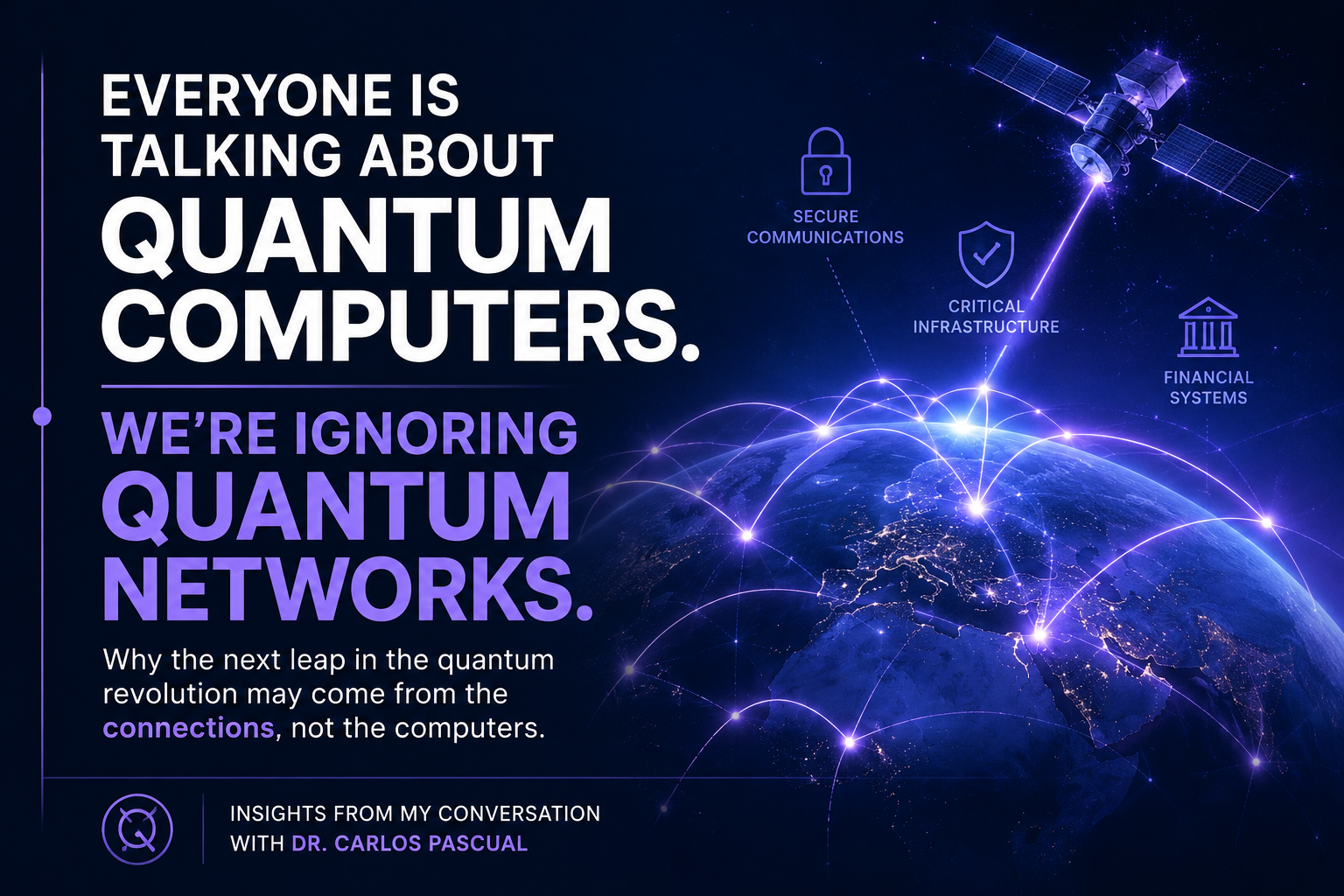
This opens the door to a true quantum internet—where quantum systems can communicate across cities or even continents. By using existing telecom infrastructure, we avoid the need for a costly, quantum-specific network. Instead, we get a shortcut: quantum messages traveling on the same highways that already carry the world’s information.
The applications are wide-ranging: ultra-secure communications through quantum key distribution, distributed quantum computing, and possibly cloud-based quantum services. It also positions IonQ as a key player in the race to make quantum systems practical at scale.
What’s most interesting is that this isn’t a flashy upgrade in speed or computing power—it’s an elegant fix to a quiet incompatibility. Rather than reinvent the internet, IonQ found a way to harmonize quantum systems with it.
Sometimes, progress doesn’t roar. It listens for what’s out of tune and brings it into alignment. IonQ didn’t just make quantum computing more powerful—they made it more connected. And that might change everything.
Stay Connected
Follow our journey and be part of the conversation:
🔗 Find us on LinkedIn
📬 Join our mailing list
📺 Subscribe to our YouTube channel