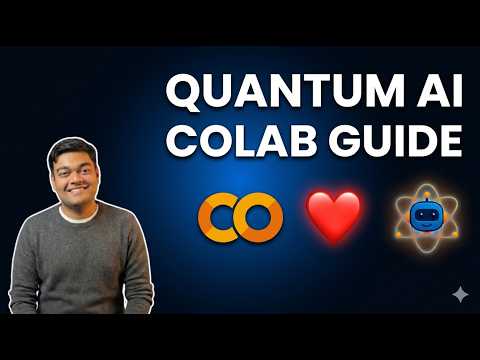
Quantum computing is making strides in artificial intelligence with the Quantum AI SDK known as QRL-QAI. For enthusiasts and researchers eager to explore quantum reinforcement learning, here’s a comprehensive guide to running QRL-QAI on Google Colab.
Based on content from QRL
Getting Started
To begin, install the QRL-QAI SDK by running:
pip install qrl-qai==1.0.0For more information, you can check the QRL-QAI documentation. We highly encourage you to engage with the community by starring the GitHub repository and providing feedback via email at jay.shah@qrlqai.com.
Diving into the Environment
The QRL-QAI SDK integrates with Gymnasium, an extension of OpenAI’s gym framework, and uses PennyLane for quantum computing tasks, with PyTorch handling the heavy lifting for AI tasks. It offers a variety of environments exploring different aspects of quantum computing—from error simulation to expressibility.
Installation and Quick Start
To install QRL-QAI, simply execute the following pip command:
pip install qrl-qai==1.0.0The package provides tutorials covering value iteration, Q-learning algorithms, and various environments that simulate quantum principles such as noise and error.
Using Google Colab
Google Colab offers a collaborative platform to experiment with QRL-QAI. Once you open the notebook, remember to make a copy to save your work. You can connect to various environments like FrozenLake or Bloch Sphere to see value iteration in action.
Here’s how to import and run a basic algorithm:
from qrl.algorithms.classical import ValueIteration
from qrl.env import BlochSphereV1
value_iteration = ValueIteration()
bloch_sphere_env = BlochSphereV1()
# Your code to train the model
Within Colab, you’ll encounter six different quantum environments offering unique challenges, like error channel simulations and qubit manipulations. Each presents a distinct learning opportunity to apply reinforcement learning techniques in a quantum setting.
Visualizing the Results
The SDK’s environments allow for rendering of the training processes. You can visualize how well your AI model navigates these quantum landscapes. Some environments, such as the Bloch Sphere, offer rich visual feedback reflecting quantum state transitions.
Conclusion and Next Steps
This introduction to QRL-QAI sets the stage for more in-depth exploration. Future posts will dive into using Lightning AI Studio for a no-code experimentation experience, allowing non-technical users to manipulate quantum AI parameters visually.
Stay tuned for upcoming tutorials that will explore each environment and algorithm in detail. Don’t miss out; subscribe to our updates and enhance your understanding of quantum AI!