

On a seemingly ordinary day in June 2026, amidst the rolling hills of Eastern Tennessee, a momentous event unfolded with minimal fanfare. This wasn’t merely a meeting of minds but a mingling of technological titans: the coupling of a quantum computer named Pathfinder with America’s mighty AI supercomputer, Frontier. This fusion represents more than a technical achievement; it’s a milestone that hints at the potential evolution of computing paradigms, perhaps shaping pathways not yet fully charted but distinctly visible on the horizon.
Based on content from Hardware Grid
The Oak Ridge National Laboratory, home to this venture, doesn’t exemplify your typical computing hub. The sheer scale can feel abstract until you imagine Frontier—a goliath straddling the size of two basketball courts, drinking in enough electricity to energize a small city. It’s a digital behemoth, juggling quintillions of calculations each second through a web of interlaced AMD processors and GPUs.
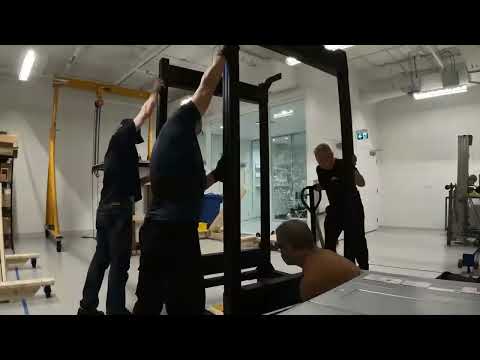
Beside this leviathan stands Pathfinder, which sits paradoxically modest in its near-magical operation. Encased in cryogenic hardware barely coming to grips with the gravity of the task, Pathfinder thrives in cold—a frigidness more intense than the vacuum of space. It embodies principles so specific and delicate that they transcend everyday physics, dipping into the quantum realm where traditional understanding grows nebulous.
Yet, this union prompts reflection. It’s no longer just the world of brute-force computation colliding with esoteric quantum principles; it is a dialogue—a shared venture into computational symbiosis. For years, artificial intelligence and quantum computing developed along semidetached trajectories, occasionally gesturing toward each other like islands across mere conceptual oceans. But now, the bridging has begun in earnest.
Why, one might muse, does this matter? The subtleties reveal themselves in successive layers: supercomputers like Frontier are masters of volume, handling vast oceans of data with unrelenting, calculated pace. Meanwhile, Pathfinder’s quantum capabilities provide tactical strikes within specific problem realms, using superposition and entanglement to walk through dimensions otherwise closed to classical eyes. By unlocking responses in parallel instead of sequence, Pathfinder and Frontier together revolutionize the perceptual landscape—a thought-provoking dance where each plays to the other’s strengths.
Consider the implications. Quantum computers alone, the pioneers that they are, often remained abstract artisanal pieces, their potential adhered in stasis by the difficulty of real-world problem integration. The necessity for ultra-cold functional environments left them often likened to rare artifacts in museum-like laboratory confines. Now there’s an opportunity to move past this: interconnected as they are within the throbbing heart of Oak Ridge’s high-performance ecosystem, quantum and classical tools begin to transcend static roles, suggesting utilitarian harmony.
The challenge remains vast but tangible. Superconducting qubits offer a fertile ground yet remain untamed—sensitively attuned to environmental intrusions from heat or electromagnetics. However, the serenity of superposition may one day drive breakthroughs akin to extinguishing the great fires of high calculations with just a whisper. The groundwork laid by careful development of hybrid algorithms and the infrastructure to facilitate fluid quantum-classical dialogue underpins this unique enterprise.
Jan Goetz, CEO and co-founder of IQM Quantum Computers, encapsulates the endeavor as more than just an operational evolution—this is the pathway toward maturity in quantum computing. The installation at Oak Ridge marks IQM’s first system in the United States, exemplifying a commitment to nurturing quantum capabilities from headline-grabbing spectacles to reliable computing forces integrated into scientific methodologies worldwide.
From this synergistic foothold, the dialog continues: entwined research, experimental practices, hands-on control shifting theoretical promise to hands-on reality. Moments like these speak volumes about infrastructure and institution, collaboration and innovation. They challenge us, inviting the question: how might our understanding of computing evolve when different paradigms harmonize, exposing facets yet unseen?
The present-day connection weaves the narrative forward—a knitting of paths not just within the ethereal expanse of possibility, but grounded in tangible, thrilling reality. The hybrid architecture that Oak Ridge now wields calls forth not merely extraordinary hardware interplay but signals a profound turning point—a patient redefining of what the future of computing might soon hold.
—









Leave a Reply